

A Prize For Stopping Food From Rotting
 Illustrative image
A garden gives you a mountain of beans in August and nothing at all in February. Off-grid food preservation is how you move that fresh produce from the busy months to the empty ones, without a big fridge humming in the corner.
For most of history, people kept food without refrigeration. They dried it, buried it in cold ground, soured it or sealed it in jars, and every one of those methods still works on a homestead today.
The whole idea got a big push from a contest. In 1795, the French government had a problem. Its soldiers were marching far from home, and their food kept going bad on the way.
So it offered a prize of 12,000 francs to anyone who could find a better way to keep food from spoiling.
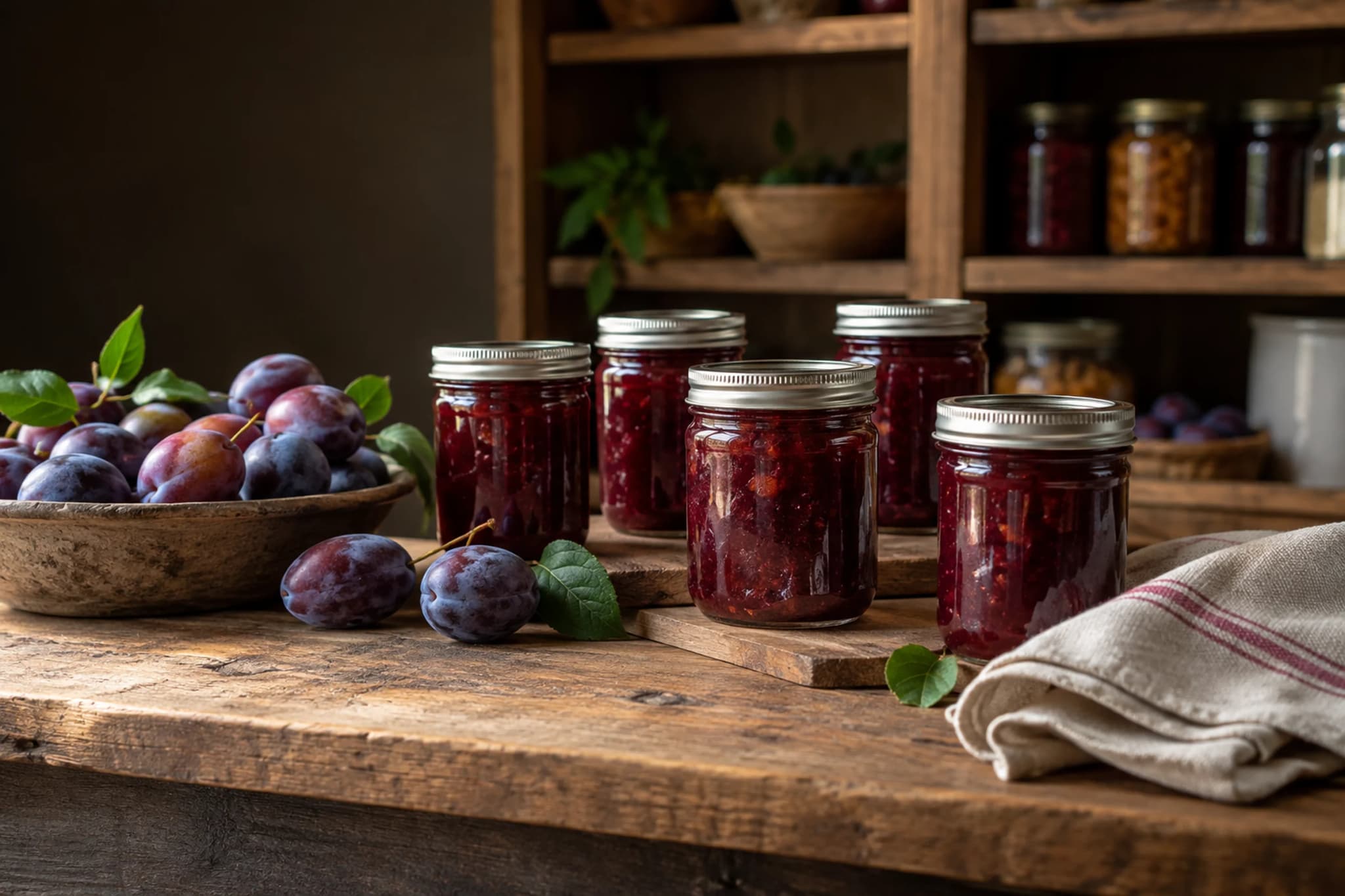
A Paris sweet-maker and cook called Nicolas Appert took up the challenge. He packed food into glass jars, corked them, sealed them with wax, wrapped them in cloth and boiled them. It took him about 15 years of trying, and in January 1810 he was named the winner.
That boiled jar is the great-great-grandparent of every can in your kitchen. When you grow your own food, preserving is the step that carries the harvest through the cold months.
Why Food Goes Bad In The First Place
 Illustrative image
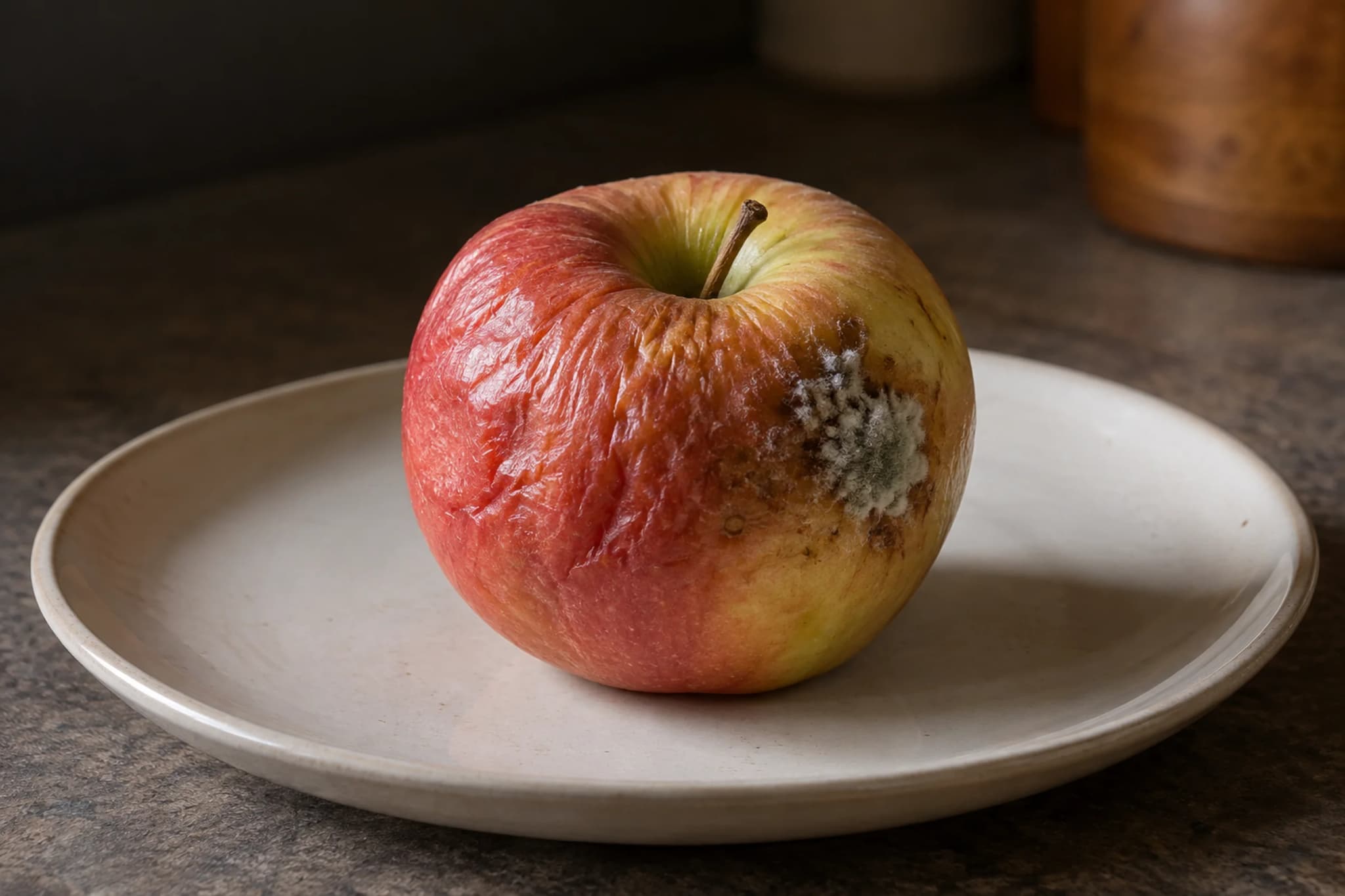
Food spoils because tiny living things eat it before you do. Bacteria, mould and yeast are everywhere, on your hands, in the air and in the soil.
Like any living thing, they need a few things to grow: moisture, warmth, and usually food that isn't too sour.
Every way of preserving food takes away at least one of those things.
Drying takes away the moisture, while a root cellar or freezer takes away the warmth. That's all refrigeration really does too: it slows the germs down by keeping them cold.
Pickling and fermenting make the food too sour for the bad germs. Canning uses heat to kill them, then a sealed lid keeps new ones out.
So the question for each food is simple. Which of those tricks will preserve it best, and for how long?
Food Storage Methods Without A Refrigerator
Here are the main options side by side, so you can see which one fits which food.
| Method | How it stops the germs | Good for | Needs electricity? |
|---|---|---|---|
| Root cellar | Cold slows them down | Potatoes, carrots, beets, cabbage, apples | No |
| Drying | Nothing left to drink | Herbs, beans, fruits, jerky | Not for fruit in the sun, yes in a dehydrator, which meat and most vegetables need |
| Pickling and fermenting | Acid makes food too sour | Cabbage, cucumbers, other vegetables | No |
| Freezing | Cold stops them | Berries, bread, almost anything | Yes, day and night |
| Canning | Heat kills them, the seal keeps new ones out | Fruits, jams and pickles, plus vegetables, beans and meat in a pressure canner | No, once the jars are sealed |
Most homestead families mix several of these, so one bad week never puts the whole supply at risk.
Root Cellars: The Fridge Under The Ground
 Illustrative image
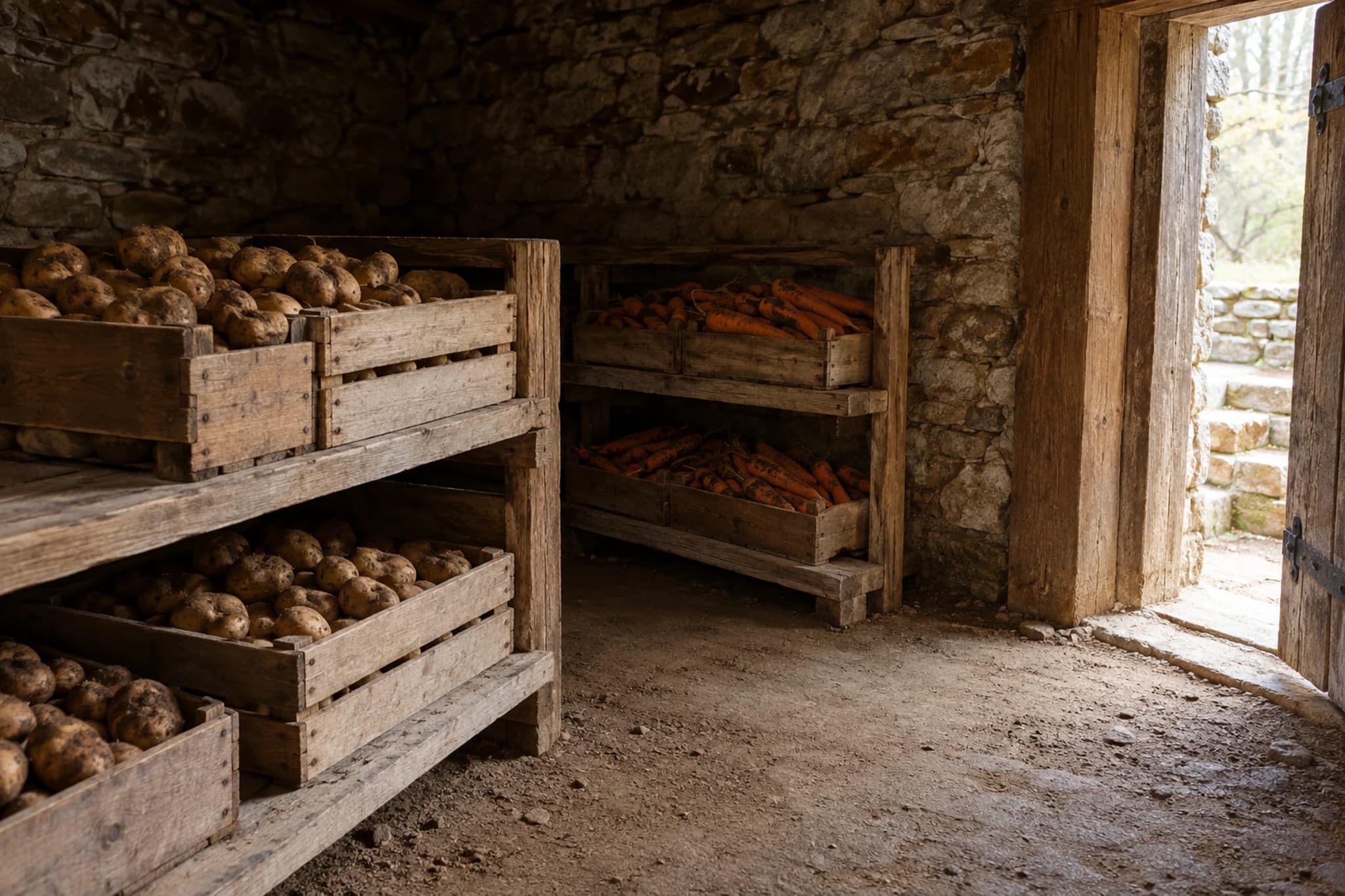
A root cellar is a room, pit or box in the ground that stays cold and damp without any electricity. It's refrigeration the old way. The earth around it works like a big blanket, keeping it cool in summer and above freezing when the snow comes.
Most stored vegetables like it close to freezing, around 0 to 4°C (32 to 40°F), with very damp air. That's why old cellars have dirt floors, which help maintain the damp. Potatoes, carrots, beets, cabbage and apples can stay fresh for months this way.
There's one twist. Apples give off a natural ripening gas called "ethylene", and it can make potatoes sprout and carrots taste bitter. So store apples away from your root vegetables, or up high near a vent so the gas drifts out.
Dehydration: Drying Food To Store It Longer
 Illustrative image
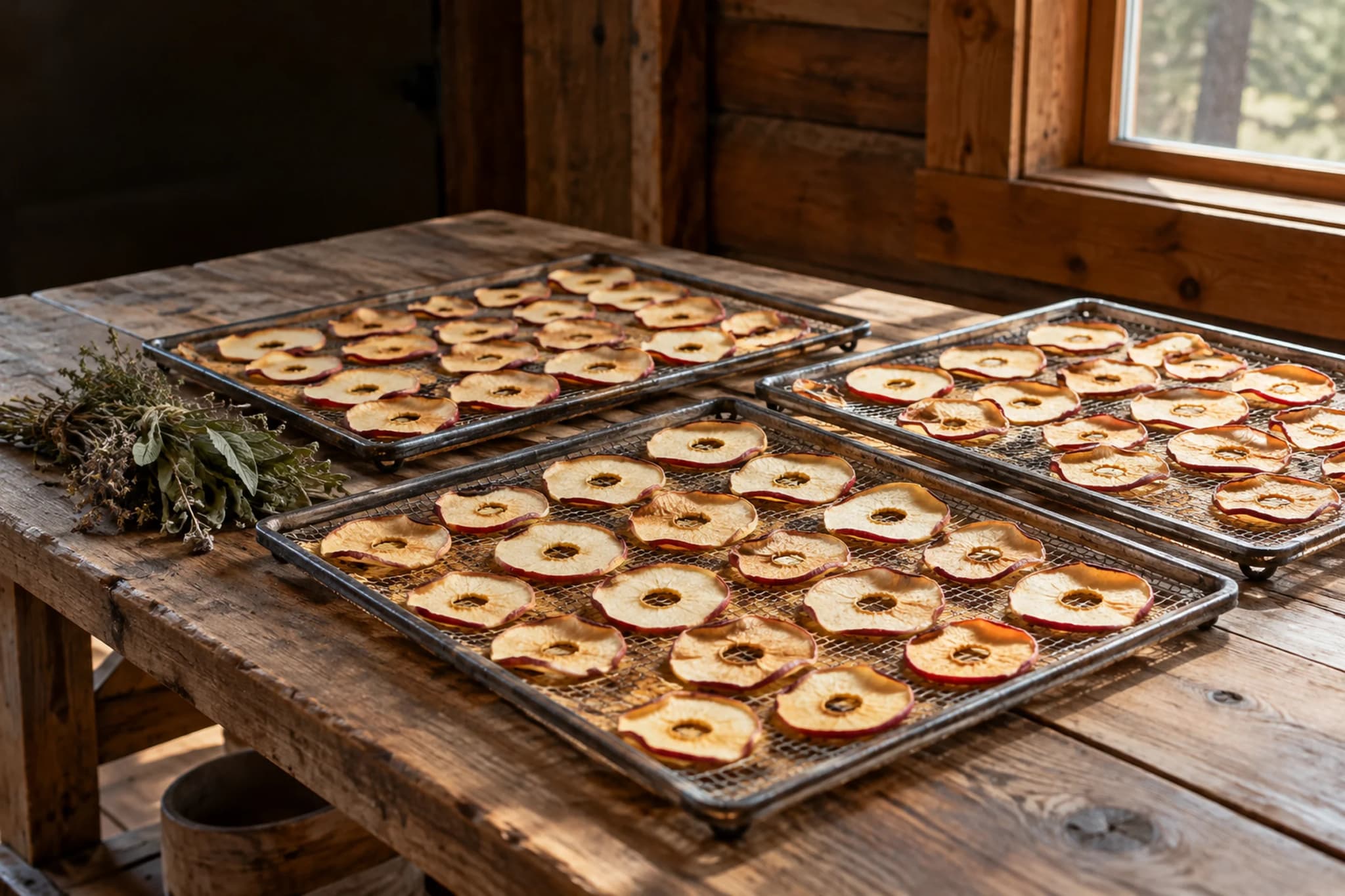
Dried food is the lightest and simplest food to store long term. Raisins, dried beans, apple rings and herbs all keep because the germs have nothing to drink. Scientists call this "dehydration", which just means taking the water out.
The sun was the first food dryer, and in hot, dry places it still works well for fruit. The NCHFP does not recommend drying vegetables (apart from beans dried on the vine) or meat outdoors in the sun. In damp climates people use an electric "dehydrator", which is a box with a small heater and a fan. Others build a solar dryer that works like a little greenhouse with air flowing through it.
Meat needs extra care. Many home dehydrators only reach about 60°C (140°F), and that's not hot enough to kill germs on meat.
US food safety advice is to heat meat to 71°C (160°F) first, then dry it. A university extension guide on jerky walks you through it.
Pickling And Fermenting: Letting The Good Germs Win
 Illustrative image
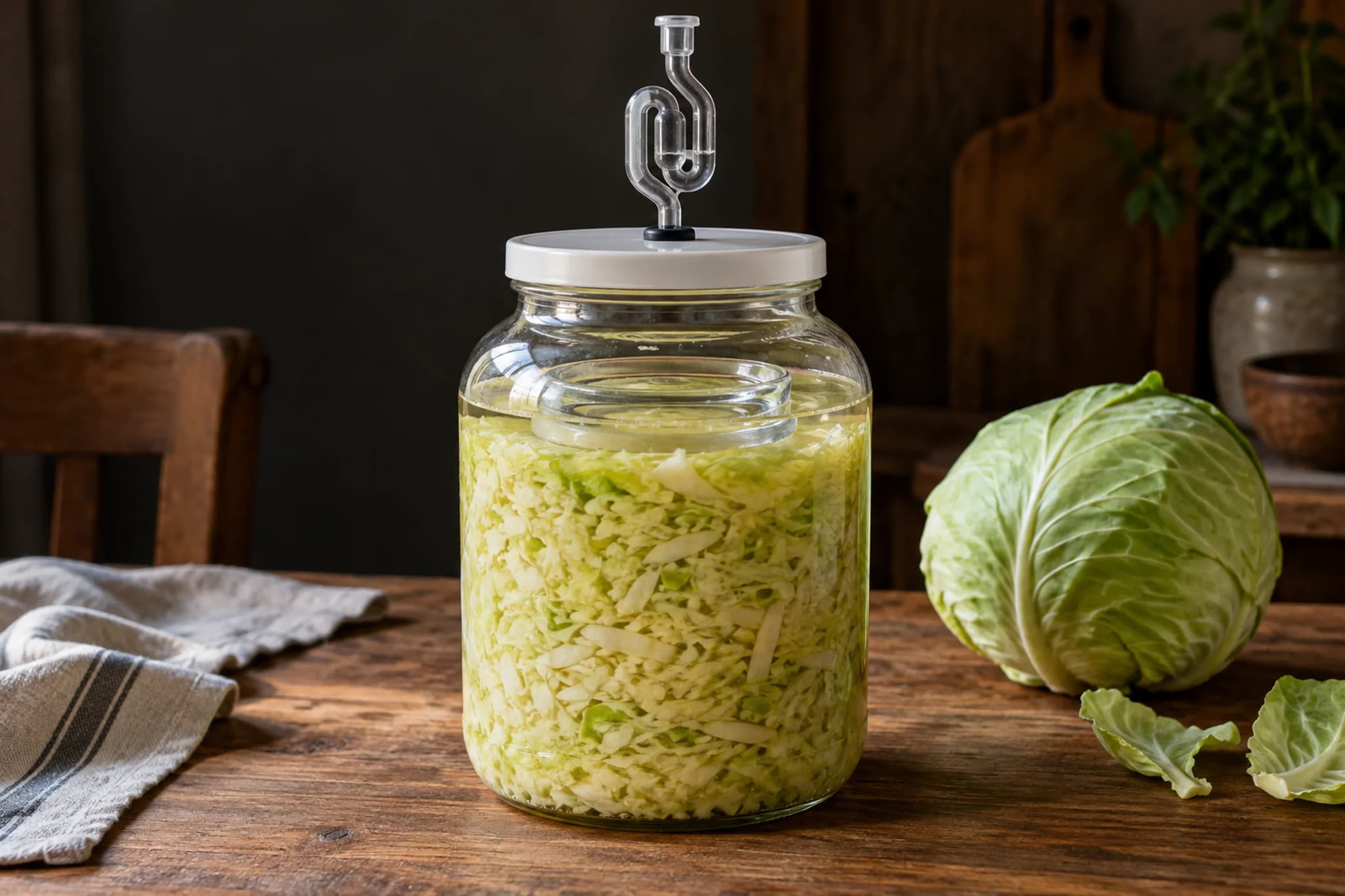
Fermenting sounds strange, but you've probably eaten it. Sauerkraut, kimchi and real sour pickles are all made this way. Pickling is the same idea: the vegetables end up so sour that the bad germs can't grow.
Cabbage already carries helpful bacteria on its leaves. When you add salt and pack it tight, those good bacteria start to win. They turn the cabbage's sugars into acid, and that acid stops the bad germs.
Food safety experts at Ohio State say the amount of salt in a fermenting recipe matters for safety, so it shouldn't be changed. The salt gives the good bacteria a head start, a bit like giving your team the first move in a game.
Freezing: Easy, But Hungry For Power
 Illustrative image
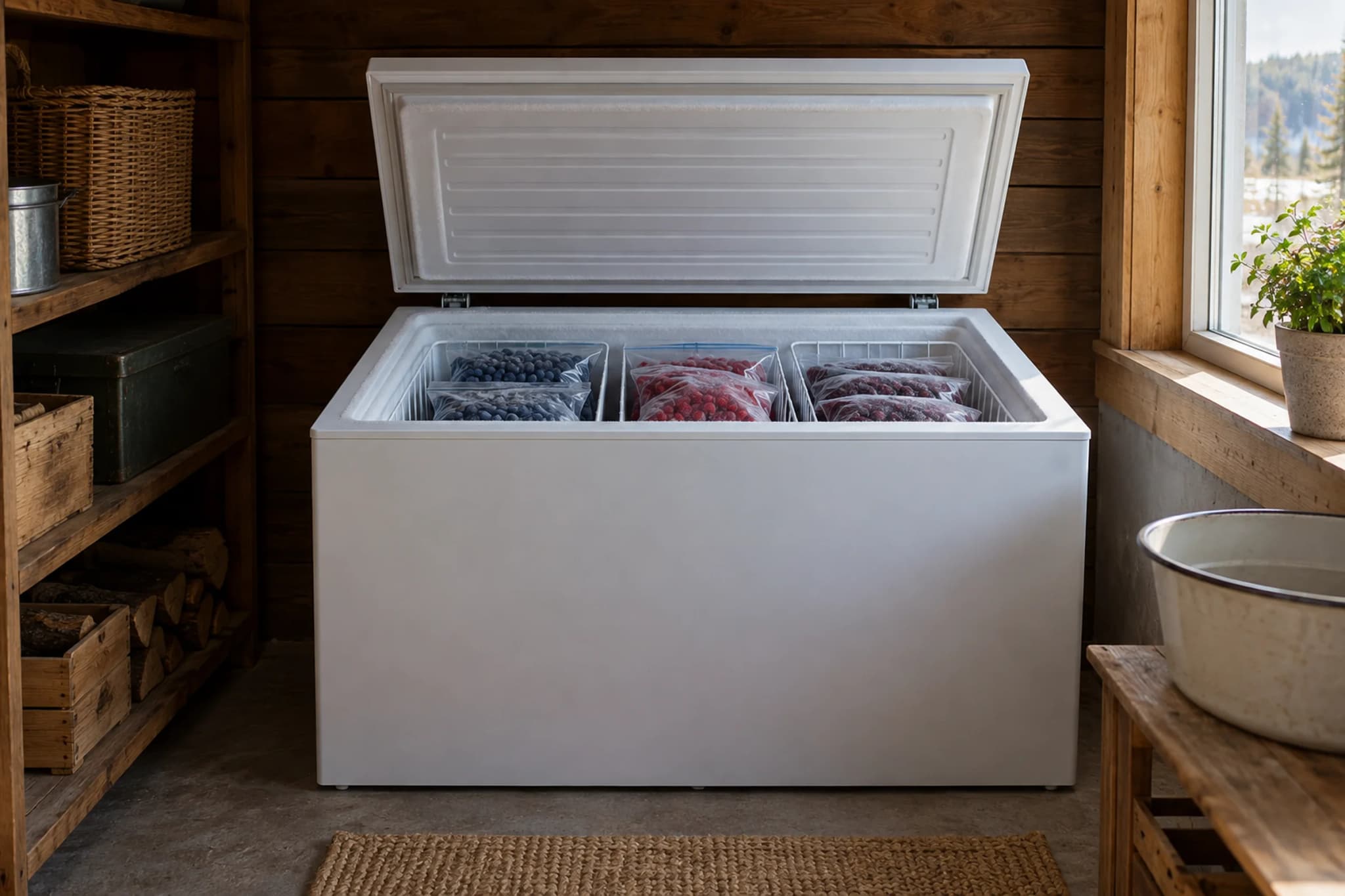
Freezing is the easiest way to keep almost anything, from berries to bread. Food goes in, and months later it comes out nearly the same.
The catch off the grid is power. Refrigeration here means a freezer running day and night, all year, so it's one of the bigger loads on a solar and battery system. If you plan to freeze a lot, consider adding it to your daily energy use list before you buy.
Many people living off the grid use a mix. They freeze some things, but lean on cellars, drying and jars so a cloudy week doesn't put the whole harvest at risk. Those methods don't need any electricity once the work is done.
Canning: Two Kinds, And Why It Matters
 Illustrative image
Canning is putting food in jars and heating them so they seal, then keeping them on a shelf at room temperature, with no refrigeration at all. There are two very different kinds, and picking the right one is the most important part.
It all depends on how sour the food is. Scientists measure sourness with a number called "pH", and the lower the number, the more sour the food.
The line that matters is pH 4.6.
Acid foods (pH 4.6 or lower) include most fruits, jams, pickles and sauerkraut. They can go in a "boiling water canner", which is a big pot of boiling water. Tomatoes sit right on the line, so tested recipes add lemon juice or citric acid to them.
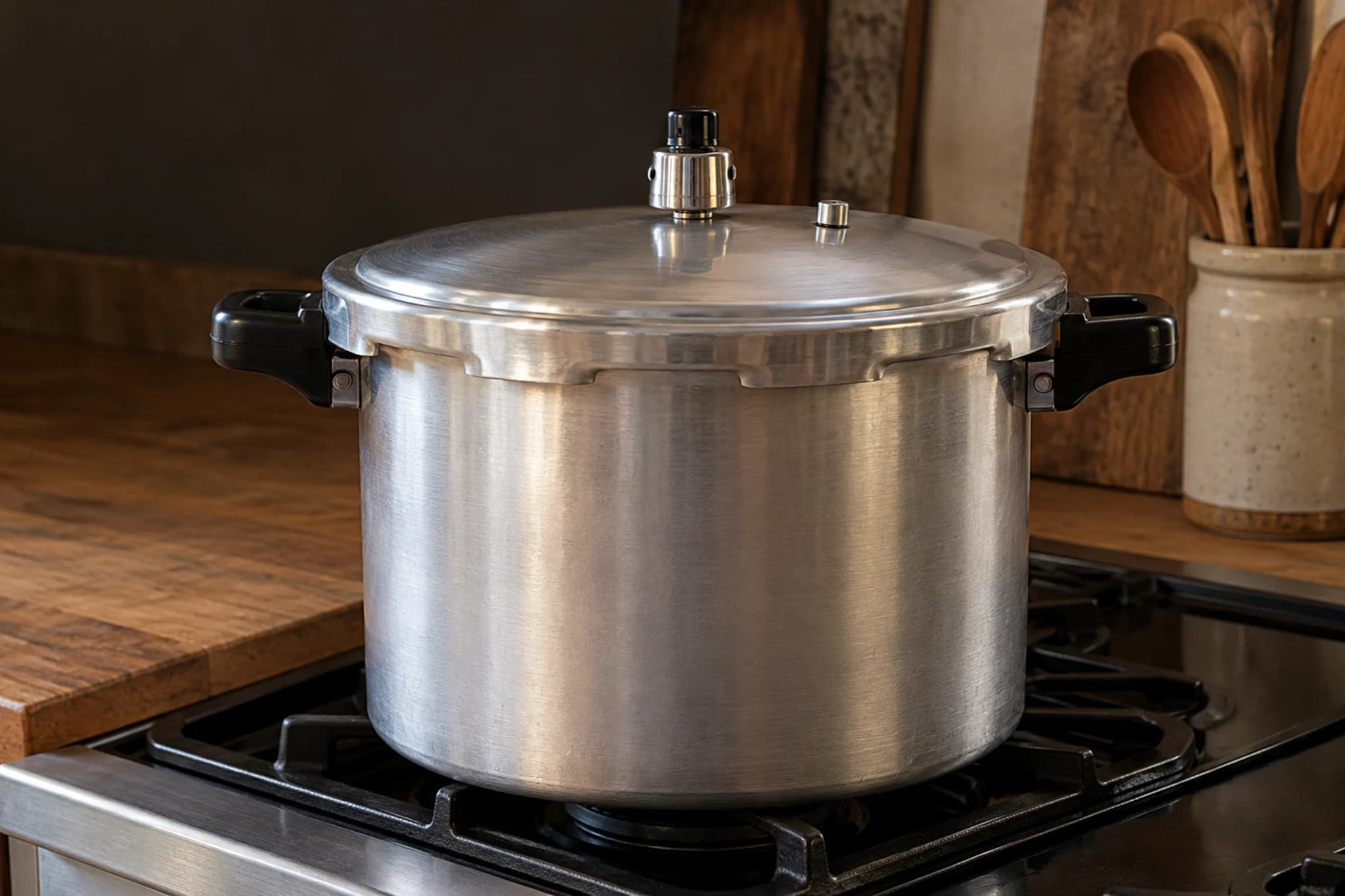
Low-acid foods (above pH 4.6) include almost all vegetables, beans, meat and fish. These need a "pressure canner". It's a heavy pot with a locking lid that traps steam, so it gets much hotter than boiling water. The US National Center for Home Food Preservation (NCHFP) says low-acid foods must reach 116 to 121°C (240 to 250°F), and only a pressure canner can do that.
The Danger You Can't See: Botulism
 Illustrative image
Here's why the two kinds matter so much.
Some soil carries the "spores" of a germ called Clostridium botulinum. A spore is like a tiny seed in a hard shell. It can sleep in soil for years, and it can ride into your kitchen on a carrot or a bean.
Boiling at 100°C does not kill these spores. Inside a sealed jar of low-acid food, with no air and no acid, they can wake up and make a poison.
Doctors call the illness "botulism". It can paralyse the muscles you breathe with, and it can kill.
And here's the scary part. Food with the poison in it can look, smell and taste completely normal.
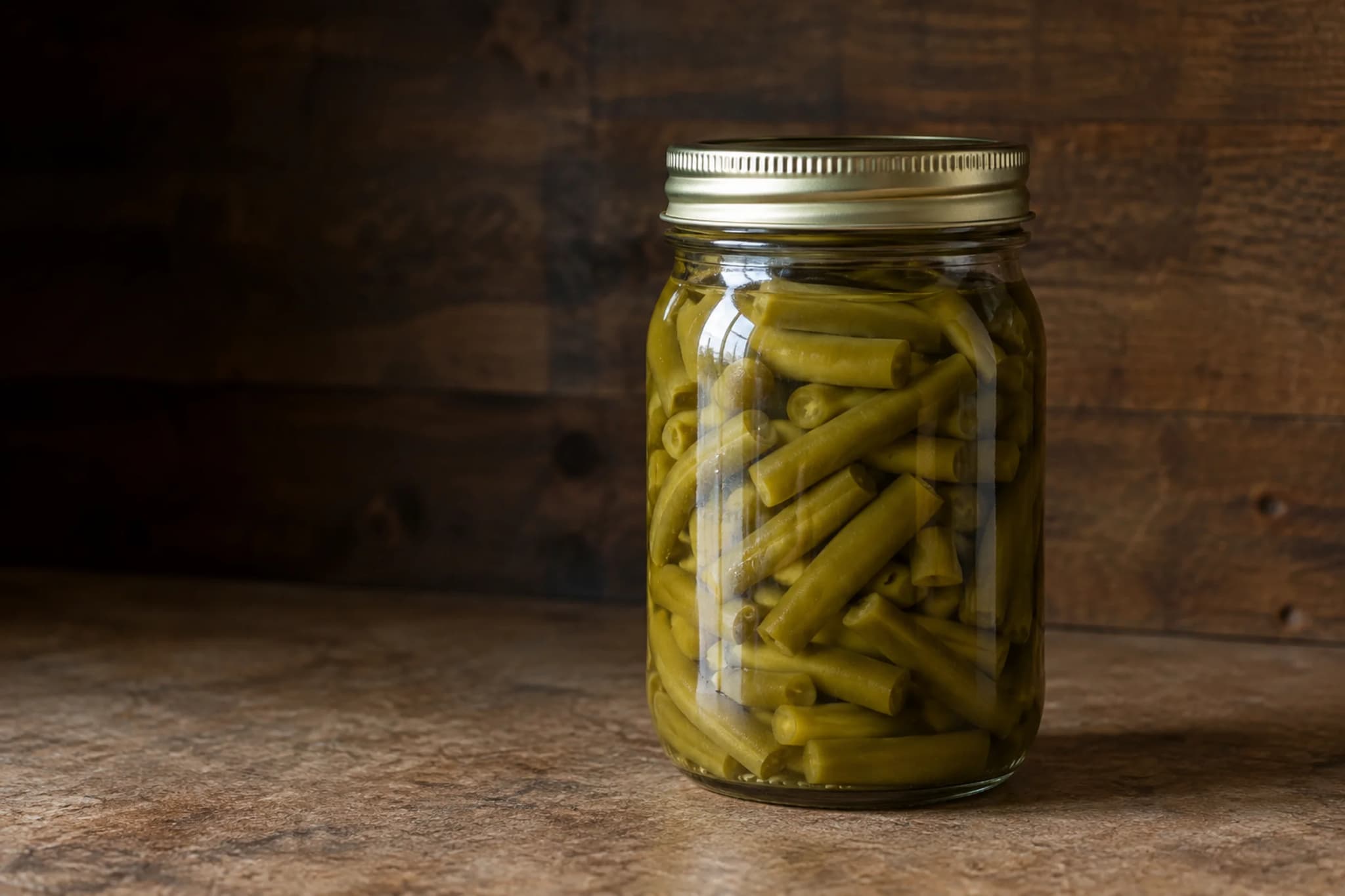
This isn't rare history. From 1996 to 2014, home-canned vegetables caused 43 of the 145 US botulism outbreaks that came from food made at home. That's about three in every ten.
So the rules for safe canning are not suggestions:
- Use only tested recipes, never times or methods from a blog, a video or your memory. The USDA Complete Guide to Home Canning is free to download from the NCHFP, and university extension services teach from it.
- Use a pressure canner for every low-acid food. Never use a boiling pot, an oven, a dishwasher or the "open kettle" trick for these foods.
- Don't can milk, cream, butter, cheese or other dairy at home, not even in a pressure canner. They are low-acid too, but there is no tested home method for them. Penn State Extension says dairy products "should never be home-canned", so add milk or cream to a soup only when you serve it.
- Adjust for height. Water boils cooler in the mountains, so above about 300 metres (1,000 feet) tested recipes add time or pressure.
- Have a dial gauge on a pressure canner checked once a year. Many extension offices can test it.
- Throw out any jar with a bulging lid, a broken seal, leaking, spurting liquid or a bad smell. Don't taste it to check. The NCHFP says to treat it as if it holds botulism poison: put a sealed jar, unopened, in a heavy closed rubbish bag. If it is leaking or open, wear gloves, boil the jar and lid covered in water for 30 minutes before you throw them out, and clean any spill with a bleach solution.
The USDA guide comes from US research. Rules and advice differ between countries, so also check what your national food safety agency says.
If someone ever has double vision, drooping eyelids, slurred speech or trouble swallowing after eating home-canned food, it's a medical emergency. Get help straight away.
Is Preserving Your Own Food Worth It?
 Illustrative image
Preserving your own food is work. A jar day means a hot kitchen, a sink full of jars and a lot of chopping.
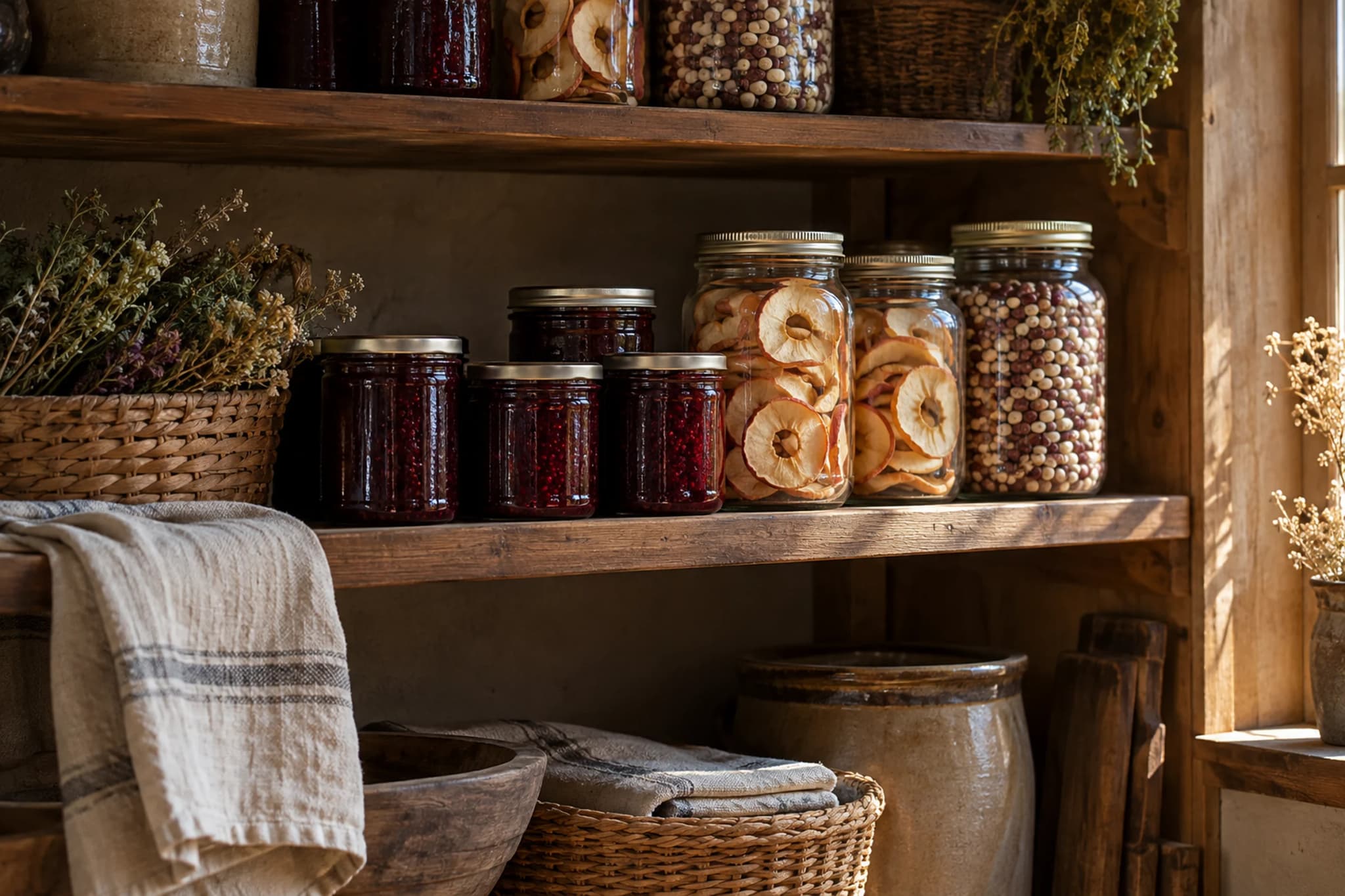
But walking past a shelf of jars in the middle of winter, every one filled from your own off-grid garden, is a feeling that's hard to beat.
Start with the simple, forgiving methods and learn as you go. Store potatoes and apples somewhere cool, dry some herbs, make a jar of sauerkraut, or try a tested jam recipe. Move on to the pressure canner when you're ready to follow a tested recipe step by step, every single time.
For best quality, food safety experts suggest eating home-canned food within about a year. By then it's summer again, and the shelves start filling up all over.
Sources
- National Park Service, Why no cans?
- National Center for Home Food Preservation, Ensuring safe canned foods
- NCHFP, Equipment and methods not recommended
- NCHFP, About the 2015 USDA guide
- University of Missouri Extension, Storing vegetables and fruits at home (MP562)
- UMass Extension, Optimal storage conditions and ethylene sensitivity of fall storage crops
- NCHFP, Sun drying
- Penn State Extension, Drying jerky
- Ohio State University Extension, Making and preserving sauerkraut (HYG-5364)
- Penn State Extension, Preserving soup safely
- NCHFP, Identifying and handling spoiled canned food
- NCHFP, Storing home canned foods
- CDC, Botulism: home-canned foods (archived 2020)
- Colorado State University Extension, Botulism
- Michigan State University Extension, Testing your pressure canner
Hard Words
| Term | What it means |
|---|---|
| Root cellar | A cold, damp room or pit in the ground that keeps vegetables fresh for months without power. |
| Ethylene | A natural gas that ripening fruit like apples gives off. It can make other vegetables sprout or turn bitter. |
| Dehydrator | A box with a small heater and fan that dries food slowly. |
| Fermenting | Letting helpful bacteria turn food sour with acid, which keeps the bad germs out. Sauerkraut is made this way. |
| pH | A number that shows how sour something is. The lower the number, the more sour. |
| Boiling water canner | A big pot of boiling water used to can sour foods like fruit, jam and pickles. |
| Pressure canner | A heavy pot with a locking lid that traps steam and gets much hotter than boiling water. Needed for vegetables, beans and meat. |
| Spore | A germ in a tough, sleeping form, like a seed in a hard shell. It can survive boiling. |
| Botulism | A rare but deadly illness from a poison that a germ can make in badly canned low-acid food. |
| Tested recipe | A canning recipe that a lab has checked to make sure the heat reaches every part of the jar. |
Common Questions
What is the safest way to preserve food off the grid?
Root cellaring, drying fruit and herbs, and freezing are the most forgiving methods, because a small mistake usually means lower quality rather than danger. Fermenting is also safe when you follow a tested recipe and keep the salt amount. Jars are safe too, but only when you use tested recipes and the right canner for each type of food.
Why do vegetables need a pressure canner?
Most vegetables are low-acid, with a pH above 4.6. Botulism spores can survive boiling water, and inside a sealed jar of low-acid food they can make a deadly poison. A pressure canner reaches 116 to 121°C (240 to 250°F), hot enough to destroy the spores. Boiling water only reaches 100°C at sea level.
Can you see or smell botulism in a jar?
No, not reliably. Food with botulism toxin can look, smell and taste normal. That's why safety depends on tested recipes and the right equipment, not on checking the food afterwards. Still, throw out any jar with a bulging lid, broken seal, leaks or spurting liquid, and never taste doubtful food to check it.
Where can I find safe canning recipes?
Use recipes tested in a lab, such as the USDA Complete Guide to Home Canning, which the NCHFP offers as a free download. University extension services and some jar makers also publish tested recipes. Outside the US, check your national food safety agency, because rules and advice can differ.
How long does home-canned food last?
For best quality, experts suggest using home-canned food within about a year. Store jars in a cool, dark, dry place, ideally around 10 to 21°C (50 to 70°F), and out of sunlight. Heat makes quality drop faster. Always check seals before opening, and throw out any jar that is leaking or has a bulging lid.
What temperature should a root cellar be?
Most stored vegetables keep best close to freezing, around 0 to 4°C (32 to 40°F), with very damp air of about 90 percent humidity. Potatoes like it slightly less damp than carrots. Keep apples apart from root vegetables, because the ethylene gas they give off can make potatoes sprout and carrots taste bitter.
Do I need to change canning times at high altitude?
Yes. Water boils at a lower temperature the higher you go, so food in the jar gets less heat. Above about 300 metres (1,000 feet), tested recipes add processing time in a boiling water canner or raise the pressure for pressure canning. Every tested recipe includes an altitude table, so use the line for your height.