

A Wild Bird That Laid A Dozen Eggs A Year
 Illustrative image
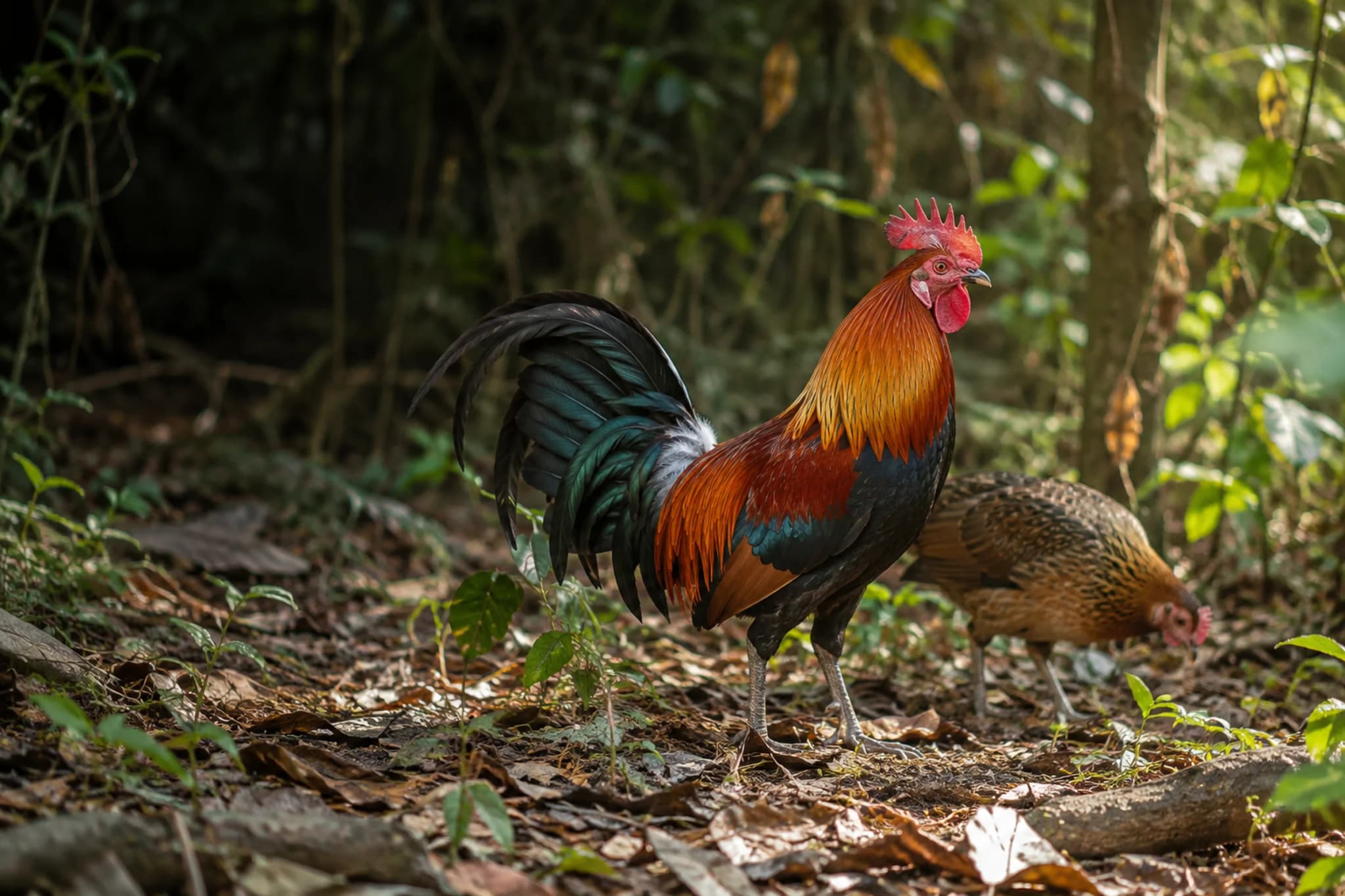
Every chicken on Earth comes from a shy wild bird called the red junglefowl. It still lives in the forests of Southeast Asia, and a wild hen lays roughly a dozen eggs a year.
A good laying hen today can lay around 260 eggs a year. Same family of bird, many times the eggs.
That jump took thousands of years of farmers choosing which birds to keep. It's also the whole idea behind off-grid livestock: animals that turn things you can't eat, like grass, weeds and some garden leftovers, into things you can, like eggs, milk and meat. Next to the garden, animals are the second big way to grow your own food on a homestead.
Humans have kept livestock for a very long time. Around 10,000 years ago, farmers in the Zagros Mountains of what is now Iran were already herding goats. Some of their goats stepped in wet mud bricks, and you can still see the hoofprints today.
How An Animal Works Like A Food Factory
 Illustrative image
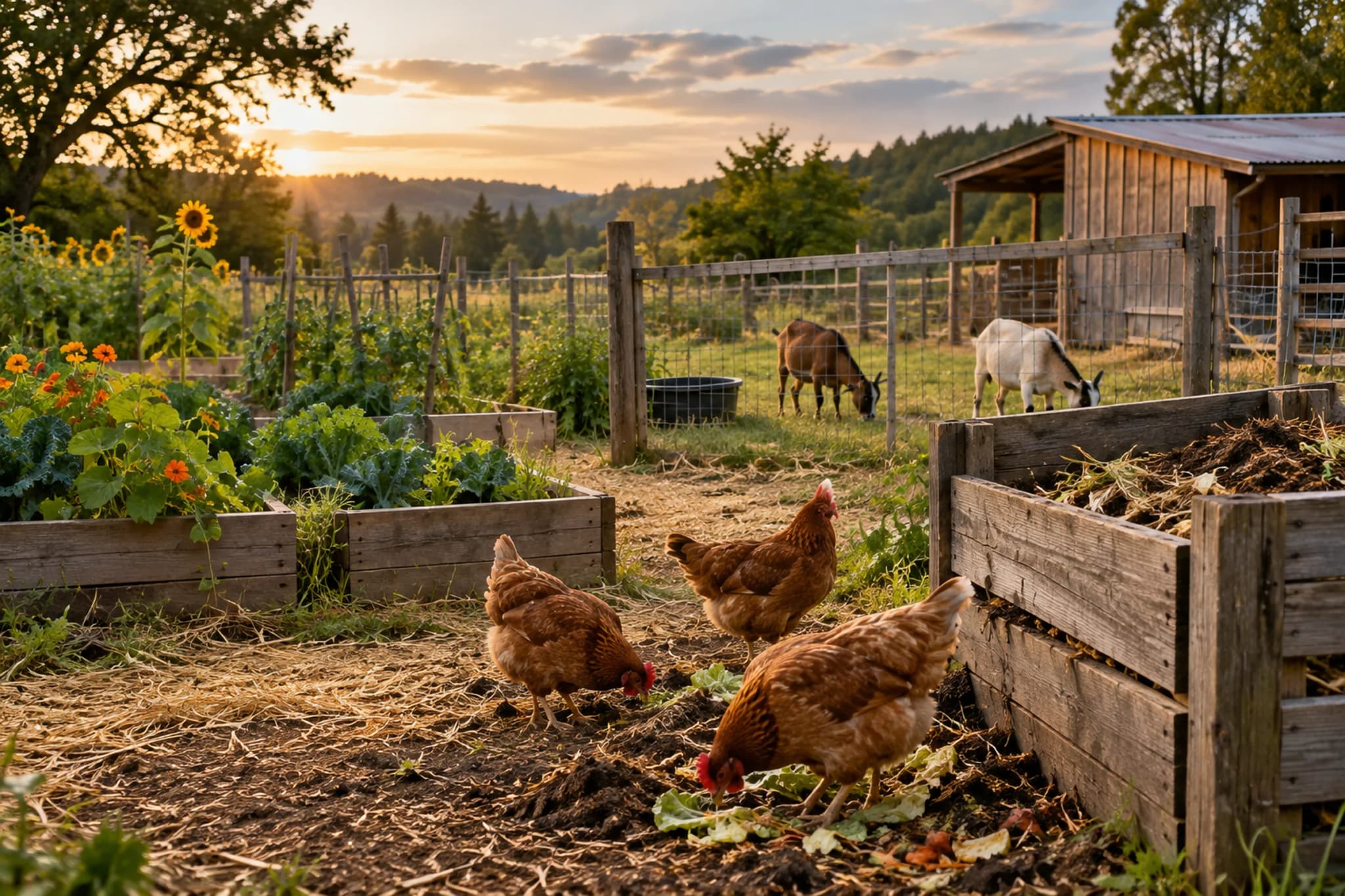
Think of a farm animal as a little food factory that walks around.
You feed in the raw stuff at one end: proper feed, grass from grazing and lots of water. The factory runs every day, and out come useful products like eggs, milk and meat, plus manure.
That manure matters more than it sounds. It goes onto the compost pile and later feeds the soil, so your garden grows better and the whole place starts to work like a loop.
But a factory needs looking after every single day. Animals need food, fresh water, shelter, and someone checking on them morning and evening, even on holidays and in the rain.
That's why most off-grid homesteads start small. A few hens or two rabbits teach you the daily rhythm before you take on anything bigger, like sheep or cattle, which need far more pasture, fencing and feed.
Chickens: The Best First Animal For Most People
 Illustrative image
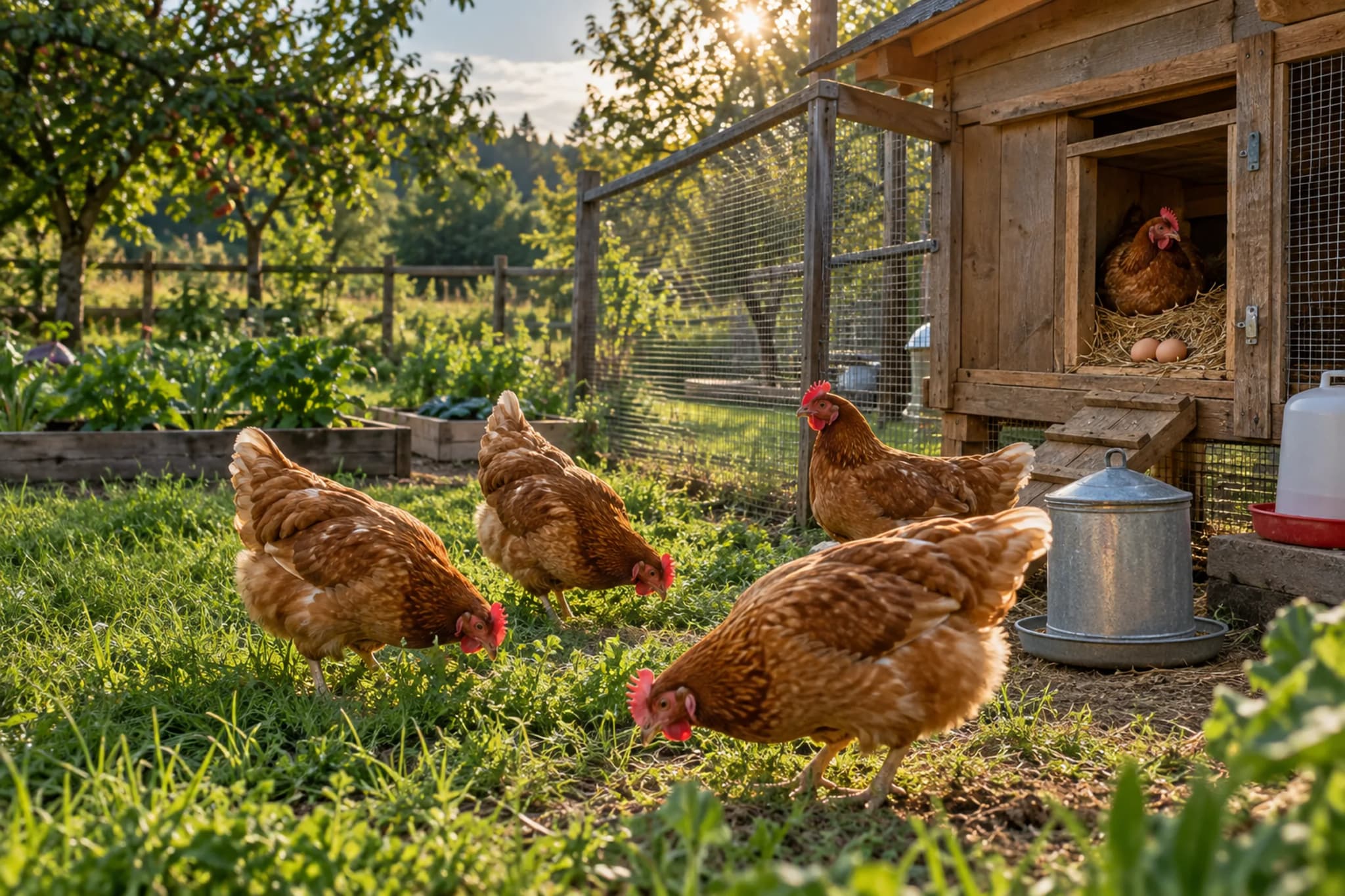
Chickens are where almost every homestead begins, and for good reason. They're small, cheap to start, and give your family something every day.
Hens start laying at about four to six months old. They lay best in their first laying year or two and then slowly lay fewer eggs as they age.
Here's something many people don't know. Hens don't need a rooster to lay eggs. A rooster is only needed if you want eggs that can hatch into chicks.
That's handy, because roosters crow loudly at dawn. Many towns that allow hens ban roosters for exactly that reason.
Hens also need daylight to keep laying. Egg production drops in winter when days get short, which is normal and not a sign that something is wrong.
How much room do they need? Advice from universities varies, from about 1.5 to 3.5 square feet (roughly 0.15 to 0.3 square metres) per bird inside the coop, plus an outdoor run.
Bigger breeds need more, and more space means calmer, healthier birds.
Rabbits And Goats: The Next Step Up
 Illustrative image
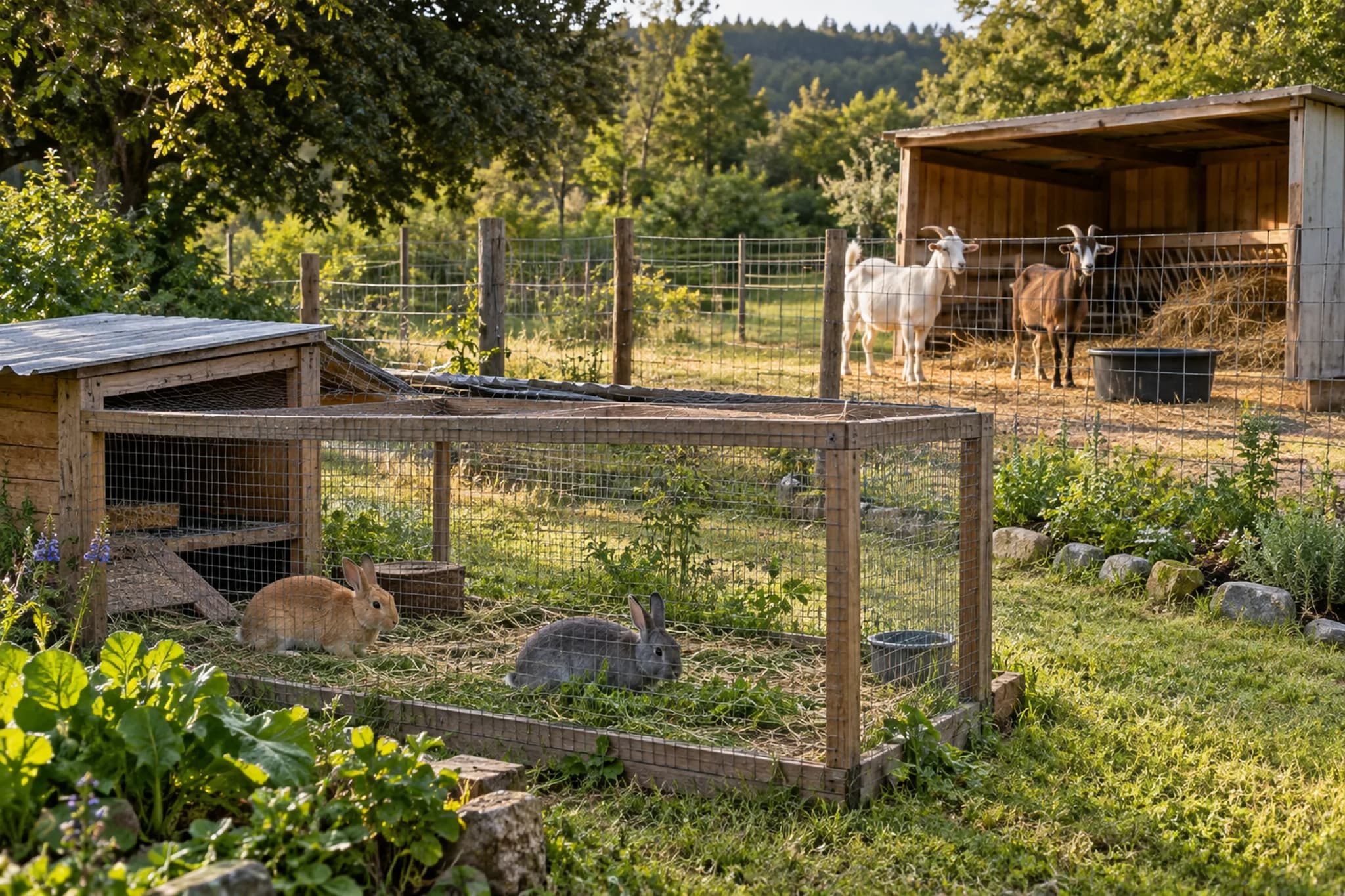
Rabbits are quiet, small and fit in places where chickens and goats can't. Many homesteaders raise them for meat, and a rabbit doesn't need a big pasture.
A mother rabbit, called a "doe", is pregnant for only about a month. A litter often has about 7 or 8 babies, called "kits". Michigan State University's 4-H program says a skilled breeder can raise many litters a year, but it advises beginners to go slower.
Goats are the step up for families who want milk. A good dairy goat can give somewhere around half a gallon to a gallon a day, roughly 2 to 4 litres, depending on the breed and the goat.
That's about one to two big milk cartons, every day, from an animal the size of a large dog.
You can drink goat milk fresh or turn the extra into cheese or yogurt, the same dairy foods people make from cow milk. Just don't try to can it: there is no tested home method for canning dairy, which is why the page on keeping food off the grid leaves milk and cheese out of the jars.
But there's a catch. A goat only gives milk after having a baby, so the milk supply comes in seasons, not all year round from one goat.
And never keep just one goat. Goats are herd animals, a bit like a school class that only feels safe together. UK vets say two goats is the absolute minimum, because a lonely goat suffers.
Goats are also escape artists. Farm experts call fencing the single most important part of keeping goats. A good fence keeps goats in and gives protection from predators like foxes and dogs.
What Off-Grid Livestock Need Every Day
 Illustrative image
Every animal needs the same basic things, no matter its size.
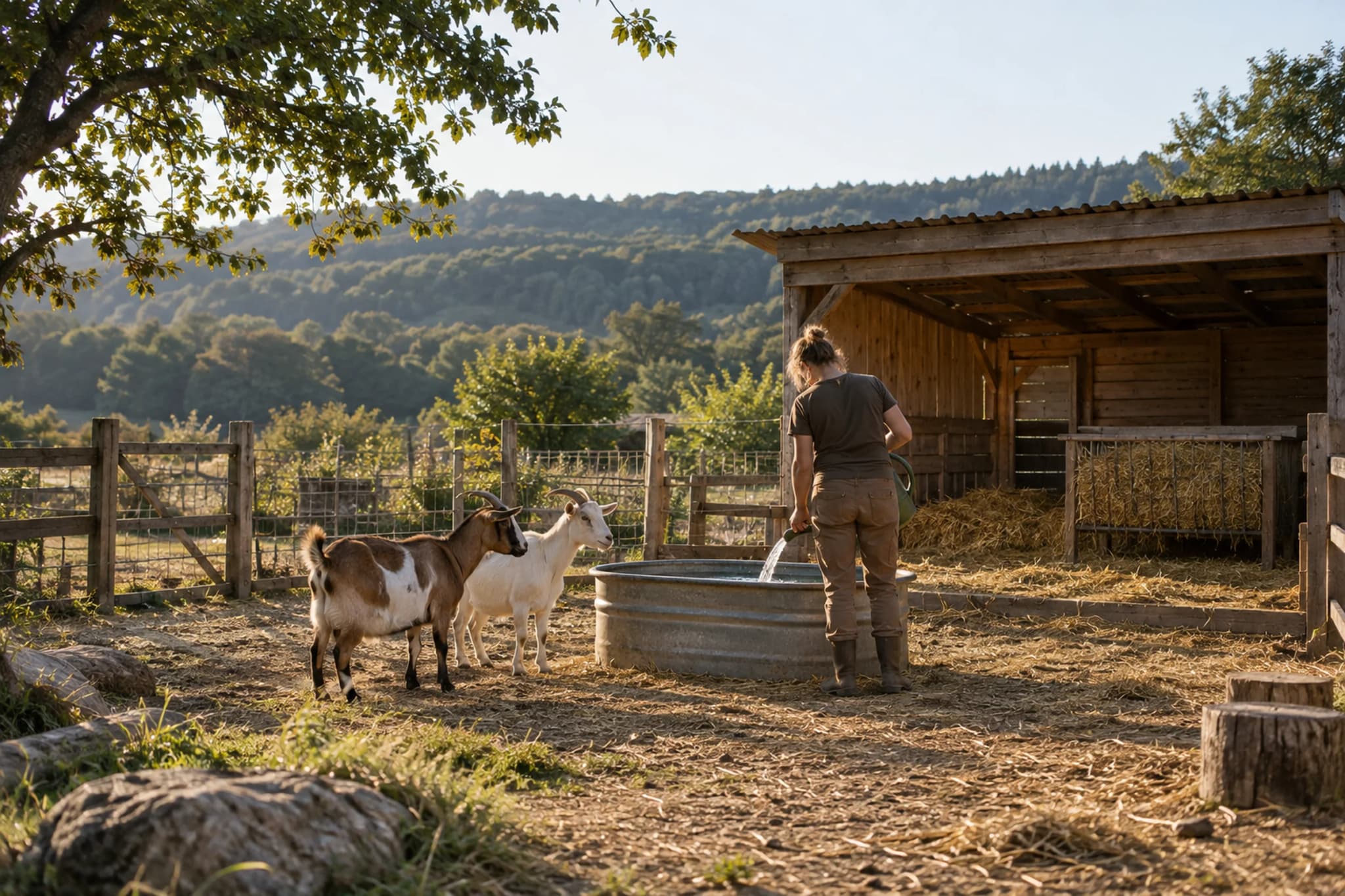
Water comes first. Animals drink a far bigger amount than you'd expect, every day, in every season. Many off-gridders fill animal troughs from a rainwater tank, but in a cold climate the water freezes, so you need a plan for keeping it liquid.
Shelter comes second. A dry, draft-free house with fresh air protects animals from rain, wind and night-time predators. Foxes, raccoons, hawks and even neighbours' dogs all like chicken.
Food comes third. Grass and grazing on pasture help, but most livestock also need a balanced feed made for their kind, especially hens that are laying or goats that are giving milk. Chickens, goats and pigs need very different food, and some plants and leftovers are poisonous to some animals. Ask a local farm store or vet what your animals need.
Be careful with kitchen scraps. In the UK and the EU it is against the law to feed kitchen or catering waste to farm animals, and that includes backyard hens and pet pigs. The reason is disease: the UK's 2001 foot-and-mouth outbreak most likely started with pigs fed scraps containing meat.
In the US, feeding pigs food waste that has touched meat needs a licence and cooking, and many places ban it outright. Rules elsewhere differ, so check with your local farm or animal health office before you feed any leftovers.
Then there are the less fun jobs. Cleaning out bedding, trimming goat hooves, spotting sick animals early and finding a vet who treats farm animals. In many rural areas that last one is harder than it sounds, so look for one before you need one.
Rules, Welfare And Keeping Yourself Healthy
 Illustrative image
Here's the part beginners tend to skip. Rules for keeping animals are different in every country, and often in every town.
Zoning rules can limit the number of animals you keep, or ban some kinds completely. Lots of towns allow a few hens but no roosters, goats or pigs.
Some countries ask you to register even a single bird. In Great Britain, anyone keeping poultry has had to register them with the government since 2024, even a flock of one, partly to help stop bird flu spreading.
Slaughter rules differ too. In the US, small farms can process up to 1,000 of their own birds a year without a federal inspector. But each state can add its own limits, and other rules still apply.
Other countries have their own rules on killing animals humanely and on selling meat.
So before you buy a single chick, find the answer for your own land: check with your local council, planning office or agriculture department. Animal welfare laws apply everywhere, and they're there to protect the animals.
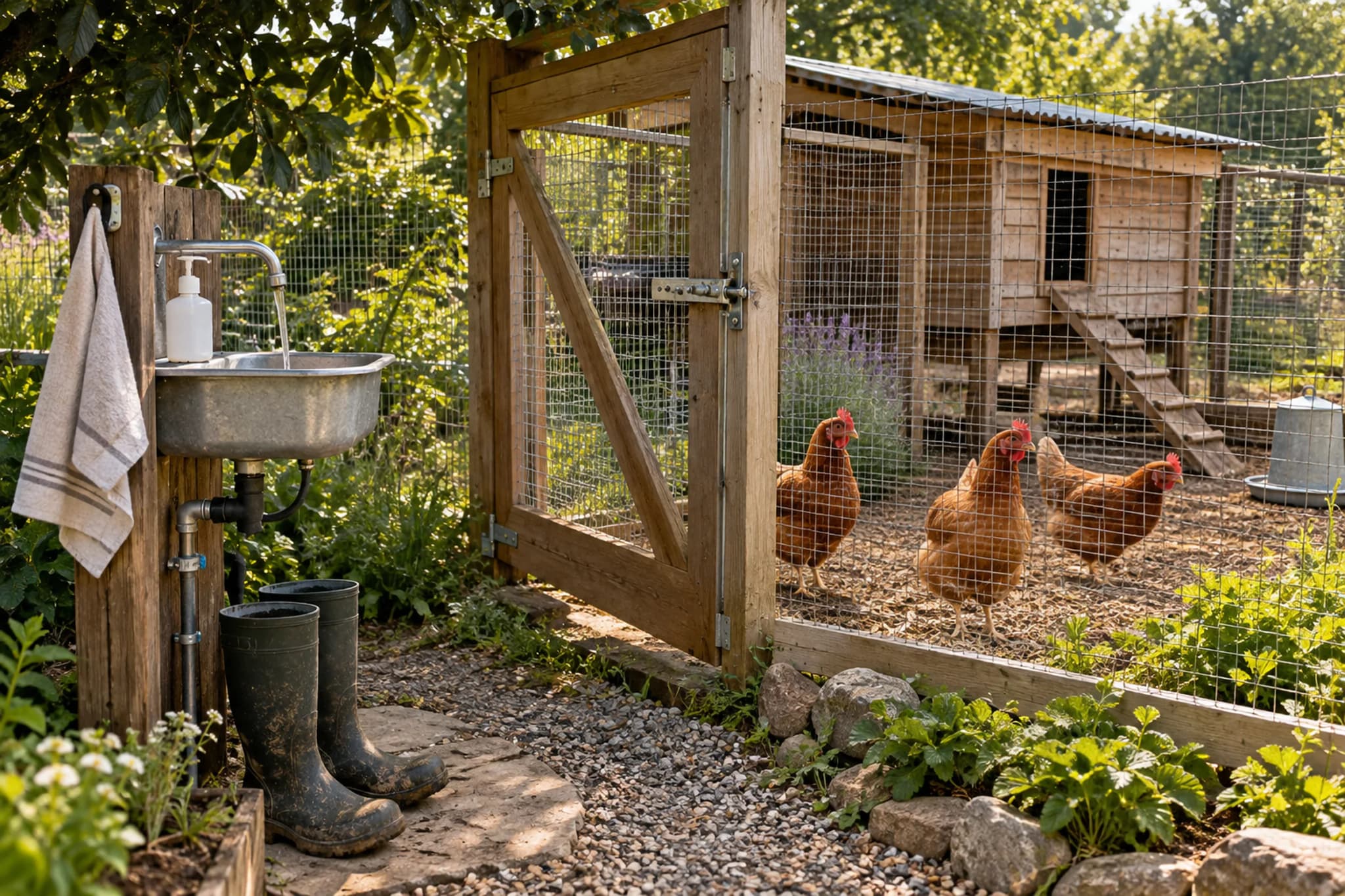
Then there's your own health. Chickens can carry Salmonella germs even when they look clean and healthy. The US Centers for Disease Control says to wash your hands after touching birds, eggs or anything in their pen, and not to kiss or snuggle them.
Children under 5 shouldn't handle chicks or ducklings at all, because germs make young kids sick more easily.
Is Raising Off-Grid Livestock Right For You?
 Illustrative image
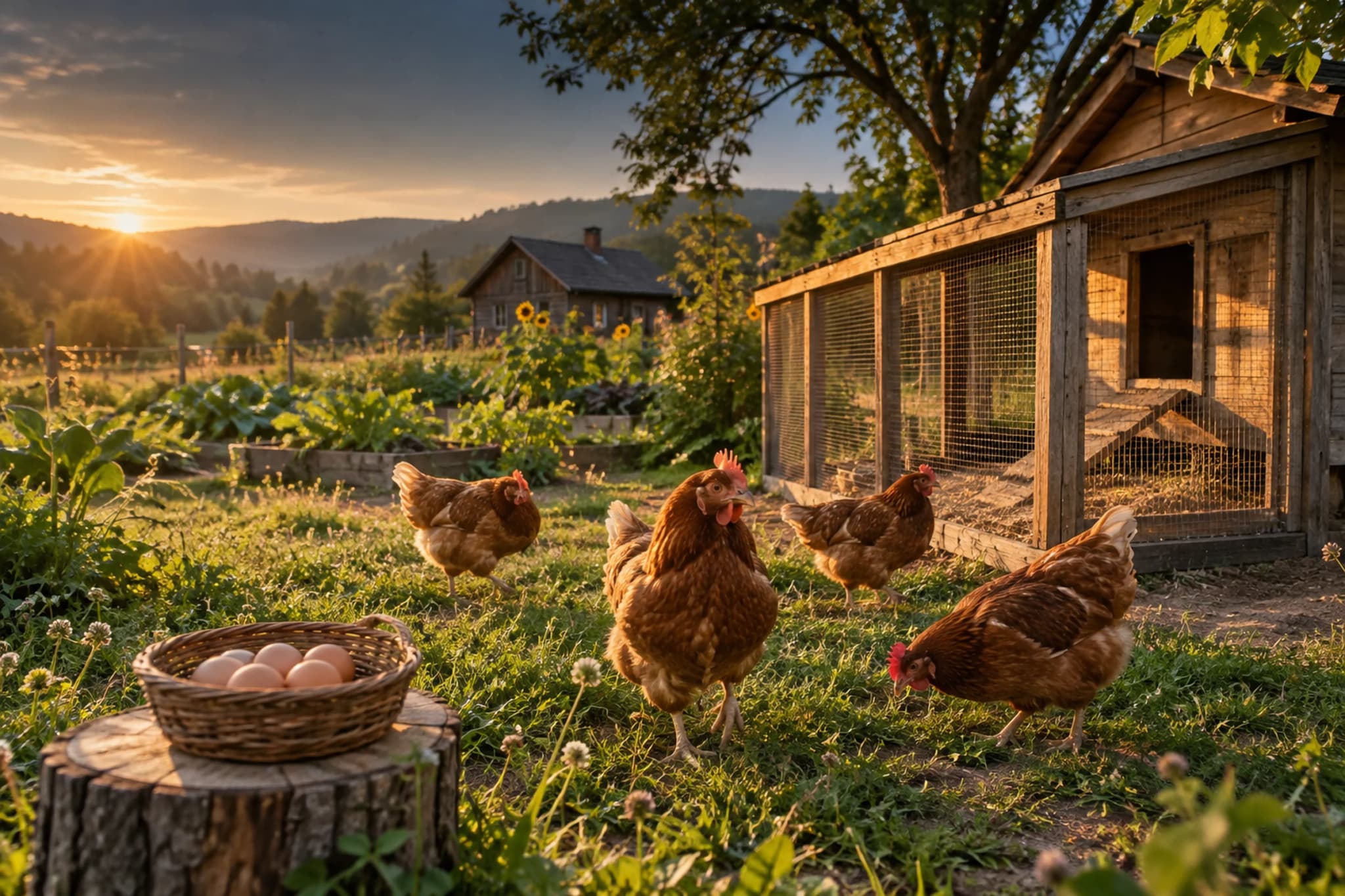
Animals can make an off-grid homestead feel alive. Fresh eggs in the morning, a goat yelling for breakfast, manure feeding next year's garden. Those are the real benefits, and they're worth a lot.
But animals are a promise, not a project. You can switch off a solar panel and go on holiday, but a goat still needs milking twice a day.
If you want to raise your own food, start with three or four hens. They're the easiest way to get used to the daily routine.
Once that feels easy, add rabbits or a pair of goats. Many off-gridders also go foraging for wild food on their land, which pairs well with a small flock and a garden.
Sources
- University of Maryland Extension, Raising your home chicken flock
- Daly et al. 2021, PNAS, Herded and hunted goat genomes from the dawn of domestication in the Zagros
- NC State Extension, Picking up chicks: a how-to guide for your spring chickens
- Penn State Extension, Successfully raising a small flock of laying chickens
- Texas A&M AgriLife, Egg production in backyard flocks
- University of Georgia Extension, Raising backyard chickens (C969)
- Michigan State University 4-H, Rabbit Tracks: breeding techniques
- Mississippi State University Extension, Dairy goats (P4120)
- Farming UK, Vets issue must-know facts on keeping goats
- University of Wisconsin Extension, Goat facilities (A3858-05)
- Penn State Extension, Preserving soup safely
- UK government, APHA warns not to feed kitchen scraps to farm animals
- EUR-Lex, Regulation (EC) No 1069/2009 on animal by-products, Article 11
- USDA APHIS, Human food waste and swine
- Countryside Alliance, Defra announces new requirements for keepers of poultry
- Cornell Small Farms, Producer/grower 1,000 bird limit exemption
- North Dakota Department of Agriculture, Poultry exemption brochure
- CDC, Backyard poultry and Salmonella flyer
Hard Words
| Term | What it means |
|---|---|
| Livestock | Animals kept on a farm or homestead for food, milk, wool or work. |
| Red junglefowl | The wild forest bird from Southeast Asia that all chickens come from. |
| Hen | A female chicken. Hens lay eggs, with or without a rooster around. |
| Rooster | A male chicken. Only needed if you want eggs that can hatch into chicks. |
| Doe | A female rabbit or goat. |
| Kit | A baby rabbit. |
| Herd animal | An animal that needs others of its kind around to feel safe, like goats. |
| Zoning | Local rules about what you're allowed to do on a piece of land, including which animals you may keep. |
| Salmonella | Germs that animals like chickens can carry without looking sick, and that can make people ill. |
Common Questions
What is the best livestock for beginners off the grid?
Chickens are the best first animal for most people. They're cheap to start, need little space, and give eggs almost every day. Rabbits are a quiet second choice, and goats suit people who want milk and can build strong fences. Start with a few animals, learn the daily routine, then grow slowly once caring for them feels easy.
Do hens need a rooster to lay eggs?
No. Hens lay eggs without a rooster. A rooster is only needed if you want fertilised eggs that can hatch into chicks. Many towns that allow backyard hens ban roosters because they crow loudly early in the morning, so most small flocks are hens only. Check your local rules before getting any birds.
How many eggs does a backyard hen lay?
A good laying breed can lay up to around 260 eggs a year when young. Hens start laying at about four to six months old and lay best in their first laying year or two, then gradually less. Egg production also drops in winter because hens need long days to keep laying. Heritage breeds usually lay fewer eggs than commercial laying breeds.
Can you keep just one goat?
No, you shouldn't. Goats are herd animals and a goat kept alone tends to suffer from stress and loneliness. Vets in the UK say two goats is the absolute minimum. If you only want one milking goat, keep a second goat, such as a young one or a wether, as company. Strong fencing is also essential.
How much milk does a dairy goat give?
A good dairy goat often gives about half a gallon to a gallon a day, roughly 2 to 4 litres, depending on breed, feed and the individual goat. A goat only produces milk after giving birth, and the amount changes through the season. Two goats bred at different times give a steadier supply than one.
Do I need permission to keep chickens or goats?
Often, yes. Zoning and animal rules differ by country and town. Many places limit flock size, ban roosters, or don't allow goats near houses. Some countries, like Great Britain, require you to register poultry even if you keep just one bird. Check with your local council, planning office or agriculture department before you buy animals.
Are backyard chickens a health risk?
They can carry Salmonella germs even when they look healthy and clean. Health agencies like the US CDC advise washing hands with soap and water after touching birds, eggs or their pen, not kissing or snuggling birds, and keeping children under 5 away from chicks and ducklings. With those habits, the risk stays low.