

The Short Answer
Off-grid waste management is how a home deals with its own waste when no sewer pipe and no garbage truck come by. It covers four things, including toilet waste, used water from sinks and showers, food and garden scraps, and everything else you throw away.
Most off grid homes handle toilet waste with a buried tank and drainfield or with composting toilets, two very different treatment solutions designed for the same job. Greywater can water the garden, scraps become compost, and trash gets sorted, reused or hauled away for disposal. The right mix of options depends on your property, your water and the local requirements.
Where Waste Goes When No Truck Comes
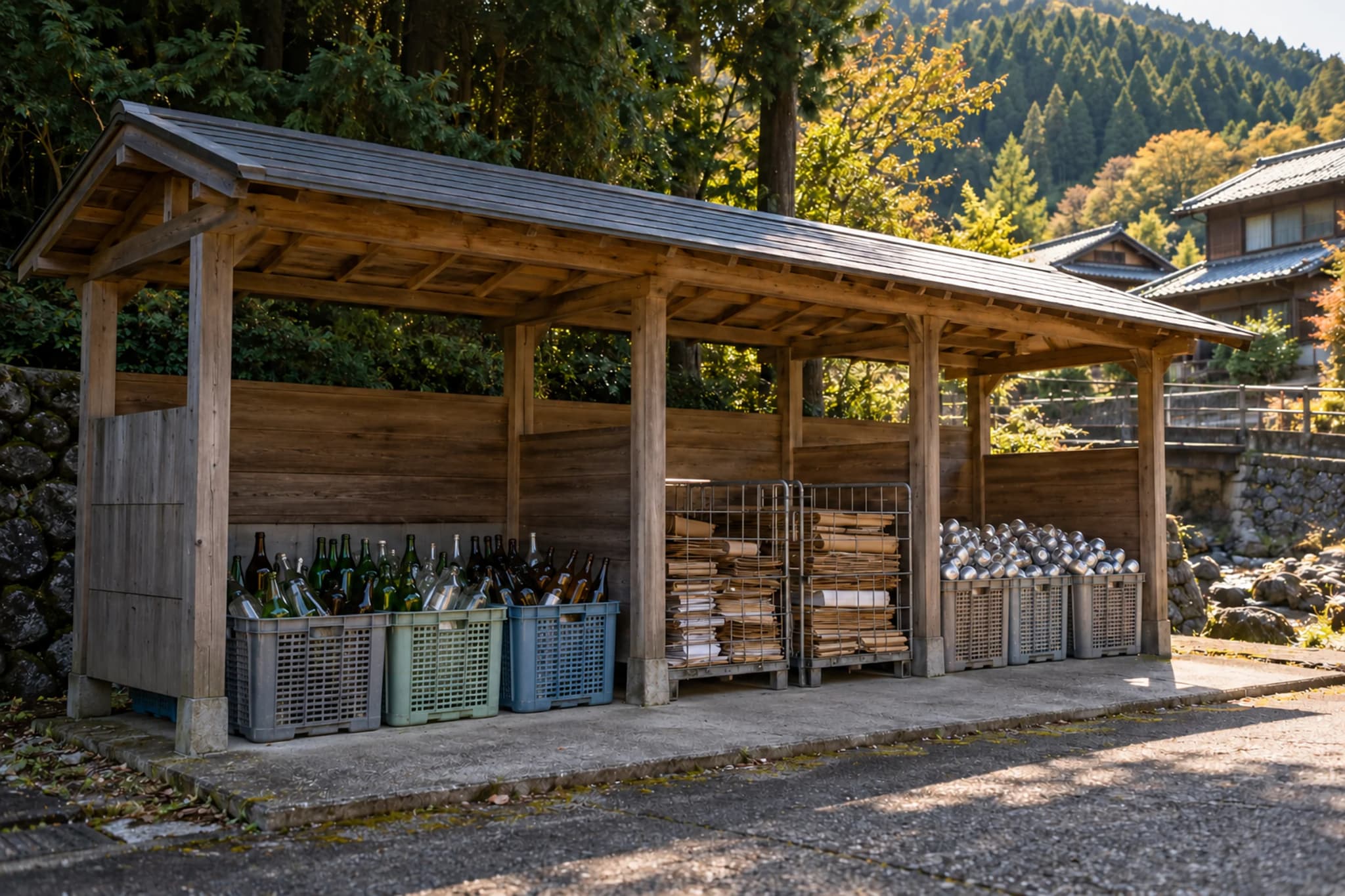
In the mountains of Japan there is a village with no garbage trucks at all. Kamikatsu has about 1,600 people spread over 55 small hamlets, and buying trucks to reach them all was too expensive. So people bring their own sorted waste to one station, and it goes into 45 different types.
That sounds strict. But in 2016 the village recycled 81% of its waste.
Toilet waste has its own story, and it begins with a very smelly problem. Around the 1860s, a Frenchman named Mouras got tired of paying to empty his cesspool, which is a pit that collects sewage. He piped it to the street drain and put a screen in the way to hold back the solids.
Years later he had it opened. The solids he expected were mostly gone, broken down by something invisible. That something was bacteria, and his tank was one of the first septic tanks.
Today about 1 in 5 homes in the United States treat their own sewage on their own property, without a municipal sewer. So managing your own waste is not strange. Millions of people already do it.
What's Happening Inside A Septic Tank And A Compost Pile
Here is the secret behind off grid waste. Tiny living things do most of the work.
A septic tank is a big buried box. Wastewater from the house flows in, and the heavy part sinks to the bottom as sludge, while oil and grease float to the top as scum. In between, the liquid flows on to a drainfield. Scientists call the tank's helpers anaerobic bacteria. That just means they work without air, slowly eating the solids like a cleanup crew in the dark.
The drainfield is a set of shallow trenches in dry soil. The soil acts like a giant natural filter, and this treatment process removes many pollutants, including germs, viruses and nutrients, before the water reaches the groundwater.
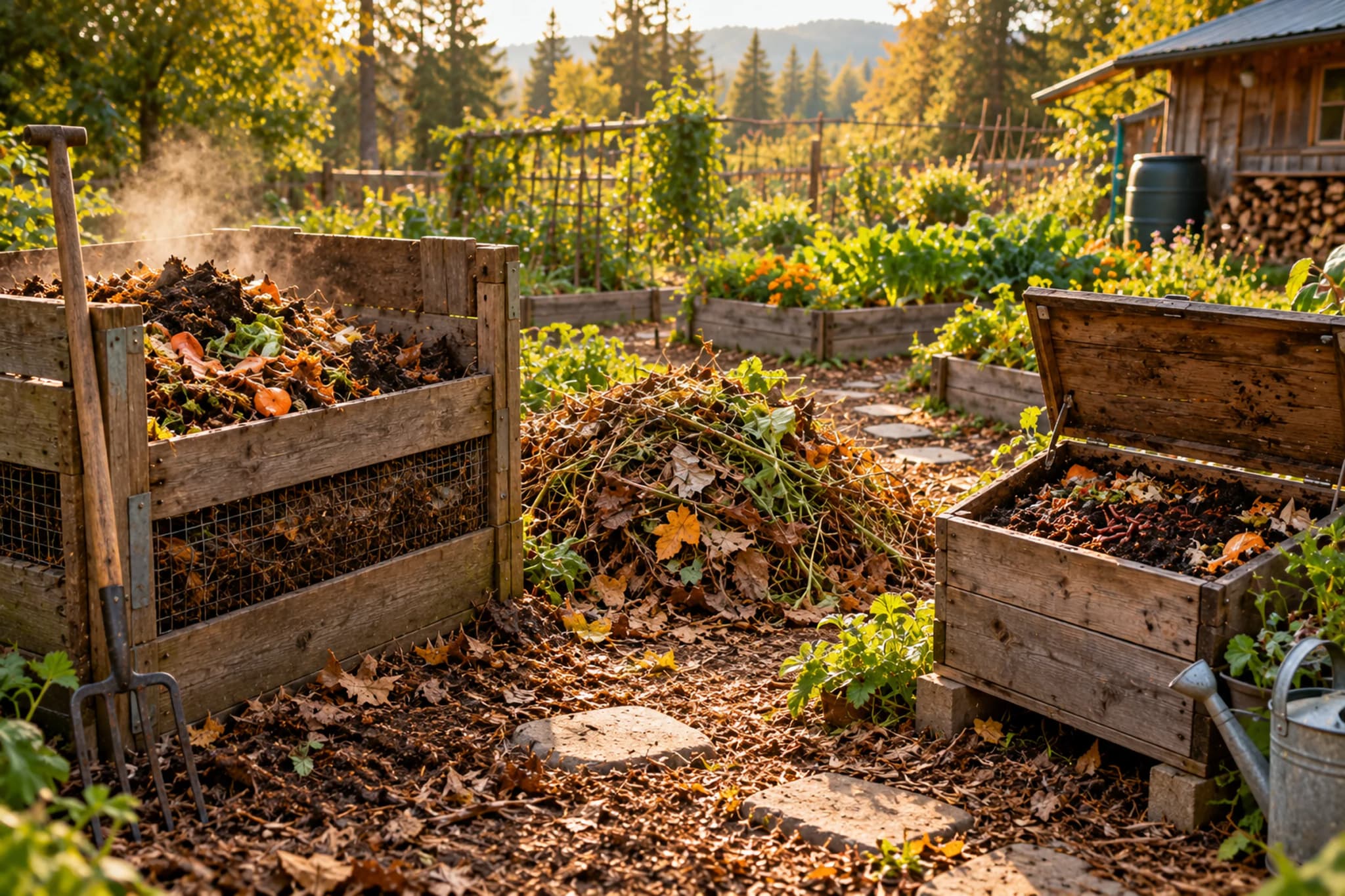
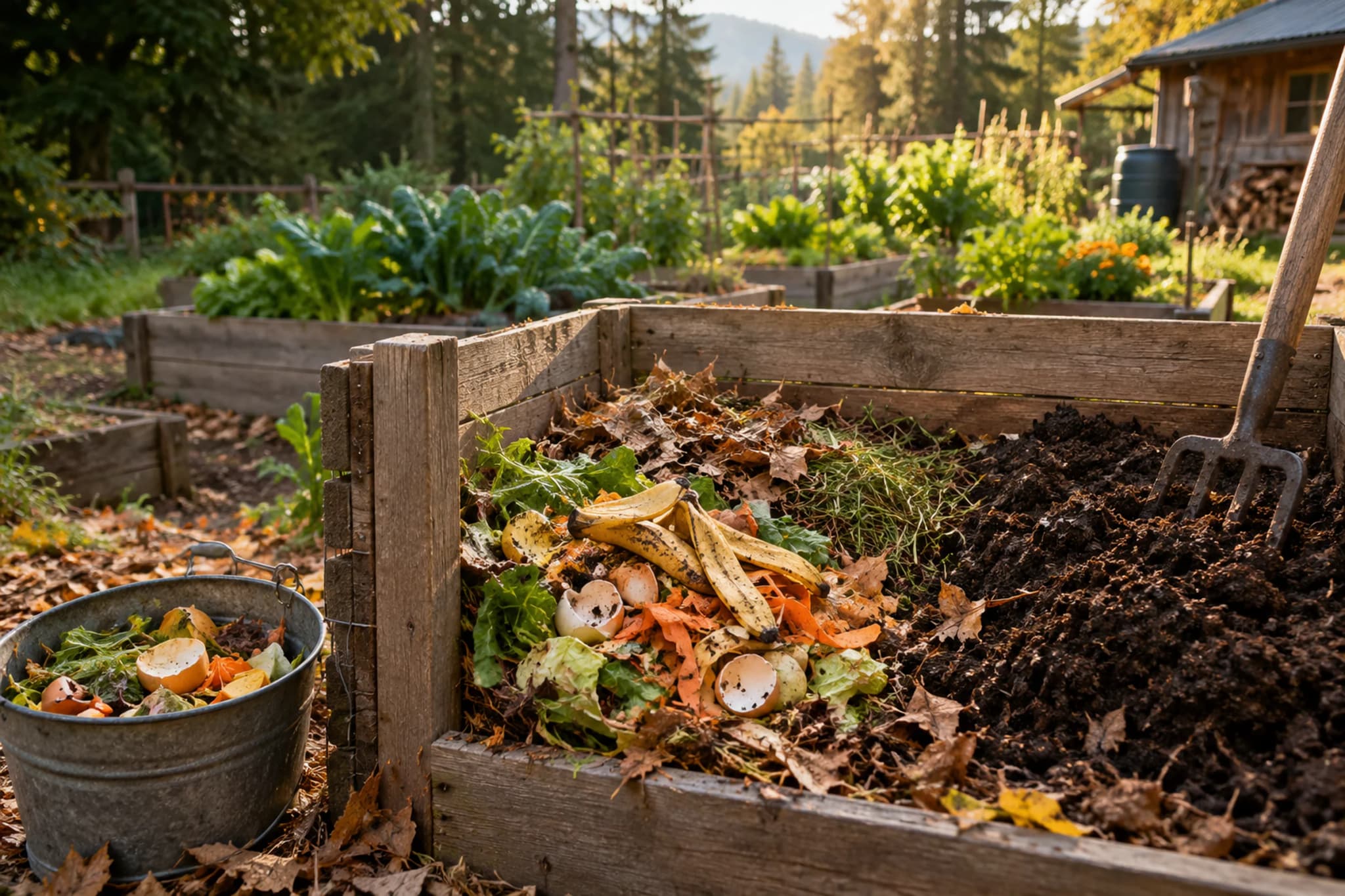
A compost pile works the other way round, because its bacteria need air. Scientists call this an aerobic process. Feed them a mix of greens, like vegetable scraps and grass, and browns, like dry leaves and cardboard, and they get so busy that the middle of the pile can reach 130 to 160 °F (55 to 70 °C). That heat kills many germs and weed seeds.
Composting toilets use the same trick for human waste. They are designed to work with no water, no flush and no sewer access.
The Basics: Four Kinds Of Waste And The Options In Off Grid Living
It helps to split waste into four streams, because each one has a different job and a different risk.
| Waste stream | What it is | Common off-grid options |
|---|---|---|
| Toilet waste (blackwater) | Toilet waste, plus any water used to flush it | Buried tank and drainfield, composting toilet |
| Greywater | Used water from showers, baths, bathroom sinks and the washing machine | Laundry-to-landscape line, mulch basins, or into the tank |
| Food and garden scraps | Peels, coffee grounds, leaves, grass | Compost pile, worm bin |
| Trash | Packaging, metal, glass, batteries, broken things | Reduce, reuse, sort and haul to a transfer station |
Toilet waste is the one that can make people sick, so it gets the most rules and standards. Greywater is much cleaner, and US guides say it makes up half or more of a home's wastewater. Scraps are the easy win. And trash is the stream most people forget until the pile grows.
Off-Grid Toilet Treatment Systems: Septic Systems Or Composting Toilets
The two main options off the grid work in very different ways.
A tank and drainfield feels like traditional plumbing in town. You pull the handle, and everything goes underground. But it needs room on your property, the right soil and a lot of water. In many locations it also needs a soil test before building begins.
Composting toilets are designed to use little or no water, which makes them a good, environment friendly alternative where water is scarce. They were first sold in Sweden, and the EPA says they can shrink waste to 10 to 30% of its original size. A fan pulls air through, and you add a bulking material such as sawdust after each use. Some models are small boxes, while others offer a big chamber in the basement with an access door for taking out the finished compost.
That fan runs on electricity, and some models also heat the chamber with solar or electric heat. Off the grid, that power comes from your own system, so add the toilet when you count your daily power use.
Want to know the surprising part? A composting toilet usually never gets hot enough to kill germs fast. Time does that work instead, which is why the finished material has rules about where it can go. Many units also separate urine into its own container, because a person makes about 500 litres of it a year, and keeping it out leaves the rest drier with less smell.
There is a catch with composting toilets. You still have greywater, the wastewater from the shower and sink, so the EPA says they usually need a greywater system too.
Our guide to septic systems and composting toilets compares both solutions side by side, with costs and what never goes down the drain.
Off Grid Wastewater Systems: Greywater From Shower To Garden
Greywater is the cleaner kind of wastewater: used water from showers, baths, bathroom sinks and the washing machine. Toilet wastewater is blackwater, and kitchen sink water is usually kept out too, because of food bits and grease.
A typical US household of 2.6 people makes about 90 gallons (340 litres) of greywater a day. That is a lot of wastewater to throw away. Sending it to fruit trees instead of the tank waters the garden, saves resources and puts less load on the wastewater system.
The simplest setup is laundry to landscape. The washing machine's own pump pushes water through a pipe to mulch basins, which are holes filled with wood chips around the plants. A three-way valve lets you send the water back to the tank or sewer when you need to.
Two rules matter most to ensure it stays safe. Never store untreated greywater longer than 24 hours, because it goes smelly. And never spray it, because the droplets can carry germs.
Read greywater and reuse for how to set one up and which soaps your plants can take.
From Scraps To Soil: Composting
Food and yard waste made up about a third of everything Americans threw away in 2018. Off the grid, that third does not need to leave your land at all.
A good backyard pile turns kitchen scraps and leaves into dark, crumbly soil in about 3 to 5 months, and it provides resources the garden would otherwise need to buy. The EPA's tip is to use 2 to 3 times as many browns as greens, keep the pile as damp as a wrung-out sponge, and turn it now and then.
Keep meat, dairy products, fat and pet waste out, because they attract animals and can spread germs. Worm bins offer another effective option, and they turn scraps into compost in 3 to 6 months.
Our home composting guide explains greens and browns, hot piles and worm bins, and how to fix a smelly heap.
Off-Grid Trash, Recycling And Disposal: Sort, Reuse And Haul Away
Here is a number that surprised me. In 2018 each American made about 4.9 pounds (2.2 kg) of trash a day, counting homes and businesses. For a family of four, that adds up to more than 3 tonnes a year.
With no truck coming, many people are tempted to burn it. Please don't, because the environmental cost is high. Burn barrels burn too cool with too little air, and the EPA has called backyard burning one of the largest sources of dioxins, which are poisons that settle on crops and get into food. Many places ban it.
A better, more sustainable plan follows the waste hierarchy, which the EPA ranks from best to worst for the environment. Reduce the products and packaging that come in, pick products that last, reuse what you can, then recycle and compost. Only the rest goes to disposal at the transfer station, which is a local site where you drop off sorted trash and recycling.
Some waste needs special care and separate containers, including batteries, motor oil and paint. Lithium-ion batteries can cause fires in trash trucks and recycling plants, so they go to a battery drop-off, never in the trash.
Off-grid recycling and reuse shows how to sort, store and haul, and how one village shrank its trash pile.
Permits, Installation And Maintenance Requirements
Waste is the part of the off-grid lifestyle with the most rules, and for good reason. Sewage in the wrong place can poison a well, so building codes and health standards are strict.
Before installation starts, check with your local health department. Many places require a soil test before a tank goes in, and a permit for any change to plumbing. Some US states only allow composting toilets with NSF/ANSI 41 certification, a standard that tests how well a unit works.
Good maintenance keeps a system working for decades and helps ensure nobody gets sick, and the maintenance list is short. The EPA says to:
- Inspect the system at least every 3 years.
- Pump the tank every 3 to 5 years.
- Flush only toilet paper and what comes out of people. No wipes, grease, diapers or cat litter.
- Keep cars and heavy machines off the drainfield.
Skip that maintenance, and the solids can flow into the drainfield and clog it. Cornell University says replacing a failed system can cost $5,000 to $15,000 or more.
Going Off-Grid With Waste: Practical Challenges For Off Grid Cabins And Homesteads
So how do you choose the right solutions? Start with four practical questions, whether you are building a weekend cabin or a family homestead.
How much water do you have? A traditional flush toilet needs a steady flow, while composting toilets suit dry land and small rain tanks.
What is your soil like? Drainfields need soil on your property that soaks water up, not solid rock or clay that stays wet.
Who will handle the maintenance? A compost pile and a composting toilet need a few minutes of maintenance every week, and a buried tank needs a pump truck every few years.
What are the local requirements? Ask before you dig, because the requirements differ a lot depending on where you live.
Why People Pick Sustainable Waste Management
Managing your own waste sounds like the least fun part of living off the grid. But it is also where you can see the whole loop.
Scraps become soil, the soil grows food, and shower water feeds the fruit trees. Each of those is a resource you no longer throw away. Even the trash pile shrinks once you notice what comes in. That is the most sustainable kind of waste management there is: less goes out for disposal because more gets used again.
The trade-off is that the job is yours, and so is the challenge of keeping it sustainable year after year. Done well, though, it is quiet, cheap and safe, it keeps the environment around your home clean, and the garden thanks you for it.
Sources
- EPA: How your septic system works
- EPA: How to care for your septic system
- EPA: 2023 Decentralized Wastewater MOU (about 1 in 5 US homes)
- EPA: Water Efficiency Technology Fact Sheet, Composting Toilets (1999)
- EcoSanRes: Urine diversion factsheet
- H. Montgomerie Neilson, Sydney University Engineering Society, 1908
- Cornell Cooperative Extension: Septic system failure
- UC Cooperative Extension: Use of graywater in urban landscapes
- Greywater Action: Laundry to landscape
- Arizona Administrative Code R18-9-D701, greywater general permit
- EPA: Composting at home
- EPA: National overview, facts and figures on materials, wastes and recycling
- EPA archive: Backyard burning and human health
- EPA: Waste management hierarchy
- EPA: Used lithium-ion batteries
- Nippon.com: The Kamikatsu zero waste campaign
Hard Words
| Word | What it means |
|---|---|
| Septic tank | A buried box where waste from the house settles and bacteria slowly break it down. |
| Drainfield | Shallow trenches in the soil that take the water from the tank, where the soil cleans it. |
| Sludge | The heavy part that sinks to the bottom of the tank. |
| Scum | The layer of oil and grease that floats on top in the tank. |
| Composting toilet | A toilet that uses little or no water and lets waste break down with air, time and a bulking material. |
| Greywater | Used water from showers, baths, bathroom sinks and washing machines. |
| Blackwater | Water that carries human waste. |
| Transfer station | A local site where you drop off sorted trash and recycling. |
Common Questions
What is off-grid waste management?
It is how a home deals with its own toilet waste, used water, food scraps and trash without a town sewer or garbage pickup. Most homes use a buried tank or a composting toilet, send greywater to the garden, compost scraps and haul sorted trash to a transfer station.
What is the best off-grid toilet?
There is no single best one. A flush toilet on a tank and drainfield feels normal but needs water, room and the right soil. A composting toilet needs almost no water and suits dry land, but you empty and care for it yourself.
Do composting toilets smell?
A well-run one should not smell much. A fan pulls air through, and many models keep urine apart, which keeps everything drier. Smell usually means it is too wet or needs more bulking material.
Can you use greywater on a vegetable garden?
Often not on the parts you eat. Arizona, for example, does not allow greywater on the soil surface around food plants, except trees and shrubs whose edible part never touches it, so many people send it to fruit trees and shrubs instead. Check your local rules, and never store it longer than 24 hours.
Is it legal to burn trash off the grid?
In many places it is banned or restricted by environmental rules. Burn barrels give off dioxins, which are poisons that can end up in food, so sorting, reusing and hauling is the safer choice.
How often do you pump a septic tank?
The EPA says most tanks need pumping every 3 to 5 years, with an inspection at least every 3 years.