
The Short Answer
Off-grid power is electricity you make and keep yourself, with no line from the power company. Off grid electrical power systems are designed to catch energy from the sun, the wind, flowing water or wood, hold it for later, and convert it into the kind your lights and fridge can work with.
Every complete setup always includes the same main parts, each with one function: something that makes the current, a charge controller, a battery bank and an inverter. A generator often waits in the shed as backup.
Catching Energy From The Sun, Wind, Water And Wood
Here is a number that surprised me. In 2023, about 666 million people around the world still had no access to electricity at home, the United Nations energy report says. And off-grid solar had already brought it to more than 560 million people by that year.
For millions of families, making their own power is the only way the lights come on.
People have caught energy from nature for a very long time. Paddle wheels on rivers turned millstones, and until the mid-1800s, biomass, meaning things that once grew, like wood, was the main energy source in the United States. In 1882 the first US hydroelectric plant to sell electricity opened on the Fox River in Wisconsin.
Modern technology shrinks those tricks down to a system connected to nothing but a single house or a cabin in remote areas.
What's Inside A Complete Off-Grid Power System
Think of an off-grid system like a small water park for electricity. Something fills it, something holds it, and something lets it out at a safe speed.
The maker. Solar panels, a wind turbine or a water turbine produce the current. A solar cell, also called PV for photovoltaic, turns sunlight straight into current with no moving parts at all. And the fuel is free: sunshine, wind and water cost nothing.
The charge controller. Think of it as a gatekeeper. It lets charge flow into the bank and stops it before it gets too full. Read what a charge controller does.
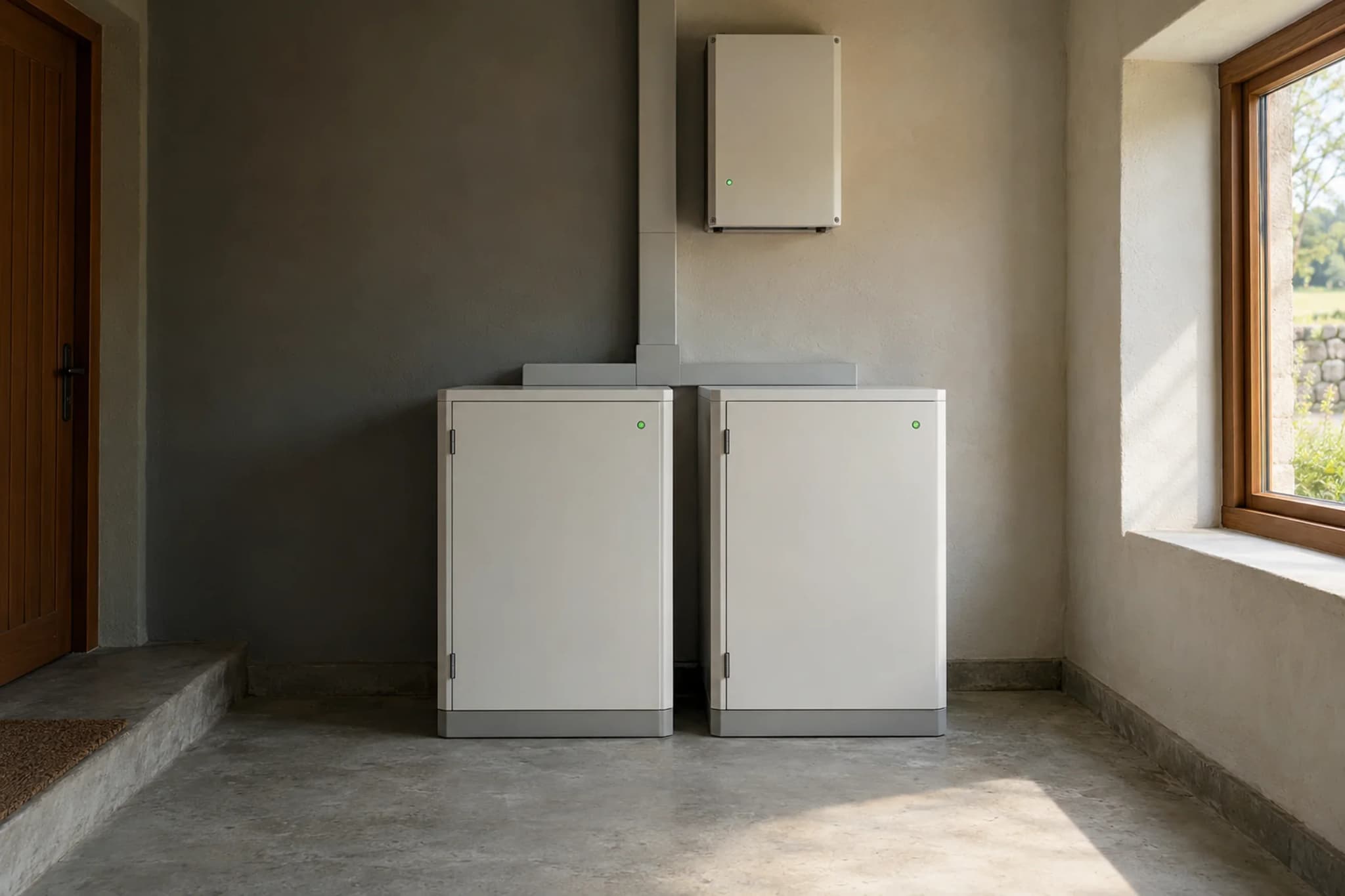
The battery bank. This keeps power for later, so the lights stay on after dark and on calm days. Our guide to how home batteries work shows what happens inside and how capacity, the amount it can hold, is measured. Cables and fuses have their own pages in our battery bank guides.
The inverter. The array and batteries give DC, a flow that only goes one way, while most appliances run on AC, which flips back and forth. It is a translator box that changes one into the other. Here is how DC becomes AC in your home.
Safety gear and meters. Fuses, switches and a meter that shows how full the bank is. The US Department of Energy lists these as additional equipment a stand-alone system requires. The meter also shows your production, so you find poor performance early, and you learn by experience: after one winter you know what your system can really do.
Five Off-Grid Power Solutions And How To Choose
There is no single best option: the right energy source is the one your property and location give you. Here is the quick menu, and our page on the five ways to power a house without the grid goes through each one.
| Option | Works best when | Watch out for |
|---|---|---|
| Solar panels | You have a sunny roof or yard | No output after dark, less in winter |
| Wind turbine | You have open land and steady wind | Calm days, tall tower needed |
| Water turbine | A stream with a drop runs across your land | Most land has no stream |
| Wood and pellets | You need heat and have a wood supply | Mostly heat, not electricity |
| Generator | You need backup on bad weeks | Fuel, noise and upkeep |
The Advantages Of Off-Grid Solar Systems
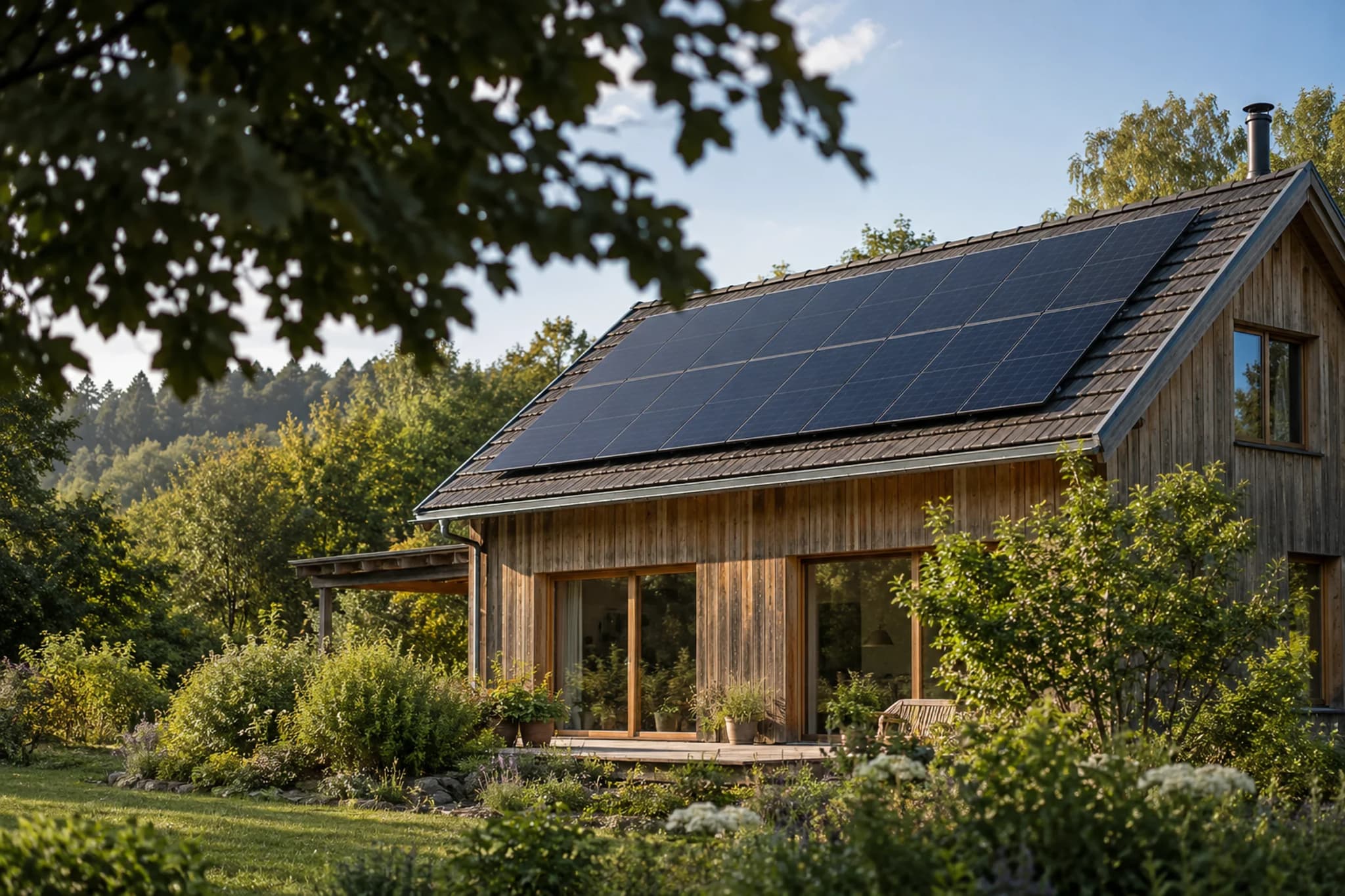
Solar is quiet, it has no moving parts, and it works almost anywhere the sun shines. That is why so many homeowners pick an off-grid solar power system first, from tiny cabins to whole farmhouses. Of the five, it offers the easiest installation, and ready-made off grid solar kits are widely available with the wiring and boxes in one package. Start with how off-grid solar works.
Wind, Micro Hydro Power And Wood
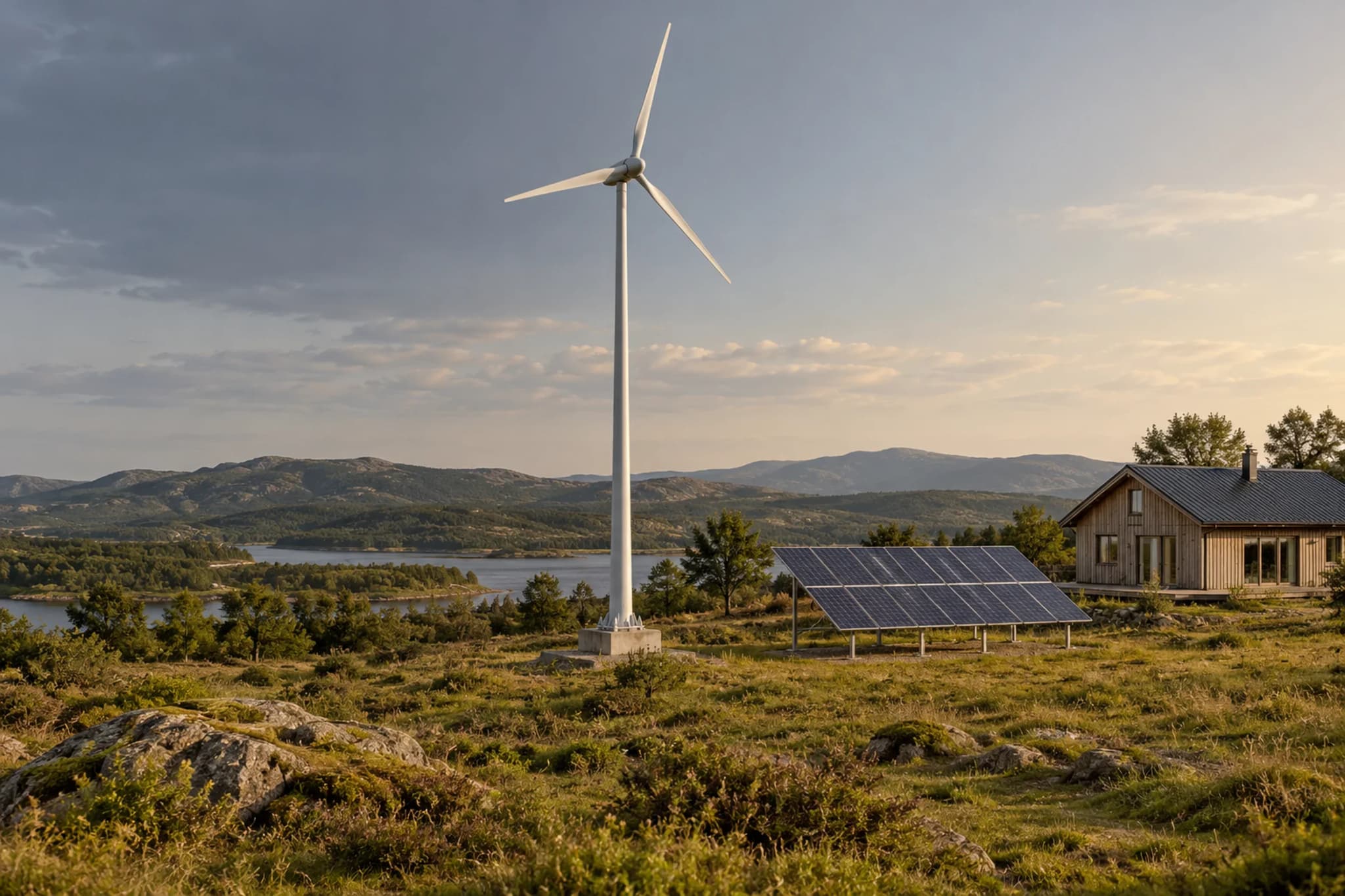
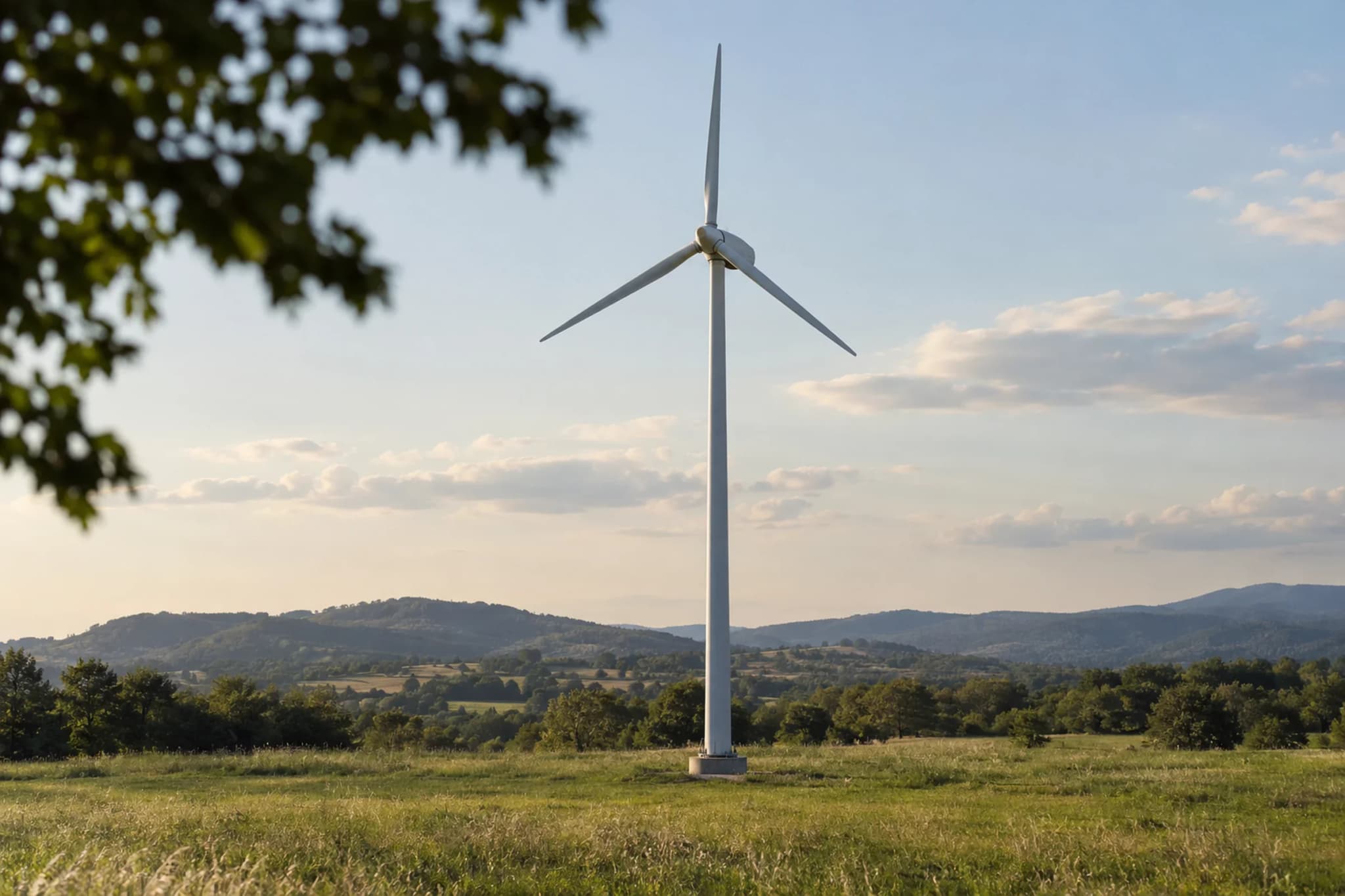
Wind. A turbine keeps spinning after sunset, and height matters a lot. The Department of Energy gives an example: raising a 10-kilowatt turbine from a 60-foot to a 100-foot tower adds about 10% to the cost but can produce 25% more. Our wind guide explains how to check your site first.
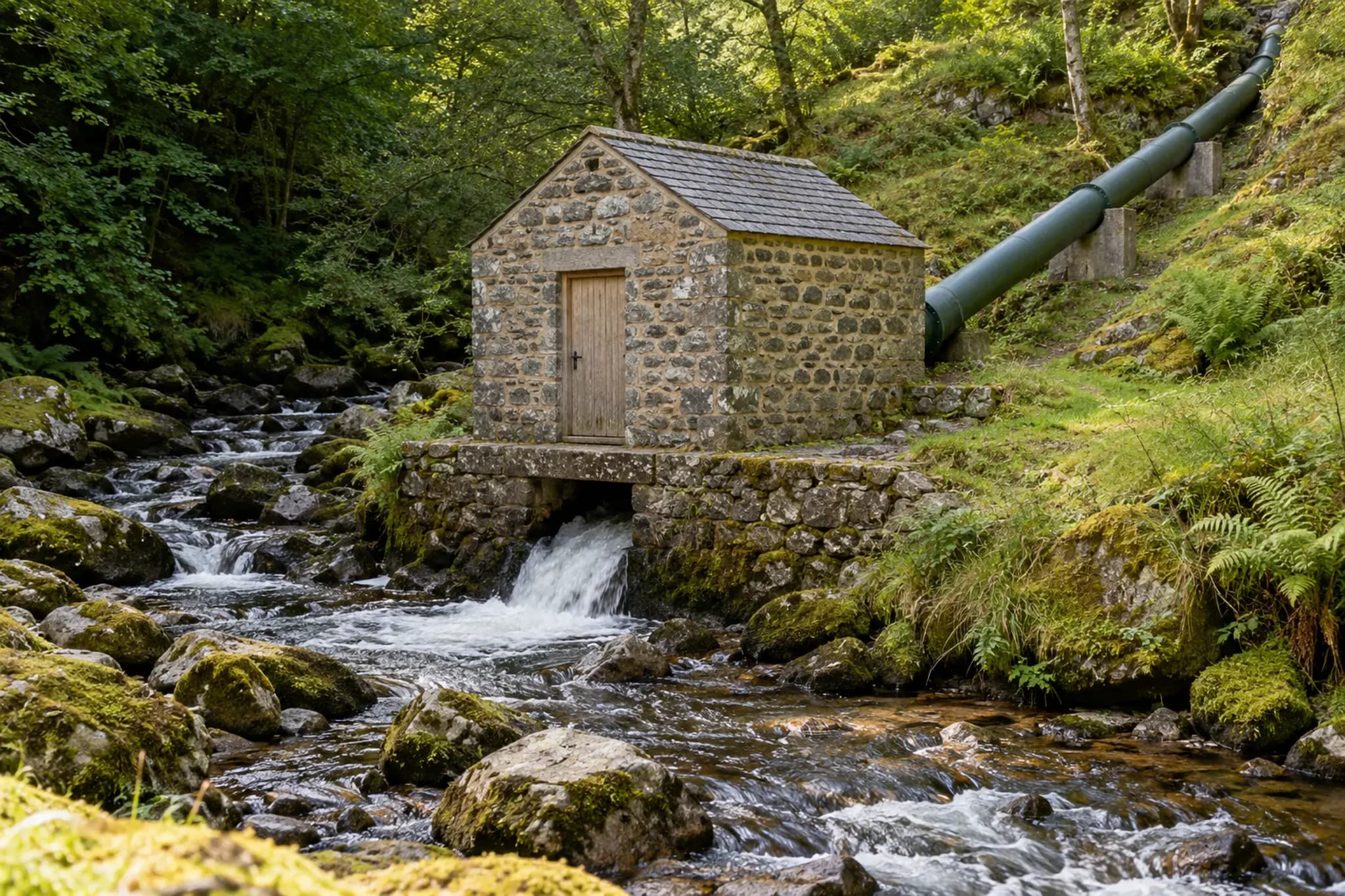
Water. A stream that runs downhill across your land may be the most reliable renewable source of all, because it flows day and night. A 10-kilowatt micro hydro power system can usually run a large house, the Department of Energy says. What it can provide depends on how much water flows and how far it drops. Read how home hydro works.
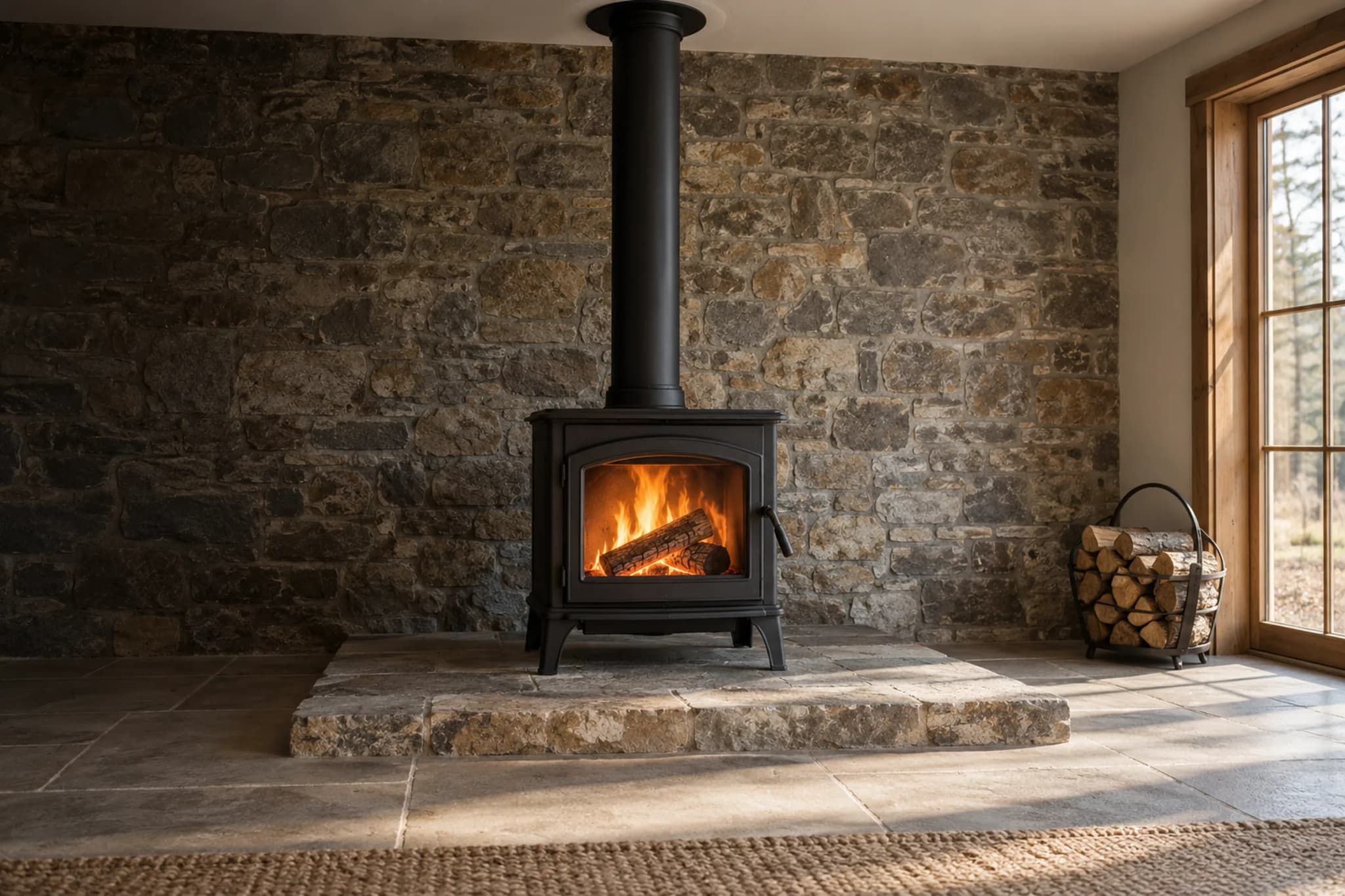
Wood. Wood is stored sunlight, and a stove lets it back out as heat. Off the grid, wood and pellets mostly warm the house and the water, not the lights. See how biomass heats a home.
Backup Generators
A fuel generator is the safety net for the darkest, calmest weeks. It brings noise, fumes and an environmental cost, but it keeps your storage from running flat.
Why Most Homes Mix Two Sources
The sun and the wind take turns. In much of the United States, wind is weak in summer when the sun shines longest, and strong in winter when there is less sunlight, the Department of Energy explains. So a house with both gets a steady supply more of the year.
That is called a hybrid system. When neither source is working, the bank takes over, and when it gets low, a generator can start and fill it back up. Adding a generator can even allow a smaller bank and fewer panels.
Compare all three in hydro vs solar vs wind, see how wind and solar hybrid systems share one set of batteries, or work out how long a generator runs on a tank.
How Big Should Your Off-Grid Power System Be?
Begin with your energy needs, not with the hardware. An average US home used about 10,791 kWh in 2022, or about 899 kWh a month, the US Energy Information Administration says. That is roughly 30 kWh a day.
A kilowatt-hour (kWh) is just the unit your meter counts in. One kWh lights a 100 W bulb for 10 hours.
Most off-grid homes typically get by on much less, because every kWh has to be made on site. Efficiency comes first: a fridge or bulb with a lower demand means a smaller system, so reduce consumption before you buy anything. Lower usage may be the cheapest upgrade there is. Our guide to how many watts you use every day helps you count, and you can add up your daily usage appliance by appliance.
Then size each part to your requirements:
- Panels: estimate the panels for a solar power system.
- Storage: banks are usually set to carry the house for one to three days, the Department of Energy says. Size your battery bank.
- Inverter: it must be capable of handling everything operating at the same time, including the high draw during startup. Pick an inverter size.
How Many Solar Panels Do I Need For An Off-Grid System?
It depends on your daily use and how many hours of strong sun your location gets. Divide one by the other, then add some extra for cloudy days. Our guide on how many solar panels you need to go off-grid walks through the math, or begin the step by step route with assessing your power needs.
What Does Off-Grid Power Cost?
There is no single price, because it depends on your site and your equipment. But bringing a power line to a remote house can cost $15,000 to $50,000 per mile, the Department of Energy has said, so in rural areas your own system may be the cheaper choice.
To see a rough range for your own installation, estimate what a system costs. Our guide to the costs of going off-grid compares the options, and there are price pages for home wind systems and home hydro.
Why People Pick Their Own Power
No monthly bill, and lights that stay on when the town has a blackout. That kind of energy independence is the payoff.
Off-Grid Or Grid-Tied?
A grid-tied system keeps its line to the utility, so the grid fills the gaps when your own source rests. Some people who live right next to the grid still go fully off-grid, the Department of Energy notes, because they want independence from the power provider. If you keep the line, read about selling power back to the grid.
The Trade-Off
You become the power company. You pick the hardware, watch the bank, change the fuses and plan for the cloudy, calm week. Get those parts right, and every light switch in the house is fed by sun, wind or water you caught yourself.
Sources
- United Nations: SDG 7 Extended Report 2025
- US EIA: Hydropower explained
- US EIA: Biomass explained
- US EIA: Wind explained
- US EIA: Photovoltaics and electricity
- US EIA: How much electricity does an American home use?
- US DOE: Off-grid or stand-alone renewable energy systems (archived)
- US DOE: Balance-of-system equipment (archived)
- US DOE: Hybrid wind and solar electric systems (archived)
- US DOE: Small wind electric systems (archived)
- US DOE: Microhydropower systems (archived)
- US EPA: End-of-life solar panels
- The Conversation: Stop removing your solar panels early, please
- SlashGear: What is the 20% rule for solar panels?
Hard Words
| Term | What it means |
|---|---|
| Off-grid | Not connected to the utility's lines. |
| Charge controller | A gatekeeper that stops the bank from being overfilled. |
| Inverter | A box that changes DC into AC for your appliances. |
| DC and AC | DC flows one way, like water in a hose. AC flips back and forth many times a second. |
| Kilowatt-hour (kWh) | The unit your meter counts in. One kWh lights a 100 watt bulb for 10 hours. |
| Capacity | How much a battery bank can hold. |
| Hybrid system | A setup with two or more sources, like solar plus wind. |
| Head | How far water drops from the intake to the turbine. |
Common Questions
What is off-grid power?
Electricity you make and keep yourself, with no line from the utility. A solar array or turbine fills the batteries, and the house draws from them.
What is the best off-grid power system for a home?
The one that fits your land and your energy needs. Solar works almost anywhere, wind suits open breezy land, and a stream with a drop is the steadiest. Many families mix two and keep a generator on standby.
How many batteries do I need to live off-grid?
Enough to carry you through the quiet days. The US Department of Energy says banks are usually sized for one to three days, and our calculator works it out from your daily use.
What is the cheapest off-grid power source?
It depends on your site. A good stream makes small hydro cheap to keep going because it works day and night. Elsewhere, solar is usually the ideal place to begin.
What is the 20% rule for solar panels?
A rule of thumb from solar companies, not an official rule: install enough solar to cover about 20% more than your average use. The extra is there for clouds, shade from a tree, and months when you use more.
Why are people getting rid of solar panels?
Researchers in Australia found that many owners upgrade: they swap to newer, more efficient models with a fresh warranty, sometimes when the inverter is due anyway. Others replace a whole set when only a few panels fail. Some come off after only 10 to 12 years, while the US EPA says they typically last more than 25 years.
How do you build an off-grid system?
Count your daily consumption, pick what fits your land, size each part, and add a charge controller and safety gear. Our step-by-step guides walk through each one.