
The Short Answer
To grow your own food off the grid, you need four things working together: a vegetable garden, a few animals, a way to keep the harvest, and some know-how about wild food. The garden gives you crops and fruit, chickens and goats turn grass and scraps into eggs and milk, and a root cellar or a jar of preserves carries summer into winter.
Start small, whether you have a field or a porch. One sunny bed or a few containers you can look after easily teach you more than any book.
Catching Sunlight On Your Plate
Here is a number that surprised me. Near the end of World War II, about 20 million Victory Gardens in the United States grew around 40 percent of the vegetables people ate, the National Park Service says.
So a vegetable garden at home is not a strange hobby. It worked before, at a huge scale, with simple tools, and it can reduce your trips for groceries.
People have been doing it for a very long time. About 10,000 years ago, in the Zagros mountains of what is now Iran, people were already herding goats, researchers found by reading the DNA in old bones. And in 1795 the French government offered a prize of 12,000 francs to anyone who could keep food from rotting. A Paris cook named Nicolas Appert won it in 1810 by sealing food in glass jars and boiling them, the start of canning.
What's Happening In The Ground Under Your Plants
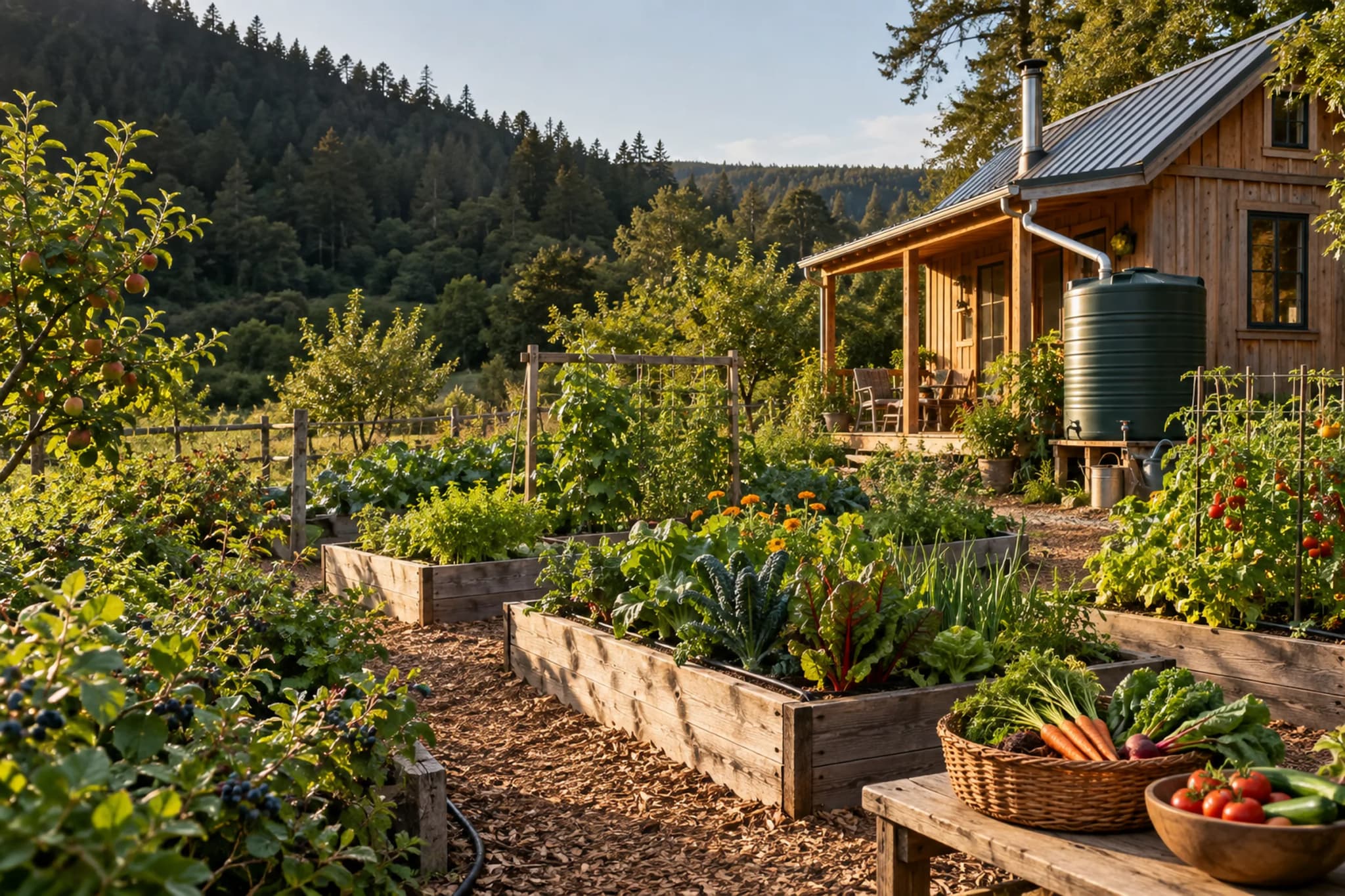
A garden is a sunlight catcher that you can eat. Plants use sunlight, rain and air to build leaves, roots and fruit, and they pull every other nutrient they need out of the soil.
That soil is alive. There are more tiny living things in one teaspoon of healthy soil than there are people on Earth. They break down dead leaves and scraps into organic matter that feeds your plants naturally, with no bag of fertilizer from town.
Most vegetables need 6 to 8 hours of direct sun a day, so choose the sunniest ground you have. Fruiting crops like tomatoes and squash need the most, while leafy crops like lettuce and spinach cope with a bit less. Beds also need about 1 inch (2.5 cm) of water a week, rain included. It is important to get those two right before anything else. Our guide to how an off-grid garden turns sunlight and dirt into dinner explains the soil, the sun and the watering in detail.
Four Ways To Feed Yourself Off The Grid
Every piece of land is different, so most homesteads mix these, depending on what grows well there.
| Way | What it gives you | What it needs |
|---|---|---|
| Garden | Vegetables, fruit, herbs and salad | Sun, rain or a tank, compost and weeding |
| Animals | Eggs, milk and meat | Daily care, a fence, shelter and feed |
| Preserving | Food that lasts through winter | Safe methods and tested recipes |
| Wild food | Berries, greens and mushrooms | 100% sure identification and local rules |
Starting A Vegetable Garden
Growing beds are where most people begin, and they are the most productive way to use a small patch. Potatoes are a good one to know about: they give more calories from the same piece of land than rice or wheat, the International Potato Center reports.
Think about seeds too. Open-pollinated varieties, which includes heirlooms, grow back true from saved seed. Hybrid seeds do not, so you buy new ones each year.
Keeping Animals
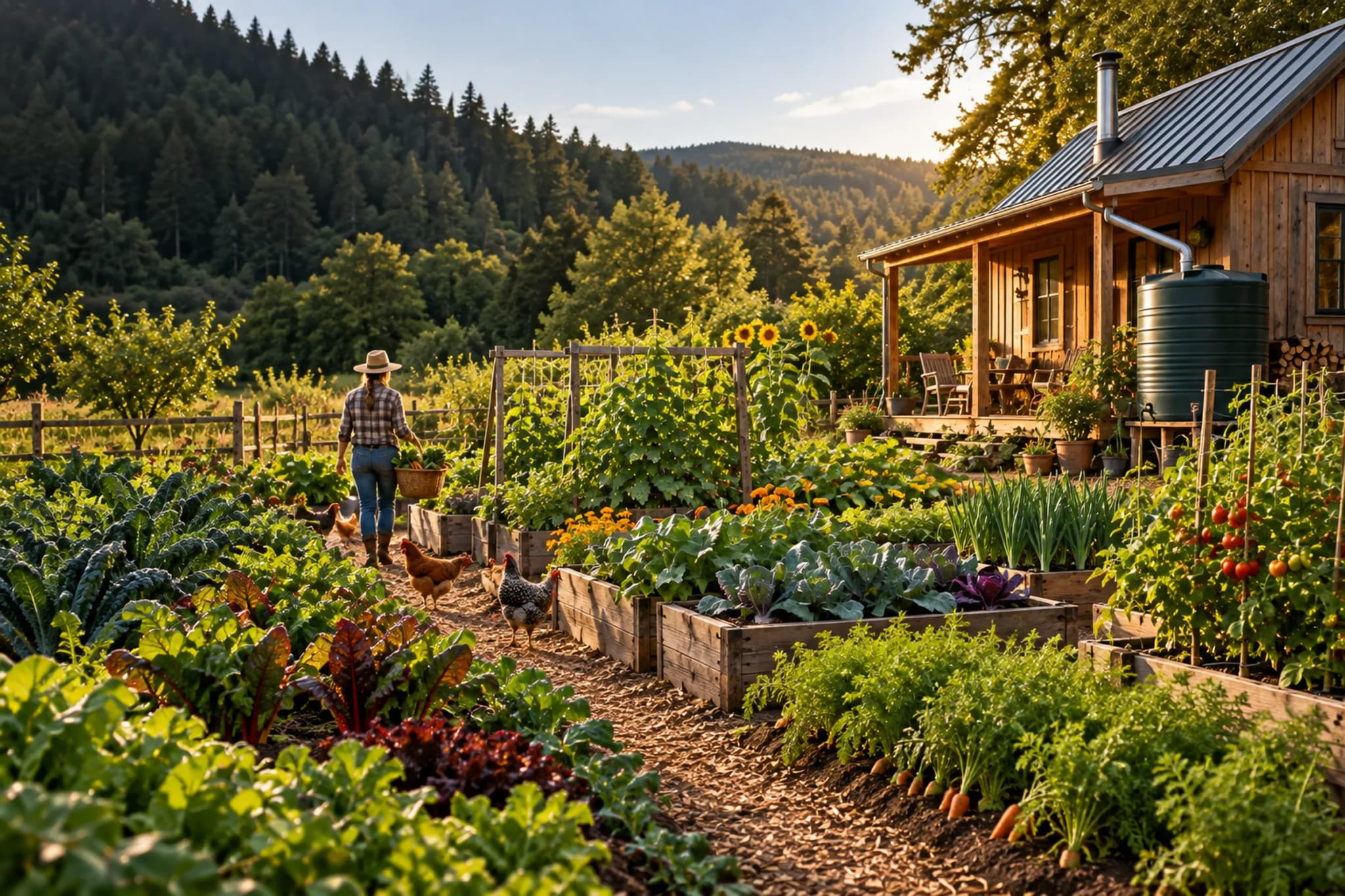
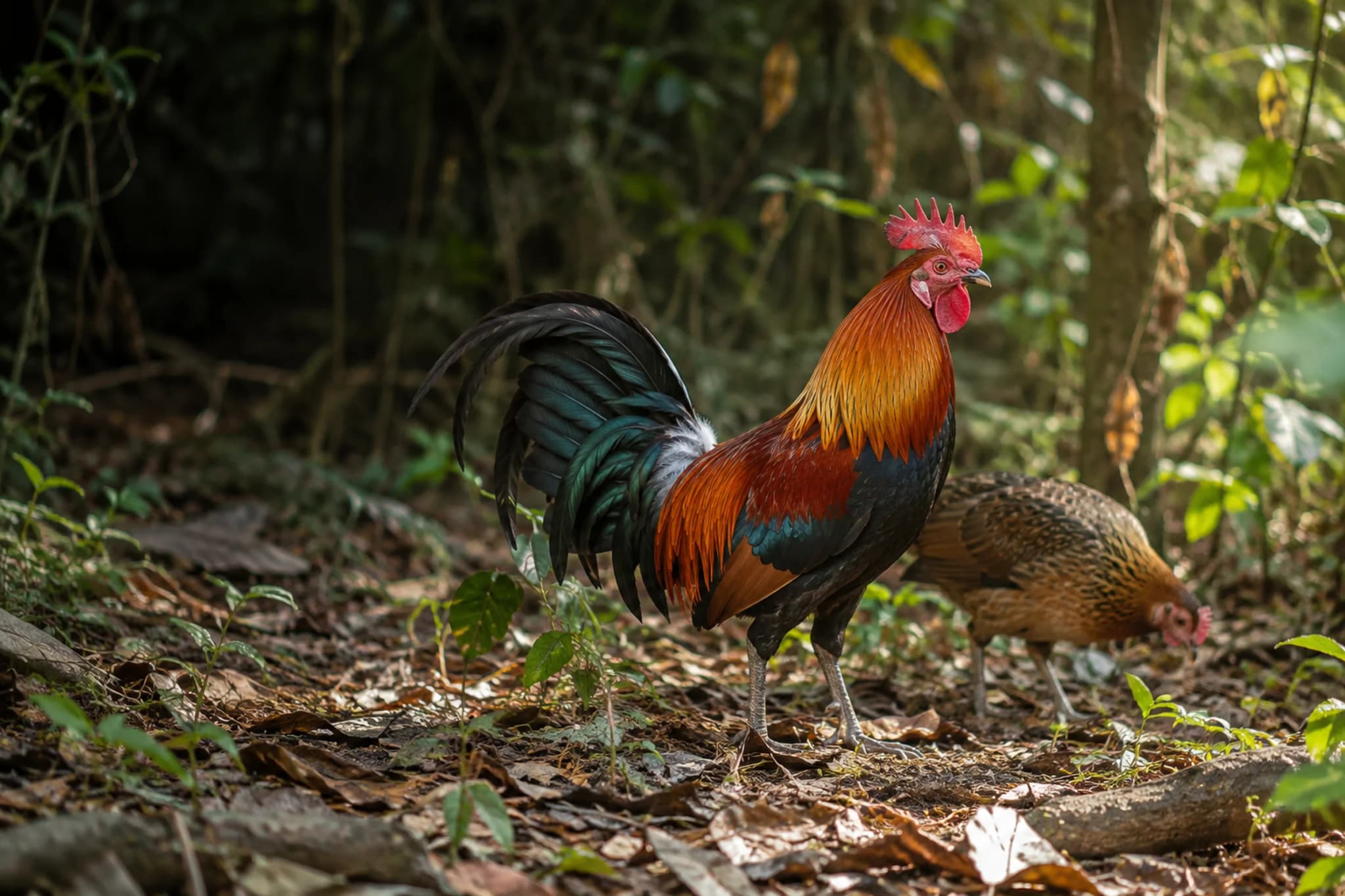
Chickens turn kitchen scraps and bugs into eggs, and a good laying breed can give up to 260 eggs per hen in a year, the University of Maryland Extension says. A dairy goat can give half a gallon to a gallon of milk a day. Goats are herd animals, so vets say two is the minimum. Check the law before you feed scraps, though: in the UK and the EU it is illegal to feed kitchen scraps or catering waste to farm animals, pet hens and pigs included, because of the disease risk. Read how off-grid livestock turn grass and weeds into food before you bring any animal home.
Finding Wild Food
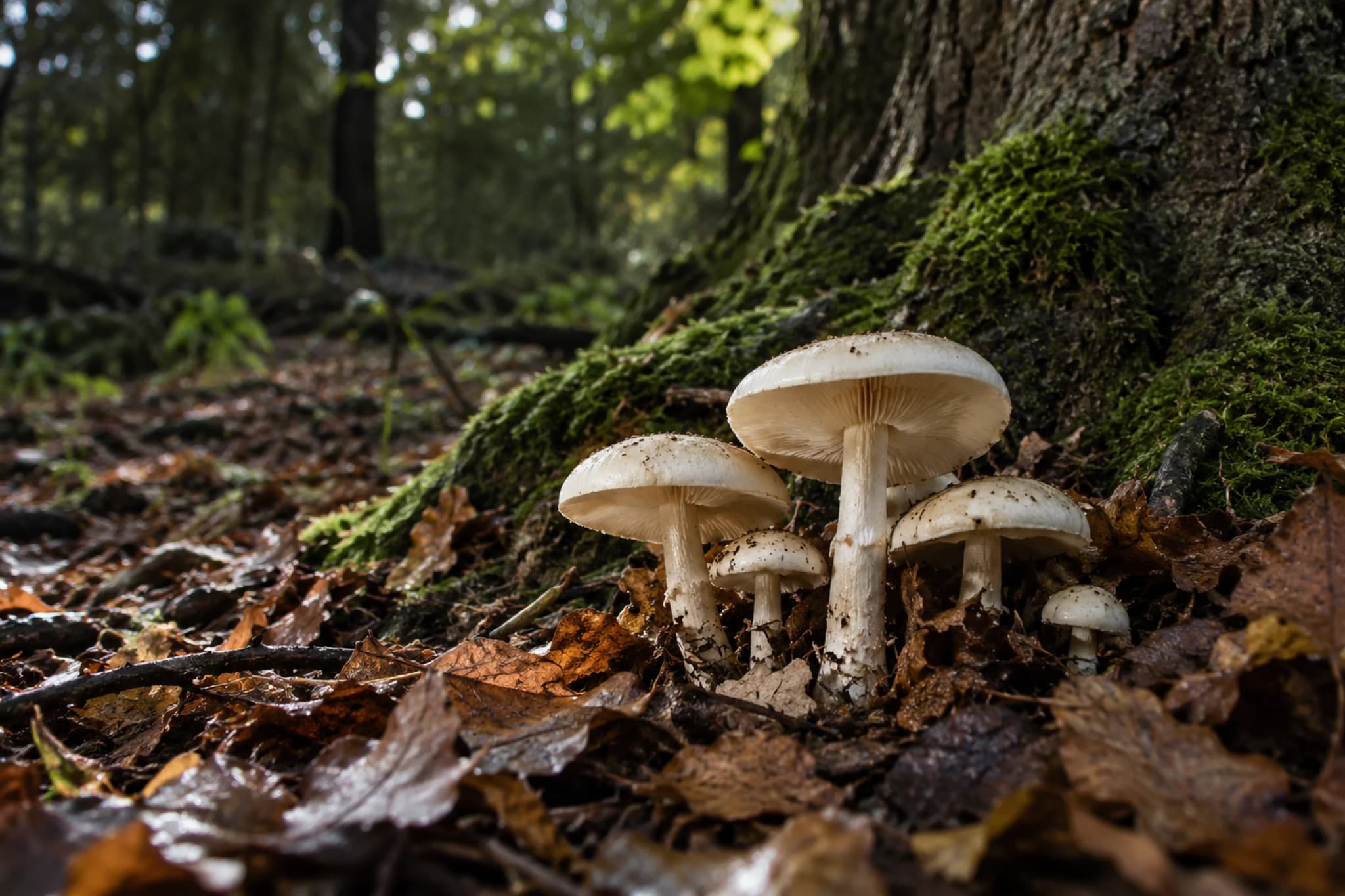
Wild food can be great, but it is the one place where a mistake can kill you, so don’t eat anything you’re not sure about. A single mushroom, the death cap, is thought to cause most deaths from mushroom poisoning. The golden rule is to be 100% sure what a plant is before you eat it. Our page on foraging for wild food safely explains how to learn.
From Seed To Supper: Choose Your Garden Space
How much room do you need? Ecology Action, a California research group, says about 200 square feet (18.6 m2) per person grows the salad vegetables and soft fruit one person eats, but not enough calories to count as a whole diet. That is a bit more than half the floor of a school bus. A complete plant-based diet for one person takes about 4,000 square feet of skilled, deep-dug beds, so most families start with their own salad, beans and potatoes and keep buying grains.
No yard? There's still a lot you can do. A few pots on a porch or a sunny step make a little container garden, and that is a simple way to learn before you dig.
Watering is often the hard part off the grid, and you’re the one carrying it if the tank runs dry. Drip lines put it right at the roots and keep the leaves dry, and a good drip system can use less than half as much as flooding the rows. Mulch 3 to 4 inches (8 to 10 cm) deep cuts evaporation and smothers weeds. A tank fed by your roof is an ideal garden supply, so read about collecting rainwater too.
Feeding the soil is the other half. Mix green scraps with about 2 to 3 times as much brown material like dry leaves, the US EPA advises, to create rich soil naturally and reduce what you throw away. Here is how home composting turns kitchen scraps into new soil.
Keeping The Harvest Through Winter
Summer gives too much and January gives nothing. Preserving fills that gap, so think about how you will store each crop before you plant it.
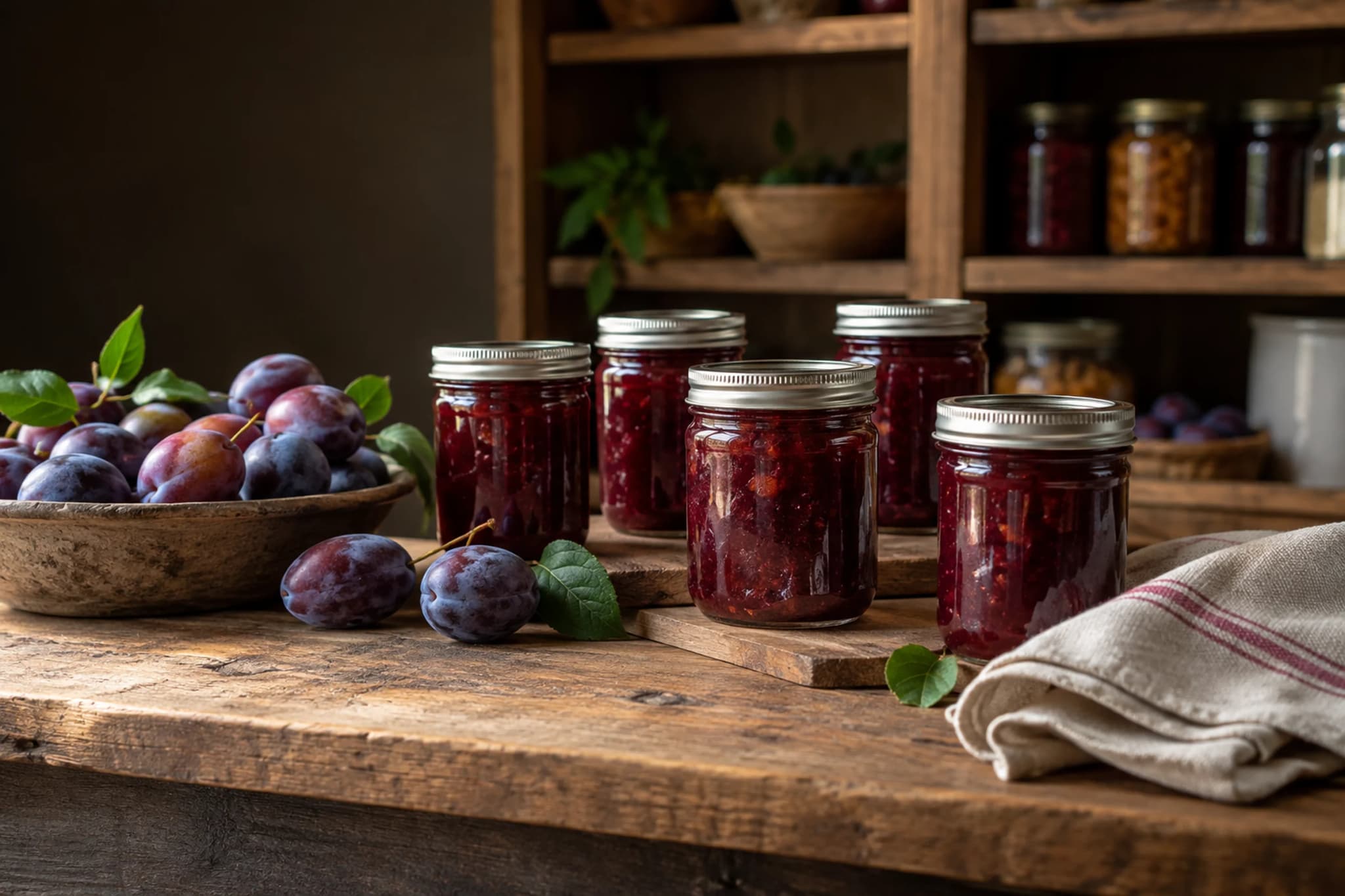
Spoiling food needs moisture, warmth and food that is not sour. Each way of preserving takes one away. Drying removes the moisture, a cold root cellar removes the warmth, pickling adds acid, and canning uses heat and a seal.
A root cellar works best for most crops between 32 and 40 F (0 to 4 C), and very damp, around 90 percent humidity. Keep apples away from your vegetables, because apples give off a gas called ethylene that can make stored carrots taste bitter.
Canning needs care. Most garden crops are low in acid, and the germ behind botulism makes spores that survive boiling. Only a pressure canner gets hot enough, and the poison cannot be seen, smelled or tasted. Always use tested recipes. Our guide to off-grid food preservation shows each method step by step.
A Longer Growing Season
Outdoor growing does not have to stop at the first frost. A light row cover, a thin sheet laid over the plants, gives a few degrees of frost protection, and covers stretched over hoops can keep the air underneath 15 F (about 8 C) or more warmer than outside. A cold frame, a box with a clear lid, catches warmth from the sun and blocks the wind.
That means salad ready in late autumn and an early spring. Our homestead calendar lists what to sow, pick and put away each month.
Going Off-Grid With Food: Rules And Realities
Check the rules where you live before you start. Many towns that allow hens ban roosters because of the noise, and hens lay without a rooster anyway. In Great Britain, everyone who keeps poultry must register, even with a single bird.
Foraging rules change by country too. In England and Wales, picking wild fruit or mushrooms for yourself is usually not theft, but digging up plants without permission is illegal. US national parks are stricter than national forests.
Chickens can carry Salmonella while they look perfectly healthy, so wash your hands after touching them, the CDC says.
The Benefits Of Growing Food At Home
Beans and tomatoes picked an hour before dinner taste better, and you know exactly how they were grown. Those are the benefits most people talk about. Many people also like the independence: a full shelf in the cellar means fewer long drives to the shops.
The trade-off is time. A garden and animals need care every day, and the first years are for practice. But the soil gets better and so do you, and that first jar of your own tomatoes on a winter night is hard to beat.
Sources
- National Park Service: Victory Gardens at Oak Ridge
- Daly et al. 2021, PNAS: earliest goat herding in the Zagros
- National Park Service: Why no cans? (Appert and the 1795 prize)
- Harvard BioNumbers: microbes in a teaspoon of soil
- Montana State University Extension: MontGuide on home gardening
- Connecticut Agricultural Experiment Station: Irrigation fact sheet
- International Potato Center: Annual report 2018
- University of Maryland Extension, Maryland Grows: Heirloom or hybrid?
- University of Maryland Extension: Raising your home chicken flock
- Mississippi State University Extension: Dairy goats (P4120)
- Farming UK: Vets issue must-know facts on keeping goats
- Guinness World Records: Most poisonous fungus
- Mississippi State University Extension: Foraging safety (P4173)
- Ecology Action: FAQ on growing your own food
- Cornell University: Vegetable soil info sheet
- Clemson HGIC: Garden irrigation fact sheet
- PlantAnswers: Drip irrigation savings
- UC Master Gardeners: Mulch depth
- US EPA: Composting at home
- National Center for Home Food Preservation: Ensuring safe canned foods
- University of Missouri Extension: Keeping fruits and crops at home (MP562)
- UMass Extension: Fall crop conditions and ethylene
- Ohio State University Extension: Botulism (HYG-5567)
- UVM Extension: Extending the growing season
- UK government, APHA warns not to feed kitchen scraps to farm animals
- EUR-Lex, Regulation (EC) No 1069/2009 on animal by-products, Article 11
- University of Maryland Extension: Row covers and cold frames
- University of Wisconsin Extension: Extending the gardening season
- Bensenville, Illinois: Hen ordinance
- Countryside Alliance: New requirements for keepers of poultry
- GOV.UK: Poultry registration rules
- UK Theft Act 1968, section 4
- Surrey Wildlife Trust: Foraging policy (Wildlife and Countryside Act 1981)
- USDA Forest Service, Wallowa-Whitman: free personal-use mushroom limits
- US Code of Federal Regulations, 36 CFR 2.1 (national parks)
- CDC: Backyard poultry flyer
Hard Words
| Term | What it means |
|---|---|
| Homestead | A home where people grow and make much of what they need. |
| Mulch | A thick layer of straw or leaves over the soil that keeps it damp. |
| Open-pollinated seed | Seed that grows into the same kind of plant as its parent, so you can save it. |
| Hybrid seed | Seed from crossing two parent plants. Saved seed does not grow back the same. |
| Root cellar | A cool, damp room, often underground, for keeping crops cold and damp through winter. |
| Pressure canner | A heavy pot with a locked lid that gets hotter than a boiling pot. |
| Botulism | A rare but deadly illness from a poison that germs can make in badly canned food. |
| Cold frame | A low box with a clear lid that keeps plants warm in cold weather. |
Common Questions
Can you grow all your own food?
It is possible, but it takes a lot of land and work. Most people start by growing their own salad, beans, eggs and maybe milk, and still buy grains, oil and other staples.
How much space do you need to grow your own food?
About 200 square feet (18.6 m2) per person grows salad vegetables and soft fruit, but not enough calories to live on, according to Ecology Action. Growing every calorie takes far more: about 4,000 square feet of skilled, deep-dug beds for one person's plant-based diet.
What is the first thing to put in a garden?
Good soil. Test it, then feed it, because most crops grow best in soil that is alive and has a pH around 6 to 7.
What are the easiest vegetables for beginners?
Start with crops that forgive mistakes. Leafy greens cope with less sun than tomatoes, and potatoes give a lot of food from a small patch. Don’t plant more than you can simply keep up with, because a small, tidy bed will produce more than a big, wild one.
How do you preserve food without electricity?
Dry it, keep it cold in a root cellar, pickle or ferment it, or can it in jars. For low-acid foods like beans and carrots, only a pressure canner is safe.
Do you need a rooster for chickens to lay eggs?
No. Hens lay eggs without a rooster. You only need one if you want fertile eggs that hatch into chicks, and many towns ban roosters because of the noise.