
The Backyards That Fed A Country
 Illustrative image
During World War II, food was short and the trains and trucks were busy carrying soldiers. So people in the United States started digging up their lawns.
By the end of the war, there were about 20 million of these "Victory Gardens", the National Park Service says. Together they grew around 40 percent of all the vegetables Americans ate. Backyards, school fields and empty city lots fed a whole country.
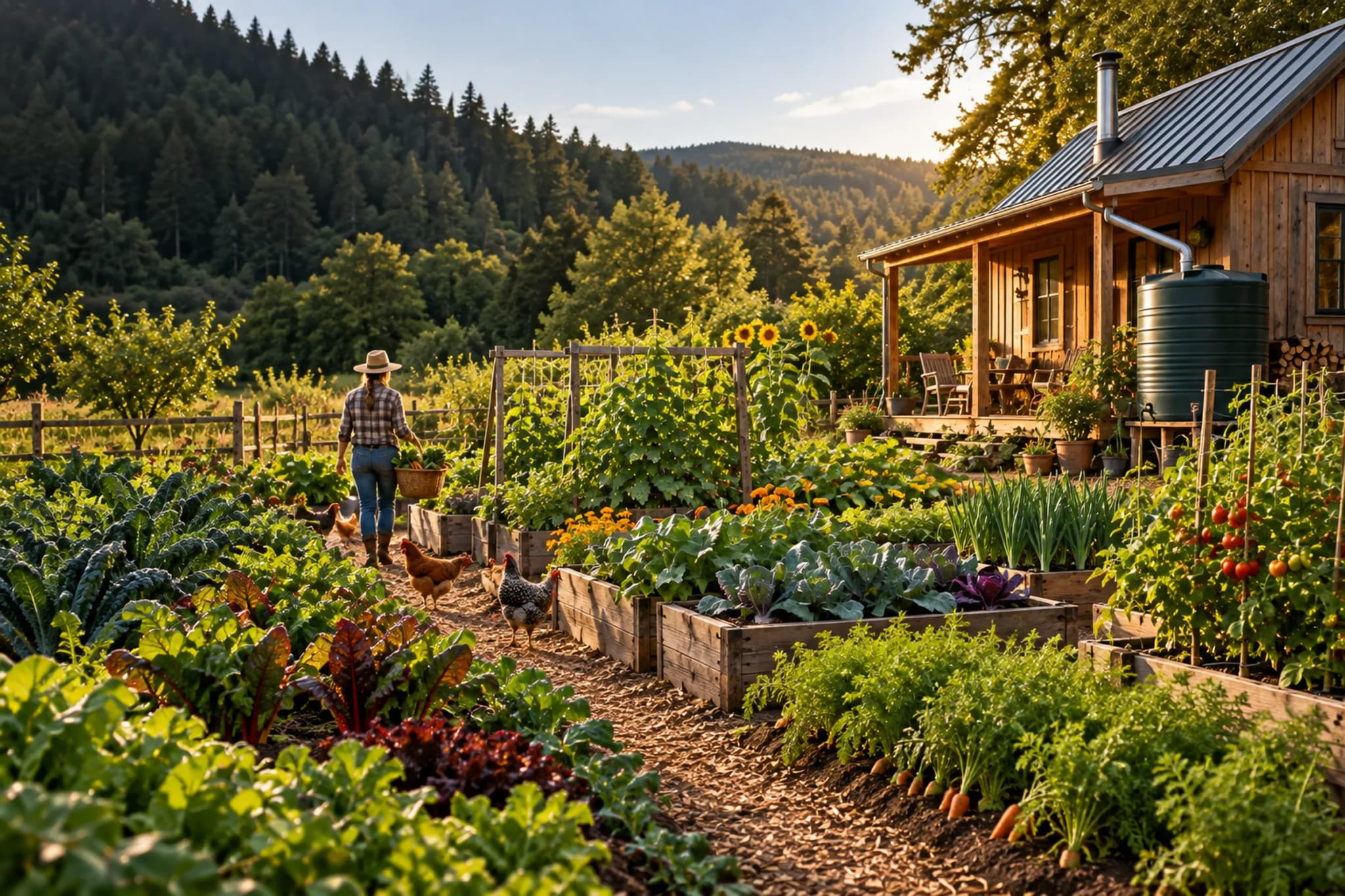
An off-grid vegetable garden is the same idea, just for one home. You grow food on your own land, with your own water and the sun that's already shining on it.
It won't make you a farmer overnight. But every tomato you pick is one you didn't have to drive to a shop for. The garden is where most people first grow their own food, before they add animals, a pantry and wild food.
Planting Starts With Sun, Water And Soil
 Illustrative image
A plant is a bit like a tiny solar panel with roots.
Its leaves catch sunlight and use that energy to turn air and water into food for itself. Scientists call this "photosynthesis". That's just a fancy word for making food out of light.
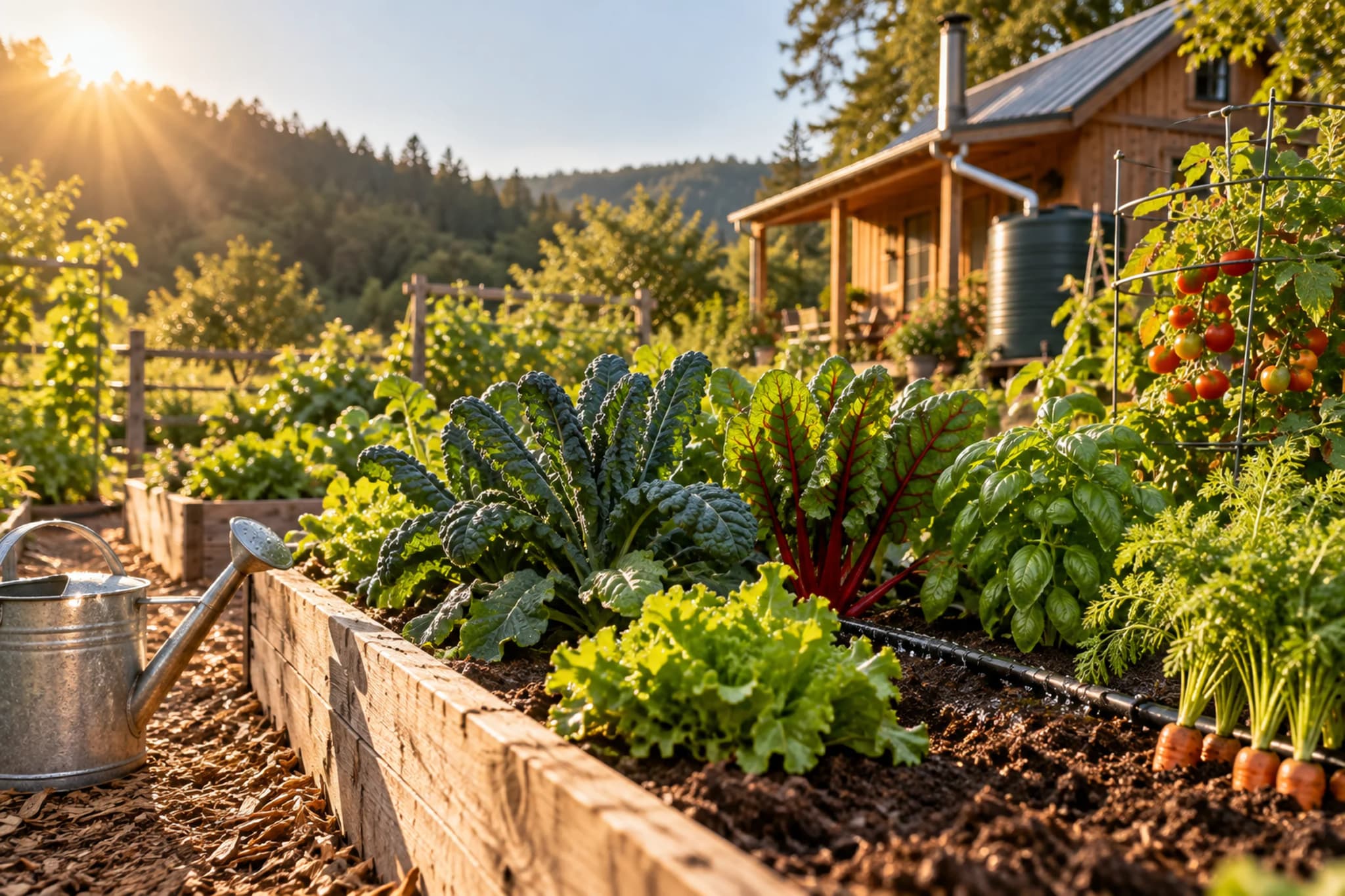
So the first thing a garden needs is sun, and lots of it. University garden guides say most crops want 6 to 8 hours of direct sun a day. Tomatoes, peppers and squash want the full amount, while lettuce and spinach can get by with less.
The second thing is water. The Connecticut Agricultural Experiment Station's rule is about 2.5 centimetres (1 inch) a week, from rain plus whatever you add. For every square metre of garden, that's about 25 litres, roughly two and a half big buckets.
The third thing is soil, and soil is much more alive than it looks.
There are more tiny living things in one teaspoon of healthy soil than there are people on Earth. Bacteria, fungi and little bugs break down dead leaves into organic matter, a natural food that roots can drink up. Organic gardeners count on them instead of chemical fertilizers. A garden is really a team, with you feeding the soil and the soil feeding the plants.
Feeding The Soil With Compost
 Illustrative image
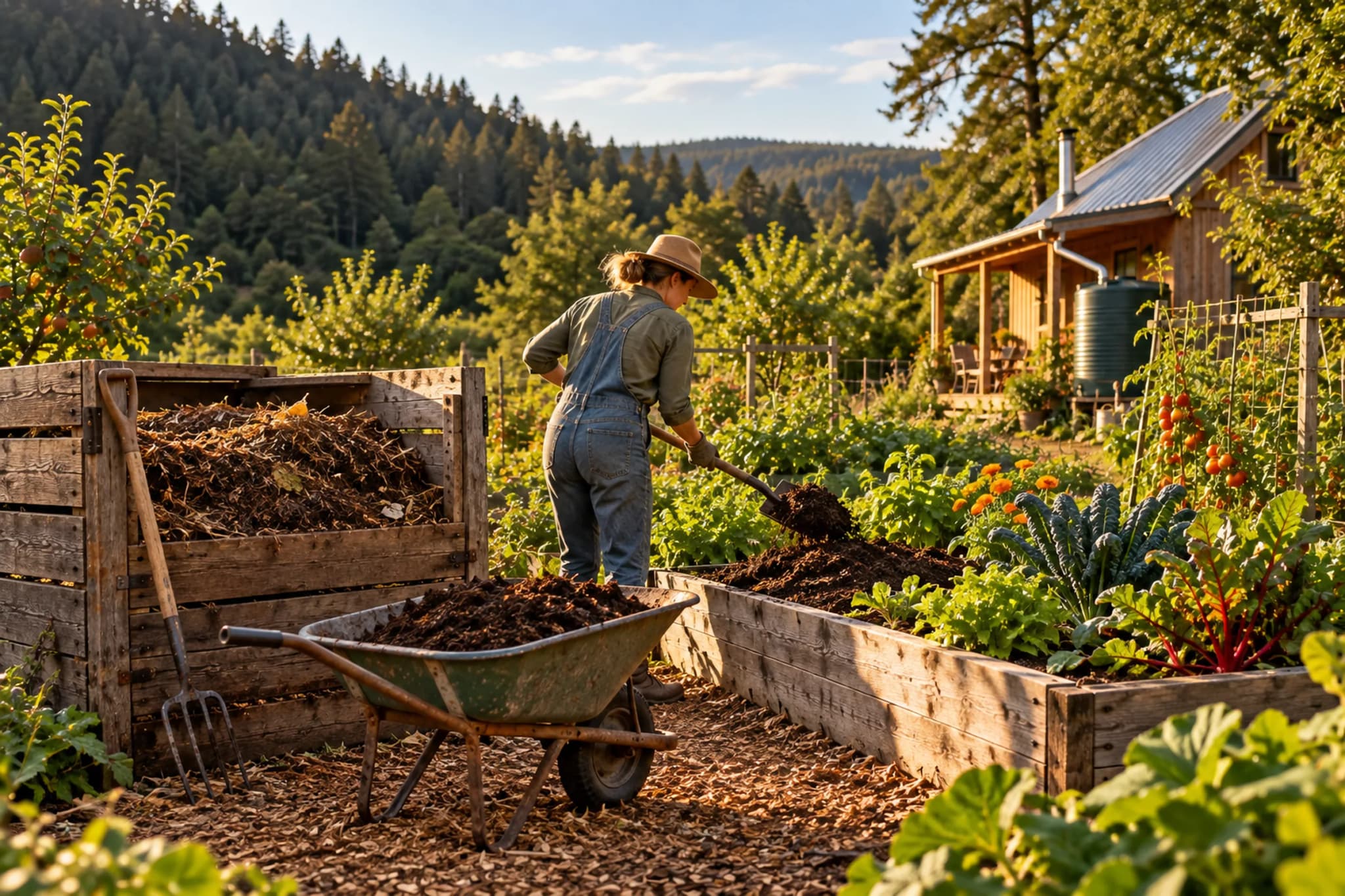
The best food for that underground team is compost.
Compost is what you get when kitchen scraps, leaves and old plants rot down into dark, crumbly stuff that smells like a forest floor. It's free, it turns waste into new food, and it can replace a lot of the bagged fertilizers you would otherwise buy. Every load you add will improve the soil a little more.
The US Environmental Protection Agency splits compost into "greens" and "browns". Greens are wet, fresh things like peels, grass clippings and coffee grounds, while browns are dry things like dead leaves, twigs and shredded cardboard.
Aim for about two to three times as much brown as green, and keep the food scraps covered with a thick layer of leaves. That keeps the pile from getting slimy and smelly.
Before you plant, a soil test helps too. Most crops grow best when the soil is close to neutral, around pH 6 to 7 on a scale that runs from sour to soapy. A lab test from a local garden service tells you that, plus what nutrients are missing, so you don't have to guess.
Planning Your Garden Space: How Much Feeds A Person?
 Illustrative image
This is the question everyone asks, and the honest answer is that it depends on what "feed" means.
If you only want fresh salad in summer, a few beds will produce plenty. Ecology Action, a California research group, says about 18 square metres (200 square feet) per person grows soft fruits and salad crops, but far too few calories to count as a whole diet. That's a bit more than half of the floor space of a school bus.
Square Foot Gardening In A Raised Bed
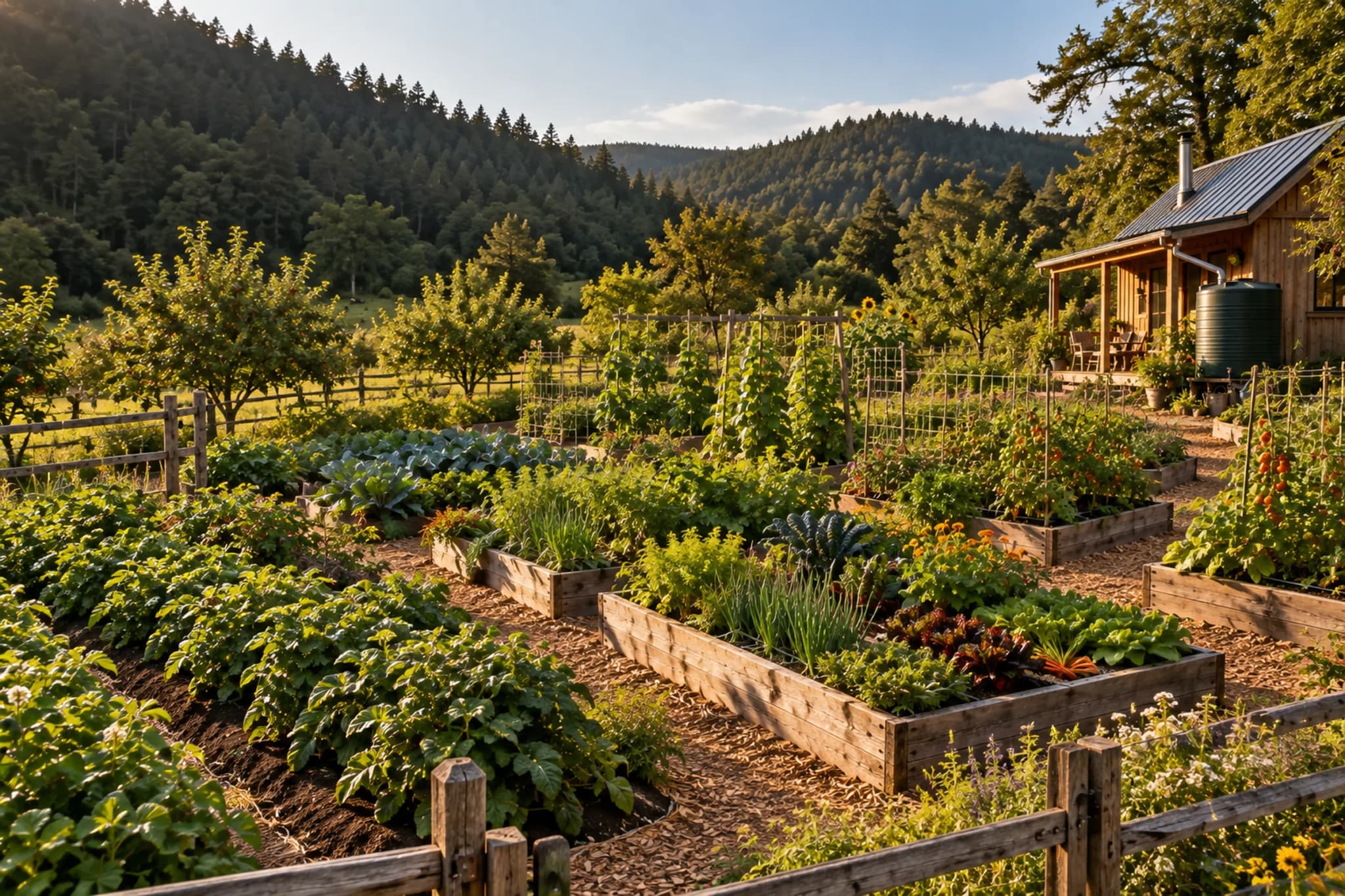
A clever way to fit a lot into a small patch is "square foot gardening". An engineer named Mel Bartholomew made the method famous with a book in 1981. You build a raised bed about 1.2 metres (4 feet) on each side and split it into a grid of 16 squares, each one foot wide, like a giant game board.
Each square gets its own crop, and the plant's size decides how many go in. The University of Florida's garden guide puts one tomato or pepper in a square, four lettuces, nine beets or peas, or sixteen carrots or radishes. Plants grow close together, so there is less room for weeds and a small bed is easy to water by hand.
Growing A Whole Diet
Growing every bite of your food is a much bigger job.
Ecology Action has worked on this since the 1970s. Their scenario: with careful, deep-dug beds and "intermediate" yields, one person on a plant-only diet needs about 370 square metres (4,000 square feet) of growing space. That's almost a whole basketball court, plus paths and compost. And it only works with their crop mix: about 60% of the beds for grain and compost crops, 30% for calorie-rich roots like potatoes, and only 10% for the salad crops most people picture.
Treat it as a scenario, not a rule. Experienced growers with a long season might need less, while a beginner, a short northern summer, dry soil, or a diet with meat, dairy or bread can need a lot more.
| What you want to grow | Rough space per person | Assumes |
|---|---|---|
| Summer salads and soft vegetables | About 18 m² (200 sq ft) | Good soil, some watering |
| Most of your vegetables, fresh and stored | Several times that | Storage crops like potatoes, cabbage, squash |
| A whole plant-only diet | About 370 m² (4,000 sq ft) plus paths | Skilled deep-bed growing, grains and roots, long season |
Want to know which crop gets the most food out of the ground? Potatoes.
The International Potato Center says potatoes give more calories per hectare than rice or wheat. That's why so many self-reliant gardeners grow a big potato patch. Most off-grid families land somewhere in between: they grow a lot of their own crops and some fruit, then buy grain, oil and the things their climate can't grow.
Watering An Off-Grid Vegetable Garden
 Illustrative image
When your water comes from a well or a roof, every litre counts. The trick is to put it only where the roots are, which will reduce waste and weeds at the same time.
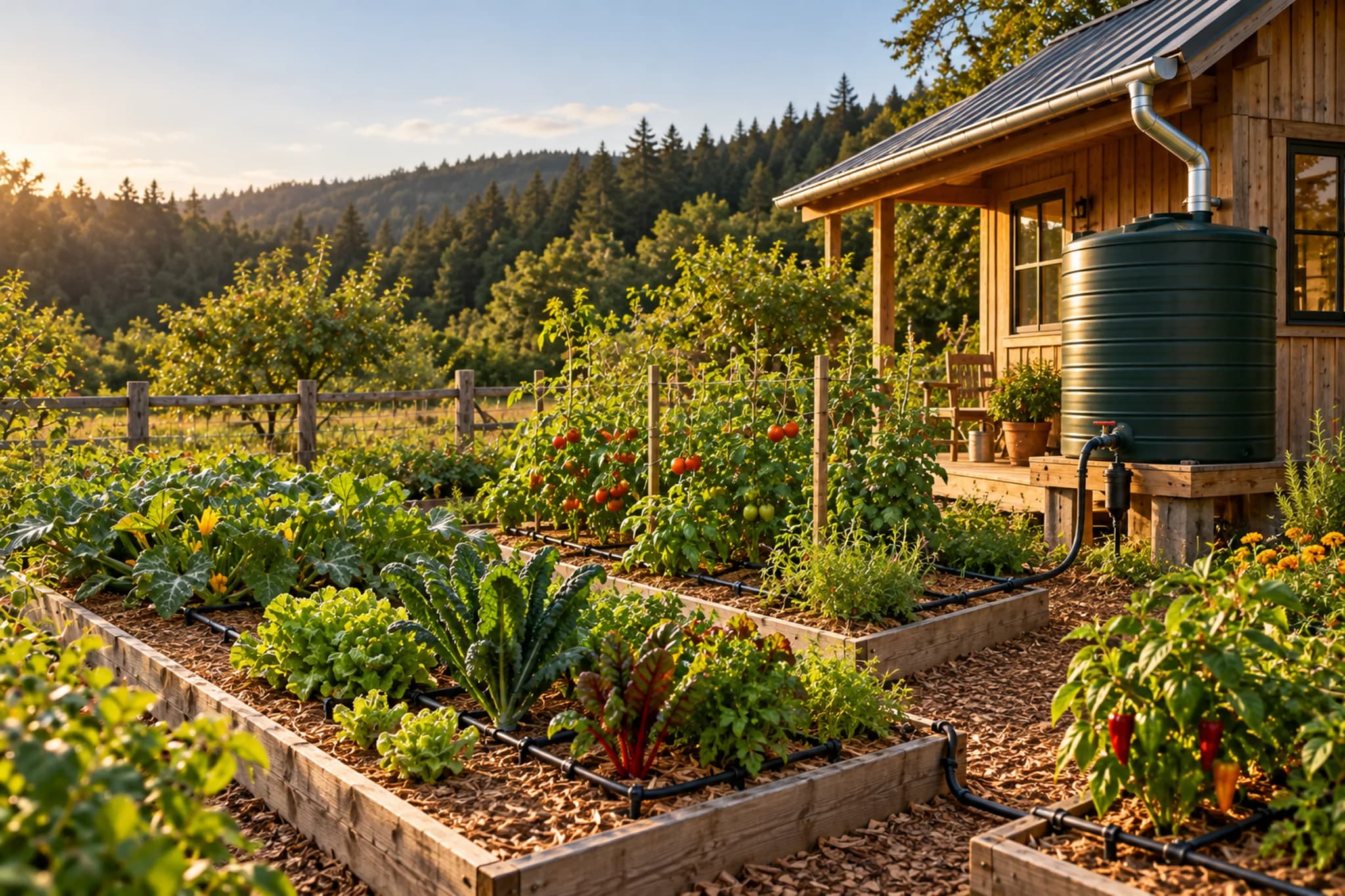
Drip irrigation is the method that does exactly that. It's a hose with tiny holes, called "emitters", that let water drip slowly onto the soil next to each plant. Clemson University calls drip the best way to save water in a garden, and it keeps the leaves dry, which helps stop plant diseases.
One Texas extension expert found a good drip system can cut water use by more than half compared with flooding the rows. A small solar or gravity setup can run it, because drip doesn't require much pressure.
Mulch is the other big helper. A blanket of straw or shredded leaves, about 8 to 10 centimetres (3 to 4 inches) thick, works like a lid on a lunchbox. It keeps the soil from drying out and blocks weeds that steal moisture. Straw and leaves also rot down slowly, so they feed the soil with more organic matter.
Lots of off-grid gardens drink from rain barrels and tanks fed by the roof. Some also send shower and laundry water out to fruit trees with a simple greywater system, but most rules say to keep that water off the parts of a plant you eat.
Making The Gardening Season Longer
 Illustrative image
Every outdoor garden has a clock. In cold places it starts after the last frost in spring and stops at the first frost in autumn.
That clock is very different around the world. Near the equator you can grow all year, while in northern Canada or Scandinavia the outdoor season can be just a few months. Your local garden service or a frost-date map will tell you your own dates.
The good news is you can cheat the clock a little.
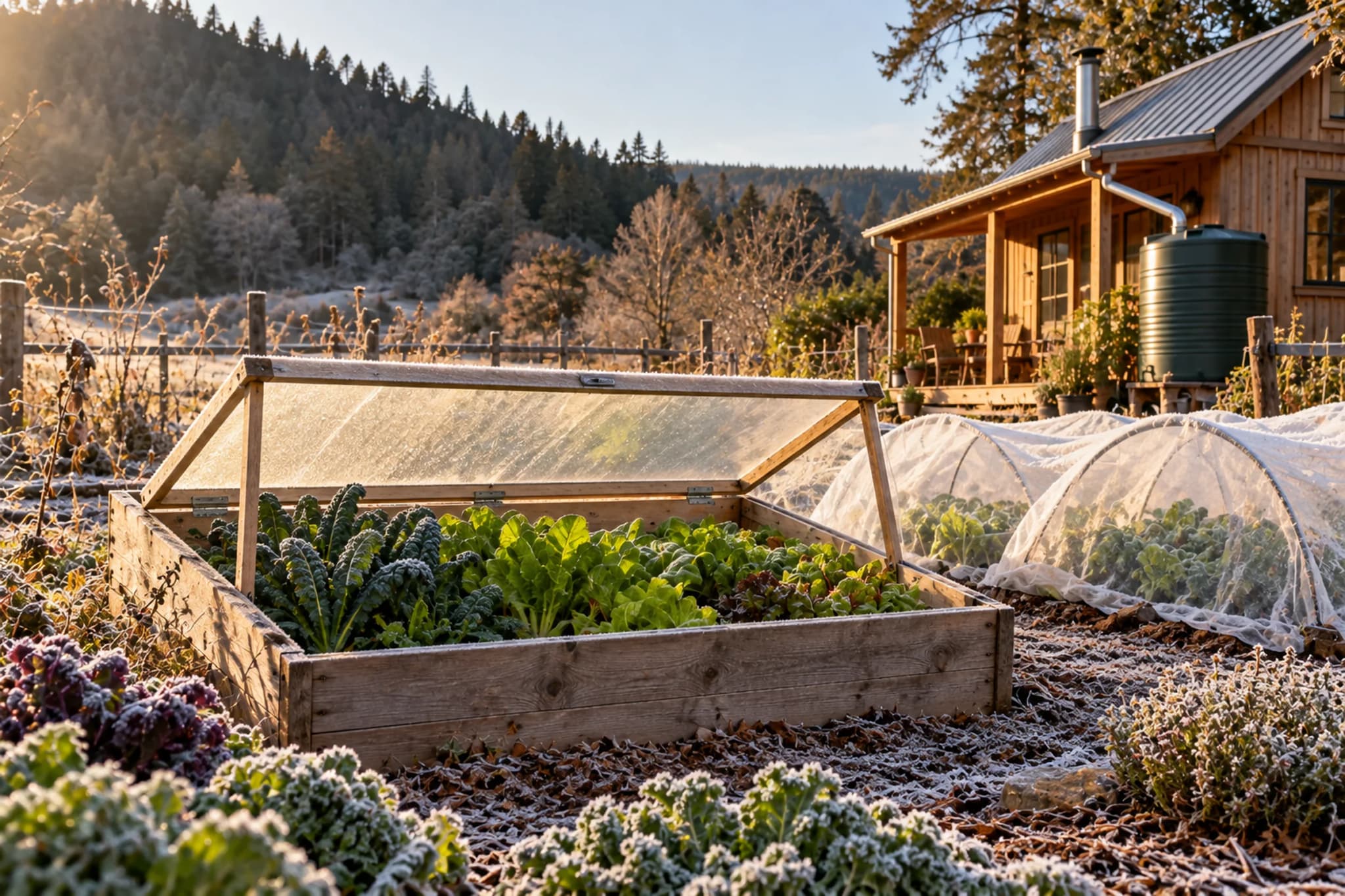
A "row cover" is a thin white cloth that floats over plants like a bedsheet. It traps a little warmth from the ground and keeps frost off the leaves. Light covers give a few degrees of protection, and heavier ones give more. Stretched over hoops, covered rows can be 8°C (15°F) or more warmer than outside.
A "cold frame" is a bottomless box with a clear lid, like a tiny greenhouse. It catches warmth from the sun and blocks the wind. That's often enough to keep picking salad weeks after the rest of the garden has gone to sleep, and to plant out earlier in spring.
Saving Seeds From This Year's Harvest
 Illustrative image
Here's where an off-grid garden starts to really feed itself.
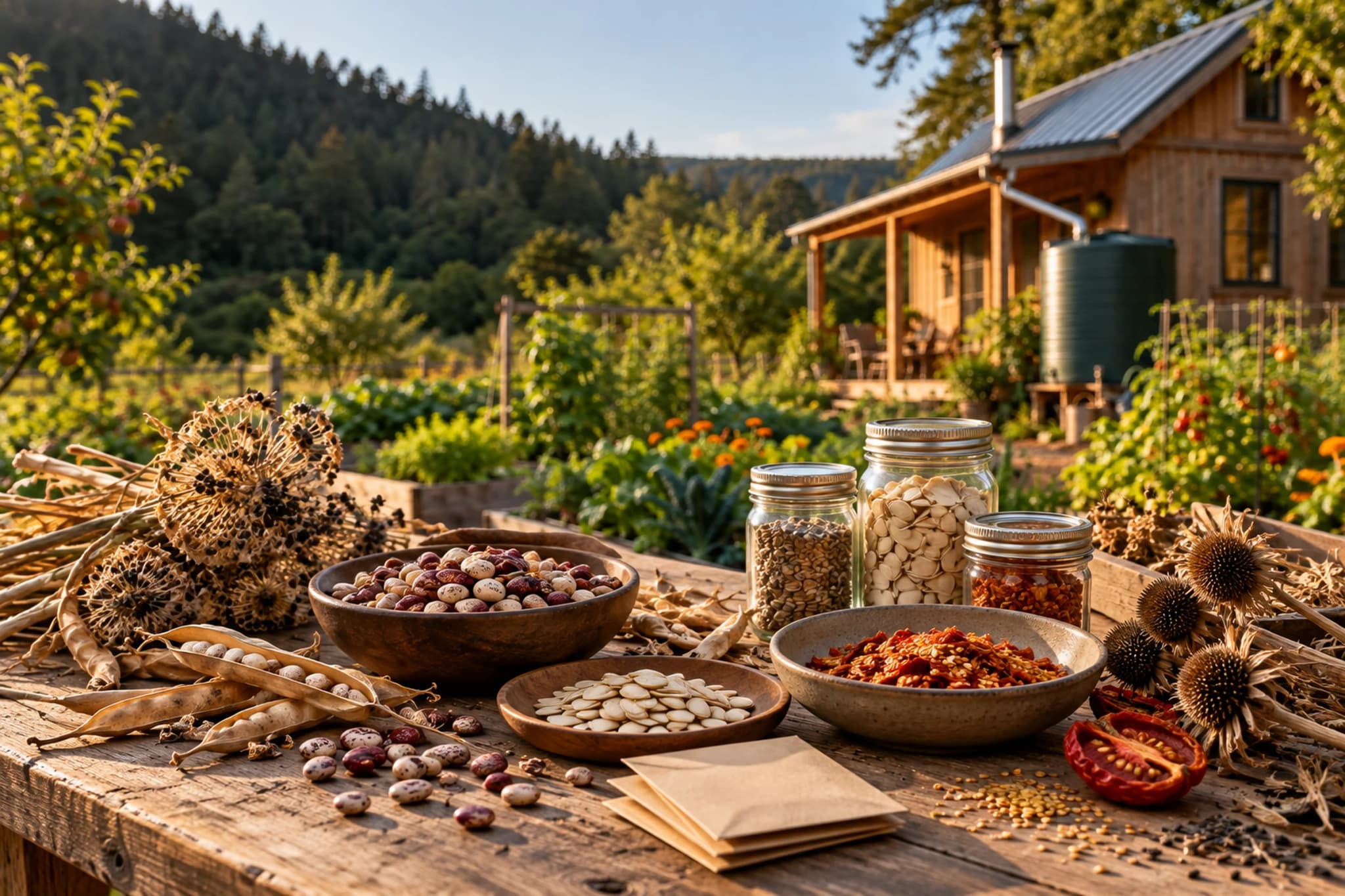
Some seeds are "open-pollinated". That means seeds you save from these plants grow into plants just like their parents, harvest after harvest. Old family varieties, called "heirlooms", are a type of open-pollinated seed.
Other seeds are "hybrids", often marked F1 on the packet. They're made by crossing two different parent plants, and they can grow strong and even.
But seed saved from them won't grow true. The next plants come out all mixed up, a bit like shuffling two decks of cards.
So if you want to stop buying seeds, pick open-pollinated varieties. Save seed from your best plants each year, and over time you end up with plants that suit your own patch of ground.
Is An Off-Grid Garden Right For You?
 Illustrative image
A garden asks for something every week. Weeding, watering, watching for bugs, and a big rush of work when everything is ready at once.
It also gives back more than food. You learn your land, your rain and your seasons better than any weather app.
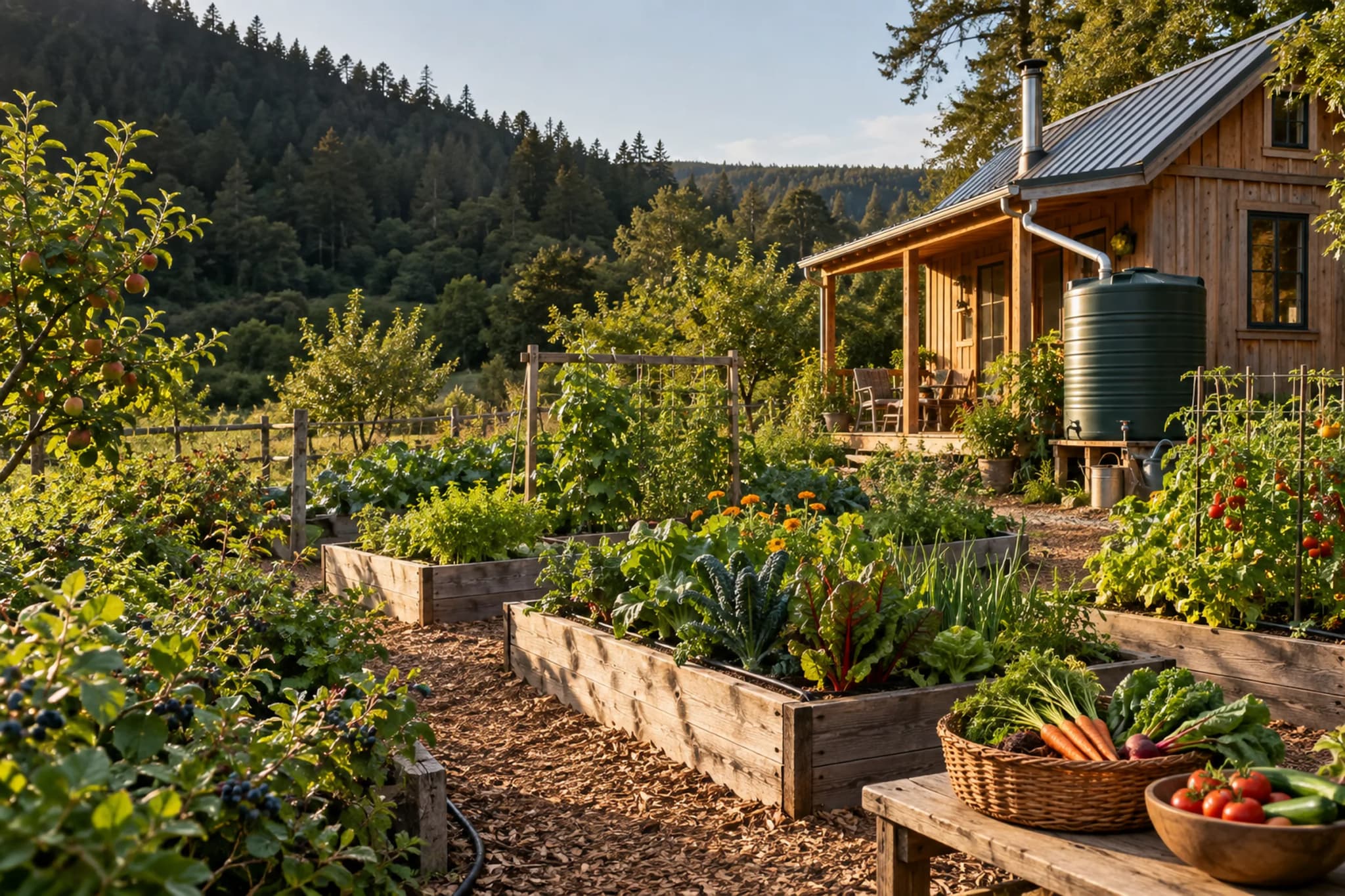
Begin small, with a raised bed or two and the crops you actually like to eat. Grow more each year as your soil gets richer and your skills grow.
And when the harvest comes in faster than you can eat it, that's when preserving and storing food turns one good summer into a full pantry for winter.
Sources
- National Park Service: Victory Gardens at Oak Ridge
- Montana State University Extension: Successful home vegetable gardening
- Connecticut Agricultural Experiment Station: Irrigating your home vegetable garden
- Harvard BioNumbers: microbes in a teaspoon of soil
- US EPA: Composting at home
- Mississippi State University Extension: Test soil to find its pH value
- Ecology Action: FAQ on growing your own food
- GrowVeg: Growing enough food to feed a family
- Christian Science Monitor (1981): Cukes by the square foot
- University of Florida IFAS: Square foot gardening
- International Potato Center: Annual report 2018
- Clemson HGIC: Watering the vegetable garden
- PlantAnswers (Texas AgriLife): Drip irrigation
- UC Master Gardeners of Yolo County: Ask a Master Gardener (mulch)
- UVM Extension: Extending the growing season
- University of Maryland Extension: Row covers and cold frames
- University of Wisconsin Extension: Extending the gardening season
- University of Maryland Extension, Maryland Grows: Heirloom or hybrid?
Hard Words
| Term | What it means |
|---|---|
| Photosynthesis | How plants use sunlight to turn air and water into their own food. |
| Compost | Rotted-down kitchen scraps, leaves and plants that become rich, crumbly food for soil. |
| Greens and browns | The two halves of a compost pile: wet fresh scraps (greens) and dry leaves or cardboard (browns). |
| Soil pH | A number that says how sour or soapy soil is. Most crops like it close to neutral, around 6 to 7. |
| Square foot gardening | Planting a raised bed in a grid of one-foot squares, with 1, 4, 9 or 16 plants per square. |
| Drip irrigation | A watering system that drips water slowly right next to each plant through tiny holes. |
| Emitter | One of the tiny holes or nozzles in a drip line that lets water out. |
| Mulch | A layer of straw, leaves or wood chips on top of the soil that keeps water in and weeds out. |
| Row cover | A thin cloth laid over plants to keep frost and bugs off. |
| Cold frame | A bottomless box with a clear lid that works like a mini greenhouse. |
| Open-pollinated | Plants whose saved seeds grow into plants just like the parent. Heirlooms are one kind. |
Common Questions
How much garden space do you need to feed one person?
About 18 square metres (200 square feet) grows salads and soft crops for one person, but not enough calories to live on. Ecology Action's scenario for a whole plant-based diet is about 370 square metres (4,000 square feet) of skilled beds plus paths.
How many hours of sun does a vegetable garden need?
Most food crops need 6 to 8 hours of direct sun a day. Tomatoes, peppers and squash want the full amount, while lettuce, spinach and many roots manage with less.
How much water does a vegetable garden need?
About 2.5 centimetres (1 inch) a week, counting rain, which is roughly 25 litres per square metre. Hot, windy weeks and sandy soil need more, and drip lines plus mulch make each litre go further.
What is square foot gardening?
It is a way to plant a small raised bed in a grid of one-foot squares. Big plants like tomatoes get a whole square, while small ones like carrots fit 16 to a square, so you grow a lot in little space.
Can you grow all your own food off the grid?
Some people grow most of it, but very few grow everything. Grain, cooking oil and sugar are hard to grow in most climates, so most off-grid households grow much of their own produce and buy staples.
What is the difference between heirloom and hybrid seeds?
Heirlooms are open-pollinated, so seed you save grows into plants like the parent. F1 hybrids come from crossing two different parents, and their saved seed does not grow true.
How can I grow vegetables in a short or cold season?
Start seeds early indoors, then protect outdoor plants with row covers or a cold frame. Pick fast, cold-hardy crops like lettuce, spinach and radishes, and check your local frost dates.
Do I need a soil test before starting a garden?
It's a very good idea. A lab test shows your soil pH and which nutrients are low, so you add only what's needed. Most crops like a pH around 6 to 7.