


The premise
Robbert is trying to make a regular Dutch row house energy-neutral. Twelve roof panels are not enough. Net metering ends in 2027, which means feeding power back at midday for €0.04 per kWh and buying it back at €0.27 in the evening. The fix is storage, and storage that pays back on its own terms needs to be cheap to build. This video covers one pack of 16 kWh. Three of these stack into the 48 kWh target.
For perspective: 48 kWh is roughly half a Tesla Model S battery, or the full capacity of a Mini Electric.
The cell choice
The pack is built from 16 EVE 314 Ah prismatic LiFePO4 cells, wired in 16S. Series, not parallel: every plus to the next minus, so capacity stays at 314 Ah and voltage adds up to 48 V nominal. That gives roughly 15 to 16 kWh per pack.
A single cell runs about €100. Sixteen cells per pack, three packs in total. The cell cost is the bulk of the build.
Compression and orientation
LiFePO4 cells swell during charging and shrink during discharge. Robbert calls it "breathing". Sixteen cells lined up in a single row would expand and contract as a single long block, and the busbars on top would take serious stress at the bolt joints.
The fix is to break the row. Four cells side by side per layer, four layers stacked. Flat faces against flat faces. A threaded rod runs through the assembly and pulls a removable side plate against the stack, applying constant pressure that limits swelling. PP plastic separators sit between cells for insulation.
The box is fire-retardant MDF. Cheap, plenty strong enough for what is essentially a holding frame. The real fire protection comes from the steel cabinet the packs live in, plus the chemistry itself.
The BMS
Robbert chose a JK BMS rated 150 A. Around €100. He is direct about not buying cheap on this part. The BMS is the safety system for the entire pack. It watches:
- Total pack voltage and per-cell voltage
- Temperature
- Charge and discharge limits
- Cell balance (it equalises any cell that climbs ahead of the others)
- Cycle count
JK also speaks to Victron over RS485, which matters for the larger system. The BMS mounts on the side of the pack with a 3D-printed bracket. Power button on the front lets Robbert flip on Bluetooth when he wants to read the pack from his phone.
Wiring the BMS to the cells
The BMS comes with a fan-out cable: one wire per cell, plus a battery negative reference, plus a final battery plus that doubles up to read total pack voltage.
The blue wires go to the cell minuses. The red wires (labelled B1 through B16) go to each cell plus, in order. B17 through B20 on this BMS are unused for a 16S pack and get clipped off. The final B+ pairs with the last cell's plus terminal, giving the BMS its total voltage reference.
Two safety habits while wiring under voltage:
- Use a ratchet socket, not an open-ended spanner. The risk of bridging two terminals with a spanner is real, and the spark is ugly.
- Wrap the socket in tape to insulate it. Suggested by a viewer on an earlier video. Cheap, effective.
Robbert spells it out on camera. A battery cannot be switched off the way a wall switch turns off a circuit. Voltage stays on the terminals. Think twice before every move.
Configuring the BMS
The JK BMS pairs to the phone over Bluetooth. The app needs the default password (1234 or 123456 depending on version) to log in, then chemistry type, cell count, and capacity get entered.
| Setting | Value |
|---|---|
| Cell chemistry | LiFePO4 |
| Cell count | 16 |
| Capacity | 314 Ah |
| Balance start | (default) |
| Max cell volt | (default) |
The default advanced settings work well for this chemistry and pack size. The status page shows total pack voltage, state of charge, remaining capacity, cycle count, per-cell voltages with the highest in red and lowest in blue, and per-cell internal resistance. Robbert sees the cells in perfect balance at the moment of first power-up.
Fusing both directions
Safety on a home battery is non-negotiable, especially with a 100 A discharge target per pack. The main power cable runs from the first cell plus to a 100 A fuse holder mounted on the outside of the box. The minus path runs from the last cell minus through the BMS, then to a second 100 A fuse on the way out. Both directions are fused. The fuse holders double as the pack's terminals.
The 100 A target comes from the system math: three packs in parallel under a 300 A maximum draw, which works out to 100 A per pack.
Finishing
A plexiglass front plate covers the cells. Not structurally required, but it stops anything metallic falling onto the busbars during maintenance. Cable brackets on the outside of the box, all 3D-printed, keep the run from BMS to fuses tidy. The full pack weighs around 130 kg.
What this pack does in the bigger system
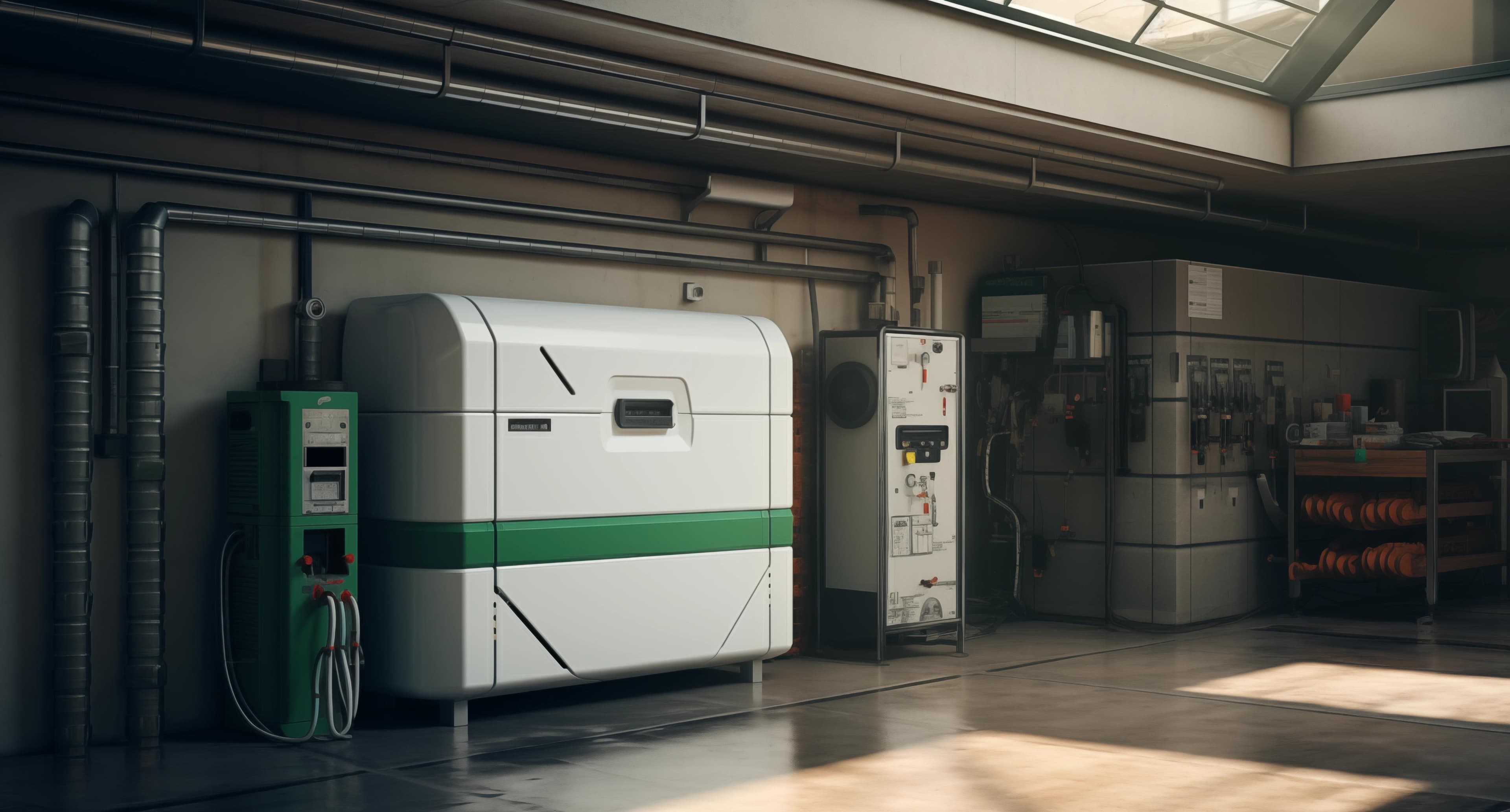
Three of these packs stack inside a steel cabinet. 48 kWh total. The cabinet sits in a storage room, monitored around the clock by the BMS units inside. The next video in Robbert's series is the Victron three-phase install that lets these packs absorb solar during the day and feed the house in the evening, instead of pushing excess to the grid for €0.04 per kWh.
Takeaways
- 16 cells in series gives you 48 V at the capacity of the cell. Don't put them all in one line; break the stack into 4x4 to limit swelling pressure.
- LiFePO4 packs don't switch off. Treat every wiring step as live work.
- Fuse the plus path and the minus path. Both can fault.
- A €100 JK BMS is cheap insurance on a €1600 pack.
- Stack pressure is the silent variable. A threaded rod and a removable end plate cost almost nothing and double cell life.