

All contributors
Robbert Lievens, known online as Robbert DIY Projects, is a hands-on builder and contributor at OFFGRIDDR. His focus sits in two places at once: electrical systems and heating. Over the years he has worked through solar installs, battery banks, home wiring, wood stoves, and heat-pump setups. The kind of project most people hire two separate contractors for.
His contribution here isn't theory. It's built, troubleshot, and improved on real installations. When the topic is energy systems, power draw, heating performance, or electrical safety, the answer leans on what Robbert has actually measured. Not on what a datasheet promises, not on what a lab predicts.
Videos by Robbert
29 videos
 Start here#15Who is Robbert? The builder behind the extreme DIY projectsWritten by Roel AdriaansA profile of Robbert DIY Projects: self-taught electronics, a backyard tropical pool, a Disney-style fairy ride in the veranda, a 4K Unreal Engine game, and now a 48 kWh Victron home battery.
 #01What a DIY home battery actually costsWritten by Roel AdriaansA pack on its own is not a home battery. Robbert walks through three full Victron setups (3 kVA, 5 kVA, and 3-phase) so the price of a working installation, not just the cells, is finally on paper.
 #02Making your own battery cables for a home batteryWritten by Roel AdriaansA €40 hydraulic crimp tool, Klauke-style lugs, and heat-shrink. Robbert walks through the exact workflow he uses for 35 to 70 mm² battery cables, and explains why he never solders them.
 #01A €165 budget solar setup with used panelsWritten by Roel AdriaansSix second-hand panels, a homemade wooden frame, a used inverter. Total spend: €165. How fast it actually pays back, and where the trick is.
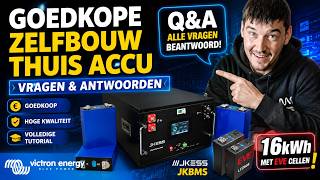 #02DIY 16 kWh home battery Q&A: cell compression, orientation, and plug-in mythsWritten by Roel AdriaansFollow-up to the 48V build video. Robbert answers viewer questions on cell compression, busbar layout, stud variants, torque, mixing packs, and why plug-in batteries are a bad idea.
 #03Building a 16 kWh home battery in a JK BMS enclosureWritten by Roel AdriaansStep by step build of a 314 Ah / 16 kWh LiFePO4 home battery using the JK ESS enclosure, EVE MB31 cells, and a JK BMS. No manual is included with the case, so this video is the missing instruction set.
 #04An €18 Action floor lamp turned into a live Victron state of charge displayWritten by Roel AdriaansA discount-store LED floor lamp, a €4 microcontroller, and a 3D-printed base become a 1.40 meter live readout of Victron VRM state of charge. No code editor required.
 #05A silent fan mod for the Victron Multiplus that doesn't void the warrantyWritten by Roel AdriaansTwo 80 mm fans, a buck converter, a temperature controller, and a 3D-printed cradle inside the Multiplus bottom cover. Quiet continuous airflow that ramps up before the loud factory fan ever spins up.
 #06A €30 touchscreen for the Victron Cerbo GXWritten by Roel AdriaansThe factory Victron display starts at €200. A €25 Raspberry Pi 7-inch IPS touchscreen, an HDMI cable, two USB cables, and a 3D-printed case give the same functionality.
 #07What the Victron meter box install taught him: a debriefingWritten by Roel AdriaansAfter the first meter-box install video, comments piled up. Robbert went back and addressed the sharpest ones: AC outputs, frequency shifting, the 1.0 rule, and emergency stops.
 #08Wiring the Victron into the meter cupboard with emergency powerWritten by Roel AdriaansRobbert takes the three-phase Victron set off the temporary bench connection and ties it permanently into the meter cupboard. Result: the house keeps running when the main breaker drops.
 #09DIY lithium home battery thermal test at 5 kWWritten by Roel AdriaansRobbert puts his 16-cell LiFePO4 pack on a continuous 4.5 kW discharge for three hours with a thermal camera running. Where the heat shows up, and where it doesn't.
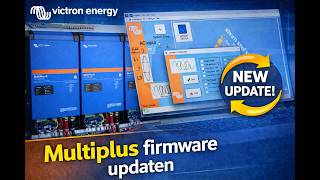 #10Updating Victron Multiplus firmware and connecting it to the CerboWritten by Roel AdriaansThree Multiplus units are wired and powered. They won't talk to the Cerbo yet. The fix: update the firmware, configure the grid code, set up three-phase, and load the ESS assistant on each unit.
 #11Wiring a Victron home battery with soft-start DC cablesWritten by Roel AdriaansConnecting a fully charged 51 V pack to three Multiplus units with empty capacitors is a recipe for a hard spark. Robbert walks through the lamp trick that pre-charges the inverters before the cables go on.
 #12Victron 3-phase home battery with 48 kWh LiFePO4 storage: 2025 summaryWritten by Roel AdriaansA consolidated walkthrough of Robbert's three-phase Victron build: 3x 5 kVA Multipluses, 48 kWh of DIY LiFePO4, a self-built Lynx Shunt that saves €200, and the Q&A that drove the design choices.
 #13Making DC cables for a Victron home battery systemWritten by Roel Adriaans70 mm² cables between three Victron Multipluses and the Lynx busbar. The tooling, the cable tray that wasn't big enough, and why proper hydraulic crimping matters.
 #14The Victron Cerbo GX: what it does and how to wire itWritten by Roel AdriaansEvery port on the Cerbo GX, what each one is for, and how to integrate it into a 48 V Victron setup using the existing busbar instead of a separate adapter.
 #16Class T, MEGA, or Adler EF3: choosing the right fuse for a home batteryWritten by Roel AdriaansWhy a MEGA fuse can fail to stop a short on a 314 Ah lithium pack, what the AIC rating actually means, and which fuse types survive the math for a 48 V DIY home battery.
 #17Turning a Victron Lynx Power In into a distributor for 70 euros lessWritten by Roel AdriaansThe Victron Lynx Distributor is essentially a Lynx Power In with four fuses and indicator LEDs. Robbert shows how to convert the cheaper unit yourself and skip the premium.
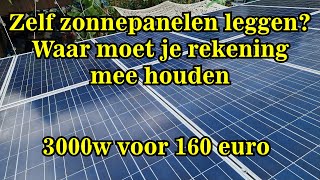 #18Sizing solar panels and an inverter for a DIY installWritten by Roel AdriaansSeries, parallel, or a mix. How to read the panel sticker, match panels to an inverter, and wire a self-installed array safely. Robbert walks through real numbers with second-hand Marktplaats panels.
 #19LiFePO4 vs lithium-ion: why home batteries use the safer chemistryWritten by Roel AdriaansNot all lithium cells are the same. Robbert breaks down the difference between LiFePO4, lithium-ion, and lithium-polymer, and why house-burning headlines almost always come back to the same chemistry.
 #20Building a Victron Lynx Shunt yourself for 200 euros lessWritten by Roel AdriaansA Smart Shunt, a 3D-printed housing, copper busbars, and an optional 500 A switch with precharge. Robbert builds a Lynx Shunt replacement that beats the original on price and features.
 #21Victron three-phase install: answers to the questions that came inWritten by Roel AdriaansEarth-leakage automats, neutral splitting, 25 A vs 40 A breakers, why 5 kVA over 3 kVA, AC-coupled vs MPPT, and the bypass switch. A round of Q&A on the three-phase Victron build.
 #22Connecting a Victron ESS at 48 kWhWritten by Roel AdriaansRobbert wires three Multiplus units into a three-phase meter box, extends the panel for safety, and runs 5x6 mm² cable to the shed. The careful version of a job most people rush.
 #23Victron three-phase home battery Q&A during the buildWritten by Roel AdriaansMid-build follow-up: why an RCD has to sit between main switch and subpanel, why Victron over cheaper alternatives, fire safety with LiFePO4, and the case for 3D-printed enclosures.
 #24Victron three-phase home battery: preparationsWritten by Roel AdriaansBefore the cables and the wiring, the mounting board. Robbert lays out the wall, drills for the Multiplus units, installs wiring trunking, and explains why every choice has a reason.
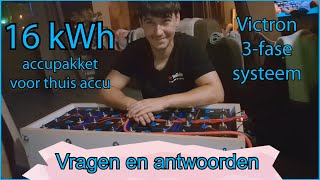 #25LiFePO4 16 kWh battery Q&AWritten by Roel AdriaansWhy 60 V fuses on a 48 V pack, Class T versus MEGA, the case for a torque wrench, and why DIY beats commercial for repairability. Comments-driven follow-up to the build.
 #26Building a 16 kWh LiFePO4 battery for a Victron home setupWritten by Roel Adriaans16 prismatic cells, a JK BMS, a fire-retardant MDF box, and two 100 A fuses. The full build of one 16 kWh pack, with three of them planned for 48 kWh of off-grid storage.
 #27DIY home battery at 48 kWh with a Victron three-phase setupWritten by Roel AdriaansShort visual overview of the full system: 48 kWh of LiFePO4 storage, three Victron Multiplus inverters, a Cerbo, and 51 solar panels. The plan to take a regular row house off-grid.