


The setup
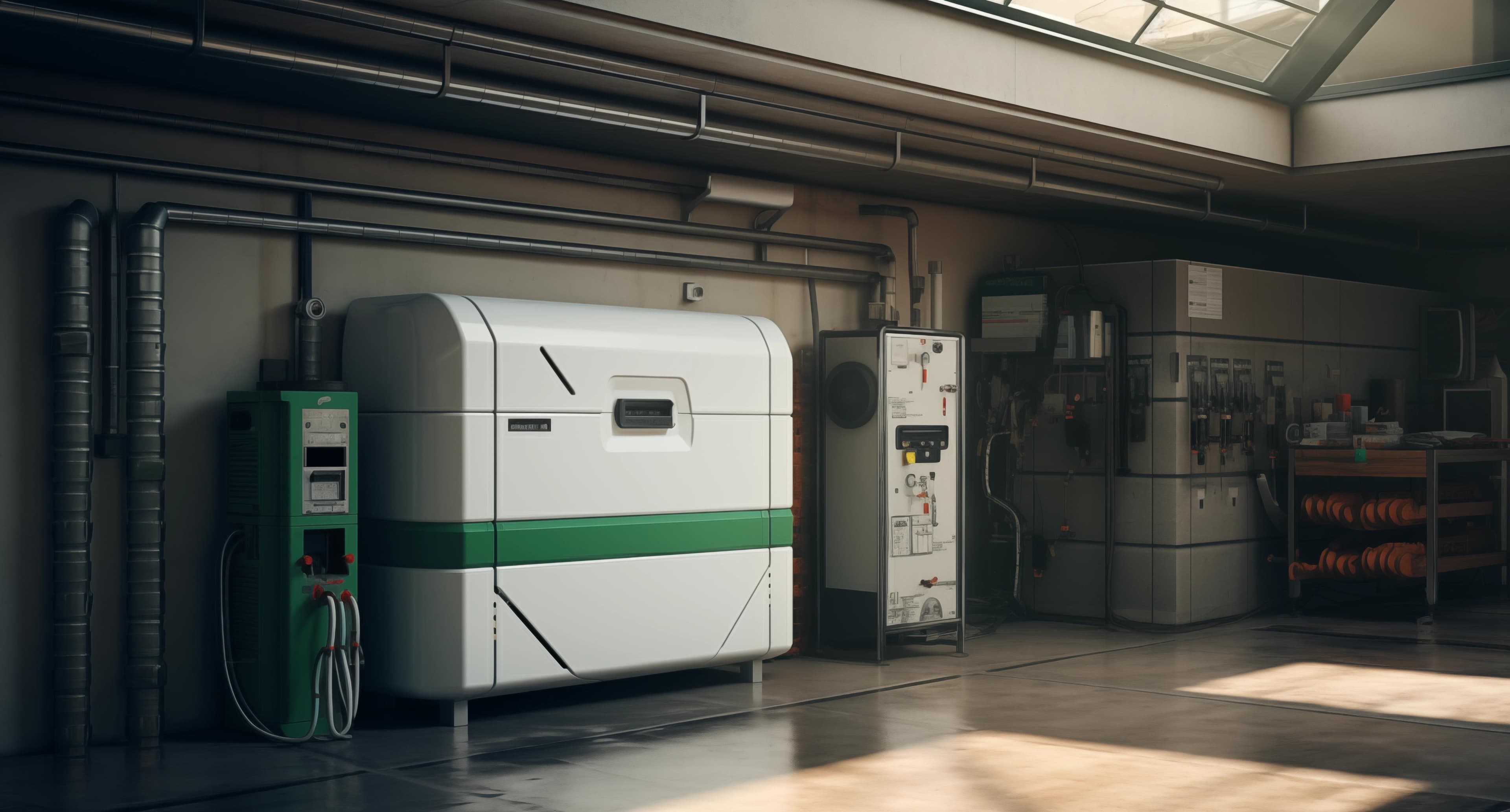
Three 5 kVA Multiplus 2 units, a heavily modified Lynx busbar (kept the function, cut the cost), and one 16s LiFePO4 pack of EVE MB31 cells. Per-cell continuous rating: 314 A. Possible discharge: around 357 A. Robbert is not going there. The plan once all three packs are installed is to draw a maximum of 100 A per pack. Cables, BMS, and fuses are all sized at 100 A. The cells can do more, but staying below their limit extends life and keeps the rest of the build honest.
For this test, one pack is in the cabinet. He pushes it to 4.5 kW continuous discharge for three hours and films it with a thermal camera.
The thermal camera
A Goyojo GW192A. Cheap by industrial-thermal standards, around €100, limited resolution but enough to see what's going on. The display maps the coldest point in frame to black and the hottest to yellow. If the gap is 3 °C, one thing looks black and the other looks bright yellow. The colour doesn't mean "hot", it means "hotter than the rest of the frame". This becomes important when looking at the busbars later: a "glowing" cable in the image is sometimes 26 °C.
Why 4.5 kW
Robbert wants each pack loaded to between 95 and 98 A. At a 51.2 V nominal, that's roughly 4.5 to 5 kW. He doesn't run it at a clean 100 A because the current fluctuates, and any spike above the BMS threshold trips the over-current protection and drops the pack. Stay just under.
He configures the three Multiplus units to feed back to the grid at 4.5 kW collectively, which pulls 96.5 A out of the pack via the BMS app.
What heats up, what doesn't
The starting baseline before discharge:
| Component | Temperature |
|---|---|
| Multiplus units | 14–15 °C |
| Busbar | room temp |
| Cerbo GX | warmer (internal PSU) |
| Cells | uniform, room temp |
| BMS | slightly warmer than cells |
After ten minutes at 4.5 kW:
- Battery output cable (heading to the busbar): 19 °C, room is 12 °C.
- 70 mm² cables to the Multiplus units: cool, no rise.
- BMS: 20 °C.
- Cells: still close to ambient.
After half an hour:
- Output cable holding stable around 34 °C.
- MEGA fuses on the busbar: 32 °C. Each fuse passes about 1500 W (one Multiplus per phase, total split across three), well inside spec.
- BMS: 30 °C, stable.
After two hours, pack at about 50% state of charge:
- BMS: 34 °C. Less than a typical laptop.
- Plus cable on the pack: 30 °C.
- Cells: 16 °C, roughly 5 °C above ambient.
- Busbars between cells: 17 °C, so 1.5 °C above the cell tops. No bolt joints glowing.
After three hours, pack empty, Multiplus units cut out:
- Cells: 16 °C. No hotspots.
- Class T fuse: warmer than the busbar around it, which is exactly what it should do. A fuse is the deliberate thermal weak point.
The balancing cables panic
Several commenters had pointed at the thin red wires on the pack and warned of fire. Those are the balancing leads, not power cables. They carry around 0.6 A while the BMS balances. In the thermal image they're invisible, indistinguishable from the surrounding metal. No current means no heat.
What the thermal image is actually telling you
A few things to read off the test that wouldn't be obvious from a multimeter alone:
- A loose bolt on a cell terminal would show as a bright single point against the otherwise uniform pack. Nothing of the sort appeared.
- The Class T fuse warming faster than its surroundings is correct behaviour, not a failure.
- The Multiplus units pushing hot air up the back of the cabinet shows on the ceiling above them. That's the natural convection from the internal fans.
- The "glowing" busbar reflections in the metal of the Lynx housing are not actually hot. They're reflective spots picking up nearby warmer surfaces. Spot-meter, don't trust eyeball.
Where this fits
This was a worst-case soak test. In normal operation each pack will see around 3 kW, not 4.5. With three packs eventually installed and 3 kW of solar per phase, the load splits and no single pack runs anywhere near the test conditions. The point of the test wasn't to validate normal use, it was to find out if the pack can take the abuse, and it can.
Takeaways
- A 16s LiFePO4 pack at 4.5 kW continuous discharge for three hours stays under 20 °C cell temperature in a cool room.
- The cables and BMS run hotter than the cells. Not by much.
- A thermal camera in this price range catches loose joints and overloaded conductors before they fail.
- Bright yellow on a thermal image doesn't mean dangerous: spot-meter every claim.
- The Class T fuse should warm faster than the surrounding busbar. That's the design.