


The premise
Comments came in fast on the 16 kWh DIY battery video. Some were sharp corrections, some were good tips, some were the start of a rabbit hole worth following. Robbert pulls the best of them into a single follow-up. The pattern is the same as every Q&A on the channel: viewers catch things he missed, and the build improves because of it.
The BMS run time
Viewer Kees noticed the BMS app showed 72 days of runtime. Sharp catch, easy explanation. Robbert originally planned a 100 A pack and bought 100 A LiFePO4 cells to start. After testing and seeing the form factor work, he switched to 314 A cells for a much larger pack. The same JK BMS that had been running on the 100 A cells came across to the new pack. The 72 days is real. It just wasn't this pack the whole time.
Insurance for a DIY battery
Mega Draadloos asked how home battery insurance works for a DIY build. The honest answer is that Robbert is not certain. Standard home batteries are usually covered under building insurance. DIY builds probably are too, but he hasn't checked the small print. The analogy he uses: a homeowner wiring their own induction cooktop is normally covered. A DIY battery should land in the same category, but worth verifying on a specific policy.
48 V or 60 V fuses
A correction worth pulling out. The pack runs at 48 V nominal, so the obvious fuse choice looks like a 48 V rating. Wrong. When the pack is fully charged, it climbs toward 56 V. Well above 48 V. Robbert used 60 V MEGA fuses for exactly that reason. Anyone copying the build should use 60 V rated fuses, not 48 V.
Class T fuses
Two viewers, Unieven and John Brown, asked why MEGA fuses instead of Class T. Robbert was honest on camera: he hadn't heard of Class T fuses before. When two independent viewers raise the same point, there is usually a real reason behind it. He plans to research the difference and may swap fuses in a later video if Class T turns out to be the better fit.
This is the build philosophy in one moment. He doesn't pretend to know. He says he'll look into it, and he means it.
Torque wrenches over socket-and-feel
The original video showed Robbert tightening terminal bolts with a ratchet. Viewer Migel pointed out a torque wrench is the better tool. They are not expensive, around €20, and they guarantee correct tension every time. Too loose and the joint heats up under load. Too tight and the post strips. A torque wrench takes the guess out of it.
Insulating the socket
Builder POS suggested wrapping the socket in tape. Simple, obvious, and Robbert agreed it lowers the short-circuit risk meaningfully. A bare metal socket near a live battery terminal is a spark waiting to happen.
Flexible busbars
Another comment recommended flexible busbars over rigid ones. Robbert kept the original rigid busbars that came with the cells. Once the pack is in service, he plans to walk it with a thermal camera at load and check whether the busbars run hot. Results go in a future video.
Cable ampacity
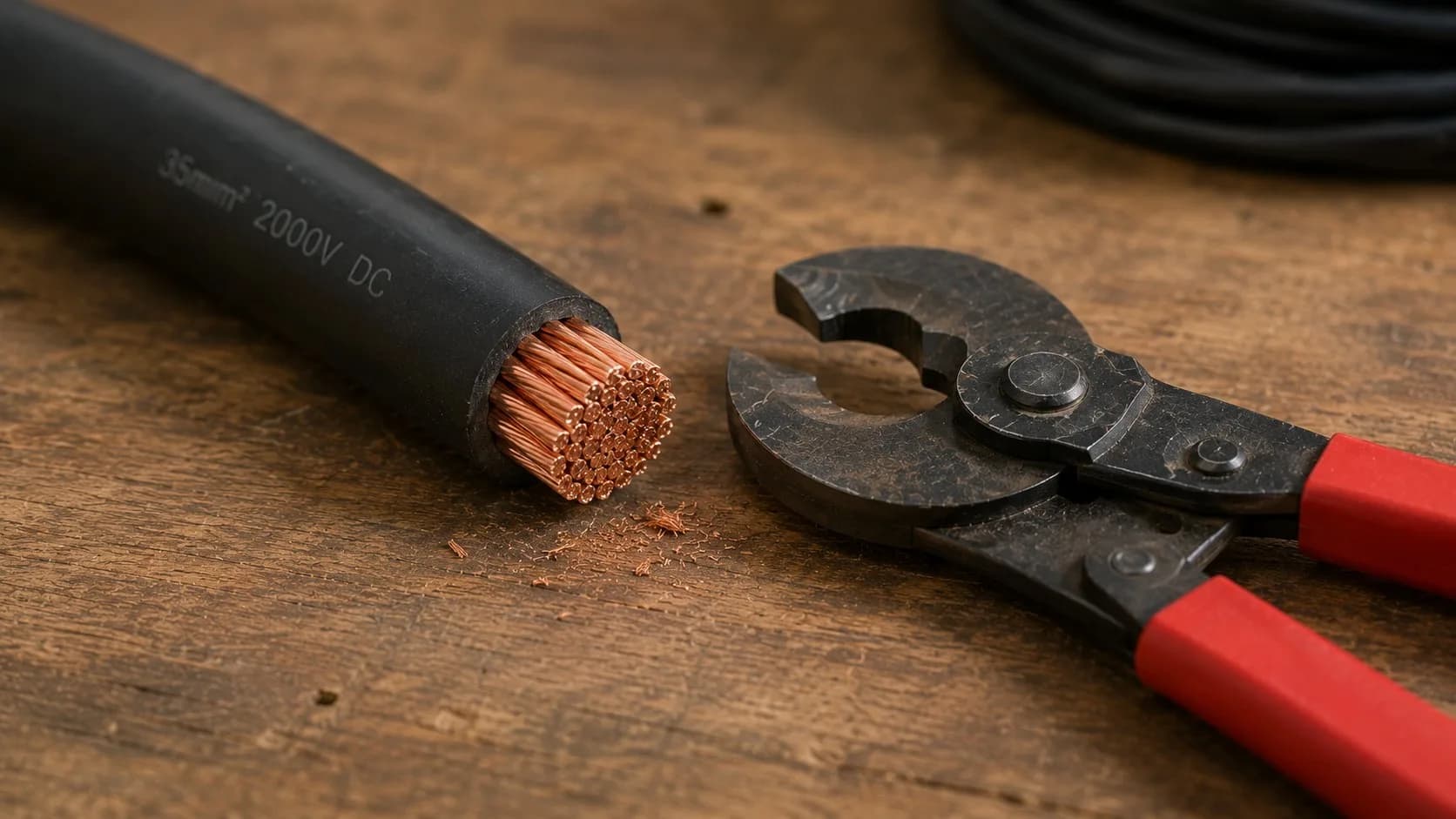
Someone questioned whether the 25 mm² cables in the build are rated for 80 A or higher. Robbert checked: 25 mm² should handle 128 A, and the pack is fused at 100 A. That leaves a 28 A margin. He plans to double-check the spec sheet because safety wins over confidence on a number from memory.
On Victron over AliExpress
A separate comment thread asked why Victron when the battery is DIY. The argument is the same one Robbert has made before. AliExpress modules are often loaded to or past their stated spec. The capacity ratings on no-name 18650 cells are physically impossible at the listed prices. A knowledgeable buyer spots it. A novice gets sold a fire hazard. With inverters, the same pattern repeats: overrated cheap components fail under real load, and the failure mode is heat.
He puts the position plainly. Stay realistic. Stay away from AliExpress for safety-critical components.
On automatic charge cutoff
Benels suggested using cheap PV chargers from AliExpress on the panel side and cutting them off slightly before the BMS would, so the BMS never has to take the load. Robbert is open to the concept but not the source. The principle of stopping early to spare the BMS is sound. The hardware brand is not.
Why DIY at all
The last thread Robbert wants to highlight is the case for DIY itself. The build is cheaper than a commercial pack of the same capacity. But the bigger reason is repairability. Robbert built it; he knows it. If something fails in three years, he can troubleshoot, source a replacement cell, and fix it. With a commercial pack, the user is at the manufacturer's mercy for proprietary parts. With a DIY pack, future modifications stay on the table.
Takeaways
- 48 V LiFePO4 packs reach ~56 V at full charge. Use 60 V rated fuses, not 48 V.
- Torque wrenches for battery terminals cost €20 and remove the guessing.
- Tape the socket. One tweet of black electrical tape, no spark risk.
- If two viewers raise the same point you have not heard of (here: Class T fuses), research it before defending the original choice.
- DIY is repairable. Commercial is not.