

A Third Of The Trash Could Be Soil
 Illustrative image
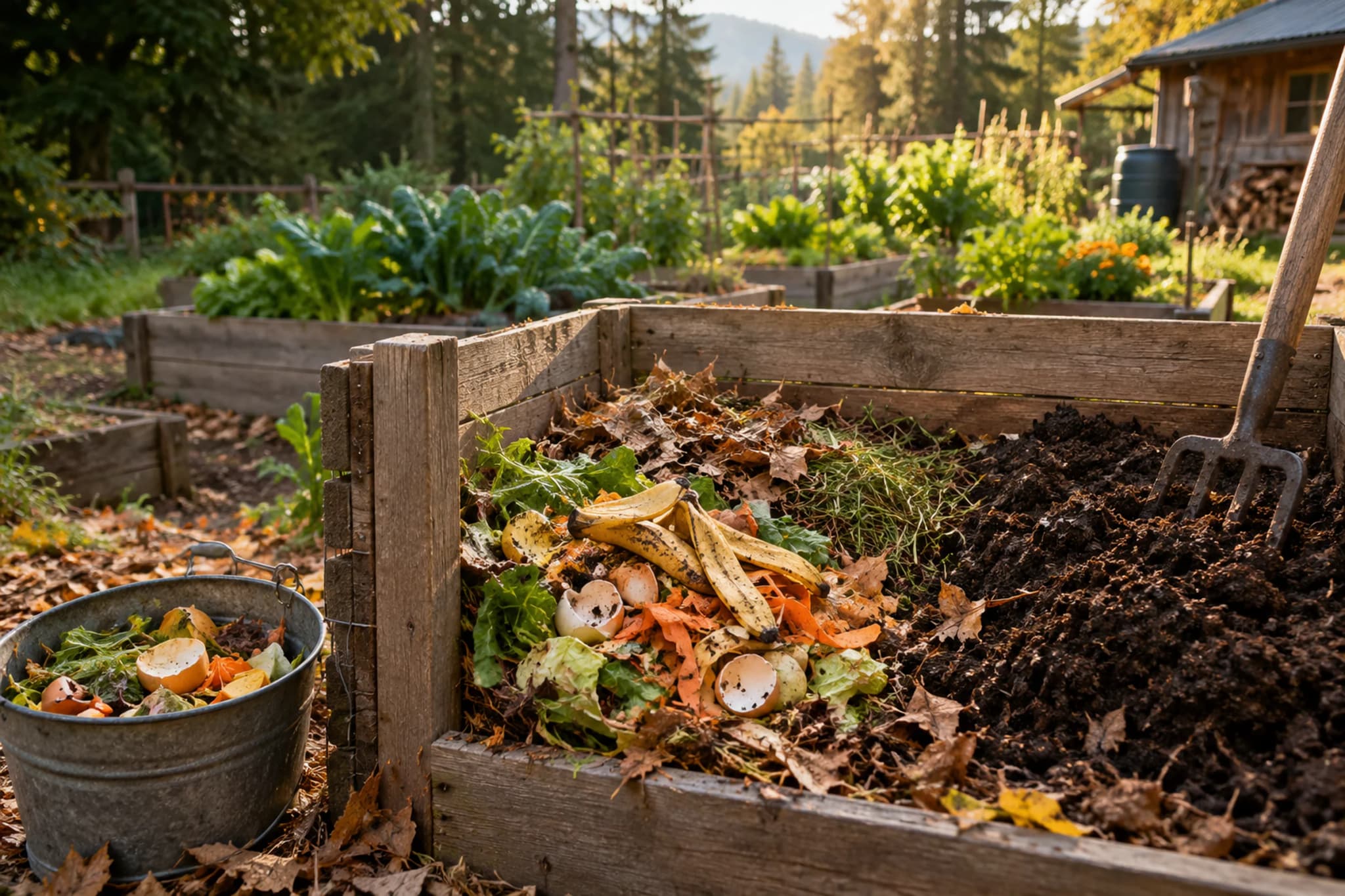
Look inside an American trash bin and about one third of it was never really trash. In 2018, food scraps and yard trimmings made up roughly 34 percent of everything US homes and businesses threw out.
Banana peels, grass clippings, fallen leaves. All of it can break down into dark, crumbly soil, and that's what home composting does.
In a landfill, that same food causes a hidden problem. It gets buried without air, and it rots in a way that produces methane, a gas that warms the planet. The US Environmental Protection Agency worked out that food is only about a quarter of what goes into landfills, yet it causes about 58 percent of the methane they leak.
That's why many towns and councils now run a food scrap collection. Off the grid, there's often no collection truck at all. So every peel that goes directly into your compost bin is one less thing to haul away, and one more handful of food for your soil. It's the easiest win in off-grid waste management.
How Does Composting Work? A Tiny Army At Work
 Illustrative image
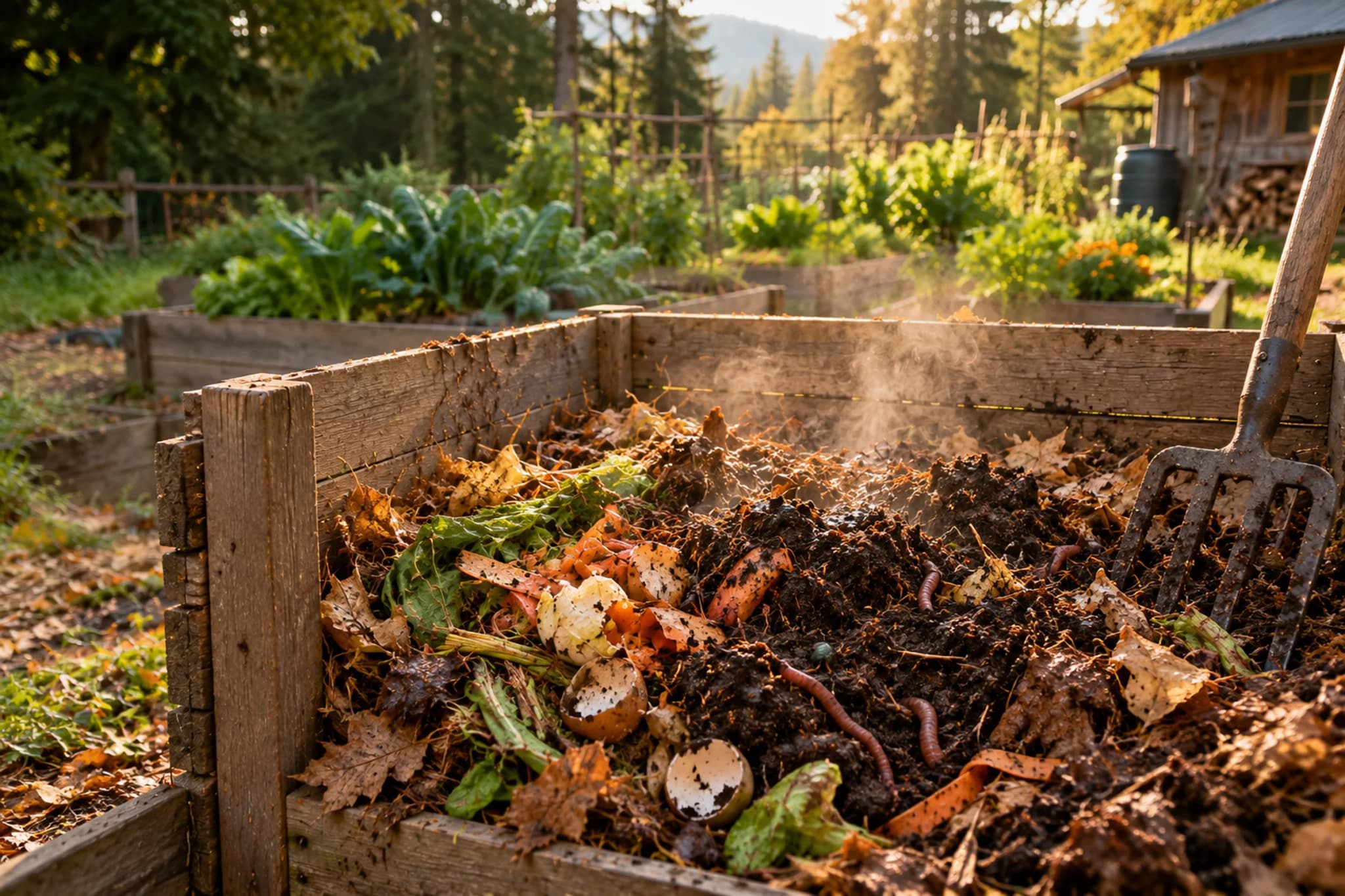
Composting is a natural process where tiny living things eat organic matter and turn it into compost. Organic matter just means anything that was once alive, like peels, leaves and straw. Bacteria and fungi do most of the eating, and worms and beetles join in later.
Like any team, they need three things to keep working: food, air and water.
Your scraps provide the food. Gaps in the compost pile provide the air, and so does turning it with a garden fork. Gardeners call this aeration, and the EPA says turning helps speed up the whole process. Water provides the rest, and the pile should feel like a sponge you've squeezed out, damp but not dripping.
When the team is busy, something surprising happens. The compost gets hot.
All that eating makes heat, just like your body warms up when you run. A well-kept backyard pile can reach 55 to 70 °C (130 to 160 °F), about as hot as a cup of tea. That heat helps kill weed seeds and many germs, so they don't end up back in your garden.
However, a hot moment is not a guarantee. Big professional compost heaps have to stay at 55 °C or more for at least 15 days under US rules for treating sewage sludge, with at least five turnings so the outside gets its turn in the middle. A backyard compost pile rarely does that, because its outside and bottom stay cooler.
So build your compost pile at least about a cubic metre, turn it so the outside goes into the middle, and check it with a long compost thermometer. Even then, keep diseased plants, weeds with ripe seeds and pet poop out.
People have known this for a long time. In India in the 1920s, a British plant scientist named Albert Howard worked with his wife Gabrielle at a research station in Indore.
Farmers there couldn't afford bought fertiliser, so the Howards built on traditional Indian composting. They worked out a careful recipe of layered plant waste and animal manure, and in 1931 Albert wrote it up in a book. Gardeners still call it the Indore method.
Greens And Browns: Feeding The Pile The Right Mix
 Illustrative image
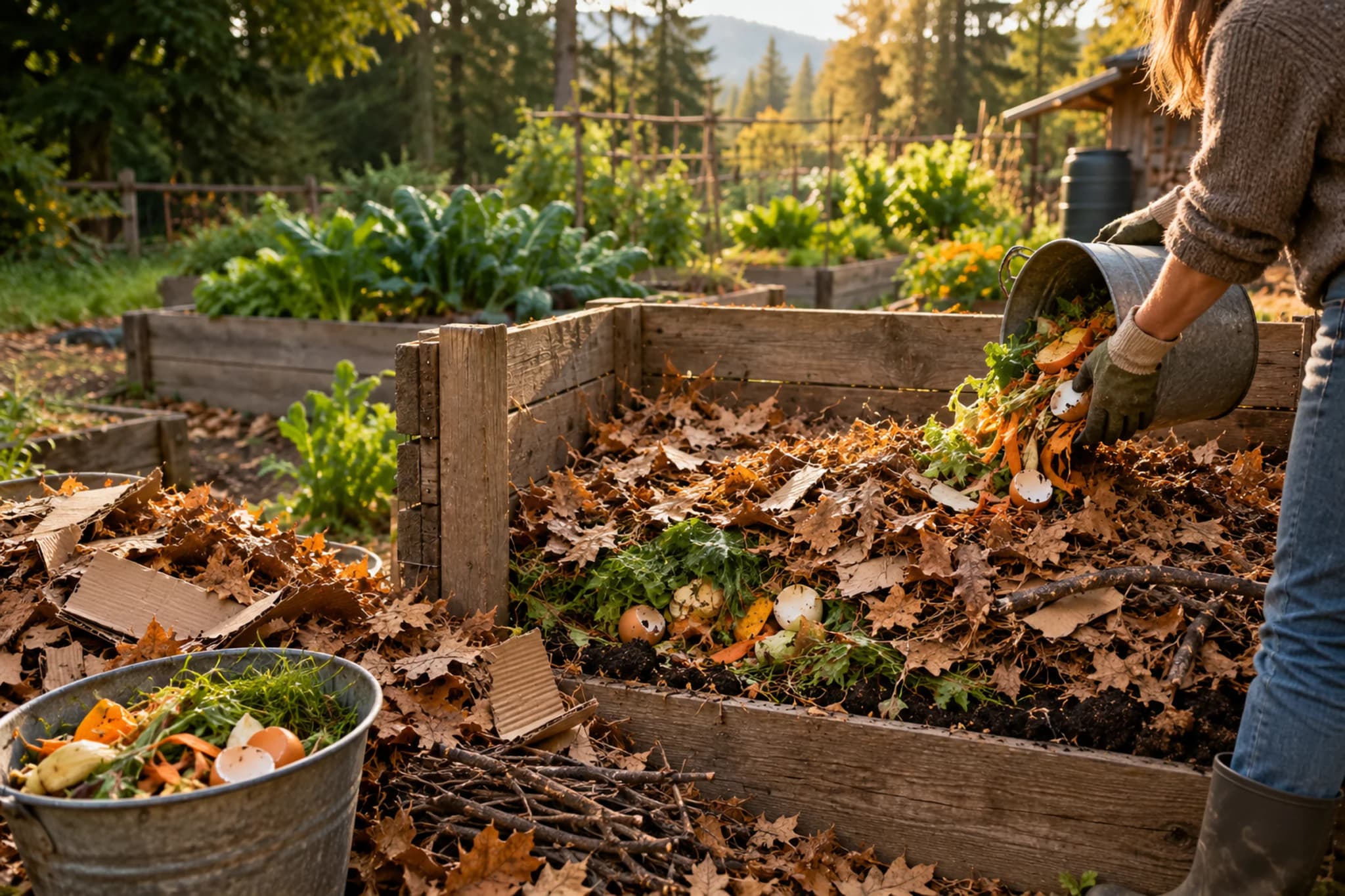
The secret to a successful compost pile is the mix of organic ingredients. Scientists sort the ingredients by what they're rich in, but gardeners just call them greens and browns.
Greens are the wet, fresh materials: fruit and vegetable scraps, grass clippings, coffee grounds, paper tea bags and crushed eggshells. They're rich in nitrogen, which is like protein for the tiny army.
Browns are the dry, crunchy materials: dead leaves, twigs, shredded paper, cardboard and untreated wood chips. They're rich in carbon, which works more like bread, filling and slow to burn.
The EPA's rule of thumb is two to three times more browns than greens, measured by how much space they take. So for one bucket of kitchen scraps, add two or three buckets of dry leaves.
Off-grid homes often have one extra ingredient. Manure from chickens, goats or horses counts as a green, and livestock can give a slow compost pile a great boost.
Producing Your First Compost
Here is the EPA's recipe, step by step:
- Choose a location you can reach all year, with good drainage and a hose or tap nearby.
- Start with a layer of bulky browns, like twigs or wood chips, about 10 to 15 centimetres (4 to 6 inches) deep.
- Add new scraps and dry stuff in layers as you collect them. Smaller pieces break down faster, so chop big ones first.
- Bury fresh scraps under 10 to 20 centimetres (4 to 8 inches) of dry leaves or straw. It hides the food from flies and curious animals, like a lid on a lunchbox.
- Keep it damp, and turn it regularly.
A compost bin works the same way as an open pile. It just keeps the compost in one tidy spot.
Hot Pile, Cold Pile Or Worm Bin: Kinds Of Composting
 Illustrative image
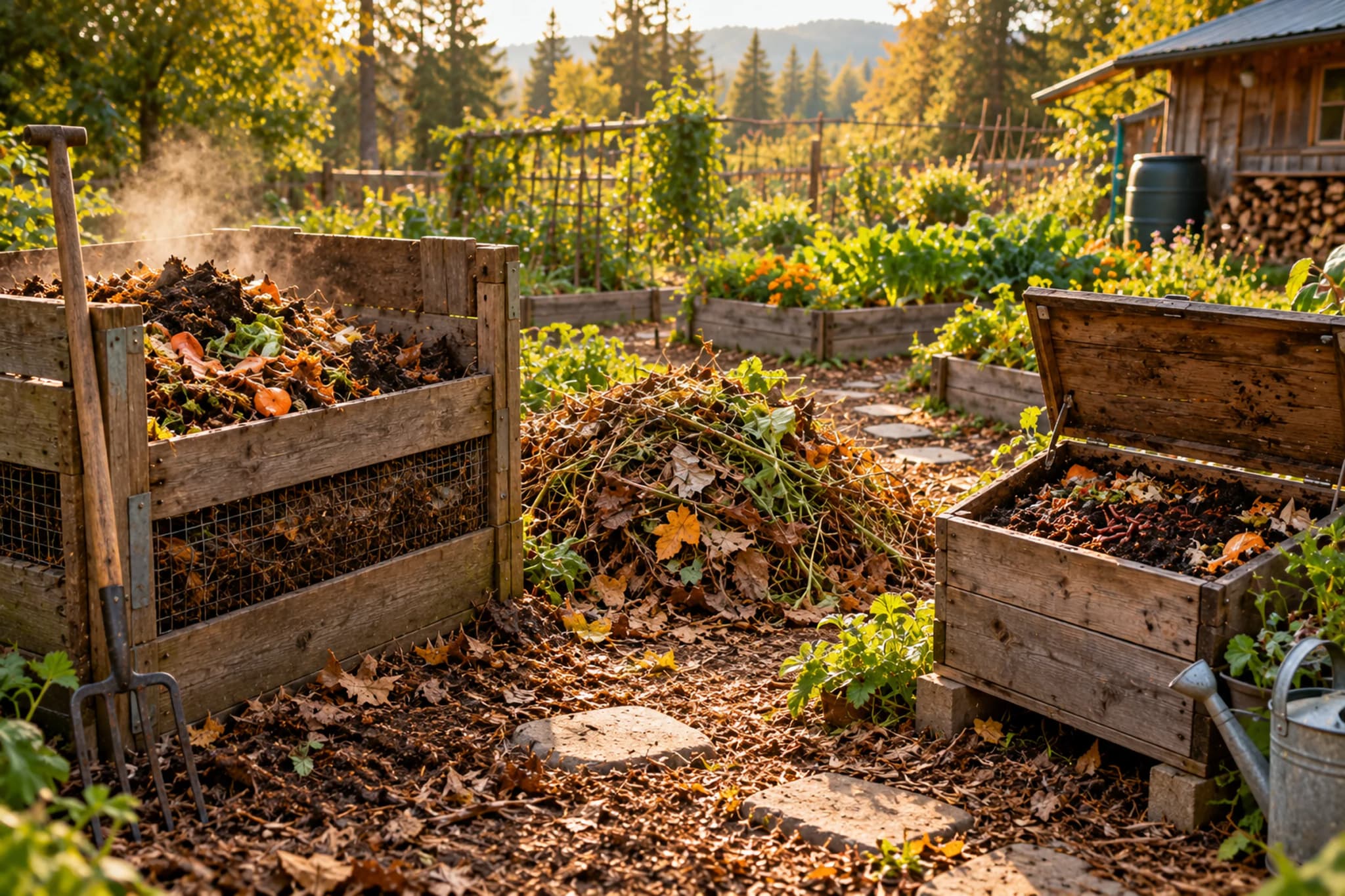
There's more than one way to make compost, and which option you choose depends on how much time and space you have.
The hot pile. You build a big heap or fill a compost bin, keep the mix and moisture right, and turn it regularly, every week or two. It heats up and works fast, and it can be ready in about three to five months.
The cold pile. You keep adding scraps and leaves and allow nature to take its time, without any turning. It's easy but slow, and the EPA says an untended pile can take about a year.
The worm bin. Scientists call this vermicomposting, which just means composting with worms. Special red worms live in a box of damp shredded paper and eat your scraps, leaving behind rich droppings called castings.
Worm bins are small enough for a porch or a tiny house. The worms like it about 15 to 25 °C (59 to 77 °F), a lot like a comfy classroom, and the compost is usually ready in three to six months.
Lots of people use more than one. A worm bin for kitchen scraps, and a big compost pile out back for leaves and garden waste.
What Not To Put In Your Compost Pile
 Illustrative image
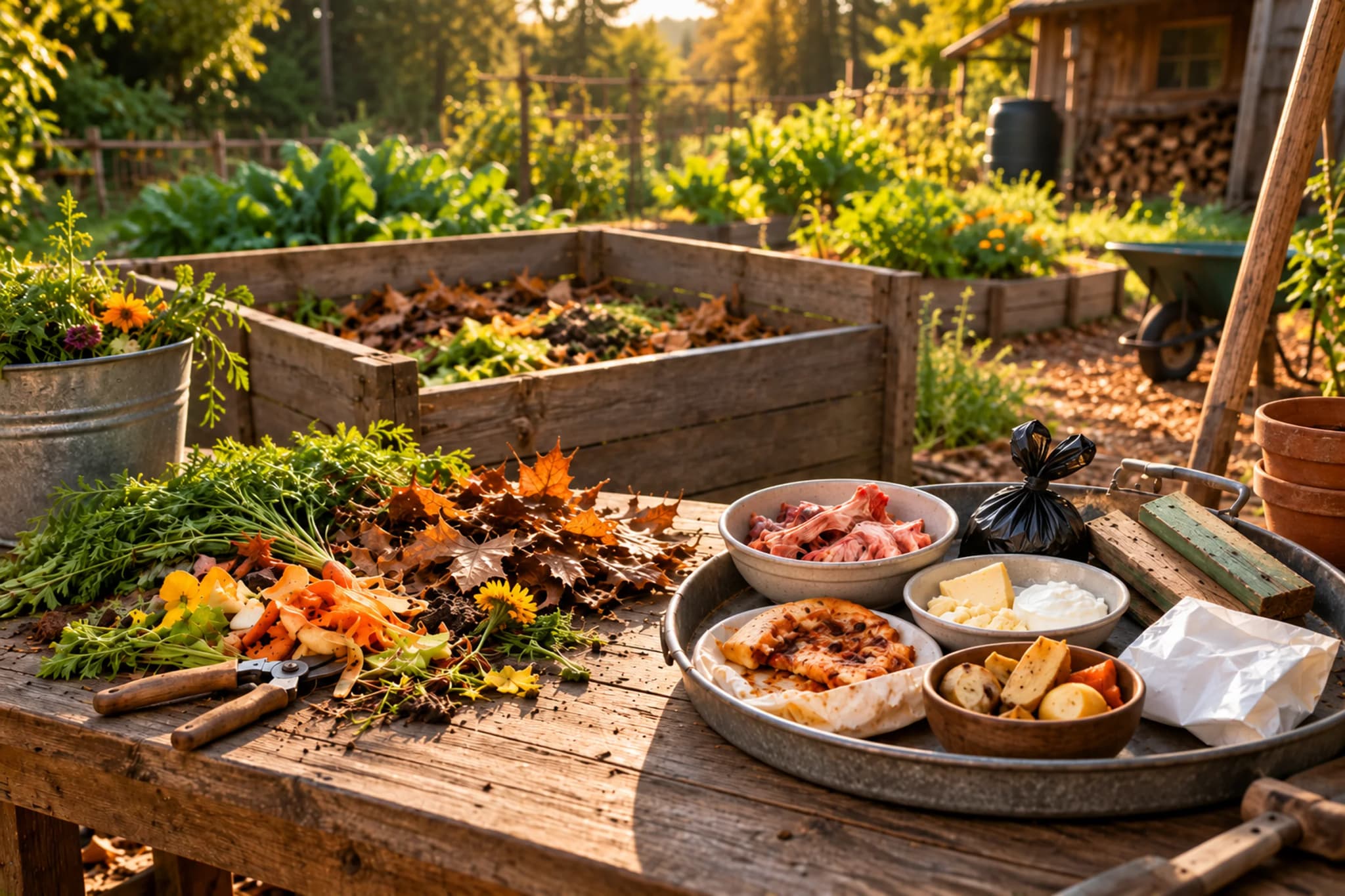
Some materials don't belong in a home compost pile, even though they're organic and they rot, so it's important to avoid them.
Meat, fish, bones, cheese, oil and grease attract rats, raccoons, dogs and bears. A little cooked food is usually fine, but a lot of it brings visitors.
Other materials carry trouble the compost can't always fix, including:
- Dog and cat poop, and used cat litter, which can carry germs that make people sick
- Sick or bug-covered plants, and weeds that have gone to seed
- Lawn clippings or plants sprayed with weedkiller
- Painted or treated wood, glossy paper and the stickers on fruit
"Compostable" plastic cups and bags are a surprise for many people. A backyard compost pile usually doesn't stay hot for long enough to break them down fully.
Human waste is a whole different story. It can be treated, but it needs its own system and its own rules, which is what composting toilets and septic systems are for.
Why Compost Smells, Stalls Or Takes Forever
 Illustrative image
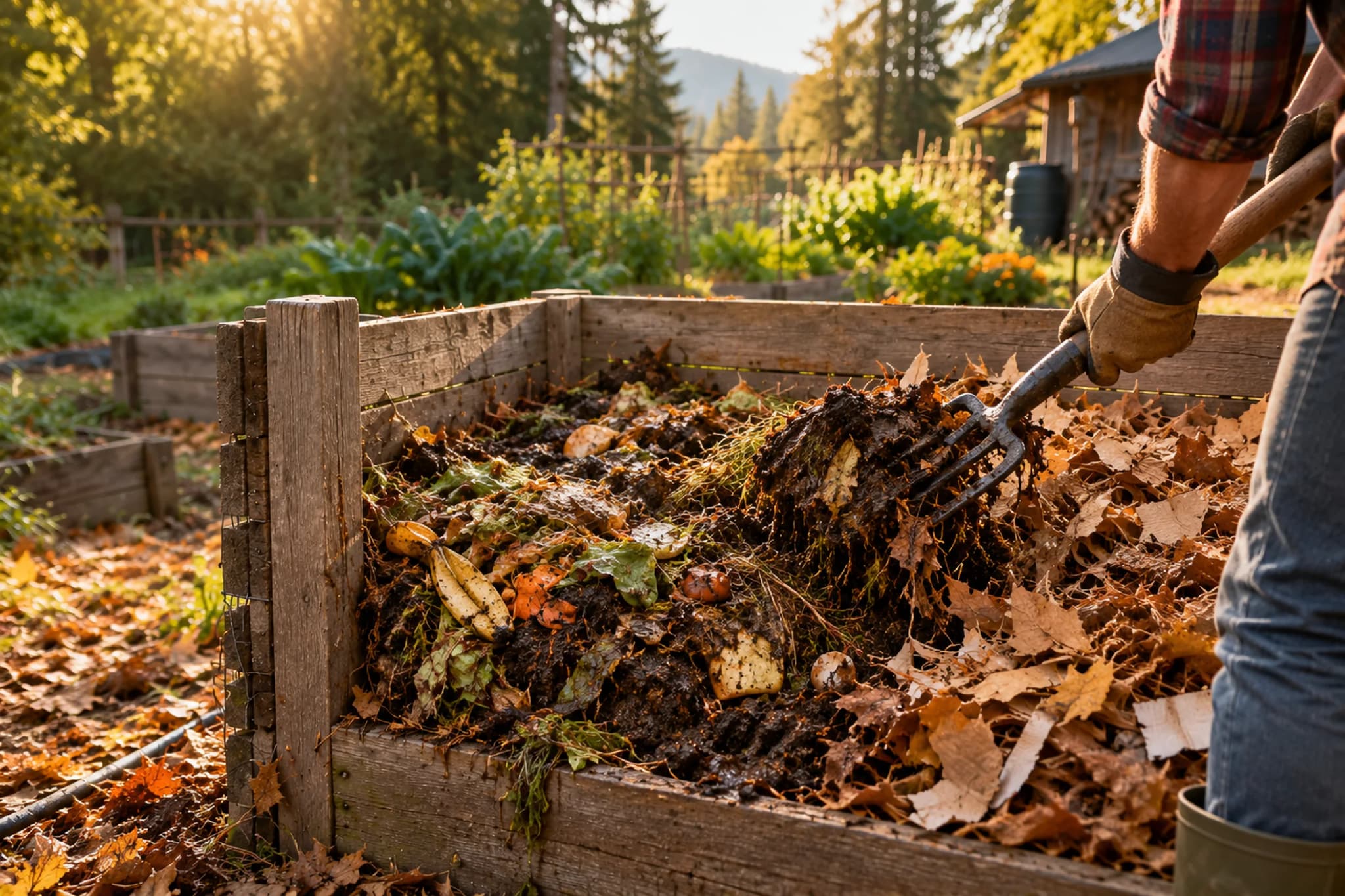
A healthy compost pile smells like a forest floor after rain. If yours stinks, the tiny army is trying to tell you something.
It stinks. The compost is too wet or packed too tight, so air can't get in. Add more browns and turn it with a fork.
Nothing is happening. It's probably too dry. Sprinkle in water and turn it, until it feels like that squeezed-out sponge again.
It won't heat up. It may need more fresh scraps or a bucket of manure. Or it's simply too small, because a compost pile about the size of a washing machine holds heat much better than a small one.
Cold weather slows the tiny army down too. A compost pile can almost stop in winter and wake up again in spring.
How do you know when it's done? You can't spot any food scraps, it has an earthy scent, and it has stopped heating up.
The EPA then says to allow it to rest for at least four more weeks. This "curing" time lets the compost settle so it won't harm young plants. By the end, the compost pile has shrunk to about one third of its starting size.
Is Home Composting Worth It Off The Grid?
 Illustrative image
For most off-grid homes, yes. It costs almost nothing, and it shrinks the pile of trash you have to drive to the dump.
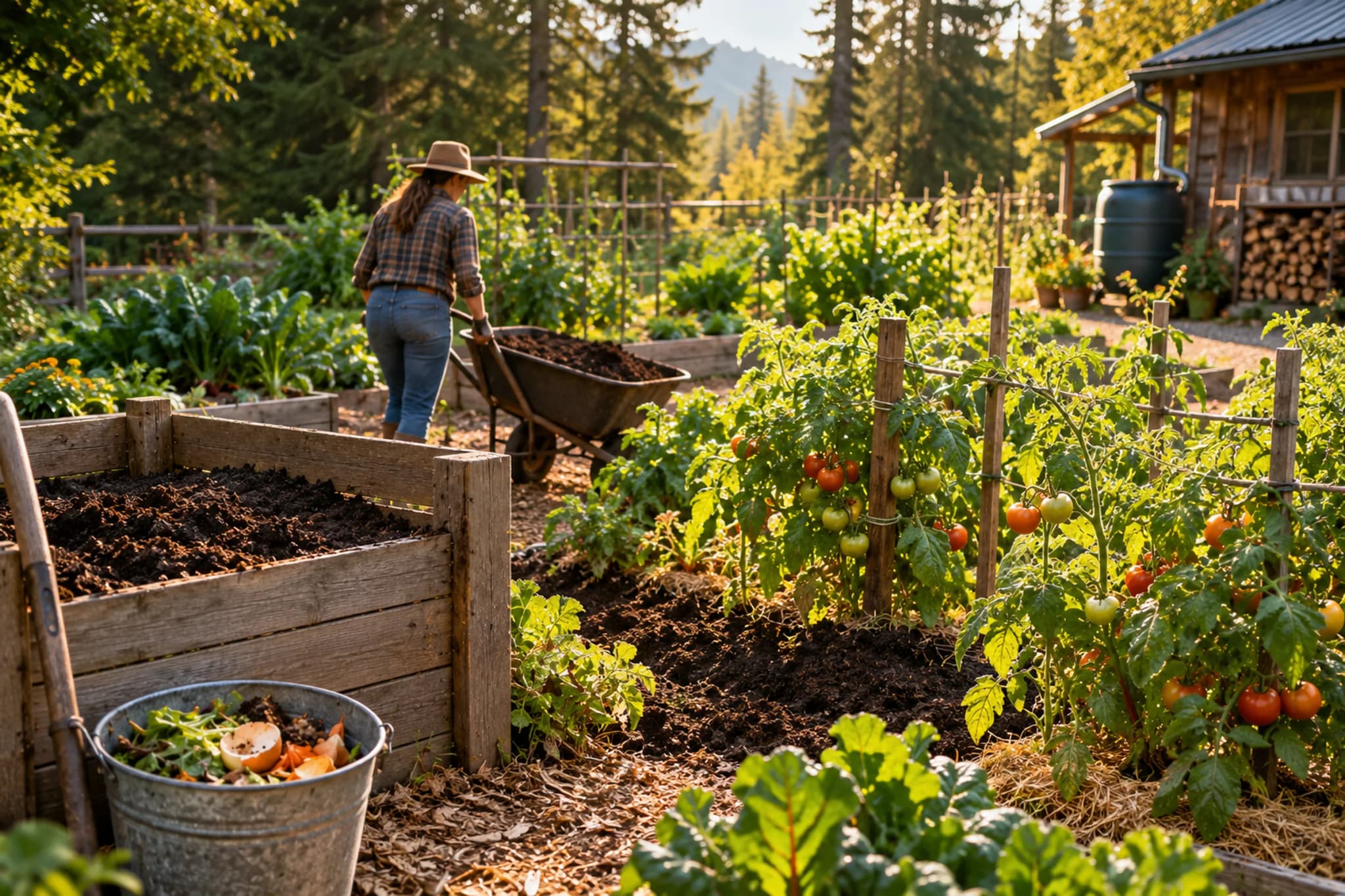
The bigger payoff is in the soil. Finished compost is great natural food for a vegetable garden and for flowers. It adds organic matter that helpss sandy soil hold water and clay soil drain, and the EPA says it means you need less fertiliser.
It does take a little effort. You need space for a compost bin, a steady supply of browns, and a few minutes a week to check and turn.
However, it won't take care of everything you throw away. Glass, metal and plastic need a different plan, and that's where recycling and reuse come in.
But think about where those banana peels would end up. Buried in a landfill, making methane. Or in your own garden, where a bucket of peels becomes next year's tomatoes.
Sources
- US EPA, Composting At Home
- US EPA, National Overview: Facts and Figures on Materials, Wastes and Recycling
- US EPA, Quantifying Methane Emissions from Landfilled Food Waste
- Cornell Law School LII, 40 CFR Part 503 Appendix B: Pathogen Treatment Processes
- Wikipedia, Albert Howard
Hard Words
| Term | What it means |
|---|---|
| Compost | Dark, crumbly soil made from rotted-down scraps, leaves and plants. |
| Greens | Wet, fresh compost ingredients like vegetable scraps and coffee grounds, rich in nitrogen. |
| Browns | Dry compost ingredients like dead leaves and cardboard, rich in carbon. |
| Nitrogen | A building block that living things need to grow. Fresh scraps are full of it. |
| Carbon | The main ingredient in dry plant material. It gives the tiny compost army energy. |
| Aeration | Letting air into the pile, mostly by turning it with a fork. |
| Methane | A gas made when food rots with no air. It traps heat in the air and warms the planet. |
| Vermicomposting | Composting with worms, which eat scraps and leave rich droppings behind. |
| Castings | Worm droppings. They're one of the richest kinds of compost. |
| Curing | The resting time after a pile stops heating, so the compost settles and is safe for plants. |
Common Questions
How long does it take to make compost in a compost bin?
A hot compost bin that you turn every week or two is usually ready in about three to five months, according to the US EPA. An untended pile can take about a year. Then let it cure for at least four more weeks.
Does a compost bin smell?
A healthy one doesn't. It should have an earthy scent, like a forest floor. A rotten stink usually means it's too wet or packed too tight, so mix in shredded cardboard or paper and turn it.
Can grass clippings be composted?
Yes. Fresh clippings are rich in nitrogen, so mix them with plenty of dry leaves. Leave out any lawn sprayed with weedkiller.
Can you compost in winter?
Yes. It slows down a lot, but you can keep adding scraps all winter, and a bigger pile, well insulated with dry leaves, holds its heat longer.
What are the different types of composting methods?
The three main home methods are a hot pile, a cold pile and a worm bin. A hot pile is turned often and works fastest. A cold pile is left alone and takes about a year. A worm bin, called vermicomposting, uses red worms and fits on a porch.
Does a compost pile need to get hot?
No. A hot pile works faster and kills more weed seeds and germs, but a cold pile still turns into compost, just more slowly.