
A Clear Glass Of Water Can Still Make You Sick
 Illustrative image
In the spring of 1993, people in Milwaukee, USA, started getting sick. Not a few people. About 403,000 of them.
The city's water supply had a real treatment plant, with filters and disinfection. But a tiny parasite called Cryptosporidium slipped through a filter that wasn't working well. It's only about 4 to 6 microns across, and chlorine barely bothers it.
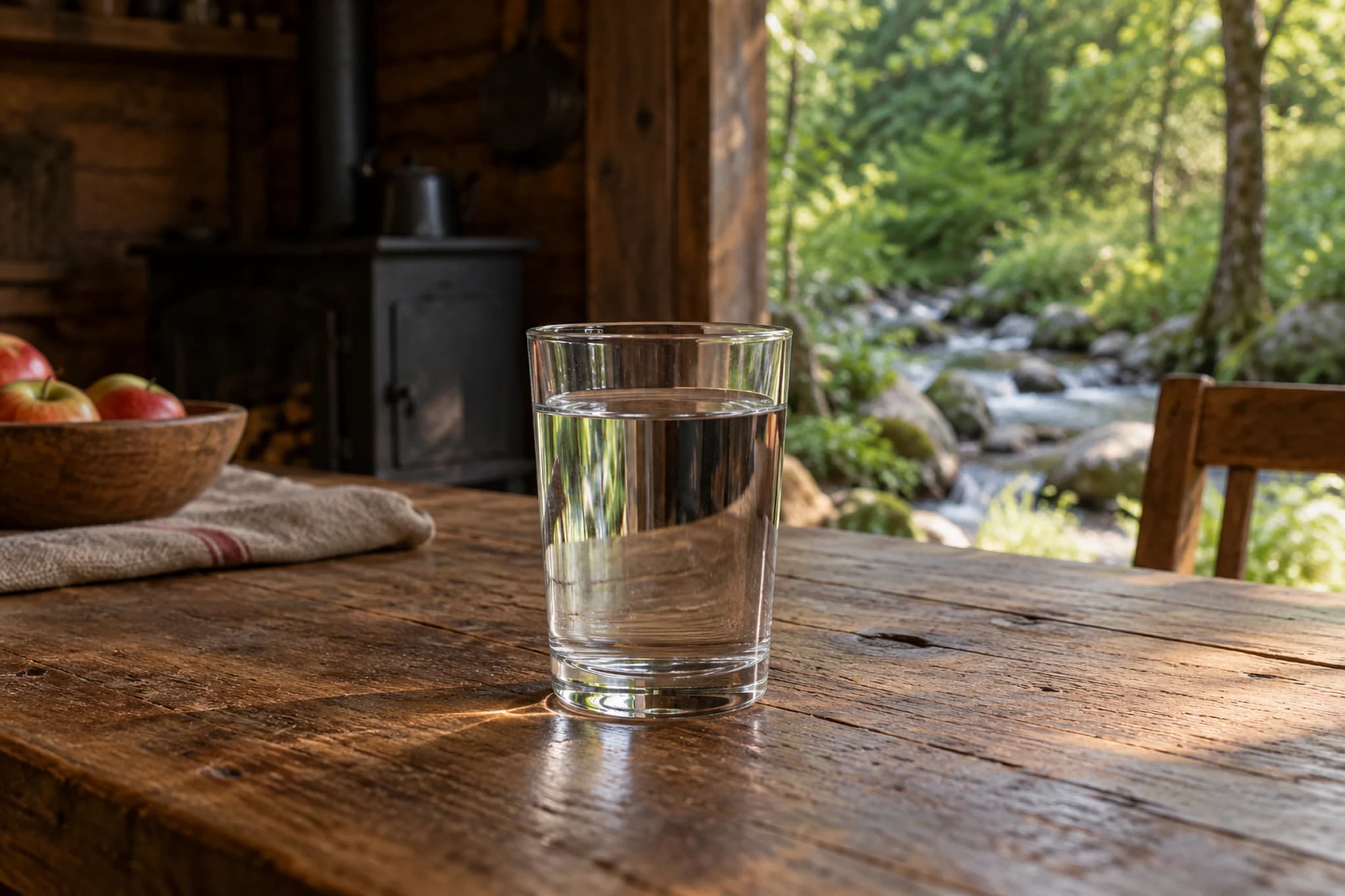
That's the most important lesson if you want to know how to purify water off grid. Water can look clean, smell fine and taste great, and still carry something that makes you ill.
When you collect your own water from a well, a roof or a stream, you become your own water company, like many rural homes. Nobody else checks the quality of your supply. So it helps to know what can be in that water, and which tool deals with which problem.
Three Kinds Of Trouble Hiding In Water
 Illustrative image
Think of water as a crowded school bus. Some passengers are harmless, while others you really don't want on board. Scientists call the unwanted passengers "contaminants", which is just a grown-up word for stuff in the water that shouldn't be there.
The first kind of contaminant is germs. They come in three sizes. Parasites are the biggest, bacteria are smaller, and viruses are the tiniest of all.
Scientists measure them in "microns". That's just a fancy word for a thousandth of a millimetre. Line up a thousand of them and you get one millimetre, about the thickness of a credit card.
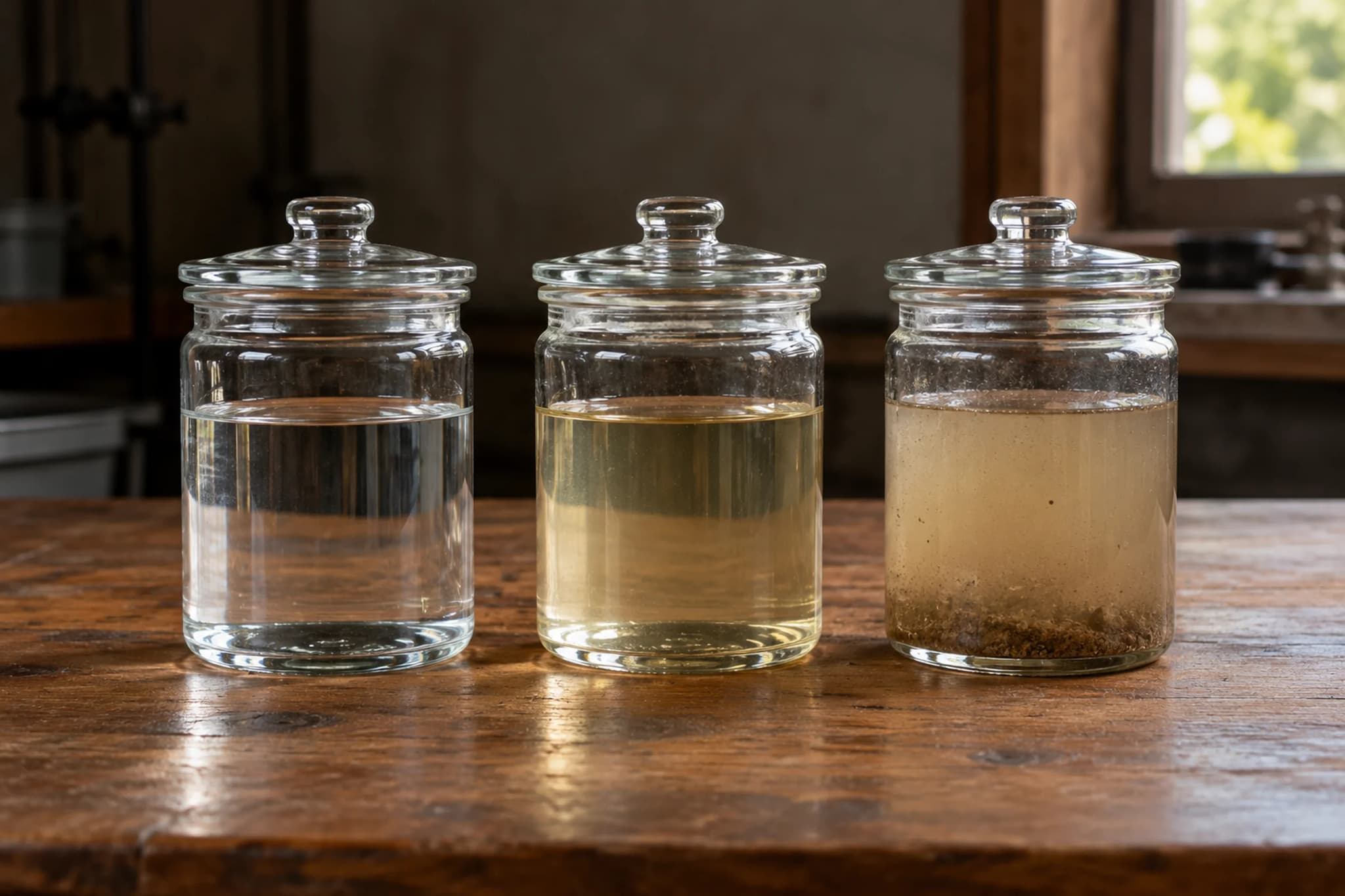
The second kind is chemicals. Think of nitrate from fertiliser, lead from old pipes, or arsenic that comes naturally out of some rock. They're dissolved in the water like sugar in tea, so you can't see them at all.
The third kind is plain dirt. Mud, leaves and rust make water cloudy, and water people call those floating bits "suspended solids". The cloudiness itself has a name too: "turbidity". Dirt isn't always harmful by itself, but germs love to hide behind it.
Your location matters as well. A stream below a farm, a well in old mining country and a roof tank in a city each carry different contaminants.
Here's the tricky part. A tool that handles one kind of contaminant may do nothing against the others.
How Water Purification Methods Work: Strain, Grab Or Kill
 Illustrative image
Every water purification method does one of three jobs.
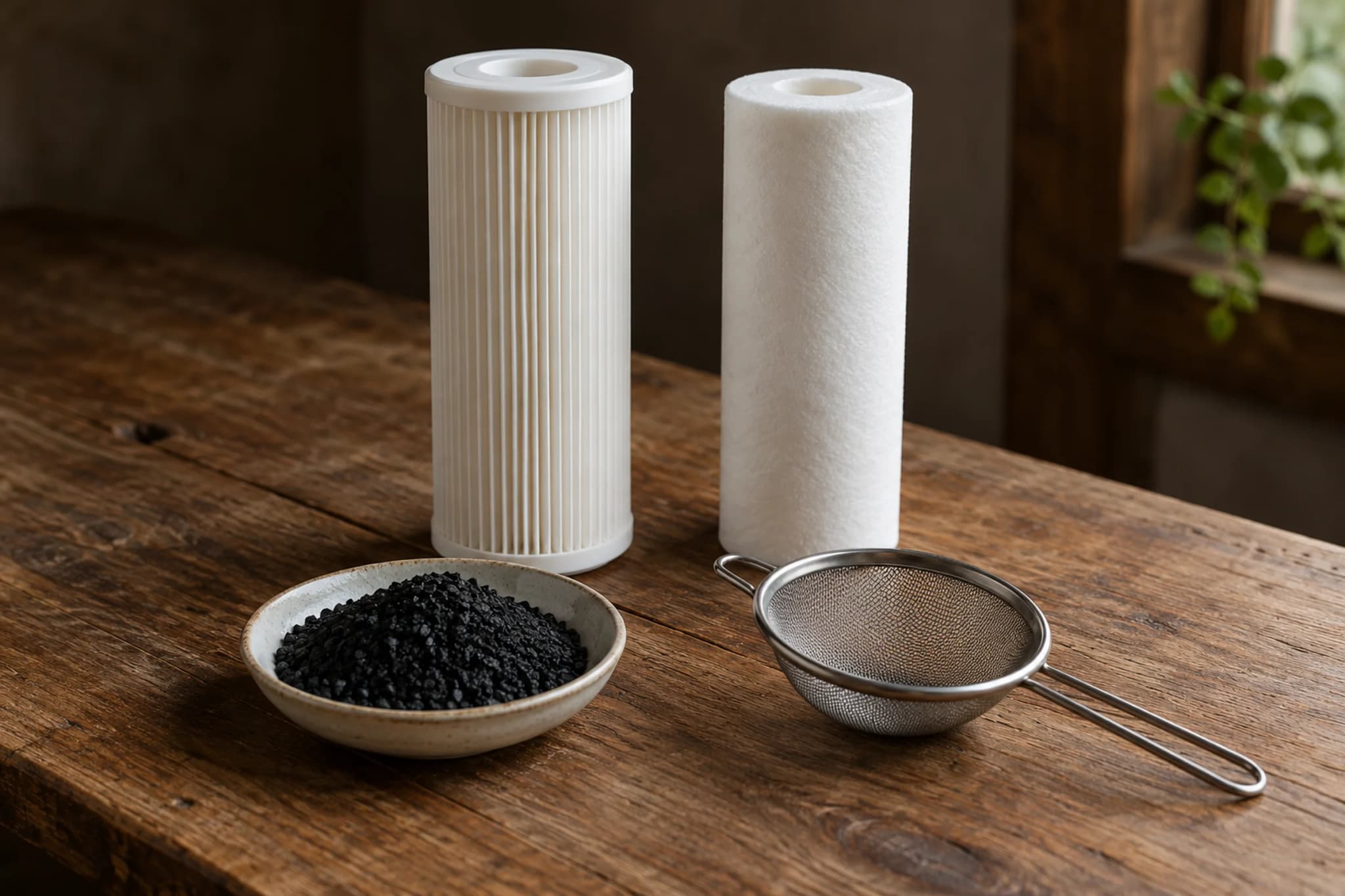
Strain. A filter works like a sieve in the kitchen. Water squeezes through tiny holes, and anything bigger than the holes gets stuck. The smaller the holes, the smaller the things it can catch.
Grab. Some materials are sticky on a tiny scale. Activated carbon is charcoal full of millions of little tunnels, a bit like a sponge for smells. Certain chemicals stick to its walls as the water flows past.
Kill. Heat, bleach and UV don't take germs out of the water. They damage them so they can't make you sick anymore. The germs are still in there, they just can't do anything.
Notice what's missing from "kill"? Chemicals. You can't boil nitrate to death.
Types Of Water Filtration Systems And What They Remove
 Illustrative image
This is where most people get surprised. Here's a rough map of the options available, based on guidance from the US Centers for Disease Control (CDC) and the US Environmental Protection Agency (EPA).
| Method | Germs | Chemicals |
|---|---|---|
| Boiling | Kills them | No, and it can concentrate them |
| Bleach (chlorine) | Kills most, but not Cryptosporidium | No |
| Activated carbon | No | Some, plus taste and smell |
| Ultrafiltration | Parasites and bacteria, only some viruses | No |
| UV light | Kills them, in clear water | No |
| Reverse osmosis | Removes them | Many, like lead and nitrate |
| Distillation | Removes them | Many, but not all |
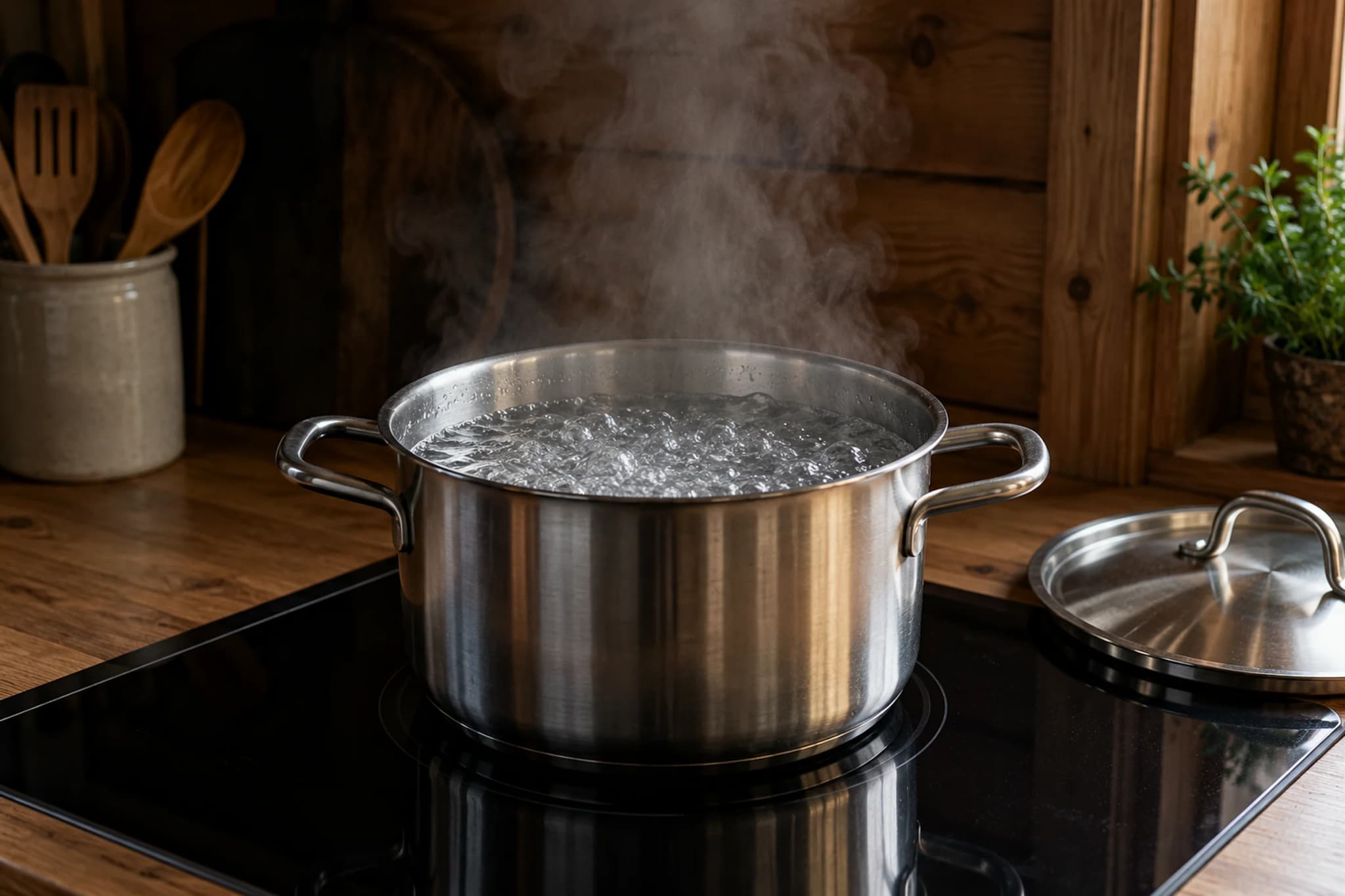
Boiling is the oldest, most traditional trick. It's one of the most effective ways to kill germs. Health agencies say a rolling boil for 1 minute is enough, or about 3 minutes higher up in the mountains. But boiling sends water away as steam and leaves chemicals behind, so they actually get stronger in the pot.
Bleach is the emergency backup. In a flood, the EPA's recommended amount for clear water is 8 drops of plain, unscented 6% household bleach per gallon (about 4 litres), then wait 30 minutes. Cloudy or very cold water needs double, so 16 drops per gallon. That's a short-term fix, not a daily system.
Sand filters are surprisingly clever. In a slow sand filter, a slimy living layer grows on top of the sand, and that layer eats many of the germs. London's Chelsea Waterworks was using one in 1829, one of the first big city filters.
Tests by the CDC found these filters take out roughly 80 to 99% of bacteria. That's effective, but it's not 100%, so they're usually one step, not the whole job.
Carbon filters, like most pitcher and fridge filters, make water taste and smell better and catch some organic chemicals. Most are not effective against germs at all.
UV, short for ultraviolet, is the same invisible light that gives you a sunburn, only much stronger. It's very effective against germs. Water flows past a glowing lamp, and the rays scramble the germs' insides so they can't multiply.
Reverse osmosis (RO for short) uses water pressure to push water through a skin, or "membrane", with holes about 0.0001 micron wide. That's so small that even many dissolved chemicals can't fit. It also sends some water down the drain to rinse itself, sometimes several litres for every litre you drink, though newer units waste less.
Distillation boils water, catches the steam and cools it back into liquid. It's thorough, but slow and hungry for energy.
Putting It Together: A Water Treatment Train
 Illustrative image
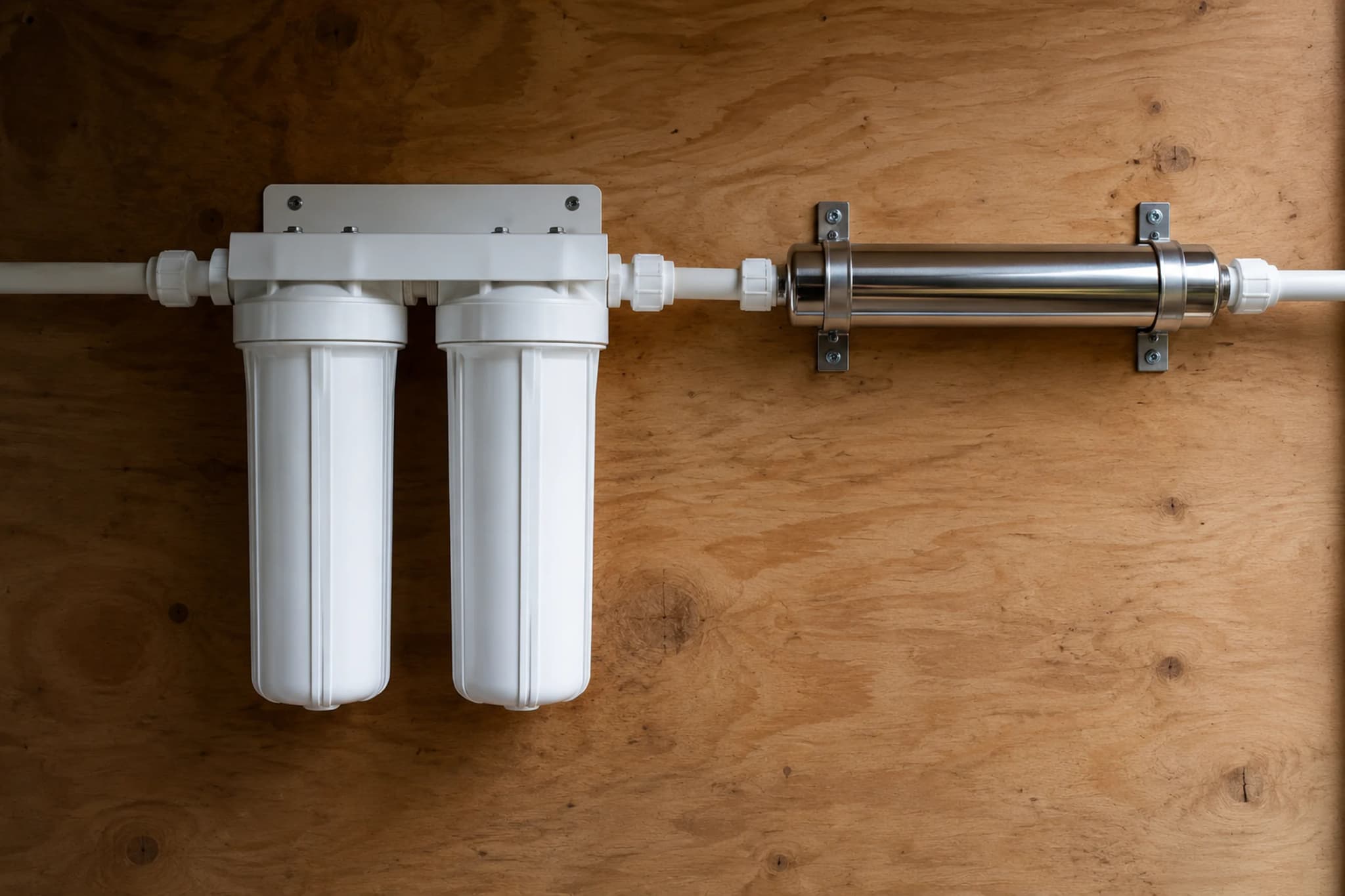
Since no single tool does everything, off-grid homes line up various steps in a row. People call this a "treatment train", and each car handles its own contaminants.
But don't copy a train before you know what is in your water. Go in this order:
- Test the raw water at a certified lab: germs, nitrate, metals like lead and arsenic, and anything your health department says is common nearby, including PFAS in some areas.
- Find the problem. Which contaminants turned up? Germs only? Dirt? A chemical above the safe limit?
- Pick a filter certified for that problem. In the US and Canada that means an NSF/ANSI certificate that names it. For PFAS, the EPA points to filters certified to NSF/ANSI 53 (carbon) or 58 (RO), and says to check that the certificate lists the exact chemical.
- Test the clean water to prove it works. To ensure it keeps working, test again every year.
The train below is a starting point for dirt, taste and germs. It is not enough on its own for nitrate, lead, arsenic, PFAS or other dissolved chemicals. Those need their own step, picked from your test result.
A common train for rainwater or well water looks like this. First the water settles or passes a coarse screen, so leaves and grit stay out.
Next comes a sediment filter, which catches the fine dirt and keeps the next steps clean. Then a carbon filter grabs some chemicals and bad tastes.
Last comes the UV lamp, right before the tap, so the water you consume is clean at the very end. The order matters, because UV only works in clear water. A speck of dirt can cast a little shadow where a germ hides from the rays. For surface water, like a stream or a pond, the UV standard calls for a filter rated for parasite cysts in front of it.
If a test shows chemicals like nitrate, arsenic or PFAS, an RO unit under the kitchen sink is a common add-on for the water you drink and cook with. Some problems need something else again, like a special arsenic or ion-exchange filter. Choose one certified for exactly what your test found.
What about power? A whole-house UV unit draws roughly 35 to 60 watts, and it stays on day and night. That adds up to about 0.8 to 1.4 kWh a day.
So it belongs on your list when you work out your daily power use. The solar panel calculator can then show how many panels that adds.
There's also a free solar method available to anyone. With SODIS, short for solar disinfection, you fill clear plastic bottles and leave them in full sun for 6 hours, or 2 days when it's cloudy. It's used around the world in emergencies when people have no access to clean water or power, but it does nothing for chemicals.
Keeping Your Drinking Water Safe Over Time
 Illustrative image
A filter is only as good as its last check. It's like a goalkeeper: it does great until it gets tired, and then everything flies past.
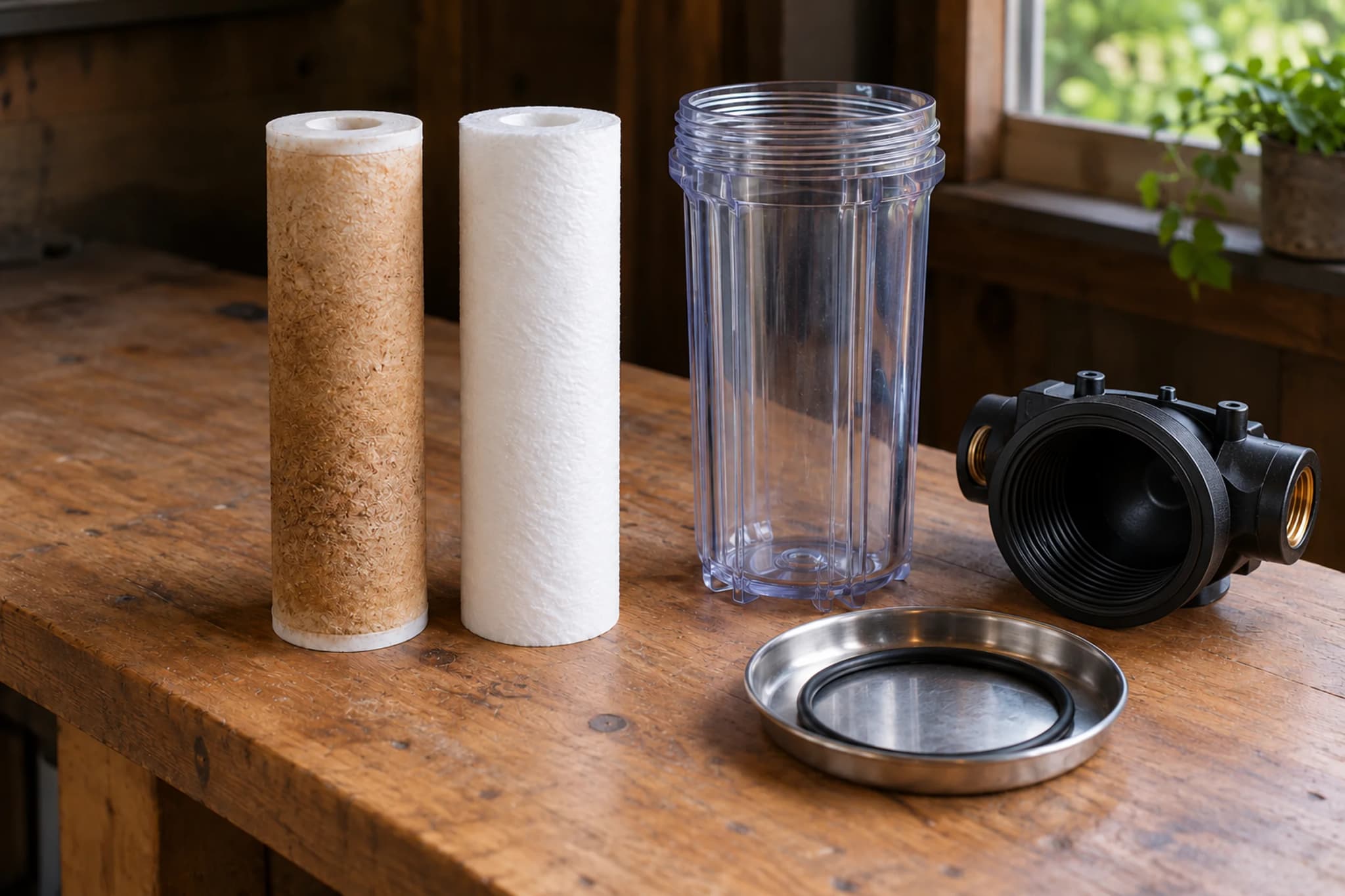
Filters clog and need replacement cartridges, and that maintenance is required, not optional. The CDC warns that a filter you don't maintain can even become a place where germs grow. UV lamps fade, and many are rated for about 9,000 hours, which is roughly a year of nonstop glowing. Sand filters need weeks to grow their living layer before they work properly.
The best UV systems have a sensor that sounds an alarm when the lamp gets too weak. In the US and Canada, look for an "NSF" mark on the label. NSF is an independent testing group, and its certificate tells you exactly what a product was proven to take out.
Most important of all: test your water at a certified lab. A test tells you which contaminants are present and how high they are, so you can pick the right tools instead of guessing.
Test again after you install a system, to check that it works. Your local health department can tell you which labs to use, what to test for, and what to do if a result comes back high.
Which Off-Grid Water Purifier Setup Fits Your Home?
 Illustrative image
It depends on your location, where your water comes from and what's in it. A deep, sealed well whose lab test comes back clean may only need a sediment filter, while water from a stream or a roof almost always needs a full treatment train with disinfection.
Feeling sure about your water is not the same as knowing. In a 2023 study of Plain-sect families in Pennsylvania, who rely on their own wells, people believed their water was fine, yet 92% of the samples failed standard drinking water quality checks.
Start with a lab test, not a shopping cart. Then match each problem to a method that's certified to handle it, so you only pay for the steps that are actually required. Filtering is one step of many, so it helps to see how a whole off-grid water system fits together, from the source to the tap.
And remember Milwaukee. Even a city with a full treatment plant got it wrong when one step failed. That's why good systems use more than one barrier, and why the rules from your local health authority always come before any advice on a website.
Sources
- CDC, About choosing home water filters
- CDC, About home water treatment systems
- CDC, Boil water advisory
- CDC MMWR, Cryptosporidium infections associated with swimming pools, Dane County, Wisconsin (1994)
- Mac Kenzie et al., A massive outbreak in Milwaukee of Cryptosporidium infection (NEJM, 1994)
- CDC, Slow sand filtration fact sheet
- EPA, Emergency disinfection of drinking water
- EPA, Identifying drinking water filters certified to reduce PFAS
- Institution of Civil Engineers, London's water supply and the introduction of sand filtration
- University of Nebraska Extension, Activated carbon filtration (G1489)
- University of Arizona Extension, Harvested rainwater for drinking (AZ1863)
- WCP Online, Ultraviolet water disinfection dose
- Eawag, SODIS manual (2016)
- Journal of Amish and Plain Anabaptist Studies, Perceptions regarding water quality among Plain-sect community members (2023)
- Western Kentucky University, Working with Kentucky Amish and Mennonite communities on contaminated water sources (2024)
Hard Words
| Term | What it means |
|---|---|
| Micron | One thousandth of a millimetre. Germs are measured in microns. |
| Contaminant | Anything in water that shouldn't be there, such as germs, chemicals or dirt. |
| Turbidity | How cloudy water is. Cloudy water hides germs from UV and bleach. |
| Cryptosporidium | A tiny parasite that causes stomach illness and is very hard to kill with bleach. |
| Activated carbon | Charcoal full of tiny tunnels that grabs some chemicals, tastes and smells from water. |
| Slow sand filter | A tank of sand where a slimy living layer on top eats many germs as water trickles through. |
| Ultraviolet (UV) light | Invisible light that damages germs so they can't multiply. |
| Reverse osmosis | A filter that pushes water through a skin with extremely small holes, stopping germs and many dissolved chemicals. |
| Distillation | Boiling water and cooling the steam back into liquid, leaving most impurities behind. |
| Treatment train | Several treatment steps in a row, each handling a different problem. |
Common Questions
Does boiling water make it safe to drink?
Boiling kills germs, so it makes water safe from all three kinds of germs. Health agencies advise a rolling boil for 1 minute, or about 3 minutes at high altitude. Boiling does not remove chemicals like nitrate, lead or arsenic. Because water leaves as steam, those chemicals become slightly more concentrated in what's left.
What filtration methods are used for water purification?
The main options are boiling, chlorine, sand filters, activated carbon, ultrafiltration, UV, reverse osmosis and distillation. Each one strains, grabs or kills a different kind of contaminant, which is why off-grid homes usually combine two or three of them.
What does a carbon water filter remove?
Activated carbon reduces chlorine, bad tastes and smells, and some organic chemicals. Some certified carbon filters also lower lead. Most carbon filters, including typical pitcher and fridge filters, are not designed to stop bacteria, viruses or parasites, and they don't remove nitrate. Check the label for an NSF certification that lists exactly what it removes.
Does a UV water filter remove chemicals?
No. UV kills or disables bacteria, viruses and parasites, but it does nothing to dissolved chemicals like nitrate, arsenic or lead. UV also needs clear water to work, because dirt can shade germs from the rays. That's why UV is usually the last step after a sediment filter, and sometimes paired with RO.
Does reverse osmosis remove bacteria and viruses?
According to the CDC, reverse osmosis takes out parasites, bacteria and viruses, plus chemicals such as lead, copper and chromium, and it can reduce nitrate and arsenic. No system is perfect, though. Membranes can be damaged and need maintenance, so a certified system, regular servicing and a follow-up water test are still important.
Is there a downside to drinking filtered water?
A filter takes out good things as well as bad. The CDC notes that some filters take out fluoride, which protects teeth, and that RO also lowers minerals like calcium and magnesium. A filter you don't look after can grow germs, so change cartridges on schedule.
How do the Amish purify water?
There's no single Amish method. A Western Kentucky University project found Amish and Mennonite communities drawing water from wells, springs and streams, and how they clean it depends on whether a community uses electricity. Some homes use RO units, which need pressure that is hard to get without power, and some don't treat their water at all.
Is rainwater safe to drink without filtering?
No, not reliably. Rain picks up dust, bird droppings, leaves and germs from the roof, gutters and storage tank. Guidance from water extension services says roof water for drinking needs screening, filtering and disinfection, such as UV. Check your local health authority's rules and test the treated water before drinking it.
Is there one filter that removes everything?
No single method removes every contaminant. Filters that stop germs often don't remove chemicals, and the other way round. That's why many off-grid homes combine steps, such as a sediment filter, carbon and UV, plus RO if a lab test finds chemicals. A lab test tells you which steps you need.
How often should I change my water filters?
Follow the manufacturer's schedule, because it depends on the filter and how dirty your water is. Cartridges wear out faster with cloudy water, and many UV lamps are rated for about 9,000 hours, roughly a year of nonstop use. A UV lamp can stop working well while still glowing.