

A well works like a straw stuck into a soaked sponge. Water hidden in sand and cracked rock seeps into a deep hole, and a pump pushes it up a pipe, into a pressure tank and out of your taps.
There Is A Hidden Ocean Under The Ground
 Illustrative image
Rivers and lakes look like the place where fresh water lives. They're not even close.
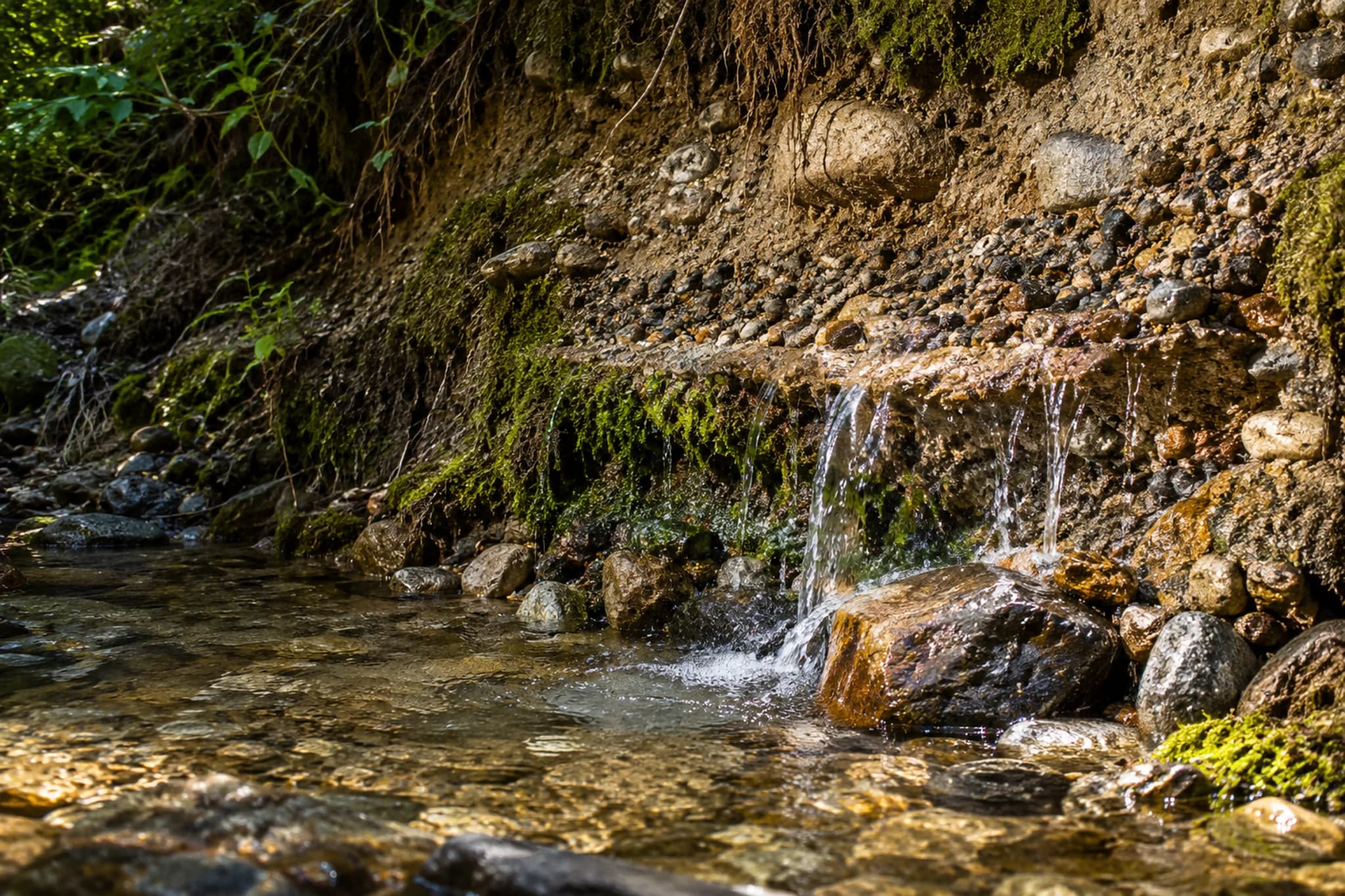
For every bucket of fresh water sitting in all the lakes and rivers on Earth, there are about 25 more buckets hiding in the ground. Scientists call it "groundwater". It sits in the tiny gaps between grains of sand and cracks in rock, quietly waiting.
An off-grid well is simply a way to reach down and grab some of it. No water company, no pipes from town, no monthly bill. Your own water supply, right where you live.
People have been doing this for a very long time. More than 10,000 years ago, people on the island of Cyprus cut a round shaft through solid rock until they hit water about 8 metres down. That's about as deep as a three-storey building is tall.
In 1835, salt makers in Zigong, China, finished a well that reached 1,001 metres. It was only 11 centimetres wide, about as wide as a can of soup.
They made it with bamboo, wood and muscle power, lifting a heavy iron bit and dropping it again and again for years. They were after salty water and gas, not drinking water.
How Do Wells Get Water?
 Illustrative image
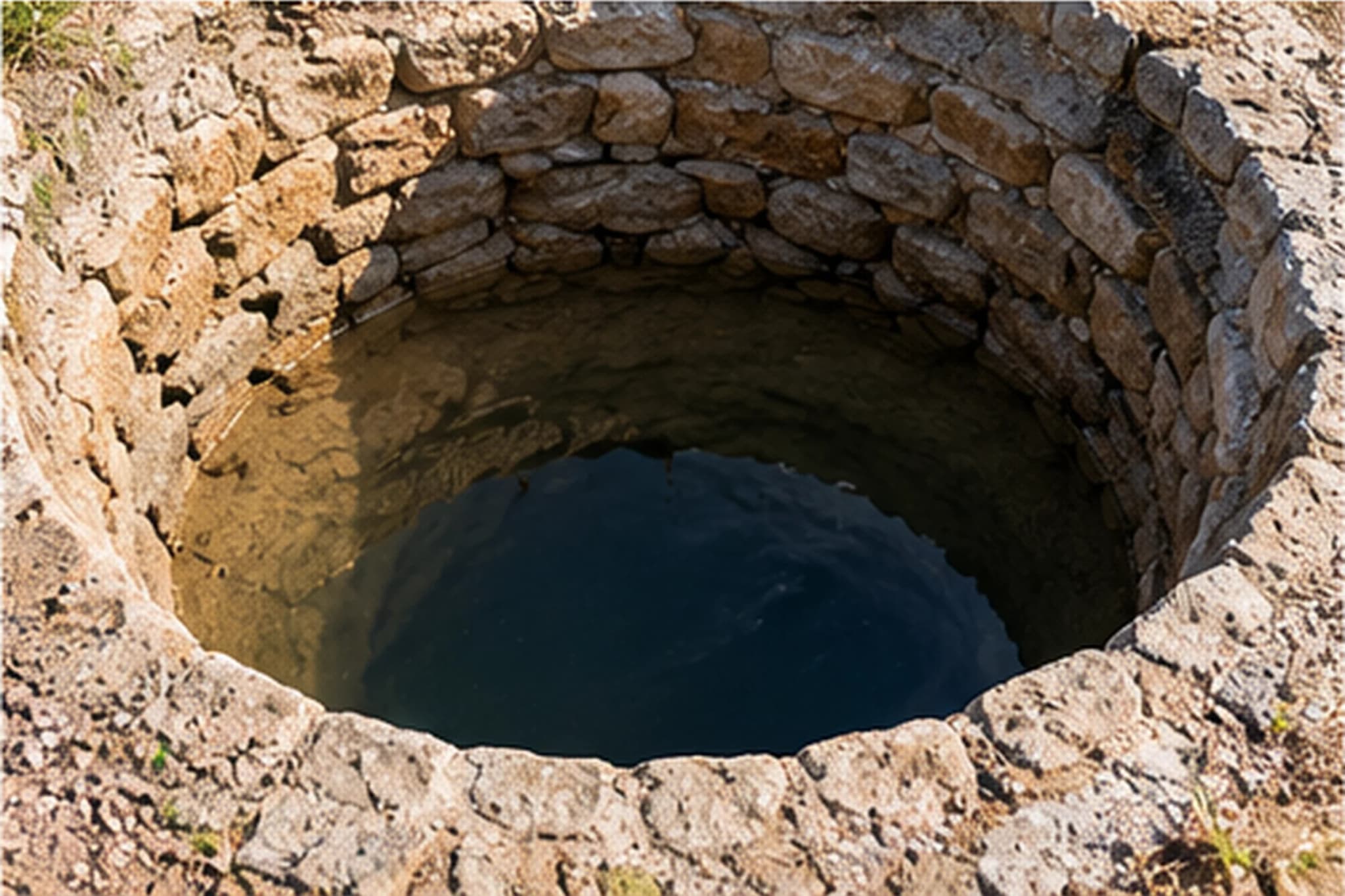
A well gets its water from the ground around it. Water seeps sideways out of soaked sand or rock and fills the bottom of the hole.
Think of the ground under your house as a giant kitchen sponge. Rain soaks in and trickles down. Near the top, the sponge is only damp.
Deeper down, every little gap is full of water. The line where "damp" turns into "soaked" is called the "water table". That's just a fancy name for the top of the wet part.
A soaked layer that holds enough water to pump out is called an "aquifer". Some aquifers are loose sand and gravel, which let water flow like through a sieve. Others are cracked rock, where water squeezes through tiny cracks.
A well is a hole that pokes down below the water table. It fills up the same way a hole you dig on the beach fills up with seawater. That's the basic idea behind every well, from a stone-lined pit to a modern borehole. The only important question is how deep that soaked layer sits at your location.
Dug, Driven Or Drilled Well: Which Kind Fits?
 Illustrative image
There are three main types of wells, and they go from shovel to truck.
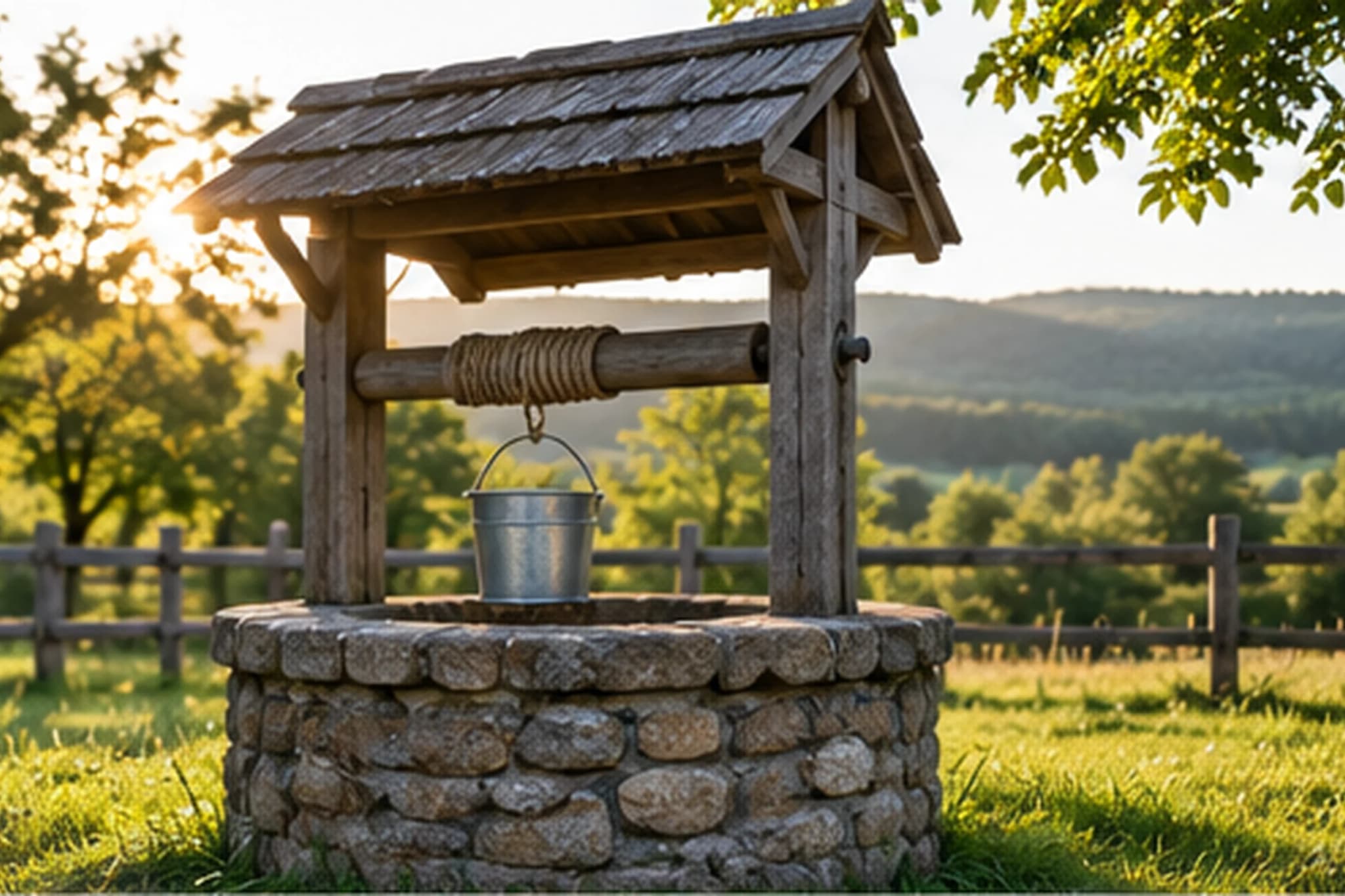
Dug wells are the oldest kind. Someone digs a wide hole by hand or with a small digger, usually 3 to 9 metres deep (10 to 30 feet), and lines it with stone or concrete rings. They only work where the water table is close to the surface. Because they're shallow, they're the easiest to pollute, and they can go dry in a drought.
Driven wells are a pipe with a screen on the tip, hammered straight into soft sand or gravel. The screen lets water in and keeps sand out. They're cheap and fast, but they only reach shallow water too, around 10 to 15 metres (30 to 50 feet).
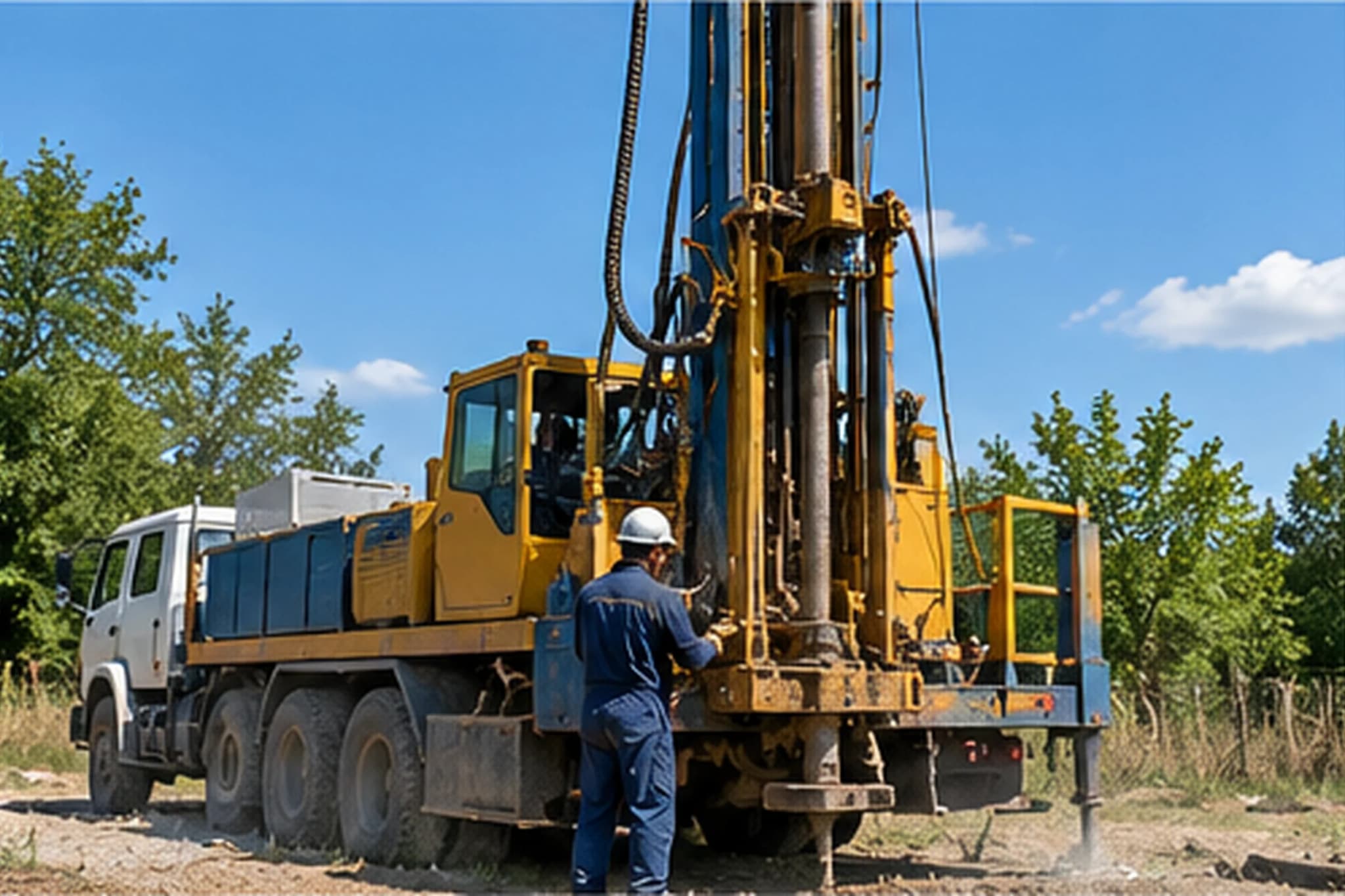
Drilled wells are what most new homes get today. A truck with a rig spins or pounds its way down, commonly 30 to 60 metres (100 to 200 feet) for a home, and sometimes more than 300 metres (1,000 feet). Some people in the UK and Europe call this a "borehole". It's the same thing.
A drilled well is lined with a strong pipe called "casing". The gap around the casing is filled with cement or clay "grout", which works like the rubber seal on a water bottle lid. It stops dirty surface water from running down the outside of the pipe.
A study in Ontario, Canada, found that dug and bored wells had much more bacteria and nitrate in them than drilled wells. Depth plus a good seal really does keep the water cleaner.
What Is A Well Pump?
A well pump is the machine that lifts water out of the well and pushes it to your taps. Most need power to run. Only a hand pump or a bucket on a rope works with no power at all.
A pump at the surface can only suck water up about 6 to 7.5 metres (20 to 25 feet). The air pushing on the water simply can't hold up a taller column. So most drilled wells have a submersible pump installed deep inside the casing, under the water. It pushes water up instead of pulling it. The pipe leaves the casing below ground at a fitting called a "pitless adapter", so it stays below the frost line.
At the house, the water goes into a pressure tank. Inside is a rubber bag of water with squeezed air around it. The air keeps pressure on the water, so the tank can provide a steady flow even when the pump is off, and the pump will start far less often.
A small pressure switch does the thinking. When the water pressure drops, it turns the pump on. When the pressure is high enough, it turns it off again. The University of Nebraska says common settings switch off at around 40 to 60 psi and back on at around 20 to 40 psi.
Want to compare the types of pumps that move water out of a well, from hand pumps to solar ones? Read how well pumps work.
Off the grid, that pump runs on your own power from solar panels and batteries. Pump motors grab a big burst of power when they start, so they're a common reason to pick a bigger inverter. The inverter size calculator lets you check that surge before you buy.
How Deep Should A Well Be, And How Much Water Do You Need?
 Illustrative image
There's no single right depth. A well needs to go deep enough to reach an aquifer that gives enough water all year round, dry season included.
In some places water sits 3 metres down. In others, you need to go hundreds of metres. The depth depends on your location. Local well services and your regional water agency usually know what depth wells in your area hit, because they keep records of every well made nearby.
How much water is "enough"? The US Geological Survey says about 5 gallons per minute, or roughly 19 litres a minute, is a good water supply for a home. That fills a normal bathtub in about 8 minutes.
An average American uses around 300 to 380 litres (80 to 100 gallons) of water a day at home. Off-gridders usually use a lot less, but a well still has to provide a consistent flow for a family. If a well gives less than that, a storage tank helps: the well fills it slowly all day, and the house drinks from the tank.
| What you need to know | What it means | How to find it |
|---|---|---|
| Peak flow | How fast water comes out when two taps run at once | About 19 L/min (5 gal/min) is a common household estimate |
| Lasting yield | What the well keeps giving after hours of pumping | A yield or recovery test by the driller, ideally late in summer |
| Daily use | Litres your home uses in a day | Your own count, or a meter |
| Storage | Tank that the well refills slowly | Bigger when lasting yield is low |
| Water quality | What is in the water | A lab test, see filtration |
The lasting yield in the driest weeks is the number that matters most. Ask for a pumping test that runs for hours and measures how fast the level comes back afterwards. The rules for this test are specific to each place: Michigan, for example, asks for a well that keeps up at least 10 gallons a minute for 4 hours.
Can A Well Run Out Of Water?
Yes. A well runs dry when you take water out faster than the ground can refill it, or when a long drought drops the water table below the pump.
When you pump, the water level around the well drops in the shape of a funnel. Scientists call this a "cone of depression". If the level falls below the pump, the pump starts sucking air.
Watch out for one trap. The flow you see in the first minutes of pumping is not the same as what the well can keep giving. At first the pump empties the water standing in the well pipe. After that, the well only gives what seeps in from the rock.
New York's health department calls well yield "a sustainable rate" a well can keep up "over an extended period". It says a low-yield well can still cover the day with a storage tank, even if it can't keep up at busy moments. Shallow dug wells run dry most easily, so a deeper well plus a tank is the safer choice.
What It Takes To Get A Well
 Illustrative image
Making a well is a job for licensed professionals in most places. In the US, prices commonly quoted run from about $25 to $65 per foot, and a whole well usually lands somewhere between $1,500 and $12,000. Hard rock, great depth and remote land push it up.
That price often leaves out the pump, the pressure tank, permits and the electrical work, so get two or three written quotes. Ask what each one includes, and which specific parts get installed. It's one of the bigger items in the cost of going off-grid.
Rules are different everywhere. Many places want a permit before anyone starts, a licensed driller, and a minimum distance from septic tanks and drain fields. In many US counties that's around 15 metres (50 feet) from a septic tank and 30 metres (100 feet) from a drain field.
In England, you don't need a licence to take out 20,000 litres a day or less, but other rules can still apply. Contact your local council or water authority before you plan anything.
And what about people walking the land with a bent stick to "feel" water? It's called dowsing, and it has not held up when scientists tested it. There's some water under almost every patch of ground, so a driller's records are a much better guide to the right location.
Keeping Off-Grid Well Water Safe To Drink
 Illustrative image
Clear, cold well water looks perfect. But you can't see bacteria, and you can't taste nitrate or arsenic.
In the US, about 43 million people drink from private wells, and nobody checks that water for them. The national drinking water law covers public systems, not your own well, so testing is up to you. When the US Geological Survey sampled private wells, about one in five had at least one thing in it above a health limit.
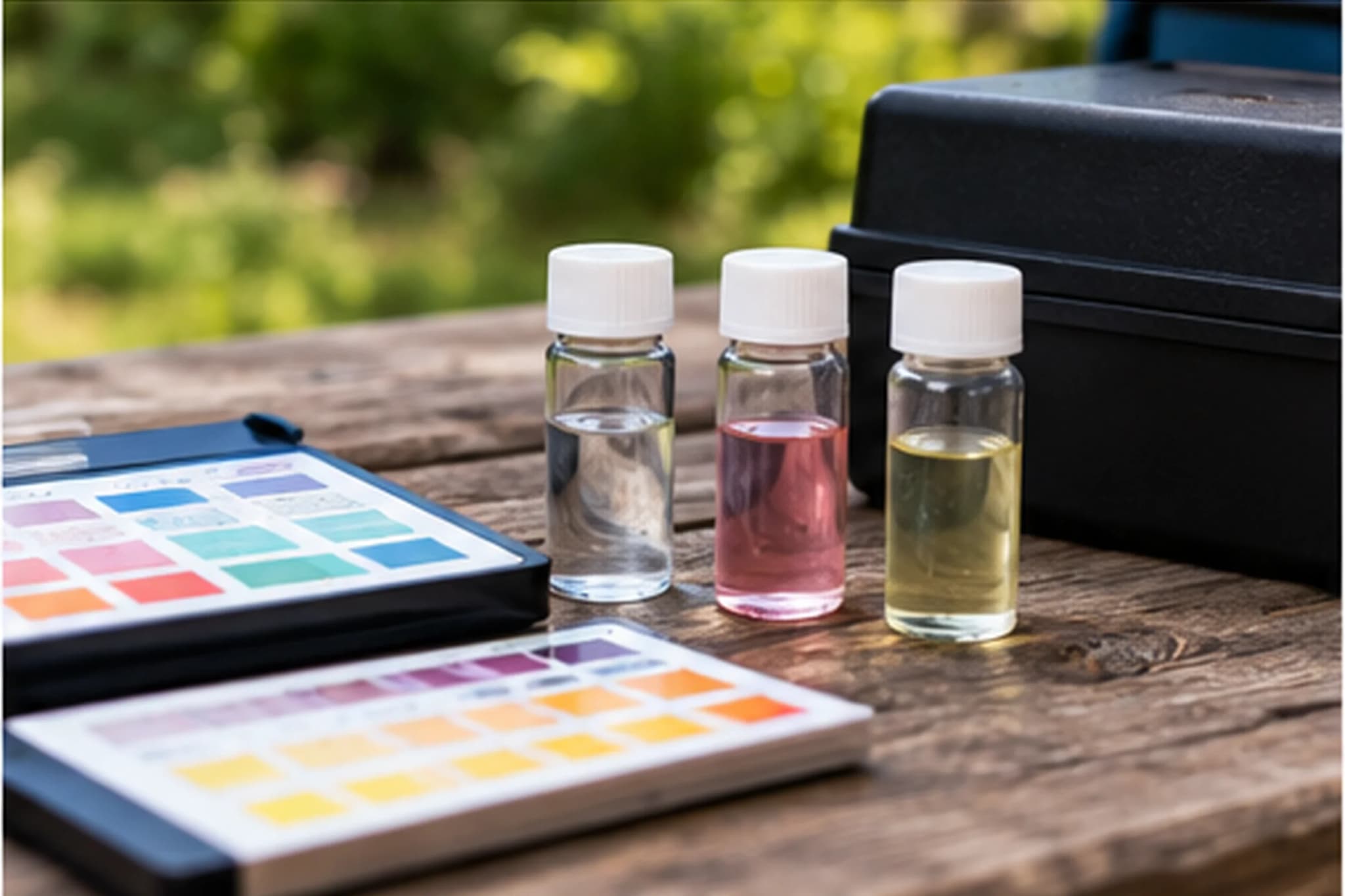
The good news is that testing is easy and usually cheap. Health agencies generally say to test at least once a year for bacteria and nitrate. Test again after a flood, after any repairs, or if the water suddenly looks, smells or tastes different.
Use a certified lab. Your local health department can tell you which labs to use and which tests are necessary where you live. In addition, some regions have natural problems like arsenic or uranium in the rock. If a test comes back bad, contact them or a licensed well contractor before you do anything else.
A little maintenance helps a lot, and it saves you costly repairs later. Keep the well cap tight so bugs and small animals can't get in. Make sure the casing sticks up above the ground and rainwater runs away from it, not toward it. And keep fuel, paint and animal pens well away from the wellhead.
Is An Off-Grid Well Right For You?
 Illustrative image
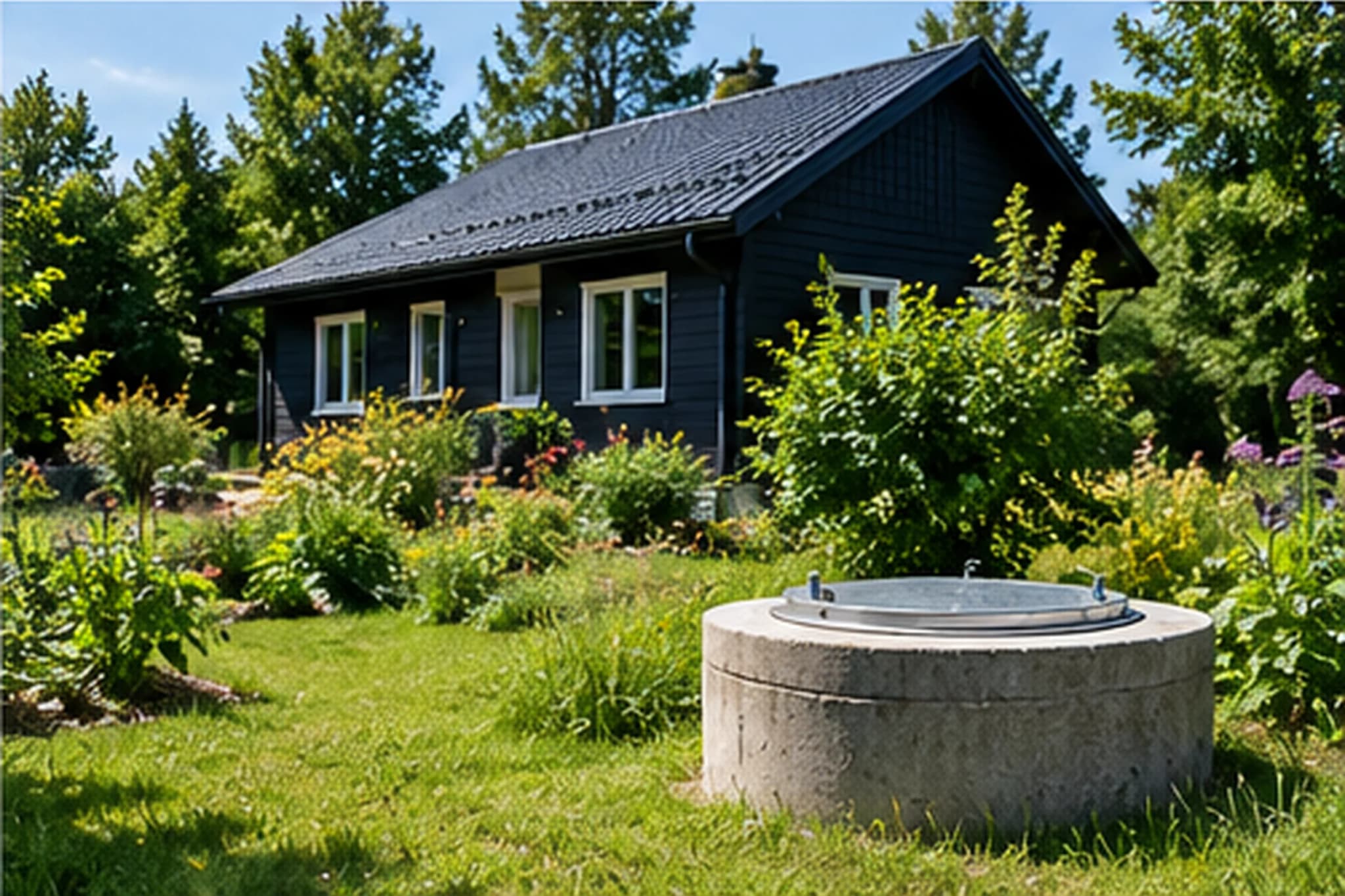
A good well can feel like magic: cold water from a hidden sponge under your own feet. But the well is a big upfront cost, the pump needs power, and testing the water is your job, every year.
If your area has a reliable aquifer and you can handle the cost, a drilled well is the most dependable water supply an off-grid home can have. If the water is very deep or the ground is dry, it may be smarter to start by catching rain from your roof and keep the well for later.
Want to see where the well sits in your whole water supply, next to the pump, the filter and the garden? Read the big picture of off-grid water systems.
Sources
- US Geological Survey: Where is Earth's water?
- US Geological Survey: Groundwater wells
- US Geological Survey: Water use questions and answers
- Wikipedia: Well
- China Science Daily: Zigong salt wells
- US EPA: Dug wells fact sheet
- Government of Newfoundland and Labrador: Groundwater and wells
- University of Nebraska-Lincoln Extension G2152: Private water systems, pumps and pressure tanks
- University of Nebraska-Lincoln Extension G2149: Well yield testing
- The Driller: How centrifugal pumps lift water
- New York State Department of Health: Water storage fact sheet
- Michigan Administrative Code R 560.411: Well yield
- Bob Vila: Well drilling cost
- Kern County Public Health: Septic system setbacks
- legislation.gov.uk: Water Act 2003, explanatory notes on abstraction
- UC Davis Center for Watershed Sciences: Water witches and the California drought
- US EPA: Private drinking water wells
- Northeastern University: Private wells and the Safe Drinking Water Act
- Extension.org: Testing recommendations for private drinking water wells
Hard Words
| Term | What it means |
|---|---|
| Groundwater | Water stored underground in the gaps between sand grains and in cracks in rock. |
| Water table | The top of the soaked layer underground. Below it, every gap is full of water. |
| Aquifer | An underground layer of sand, gravel or rock that holds enough water to pump out, like a soaked sponge. |
| Borehole | Another word for a drilled well, common in the UK and Europe. |
| Casing | The strong pipe that lines a drilled well and keeps the hole from caving in. |
| Grout | Cement or clay packed around the casing to seal it, so dirty surface water can't run down the outside. |
| Submersible pump | A long, thin pump that sits under the water inside the well and pushes water up. |
| Pressure tank | A tank with squeezed air inside that keeps water pushed toward your taps. |
| Cone of depression | The funnel-shaped dip in the water level around a well while it is being pumped. |
| Well yield | How much water a well can give steadily, usually measured in litres or gallons per minute. |
| Nitrate | A chemical from fertiliser, manure and septic systems that can get into wells. You can't see or taste it, so only a test finds it. |
Common Questions
How deep does an off-grid well need to be?
Deep enough to reach an aquifer that gives water all year. Drilled home wells are commonly 30 to 60 metres (100 to 200 feet), and records of nearby wells are the best guide.
How much does a 200 ft well cost?
At the $25 to $65 per foot often quoted in the US, a 200 ft (60 m) well works out at about $5,000 to $13,000. Pumps, tanks, permits and wiring are often extra, so compare written quotes. Prices in other countries differ.
Do I need a permit to drill a well?
In many places, yes. Rules can cover permits, licensed drillers, how much water you may take, and distances from septic systems. Always check with your local council, health department or water authority first.
Is well water safe to drink?
It can be, but only a test tells you. Bacteria, nitrate and arsenic are invisible and often tasteless, and nobody checks a private well for you.
How often should I test my well water?
At least once a year for bacteria and nitrate, and again after a flood, repairs, or a change in taste, smell or colour. A wider test for things like arsenic every few years is common advice.
Do you need power to run a well?
For running water at the tap, yes: the pump needs electricity, from solar, batteries or a generator. A hand pump works with no power at all, which makes it a good backup.
Can a well run dry?
Yes. Drought and heavy pumping both lower the water level, and if it drops below the pump, the well pumps air. A deeper well and a storage tank make the water supply more reliable.
How much water does a home well need to supply?
The US Geological Survey says about 5 gallons per minute, roughly 19 litres a minute, is an adequate supply for a home. A slower well can still work if it fills a storage tank through the day.
Does water dowsing work?
No. Dowsing has not held up in scientific tests. It only seems to work because some groundwater exists under most land.