

Five Million Hand Pumps And One Big Drought
 Illustrative image
Finding water is only half the job. An off-grid water pump does the other half: it lifts that water up and pushes it to your tap, with no water company in sight. That's true for a remote cabin, a farm far from power lines, or a whole village.
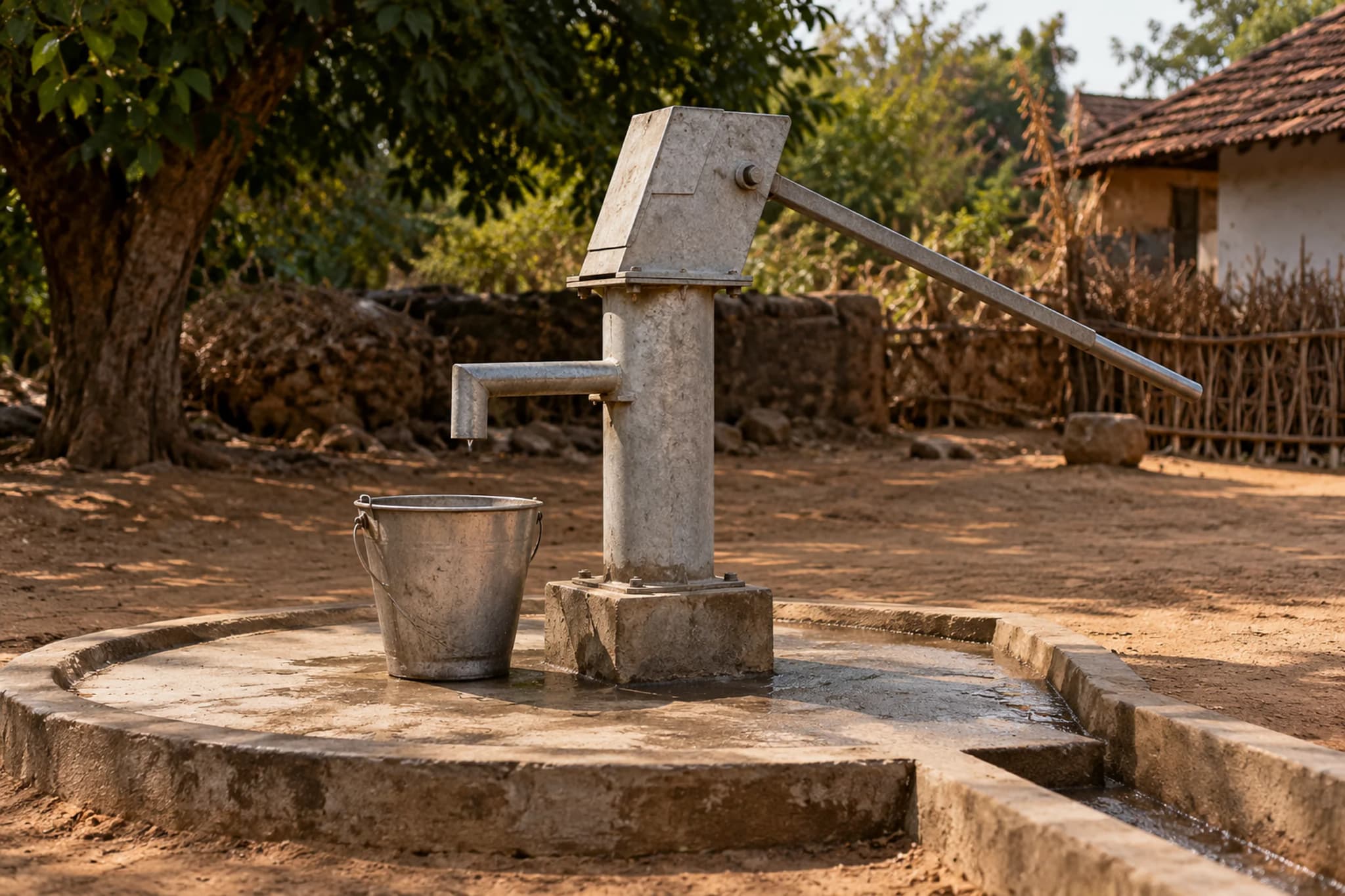
In the 1970s, a terrible drought hit villages across India. The government, UNICEF and the World Health Organization worked together on a durable hand pump that village communities could keep running themselves. They called it the India Mark II.
By the mid-1990s, about five million of them had been built and installed. It's often called the most widely used hand pump in the world.
A normal Mark II can lift water from around 50 metres down, and the extra deep version reaches about 80 metres. That's taller than a 20-storey building, and it's all done with one person pushing a handle.
How A Water Pump Actually Lifts Water
 Illustrative image
Every pump takes water from a low place and pushes it toward a higher one.
You can't really "suck" water up very far, though. When you drink through a straw, the air around you is what pushes the drink up. That air can only hold up a column of water about 6 to 7.5 metres tall in real life (20 to 25 feet).
So a pump that sits at the top of a deep well is stuck. The trick is to put the pushing part down near the water instead.
That's what the India Mark II does. A long metal rod runs from the handle all the way down to a small cylinder under the water. Every time you push the handle, a plunger in that cylinder moves up and down, and two tiny one-way flaps let water in and then push it up the pipe.
Each push lifts about 0.4 litres. So 25 pushes fill a 10 litre bucket.
Electric well pumps work on the same idea, just with a motor doing the pushing. Pump builders call the height the water has to climb the "head". That's just a fancy word for how far up it goes.
Hand, Jet Or Submersible: Which Well Pump Fits?
 Illustrative image
Hand pumps, also called manual pumps, are the bike of the water world. No power, no wiring, no fuel, and almost nothing to break. They're slow for a whole family's daily water, but plenty of off-grid homes keep one on the well as a reliable backup for when the power fails.
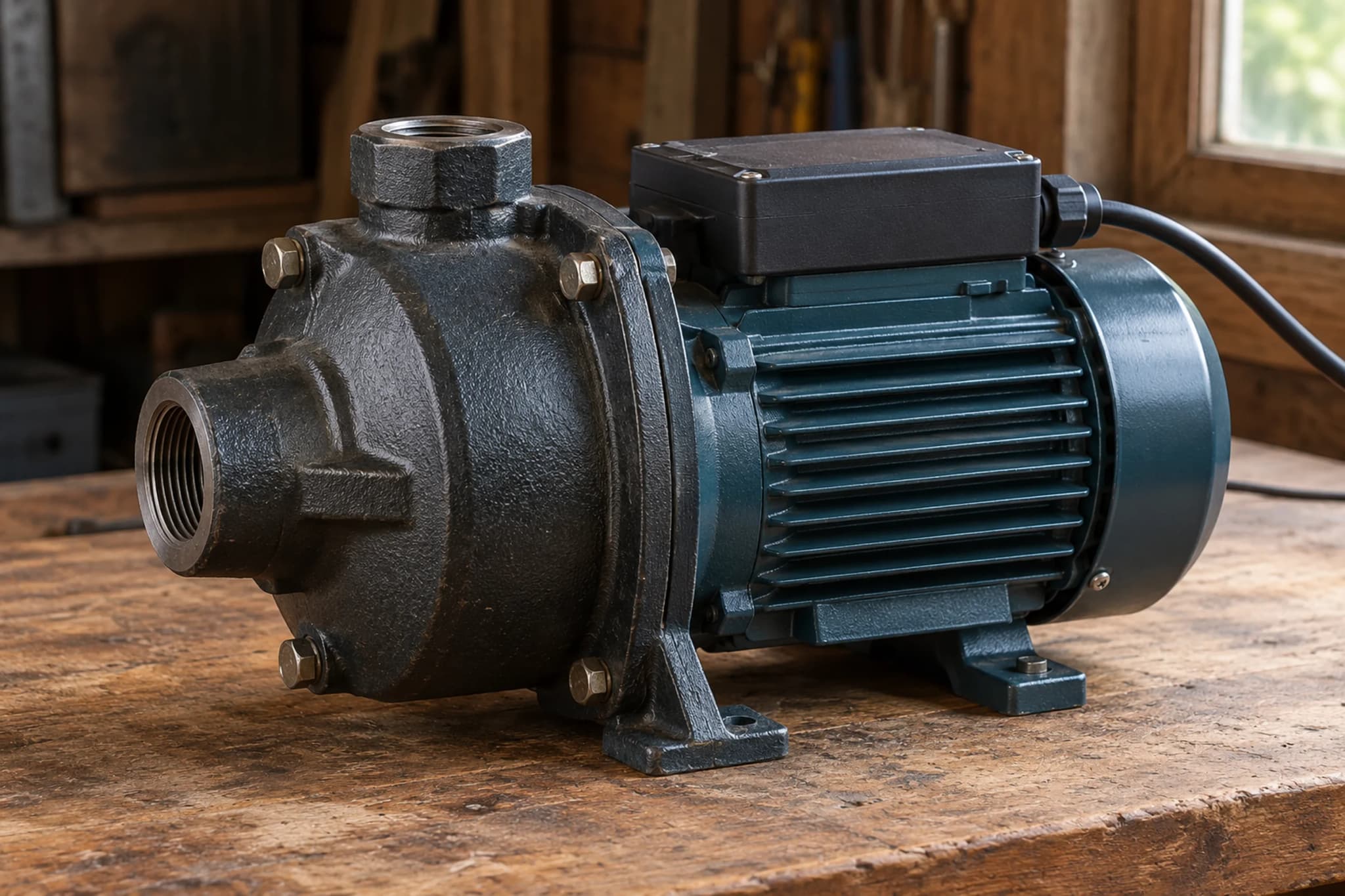
Jet pumps sit above ground, in a shed or a basement, and pull water up through a pipe. A shallow-well jet pump works when the water is less than about 7.5 metres down (25 feet). Deep-well jet pumps use a clever second pipe to reach further, up to around 75 metres (250 feet) according to the University of Nebraska.
Jet pumps are easy to reach and more accessible for repairs. But they must be filled with water before they start, which is called "priming", and kept from freezing.
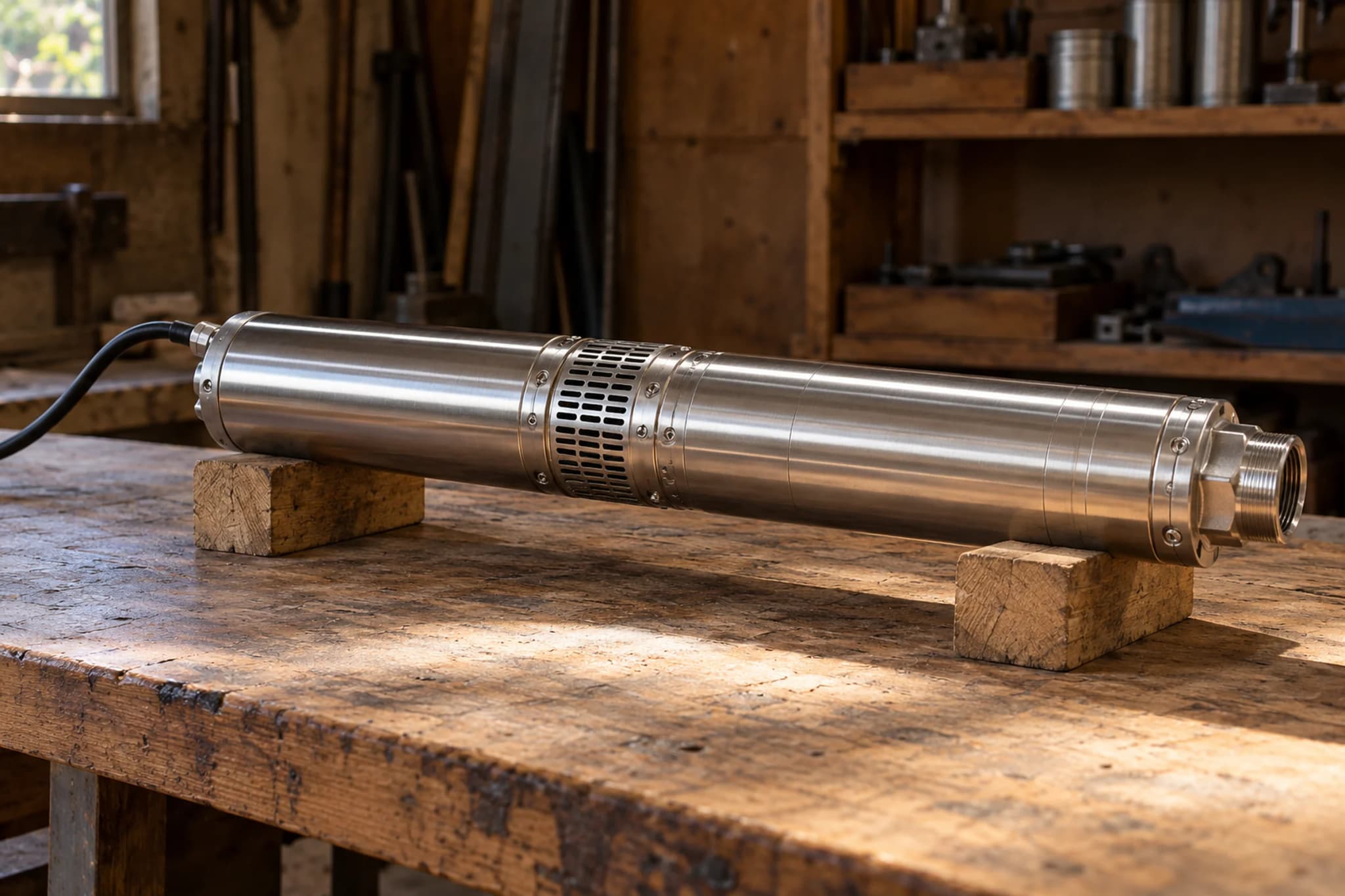
Submersible pumps are long, skinny tubes that drop right down inside the well casing, below the water. They push water up instead of pulling it. Most drilled wells use one, and they need a casing of about 10 centimetres (4 inches) wide or more.
The catch is repairs. When a submersible pump breaks, someone has to pull it all the way up out of the well, pipe and all.
From Windmills To Solar On Remote Ranches
For a long time, ranchers in rural Arizona had three ways to get water to their cattle when the well sat far from power lines. They could pay to bring in a power line, which can cost a lot. They could run a pump on gasoline or diesel, but then someone has to keep buying fuel and keep the engine going.
Or they could put up a windmill. Windmills are renewable and run without anyone watching. But they need enough wind, and they need maintenance and repair over and over again.
That's why solar pumps keep getting more popular with ranchers, who often swap the old windmill for a few panels. The University of Arizona lists the benefits: few parts, low maintenance, no fuel and no exhaust. Very little maintenance is required at all, because apart from the pump itself, nothing in the system moves.
The one chore is dust. A layer of dirt on the panel, especially after a storm, makes it less effective and slows the pump down, so a quick wipe helps. The same kind of setup is used for livestock watering and for irrigation, and it works just as well for a remote off-grid home.
Solar Water Pumps: With Or Without A Battery?
 Illustrative image
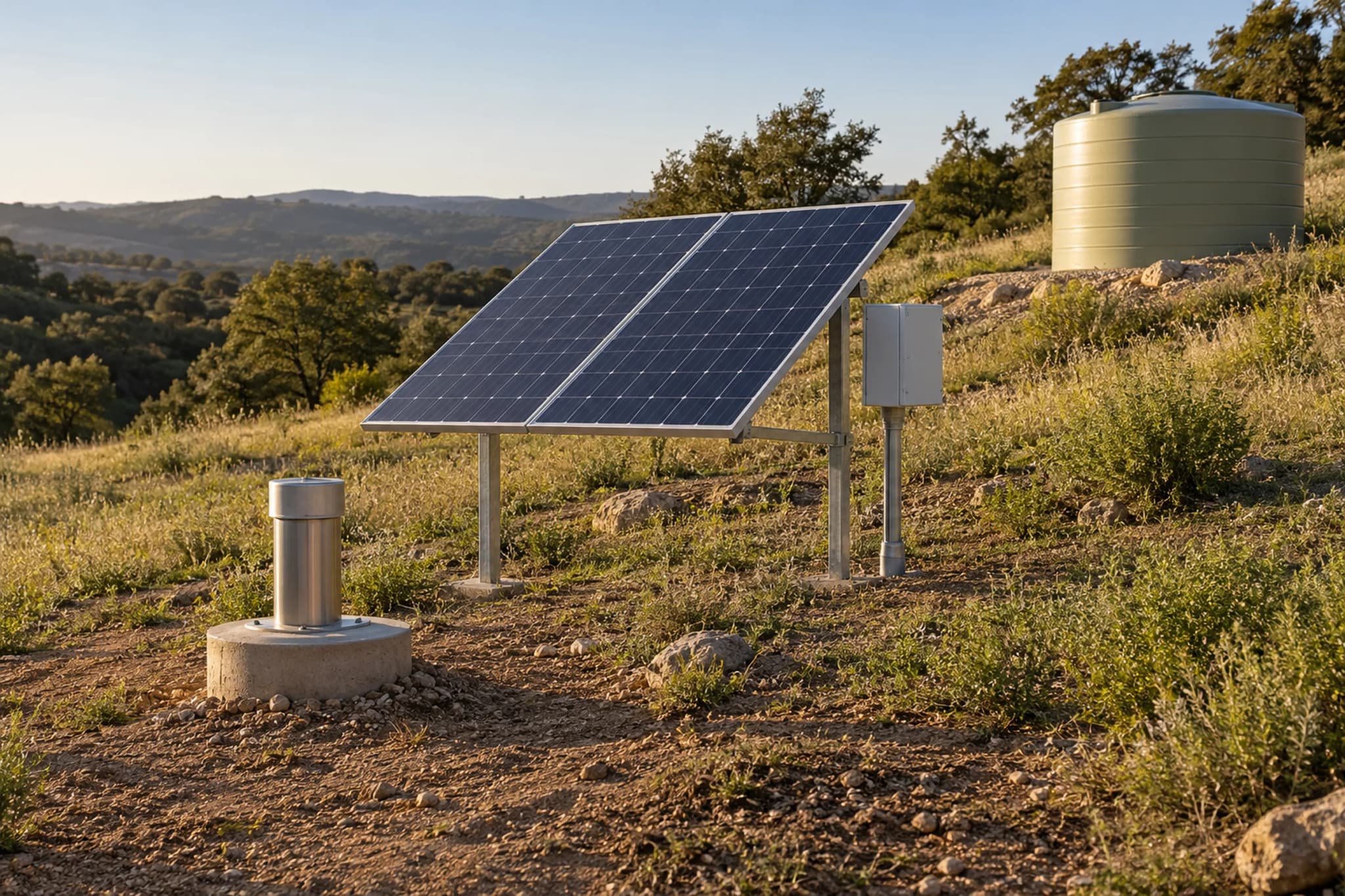
A solar water pump is a pump that runs on power from solar panels. Most use DC, the same kind of electricity a battery gives, so they can connect to the solar panels without much in between.
The simplest setup has no battery at all. Experts call it "PV-direct". The panels feed a small box called a pump controller, and the pump runs whenever the sun shines.
How small can it be? One demonstration system from the University of Arizona uses just one 85 watt solar panel. It pushes 7 to 18 litres a minute from about 18 metres down (60 feet).
At night the pump stops. So where does the night water come from?
From a tank. The University of Arizona puts it simply: it's cheaper to store water than to store energy.
You pump all day into a big tank, the same kind people use for catching rainwater, and use that water whenever you want. A common rule of thumb is a tank that holds three days of water, so a few cloudy days don't leave you dry. Where long grey spells are normal, you need more, or a backup way to run the pump.
A PV-direct pump is not like a tap. Its flow rises and falls with the sun: strong at noon, slow in the morning, and on a dull day it may not start at all, because the controller needs a minimum voltage from the panels. So check these before you buy:
- Litres per day at your total head. Read the maker's chart for your head, for a sunny day and for a dull winter day. That number matters, not the panel watts.
- Dry-run protection. If the well level drops below the pump, it must switch itself off, or running dry can damage it. Many solar pump controllers have this built in, like Grundfos's CU 200 for its SQFlex pumps.
- A float or level switch in the tank, so the pump stops when the tank is full instead of overflowing.
- Your well's lasting yield. The pump should never take water faster than the well can refill.
- Tank height, because a tank on a hill adds to the head the pump has to climb.
Put that tank up high, on a hill or a tall stand, and gravity gives you push for free. Every 2.31 feet of height (about 70 centimetres) adds 1 psi. It's the same reason towns build water towers.
The other option is a solar pump with a battery, which runs the pump day or night. It costs more, but it gives you water on demand, day or night. The battery size calculator helps you work out how much storage that would take.
Pressure Tanks And Pressure Switches
 Illustrative image
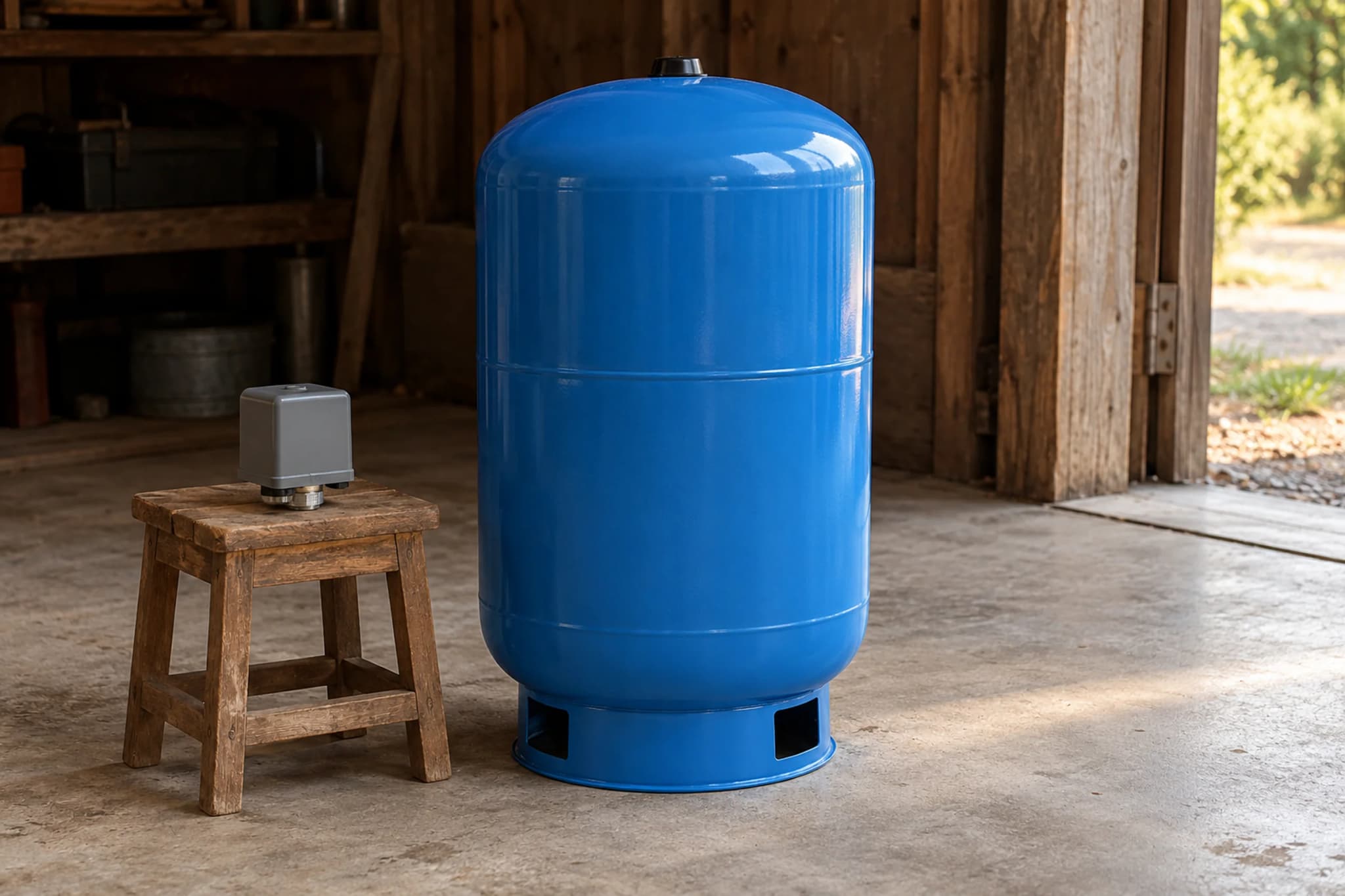
A tap at home needs water that's pushed, not just water that's there. That's the job of the pressure tank.
Inside most modern tanks there's a rubber balloon called a "bladder". The pump fills it with water, and the air around the bladder gets squeezed like a bike pump with your thumb over the end. When you open a tap, that squeezed air pushes the water out.
A small box on the pipe, the "pressure switch", keeps watch. When the push drops to the low setting, it switches the pump on, and when it reaches the high setting, it switches the pump off again. The University of Nebraska says common settings switch off around 40 to 60 psi and back on around 20 to 40 psi.
Why not just let the pump run every time someone opens a tap? Because starting is the hardest part of a pump's day.
Starting a motor takes more energy than keeping it running. A pump that clicks on and off every few seconds wears out fast. Installers call this "short cycling", and a big enough tank is how you stop it.
For a bladder tank, the University of Nebraska rule of thumb is a tank at least four times the pump's flow. A pump that moves 9 gallons a minute gets a tank of 36 gallons or more.
How To Size An Off-Grid Water Pump
 Illustrative image
Two numbers decide which pump you need: how high and how much.
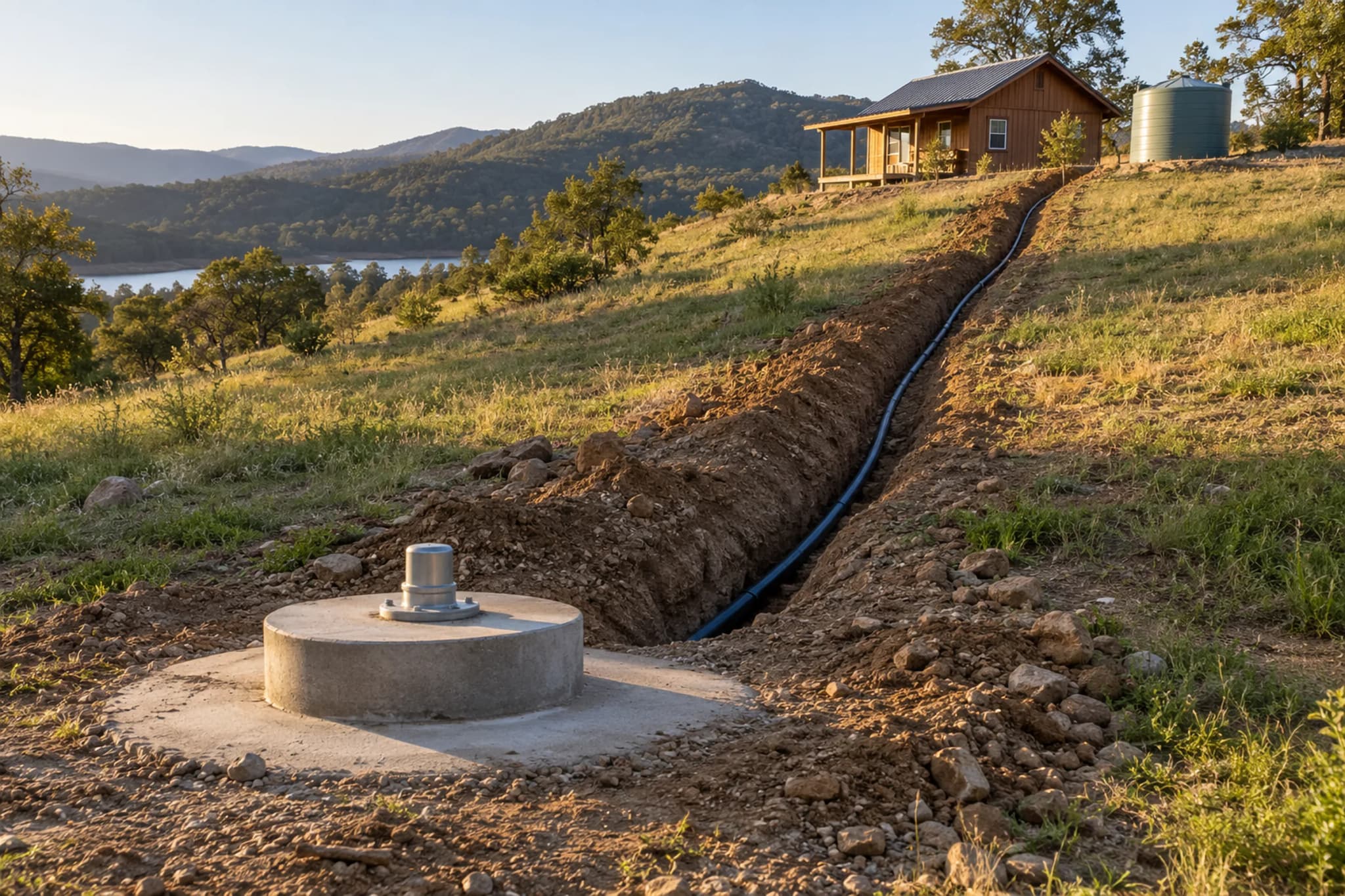
How high is the total head. Start with how far the water level sits below the ground. Add any climb up to the house or a tank on a hill.
Then add the push you want at the tap, turned into height. One psi is 2.31 feet, so 40 psi is like lifting the water another 28 metres (92 feet). Long, thin pipes add a bit more, depending on the flow, because the water rubs along the walls, which is called "friction loss".
How much is the flow. The US Geological Survey says about 19 litres a minute (5 gallons) is a good water supply for a home. With a big storage tank in the middle, the pump can be slower, because the tank handles the rush when everyone showers at once.
Pump makers print a chart called a "pump curve" for every model. It shows the pump's performance: how much water it gives at each height. A good installer matches your head and flow to that chart.
How Much Power Does A Well Pump Use?
 Illustrative image
A common half horsepower submersible pump pulls about 1,000 watts while it runs. That's about the same as a microwave oven.
But it doesn't run all day. A family using 400 litres a day with a pump moving 19 litres a minute only needs about 20 minutes of pumping. That adds up to roughly a third of a kilowatt hour, less than a typical fridge uses in a day.
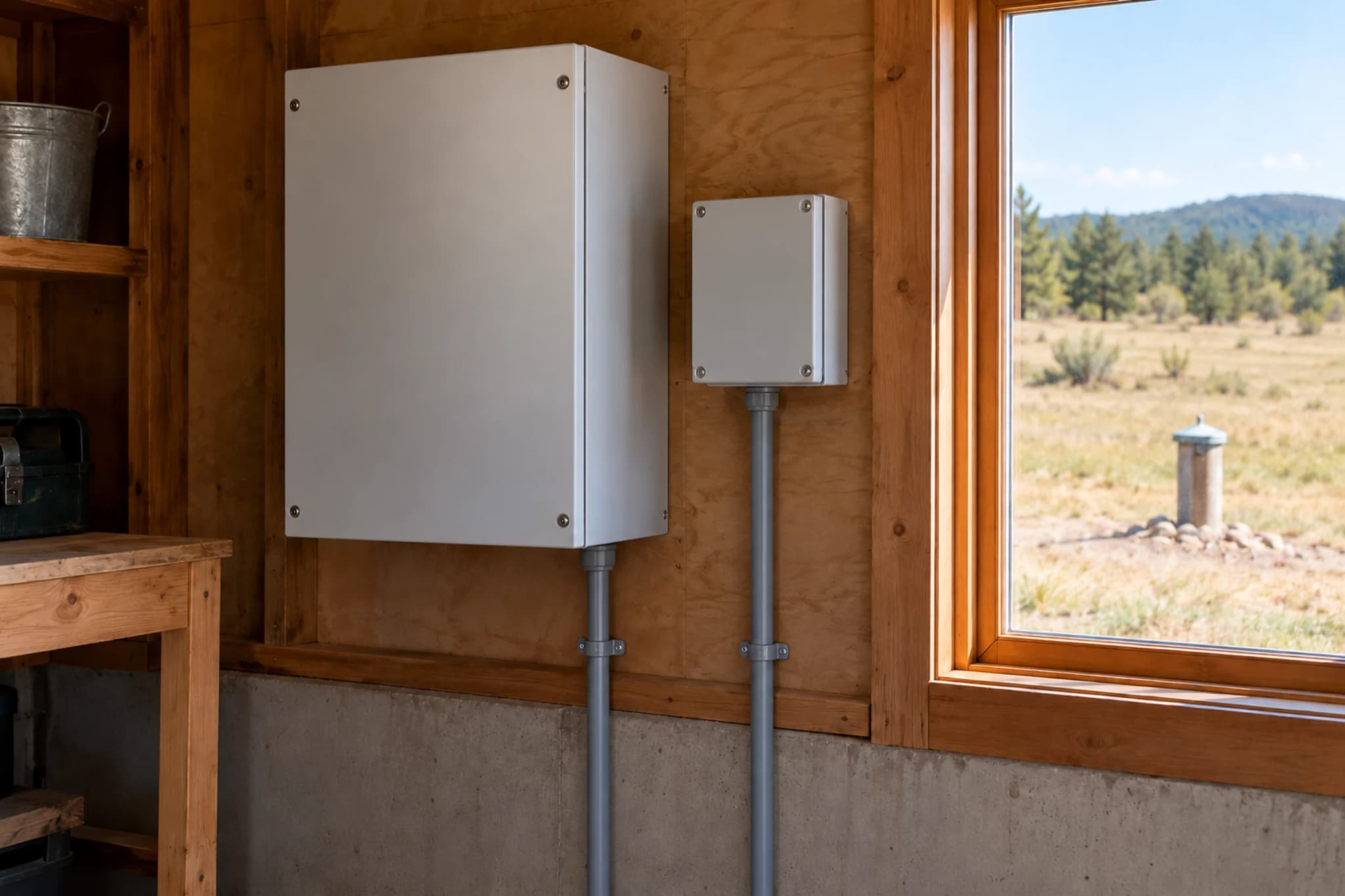
The tricky moment is the start. Many pump motors grab a big burst of power for a split second when they switch on, which is a common reason off-gridders end up with a bigger inverter.
Some newer pumps have a "soft start" that ramps up gently instead. Check your pump's surge with the inverter size calculator before you buy.
Water, Wires And Staying Safe
 Illustrative image
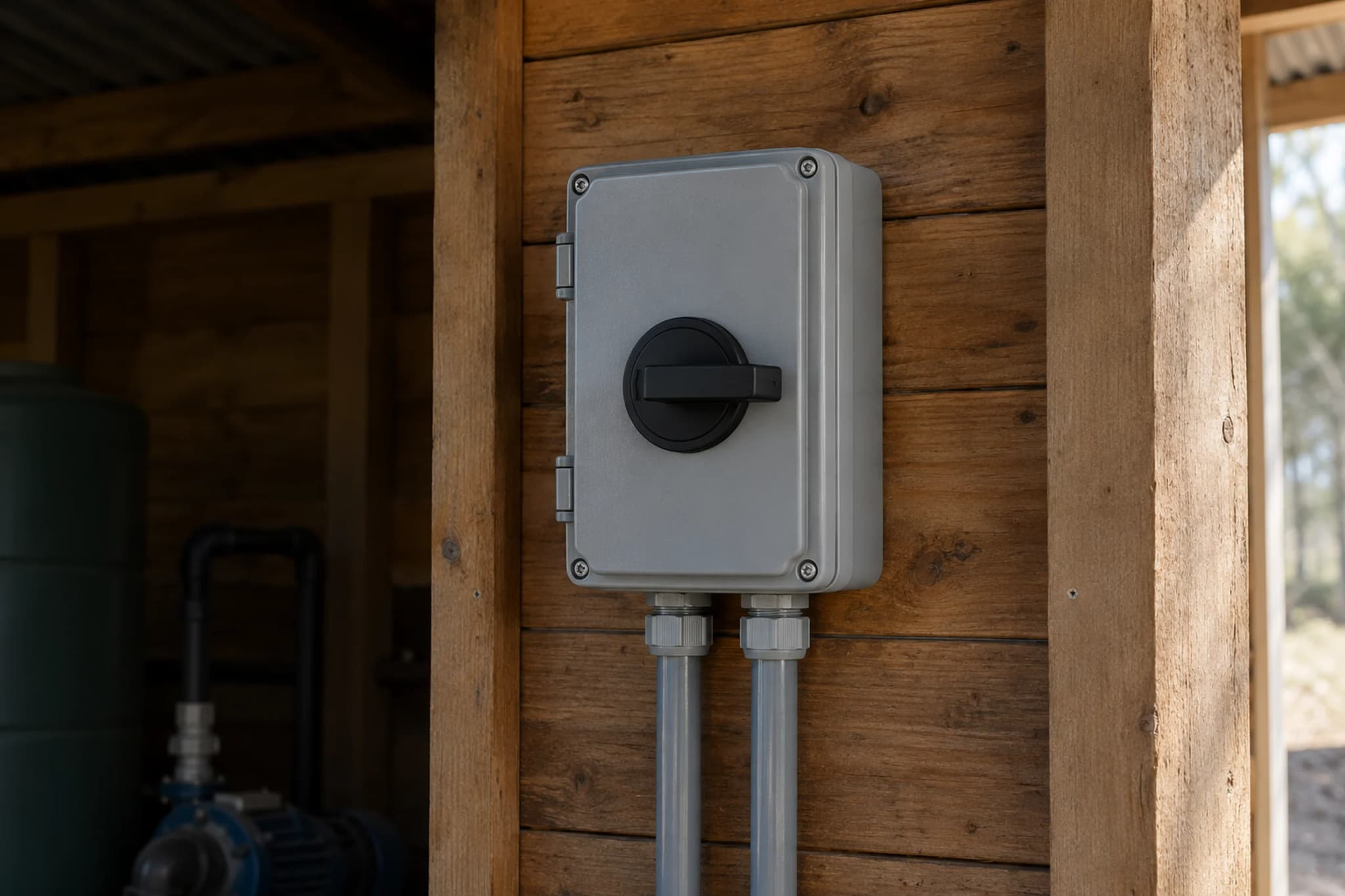
Pumps put electricity and water right next to each other, often deep in a well where you can't see what's happening. That's why wiring a well pump is a job for a qualified electrician or pump installer.
They know which cable is safe under water and how to protect the circuit. They also fit a safety disconnect switch, so the pump can be shut off before anyone works on it. Rules differ from country to country, so a local pro is your best guide.
Choosing The Right Off-Grid Water Pump System
 Illustrative image
If your water is shallow and you want something that never needs power, a hand pump is hard to beat. Many people keep one as a backup.
For a deep drilled well, a submersible pump is the usual pick. Run it from solar into a big tank and you get the simplest, most reliable water pump system, as long as you have room for the tank.
Want strong taps at any hour? Add a pressure tank, and a battery if the pump runs straight from the well. It costs more, but your taps will work just like they do in town.
A pump is only the middle link. See how the source, pump, filter and greywater work together in one off-grid water setup before you choose.
Sources
- Wikipedia: India Mark II
- UNICEF Supply Catalogue: India Mark II extra deep well hand pump
- Red Cross Items Catalogue: Hand pump India Mark II
- The Driller: How centrifugal pumps lift water
- University of Nebraska-Lincoln Extension G2152: Private water systems, pumps and pressure tanks
- University of Arizona Cooperative Extension AZ1956: A mobile solar PV water pumping demonstration system
- US Geological Survey: Groundwater wells
- Grundfos: Pump selection basics
- Virginia Tech Extension: Energy use of common household appliances
Hard Words
| Term | What it means |
|---|---|
| Head | How high a pump has to lift water, including the push needed for pressure at the tap. |
| Hand pump | A pump you work with a handle. No electricity needed. |
| Jet pump | A pump that sits above ground and pulls water up through a pipe. |
| Submersible pump | A long, thin pump that sits under the water inside the well and pushes water up. |
| Priming | Filling a pump with water before it starts, so it can pull more water up. |
| PV-direct | A solar pump setup with no battery. The pump runs only while the sun shines. |
| Pressure tank | A tank with squeezed air inside that keeps water pushed toward your taps. |
| Pressure switch | A small switch that turns the pump on when pressure drops and off when it is high enough. |
| Short cycling | A pump turning on and off too often, which wears it out quickly. |
| Pump curve | A chart from the pump maker showing how much water a pump gives at each height. |
Common Questions
What is the best pump for an off-grid well?
For most deep drilled wells, a submersible pump is the usual choice, often powered by solar panels. Shallow wells with water less than about 7.5 metres down can use a jet pump above ground. A hand pump is the best backup because it needs no power at all. The right pick depends on depth, flow and your power system. A solar pump keeps you independent: no fuel to buy and no power line needed.
Submersible or jet pump: which is better?
A submersible pump is better for deeper wells and uses less energy, because it pushes water up from below.
A jet pump sits above ground, so it is easier to reach for repairs. It suits water up to about 7.5 metres down, or about 75 metres with a deep-well kit, and it needs priming and frost protection.
Can a solar pump work without batteries?
Yes. A PV-direct solar pump runs whenever the sun shines and stops at night. Instead of a battery, you store water in a tank, often enough for about three days of use. Raising the tank gives free pressure from gravity. Add a battery only if you need water on demand at any hour.
How deep can a hand pump lift water?
It depends on the design. Simple pitcher pumps at the surface only reach about 6 to 7.5 metres, because they rely on suction. Deep-well hand pumps put the pumping cylinder under the water: the India Mark II lifts from around 50 metres, and its extra deep version reaches about 80 metres, though pumping gets harder with depth.
Do I need a pressure tank with a well pump?
For normal taps and showers, yes. The pressure tank keeps water pushed toward the house and stops the pump from switching on every time a tap opens. That protects the pump from short cycling. A common rule is a bladder tank at least four times the pump's flow in gallons per minute.
How much electricity does a well pump use?
A half horsepower submersible pump draws about 1,000 watts while running, similar to a microwave. Because it only runs for short bursts, a family's daily water may take around 20 minutes of pumping, roughly a third of a kilowatt hour. Pump motors can need a much bigger burst of power to start, so size your inverter for that surge.
What size well pump do I need?
Work out the total head, which is the depth to the water plus any climb to the house plus the pressure you want, then the flow you need. About 19 litres a minute suits a typical home. Match both numbers to the maker's pump curve, or ask a pump installer to do it for you.