

The Water That Leaves Too Soon
 Illustrative image
In 2007, during a long drought, more than half of all Australian households were reusing their own used water. In the state of Victoria it was almost three out of four homes.
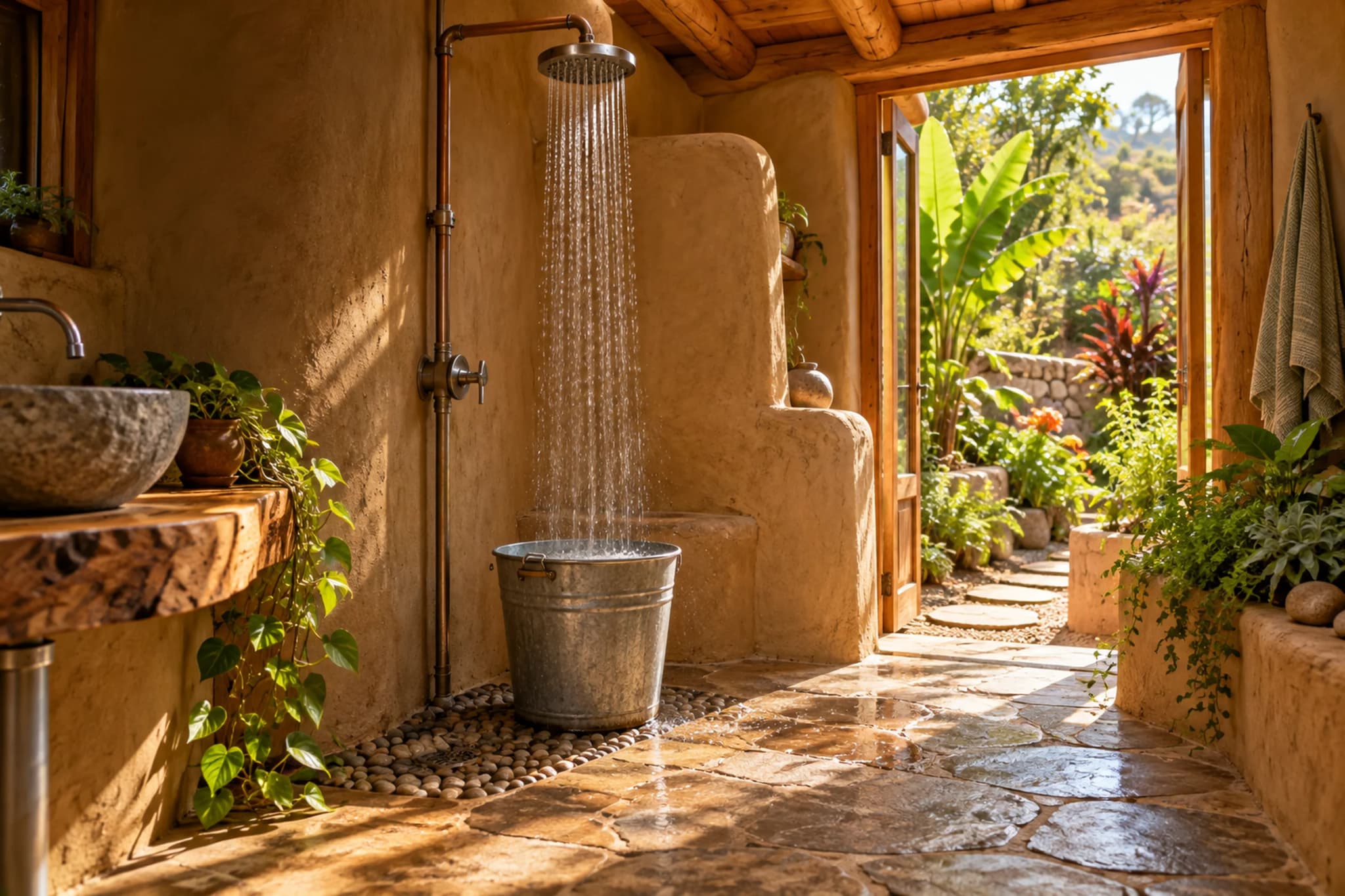
People carried buckets from the bath to the flower beds, and others ran the washing machine hose straight out the window to the fruit trees.
That water has a name: greywater. A greywater system is a simple way to give it a second job before it's gone, and greywater reuse (some people call it greywater recycling) has become one of the easiest water conservation steps a home can take.
California has its own version of the story. A 1999 survey found that nearly 14 percent of homeowners there were already using greywater, and almost none had a permit.
In Santa Barbara, only four people got a greywater permit in 20 years, while hundreds of homes did it anyway. So in August 2009, in the middle of another drought, California changed the rules and made the simplest systems legal without a permit.
What Is Greywater, And What Isn't?
 Illustrative image
Think about every sink, tub and washer in your house. Some of that wastewater is only a bit dirty, and some is really dirty.
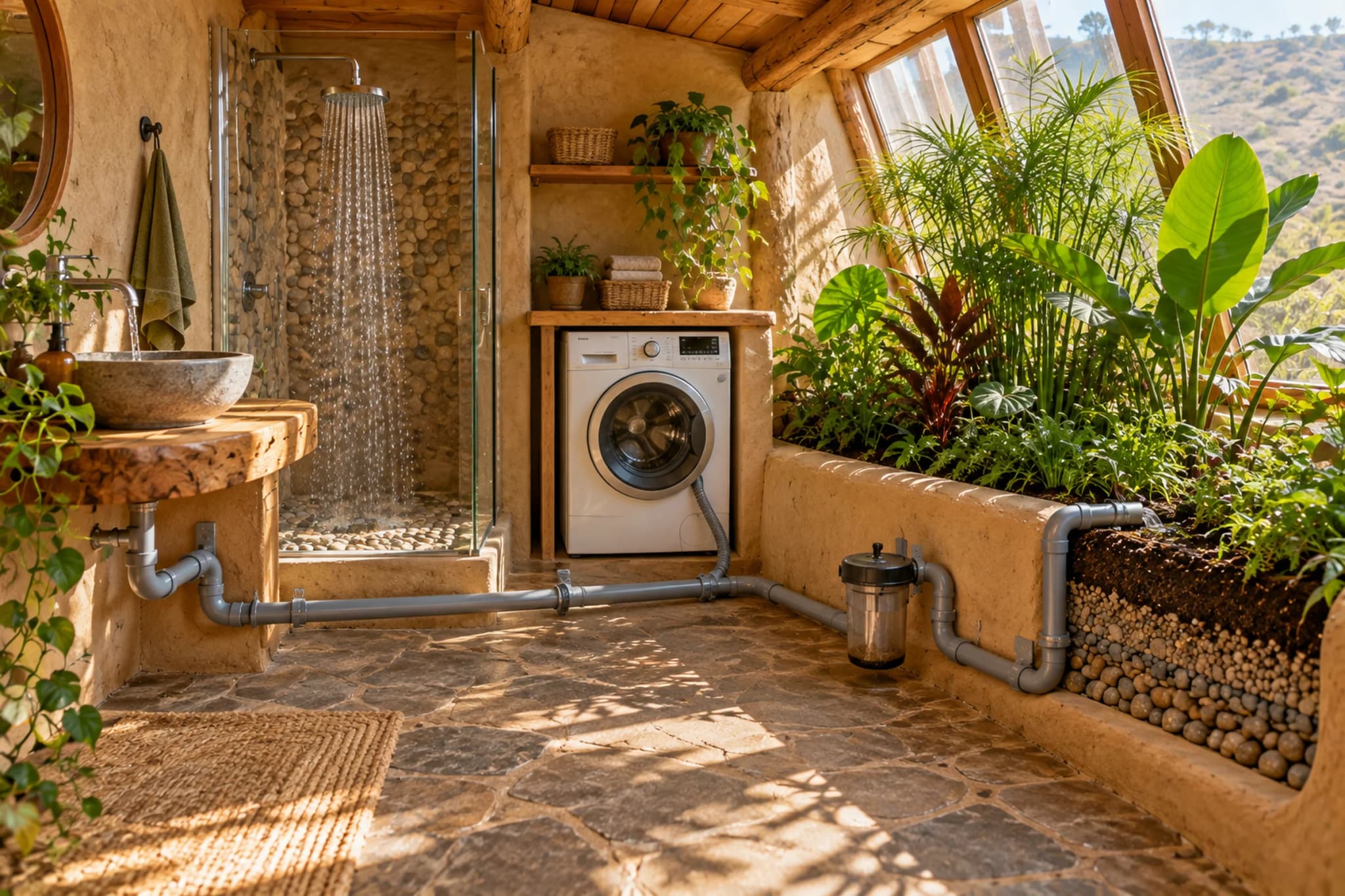
Greywater is the "only a bit dirty" kind. It comes from showers, baths, bathroom sinks and the washing machine, and it has soap, hair, lint and skin flakes in it, but no poop. (In the US you'll often see it spelled "graywater". Same thing.)
Blackwater is everything from the toilet. It carries germs that can make people very sick, so it never goes into a greywater system. It needs a sewer or a septic tank, and that's a whole different part of off-grid waste management.
The kitchen sink sits in the middle. Food scraps, grease and germs from raw meat make it much messier, so most rules keep it out, and some places call it "dark greywater".
Here's what surprises most people. Greywater is half or more of all the wastewater that leaves a normal home.
A University of California guide says a typical American household of two or three people makes about 340 litres (90 gallons) of greywater every day. That's more than two full bathtubs, poured away daily.
How A Basic Greywater Irrigation System Works
 Illustrative image
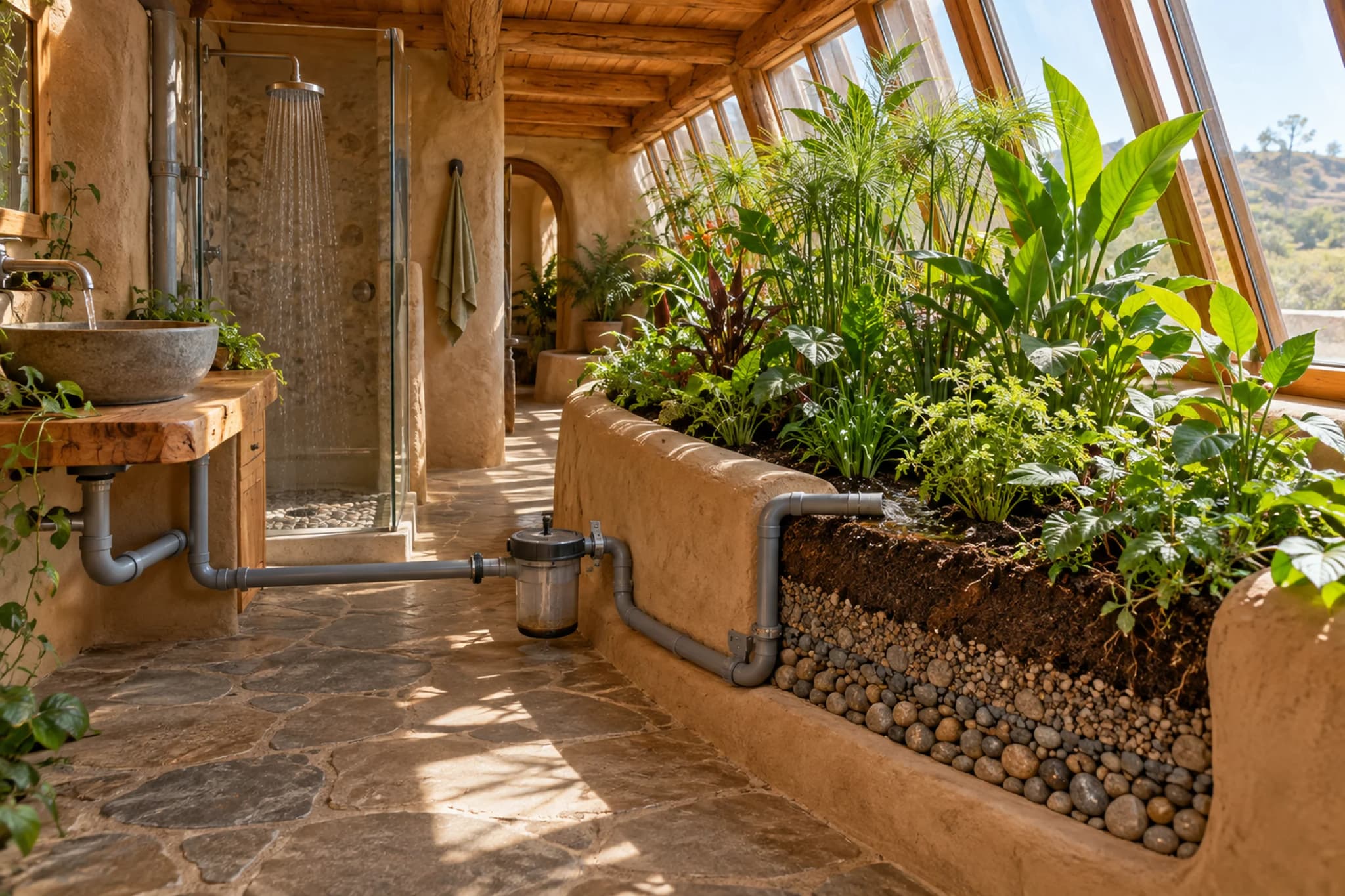
The big idea is simple. Soil is a filter, and it's full of tiny living things that eat the soap and dirt.
So a greywater system doesn't try to make the water pure in a tank. It moves it to the roots of outdoor plants, and the soil does the cleaning.
Most of it ends up in a "mulch basin", the simplest kind of irrigation. That's just a shallow pit around a tree or shrub, filled with chunky wood chips. The water soaks in under at least 5 centimetres (2 inches) of mulch, so nobody touches it and nothing pools on top.
Then the plants drink it, and the soil life breaks down the leftovers.
Some homes use subsurface drip irrigation instead, with thin tubes buried in the soil. Hair and lint clog the tiny drip holes, though, so a drip irrigation system requires a filter and a pump.
Why not keep it in a big barrel for later? Because greywater goes bad fast.
The soap and dirt start to rot, and that uses up the oxygen. Within a day it turns smelly and murky, like a fish tank nobody cleaned. That's why almost every guide says the same thing: use untreated greywater within 24 hours, and never keep it like rainwater.
Greywater System Types
 Illustrative image
Greywater systems range from a simple bucket to a complex treatment machine, depending on how much you have and how much work you want to do. Most homes pick one of these.
The Bucket
You catch shower water while it warms up, or bail out the bath, and carry it to the plants. It costs nothing, and in places like Brisbane, Australia, it needs no approval at all.
Laundry-To-Landscape
This is the most popular residential setup, and the simplest greywater irrigation system to install. It's clever, too. The washer already has a pump inside, so you let that pump run a free irrigation system.
An old top-loading washer can use 115 to 150 litres (30 to 40 gallons) per load. One California report says a family of four could reduce their water use by up to 83,000 litres a year this way.
Branched Drain
This one uses only gravity, no pump at all. Water from the bath flows downhill through a pipe that splits again and again, like branches on a tree, and each branch ends at a different mulch basin.
A good branched design requires a steady downhill slope, about 2 centimetres for every metre. That's gentle, but steady, like a marble rolling slowly down a long ramp. Greywater designer Art Ludwig worked out much of this design.
Manufactured Greywater Systems
The most complex setups are store-bought treatment systems. They clean greywater with filters and disinfection and use it to flush toilets. These bigger, pricier machines have their own standards, like BS 8525 in the UK, and each one requires a professional to install and regular maintenance.
How Do I Make A Homemade Greywater System?
The easiest homemade greywater system is laundry-to-landscape: a valve on the washer hose, a pipe out to the yard and a few mulch basins around trees. Many people build one themselves.
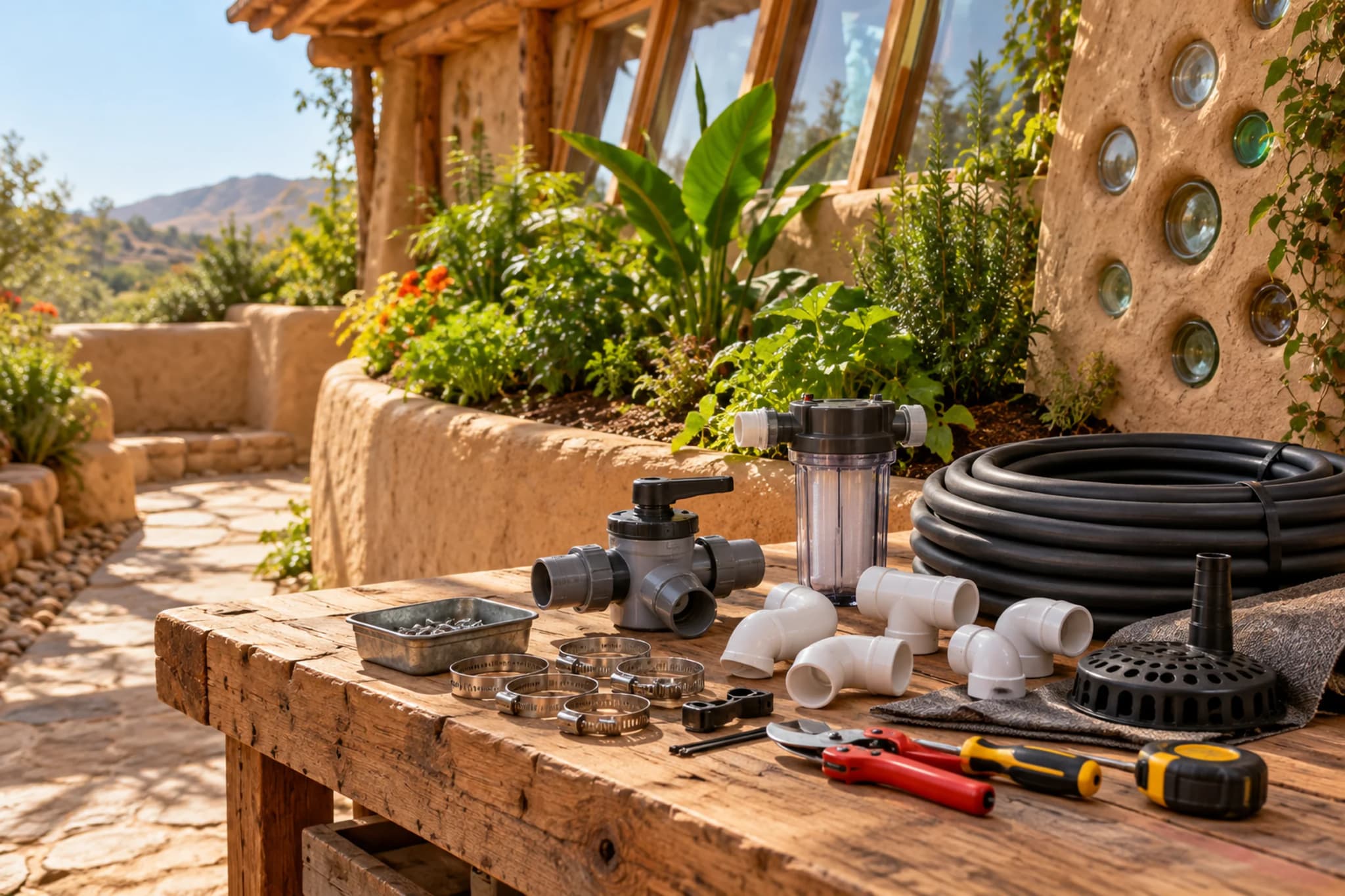
The basic components include:
- A 3-way valve. It connects to the washer hose. Turn it one way and the water goes to the sewer as normal, turn it the other way and it heads outside.
- A 1-inch pipe. Rigid pipe runs out through the wall, then bendy tubing carries the flow across the yard.
- Tee fittings. These split the flow, so one load can provide a drink for many plants.
- Mulch basins. Each outlet drops into a basin of wood chips, so nothing shows above the surface.
There's no filter to wash out, and Greywater Action says this irrigation system needs very little maintenance. In addition, it only takes some very minor rerouting of pipes.
One design tip before you install it: don't push the water far uphill. Pumping it more than a few feet above the top of the washer strains the pump and can shorten its life.
Cost, Permits And Guidelines Before You Install
 Illustrative image
A laundry-to-landscape irrigation system is cheap. In the US, the parts usually cost around 150 to 300 dollars if you build it yourself, and a professional install runs roughly 800 to 2,500 dollars.
A branched drain costs more, because somebody has to cut into the house plumbing, and treated systems cost the most.
In California, a washer-only system with no extra pump or tank, and no cut pipes, needs no permit. Bigger "simple" systems up to about 950 litres (250 gallons) a day usually do.
Arizona has a general permit for residential greywater irrigation systems under about 1,500 litres (400 gallons) a day. You still have to follow its rules, like no spraying.
In Brisbane, a bucket needs no approval, but a big treatment system needs a council permit. Many other countries have no clear greywater rules at all, or they forbid it.
So before you install anything, ask your local council, building department or health department what's allowed where you live. A quick call can save you from having to rip it all out later.
Keeping Greywater Safe
Rule number one: greywater is not drinking water. Not for people, not for pets, not even after it looks clear.
It can carry germs like E. coli and Salmonella, especially from dirty clothes. That's why the safety rules all point in the same direction: keep it underground, keep it away from mouths, and keep it moving. Gloves are cheap protection when you work on the pipes.
Things you must keep out of a greywater system include:
- Water from washing nappies or clothes with poop on them
- Water with paint, oil, petrol or strong cleaning chemicals in it
When someone in the house is sick, switch the valve back to the sewer for a while.
In addition, the soap matters, because plants feel it. "Boron" is a mineral found in borax and some washing powders, and even a little can hurt plants.
Salt is the other problem, and powdered detergents usually contain much more of it than liquid ones. Chlorine bleach harms the tiny soil life that does the cleaning.
So pick liquid soaps that say salt-free and boron-free, and skip the bleach on days the water goes outside.
Where it goes matters as much as what's in it:
- Not on the parts of plants you eat, and not on carrots, potatoes or other root crops
- Fruit trees are usually fine, as long as the water never touches the fruit
- No sprinklers, because tiny droplets with germs can float in the air
- No puddles or runoff, and nowhere near a well or other drinking water source
And one pipe rule above all: greywater pipes must never connect to drinking water pipes, not even through a valve or a hose. Mark them clearly so nobody mixes them up later.
Before you dig, ask your local council or health department about these, because the answers change from place to place:
| Check | What to ask |
|---|---|
| Which water may go in | Shower, bath, washer only? Is kitchen water banned? |
| How it goes into the ground | Under mulch only, or a set depth below the surface? |
| Distance to wells and streams | How many metres from a drinking water well, a stream, your house wall and the property line? That gap is protection for your drinking water. In California these distances are set in state code, and other places use other numbers. |
| Food plants | May it water fruit trees? Vegetables at all? |
| Sickness and chemicals | When must it go to the sewer or septic instead? |
| Permit | Is your size of system allowed without a permit? |
What Are The Disadvantages Of Greywater Systems?
The main downsides of greywater reuse: it won't keep, it can't handle the irrigation of a big green lawn, and the soap and safety rules take some care. A badly designed laundry system can also wear out the washer pump.
The University of California guide says greywater can cover about half to three quarters of the irrigation for a water-wise garden with little or no grass, not a whole green lawn.
And if your washer is very efficient, there may not be much to share. Art Ludwig has warned that a super-efficient machine may not put out enough to split between two fruit trees.
Is A Greywater System Right For You?
 Illustrative image
Greywater shines in dry places, where water resources are thin and every litre counts. Desert off-gridders often plan their whole home around how much water they can get, and greywater stretches that same water twice, which can reduce how much you pump, haul or buy. It's a free water source that turns up every single day.
It also pairs well with a composting toilet. Many off-grid tiny houses and cabins skip the flush entirely and send only sink and shower water outside.
For people who already count every litre, like those living on a boat or in an RV, the idea comes naturally. Water you've paid for, pumped or hauled shouldn't vanish after one quick rinse.
Give it a second job, and your shower quietly turns into a watering can. That's sustainable water recycling at its most basic: no tank, no chemicals, just soil and roots. Greywater is the last stop in an off-grid water system that runs from well or rain tank to garden.
Sources
- University of California Cooperative Extension, Use of Graywater in Urban Landscapes
- Australian Bureau of Statistics, Environmental Issues: Water Use and Conservation, March 2007
- Pacific Standard, A Victory for the Water Underground
- Greywater Action, Laundry to Landscape
- Greywater Action, Can I store greywater?
- Brisbane City Council, About greywater
- Harvesting Rainwater, Branched drain greywater distribution plumbing
- Harvesting Rainwater, Greywater and your detergent
- City of Santa Barbara, Graywater fact sheet
- BAWSCA, Graywater fact sheet
- Arizona Administrative Code, R18-9-D701 Gray water general permit
- PBS SoCal, After the lawn: greywater
- BSI, BS 8525 Greywater systems code of practice
Hard Words
| Term | What it means |
|---|---|
| Greywater | Lightly used wastewater from baths, bathroom sinks and washers. Not safe to drink. |
| Blackwater | Water from the toilet. It carries dangerous germs and never goes into a greywater system. |
| Dark greywater | A name some places use for sink and dishwasher water from cooking, which has food, grease and more germs. |
| Mulch basin | A shallow pit around a plant, filled with wood chips, where greywater soaks into the soil out of sight. |
| Laundry-to-landscape | A system that uses the washer's own pump to send its water out to the yard. |
| Branched drain | A gravity system where the pipe splits like tree branches to share water between several plants. |
| Diverter valve | A valve that lets you send greywater outside or back to the sewer with one turn. |
| Boron | A mineral in borax and some detergents. Even small amounts can harm plants. |
| Root crop | A vegetable where you eat the part that grows underground, like carrots or potatoes. |
Common Questions
What is greywater?
Lightly used wastewater from baths, bathroom sinks and washers. It contains soap, hair and lint, but nothing from the flush, which is blackwater.
Is greywater safe to drink?
No, never, even when it looks clear. It can carry germs like E. coli and Salmonella, so it's only for plants, under mulch or soil.
How long can you store greywater?
No more than 24 hours, and ideally not at all. The soap and dirt rot, use up the oxygen and make it smell.
Can I use greywater on vegetables?
Keep it off the parts of plants you eat and off root crops like carrots. Fruit trees are usually fine if it soaks in under mulch and never touches the fruit.
Do I need a permit for a greywater system?
It depends on where you live. A simple washer system in California needs no permit, while bigger systems usually do, so ask your local council first.
What soap is safe for greywater?
Liquid soaps that are free of salt and boron. Skip chlorine bleach on days the water goes outside.
Is kitchen sink water greywater?
Usually not. Most US and Australian rules leave it out, because food scraps, grease and germs make it much dirtier. Some places call it dark greywater.