
A Fireplace Is Mostly Useless
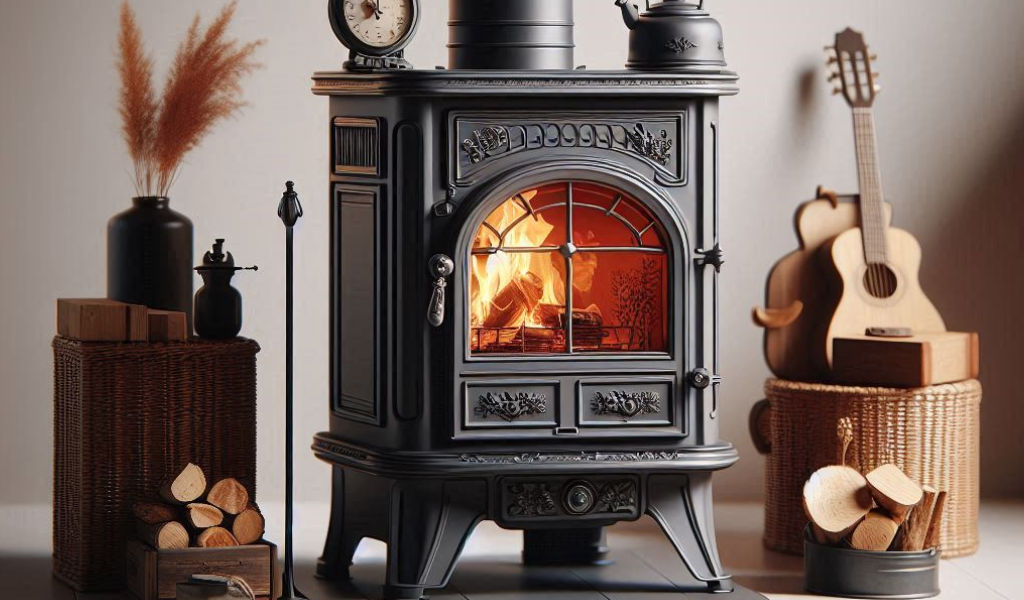
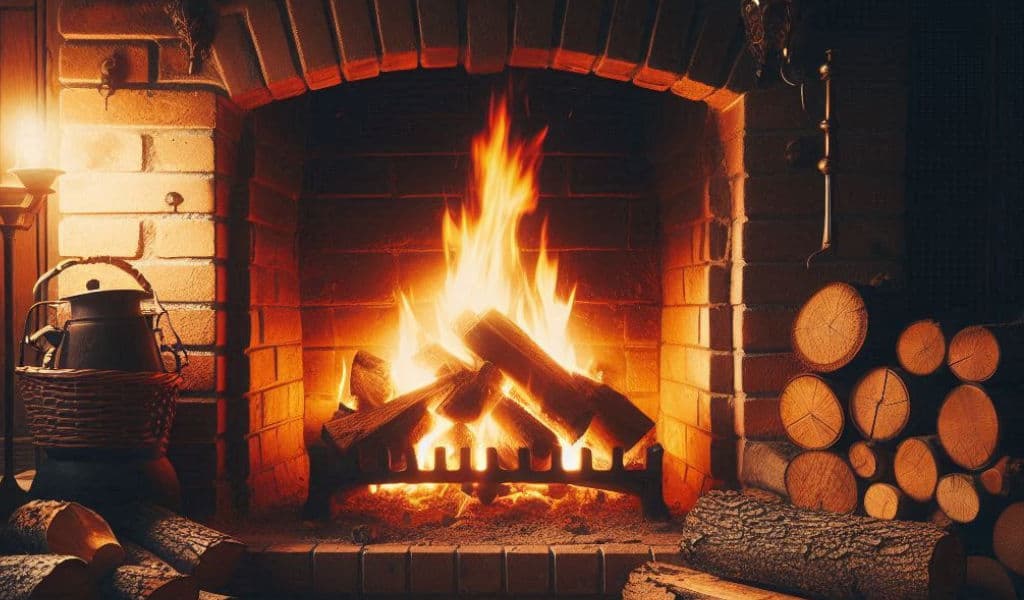
If you've ever sat in front of a roaring open fireplace, you might have noticed something weird. Your face feels hot. Your back is freezing.
That's because an open fireplace is only about 10% efficient. Nine-tenths of the heat shoots straight up the chimney and disappears into the sky. You're paying for ten logs and getting one log's worth of warmth.
A modern wood stove flips that number around. The good ones reach 80% efficiency. Same wood. Same fire. Eight times more warmth stays in your room.
How does a metal box on the floor pull off such a big upgrade?
The Sealed Box Trick
A wood stove is just a fire trapped in iron.
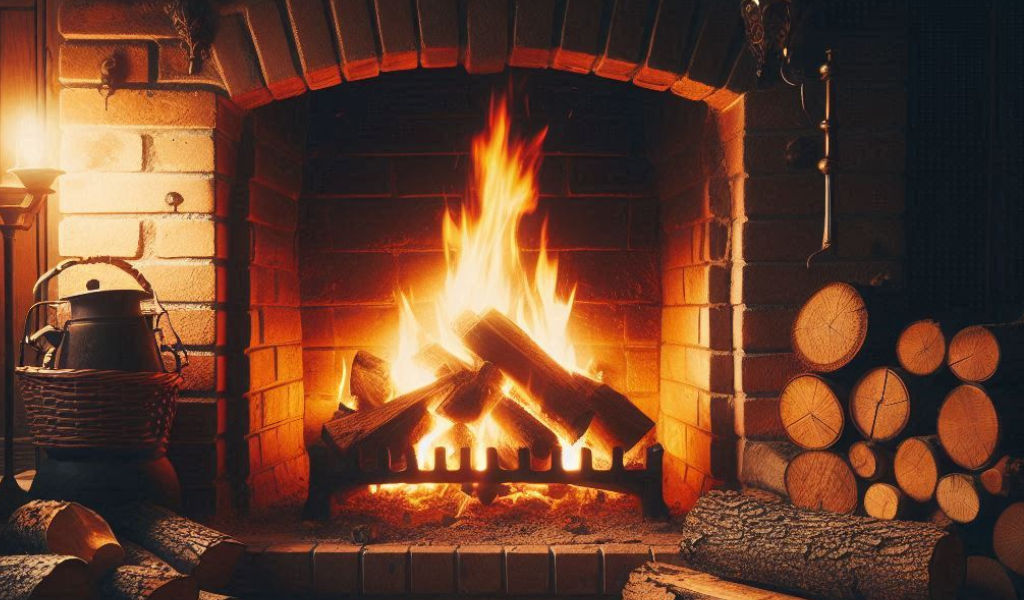
The firebox is the inner chamber where the wood burns. Thick iron or steel walls. A heavy door that seals tight. That seal is the whole secret. An open fireplace lets air rush in freely, which makes the fire hungry and the smoke fast. A stove starves the fire on purpose, just a bit, so it burns slow and steady.
The iron walls soak up the heat. They get red-hot. They stay hot for hours. Long after the fire has settled into glowing coals, the iron is still warming the room.
Then come the air vents. These are little sliding gates you control from the front of the stove. Open them wide and the fire roars. Close them down and the fire crawls. Same wood, totally different burn rate.
That control is why a wood stove is so efficient. You match the fire to how cold the room is.
What Burns Inside The Firebox
Most people burn firewood. Logs from oak, maple, or birch. These are called hardwoods, and they burn slow and hot. A pile of hardwood lasts way longer than the same pile of pine.
Pine and softwoods work too, but they burn fast and leave more sticky black gunk in the chimney. That gunk is called creosote, and it can catch fire. So most people stick with hardwood.
Whatever wood you burn, it needs to be dry. Freshly cut logs are full of water. The fire has to boil that water out before it can even start burning the wood. Wet wood burns cold and smoky. Dry wood (softwoods left to sit at least six months, hardwoods 12 to 18) burns hot and clean.
Some stoves can burn pellets, wood chips, or even coal. But the classic wood stove is built for split logs.
→ How pellet stoves work without smoke
The Chimney Does The Pulling
You can't have a fire without a chimney. The chimney does two jobs.
First, it lets smoke escape. Smoke is full of stuff you don't want to breathe (carbon monoxide, fine particles, tar). The chimney sends it up and out.
Second, it creates a pull. Hot air rises. As hot air shoots up the chimney, it pulls fresh air in through the stove's vents. That's how the fire keeps getting oxygen without you blowing on it. The taller the chimney, the stronger the pull.
If the chimney clogs up with creosote, both jobs stop working. Smoke can back up into the room. The fire suffocates. That's why a wood stove needs the chimney cleaned at least once a year by a chimney sweep.
Why The Heat Spreads
A hot stove warms a room two ways at once.
Some heat radiates straight out, like sunshine. Stand near the stove and the iron is throwing heat at you in a line. That's why your face gets warm even though the air in the room is still chilly.
The other way is convection. Air touching the stove heats up. Hot air rises. Cooler air slides in to take its place. Pretty soon there's a slow current of warm air moving around the whole room. Some stoves have a small fan built in to push that hot air around faster.
After an hour, even a cold room feels like a cozy room.
What A Good Wood Stove Needs
Three things keep a wood stove safe.
First, space around it. The walls of a stove get really hot. Building codes set rules for how far the stove has to sit from any wall or piece of furniture. Skip this and you can scorch your wall or worse.
Second, regular cleaning. Ash piles up, the chimney needs a sweep, and the door seal needs checking. None of this is hard, but it has to happen.
Third, dry, well-stored wood. Wet wood is the source of most stove problems. Stack your wood somewhere covered, off the ground, with airflow around it. Let softwoods dry at least six months, and hardwoods 12 to 18 months, before burning.
Why People Still Pick Wood Stoves
In an age of smart thermostats and heat pumps, why are wood stoves still everywhere?
Because the fuel grows on trees. Literally. If you have land with trees, you can heat your house for free forever. You can burn fallen branches, scrap lumber, or wood your neighbor was throwing out.
A wood stove also works during a power outage. No electricity needed. The day the grid goes down, your wood stove keeps going.
And it just feels good. There's something about a fire in a metal box that no radiator can match.
→ The big picture of biomass energy
→ The exact parts of a pellet stove
→ How biomass is being used today