
Burning Trees To Make Electricity
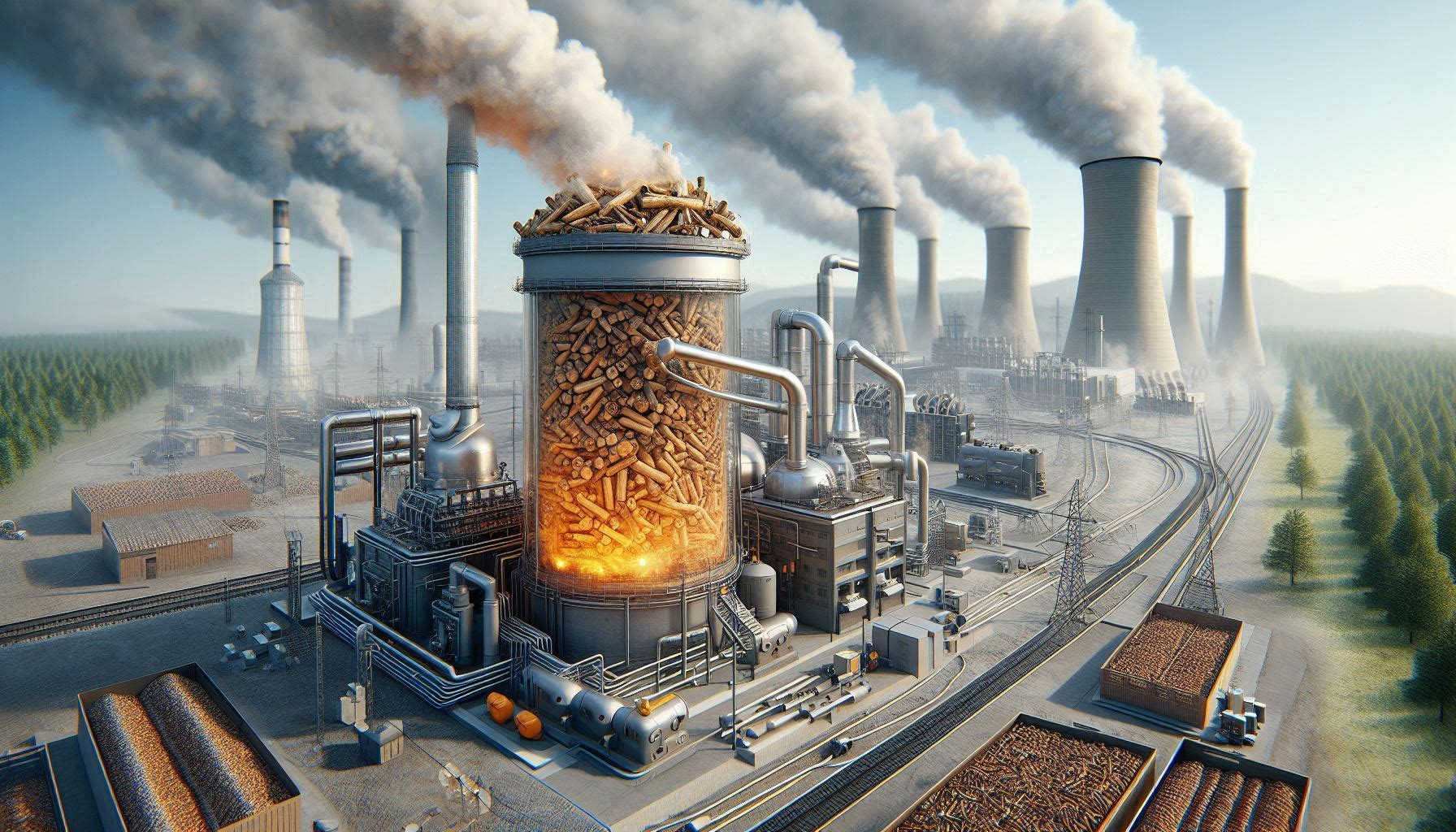
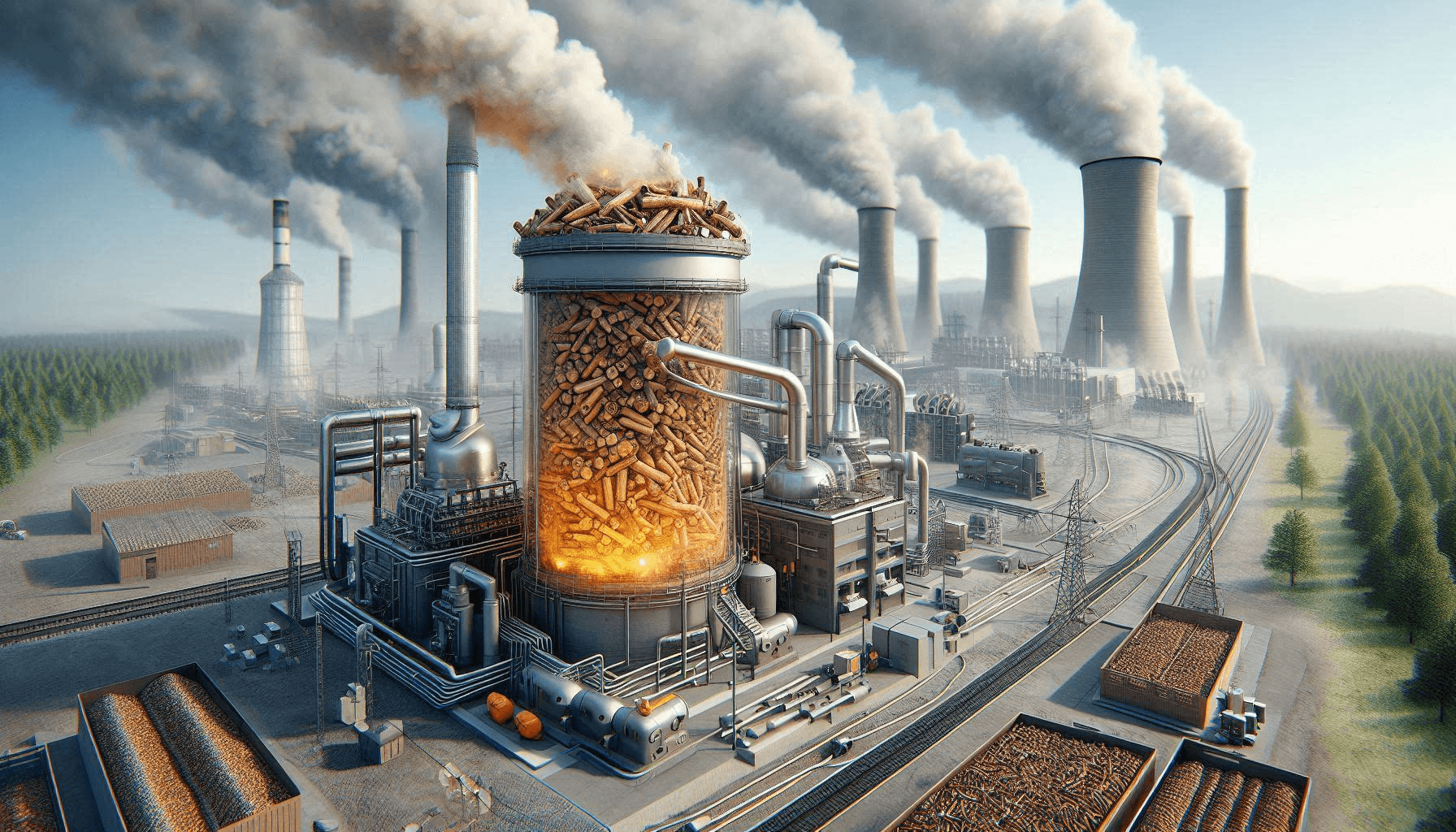
A giant power plant burning wood chips looks weird at first. But it's the same idea as your kitchen kettle, just much bigger.
Wood goes in. It burns. The fire heats water in a huge metal boiler. The water turns to steam. The steam blasts through a turbine (a wheel with curved blades). The wheel spins. The spinning is connected to a generator, which is just a magnet spinning inside coils of wire. That spinning magnet makes electricity flow out.
Same trick coal plants use. Same trick nuclear plants use. The only difference is what's making the steam.
The wood chips can be leftover bits from sawmills, fallen branches, or trees grown on purpose. When the wood is gone, you plant more. Coal can never grow back. That's the whole pitch for biomass: same job, refillable fuel.
→ How steam turned water into work
Wood Stoves: The Oldest Home Appliance
People have heated houses with wood for thousands of years. But the modern wood stove is way better than what your great-great-grandparents had.
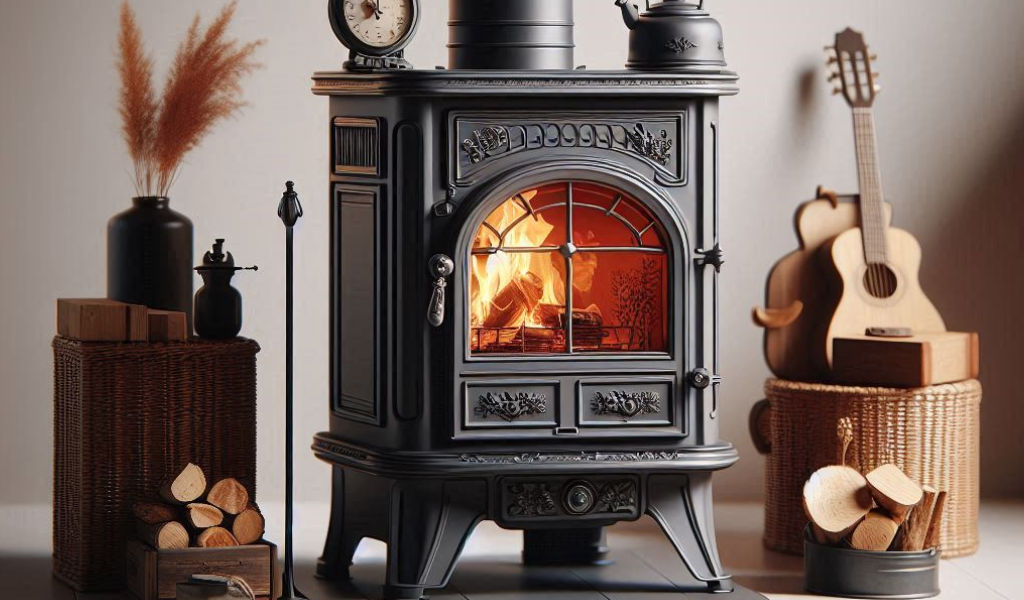
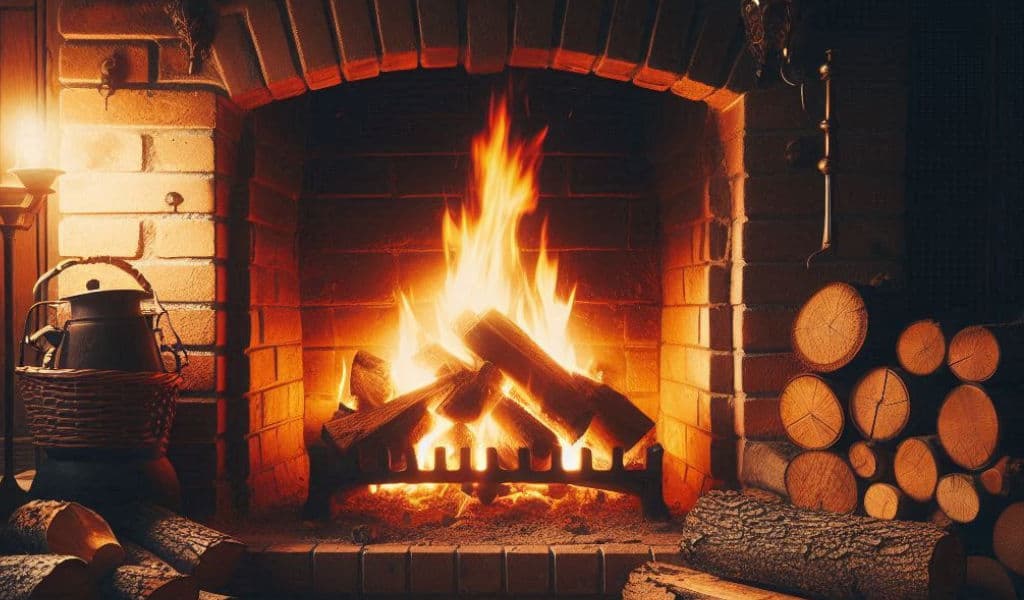
An open fireplace is only about 10% efficient. Most of the heat shoots straight up the chimney. You feel warm because you're standing right in front of it, but the rest of the house barely changes.
A good wood stove can be 80% efficient. Eight times more heat stays in the room. Same wood. Same fire. Just a smarter box around it.
How? The stove traps the fire in a sealed metal box and forces the heat to stick around. Air vents control how fast the wood burns. The chimney pulls smoke out, but slowly enough that the heat warms up the iron walls first.
→ How wood stoves squeeze the most heat from a log
Pellet Stoves: Pressed-Wood Power
A pellet stove burns little pellets the size of a vitamin. They're made from sawdust pressed into hard cylinders.
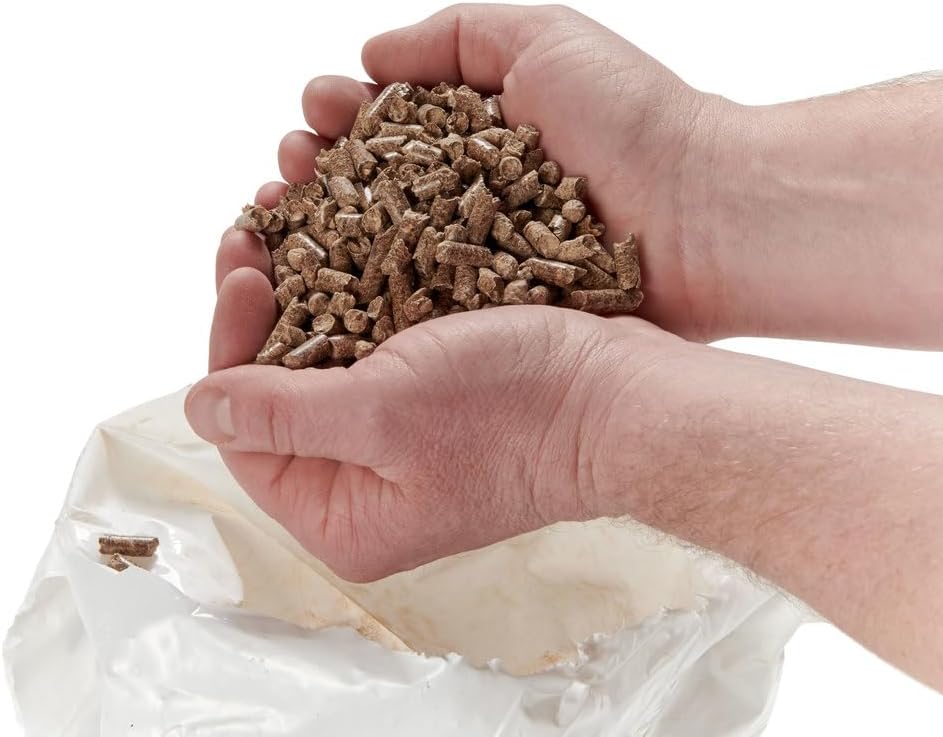
The cool part is what happens after you pour pellets in. You don't tend the fire. A motor (called an auger) feeds pellets into the flame automatically, a few at a time. Fill the hopper once, and the stove can burn steadily for 24 hours.
Modern pellet stoves run up to about 85% efficient. They make almost no smoke because they burn slowly and completely.
→ How a pellet stove works without smoke
→ The exact parts inside a pellet stove
Wood Boilers: Heat For The Whole House
A wood boiler is like a wood stove that doesn't try to warm the room. Instead, it heats water. That hot water flows through pipes to radiators or under your floor.
Same trick as central heating with gas, but the fuel is wood. Some boilers take big logs you load yourself. Fancier ones eat wood chips or pellets and feed themselves.
The hot water gives off its heat in every room, then comes back to the boiler to get heated again. The cycle never stops as long as there's wood.
Biomeilers: A Pile Of Wood Chips That Heats Your House
This one is wild.
A biomeiler is a giant pile of wood chips. No fire. Nothing burning. Just damp chips left to rot.
As the chips decompose, the pile gets hot. Really hot. The center of a big biomeiler can stay around 60°C (140°F) for two years.
People build them with water pipes running through the middle. The pile heats the water. The water heats their house or their greenhouse. No flame, no smoke, no chimney. Just a heap of organic stuff turning warm because of bacteria doing their thing.
When the chips finally cool down (after a year or two), what's left is rich compost you can spread on a garden.
Rocket Stoves: A Lot Of Heat From A Stick
A rocket stove looks too simple to work. It's basically an L-shaped tube. You feed twigs in the horizontal part. The fire burns inside the vertical part, which acts like a chimney.
The shape forces air to rush up through the flame. That creates a fierce, hot burn. A few small sticks make a lot of heat. Almost no smoke.
People use rocket stoves for camp cooking. In some parts of the world, they're the main way families cook every day. They use a fraction of the wood a normal fire needs.
Rocket Mass Heaters: A Rocket Stove Plus A Long Couch
This is a rocket stove with a clever upgrade.
The exhaust gases from the rocket stove are usually still very hot. Normally that heat goes up the chimney and vanishes. A rocket mass heater traps it.
The hot exhaust snakes through a long bench made of stone, brick, or packed earth. The bench slowly soaks up the heat. Hours after the fire has burned out, the bench is still warm. You can sit on it.
Some people heat their whole house this way using only fallen branches from their yard. No electric heat. No gas bill.
Masonry Heaters: A Stove Made Of Stone
A masonry heater is built into a wall like a fireplace, but made entirely of brick or stone. It's huge and heavy.
You light a quick, hot fire inside. The fire only burns for an hour or two. But the stone soaks up all that heat and holds onto it.
For the next 12 to 24 hours, the stone slowly gives the heat back. The whole room stays warm even though there's no fire anymore.
It's the opposite of a normal stove, which heats only while burning. A masonry heater works on the way home from school.
Turning Plants Into Car Fuel
Biofuels are biomass turned into liquid you can pour in a tank.
Ethanol is alcohol made from corn or sugarcane. In Brazil, most cars run on a mix of ethanol and gas. In the US, gas usually has 10% ethanol mixed in.
Biodiesel is made from plant oil (or even used cooking oil from restaurants). Diesel engines run on it with almost no changes.
Both are renewable. The crops grow back every year. But there's a catch: growing fuel crops uses farmland that could grow food. So scientists are working on making biofuels from waste instead (corn husks, sawdust, garbage).
Anaerobic Digestion: Garbage Into Gas
Stick organic waste in a sealed tank with no air. Bacteria eat it. As they eat, they fart out methane gas. That methane (called biogas) burns just like natural gas.
It's not science fiction. Farms do this with cow manure all over the world. Cities do it with food scraps from restaurants. The resulting gas heats houses, cooks food, even fuels buses.
What's left in the tank afterward is rich liquid fertilizer. Nothing wasted.
Gasification: Solid Wood Into Burnable Gas
Gasification is a trick where you heat wood in a near-total absence of oxygen. The wood doesn't burn. It breaks down into a gas called syngas (a mix of hydrogen and carbon monoxide).
That gas can be burned cleanly to make electricity, or turned into liquid fuel.
The cool part: gasification works on stuff you can't really burn well, like crop waste, garbage, or wet wood. It turns junk into a clean fuel.
Pyrolysis is a related trick that produces bio-oil, a thick liquid that can be refined like crude oil. Both are still being improved in labs around the world.
→ Where biomass is heading next
→ The 100,000-year history of humans and biomass
→ How biomass fits with solar and wind