
A Cup Of Boiling Water Lifts A Lid
You've probably noticed this without thinking about it.
Put water in a kettle. Boil it. The lid rattles. Sometimes it lifts right off. That little jump is steam pushing on the lid.
That's all a steam engine is. The same push, made enormous. Catch the steam, point it at something heavy, and the steam can move it.
Hero of Alexandria figured this out about 2,000 years ago. He built a toy where a hollow ball spun because steam blasted out of two bent pipes. He had no idea he was looking at the future of energy. People thought it was a clever party trick.
It took 1,700 more years before anyone built a useful steam engine.
The First Real Engine
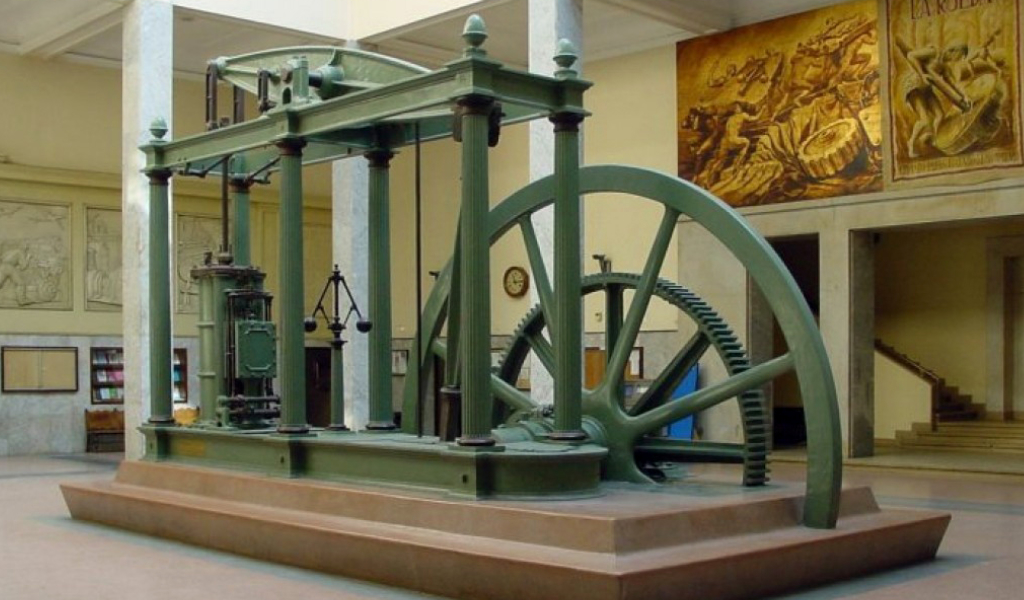
In 1712, an Englishman named Thomas Newcomen built the first steam engine that did real work. It pumped water out of coal mines. It was huge, slow, and ate a lot of coal. But it worked.
About 50 years later, James Watt made it way better. His version used much less fuel and ran much smoother. Watt's engine is the one that kicked off the Industrial Revolution.
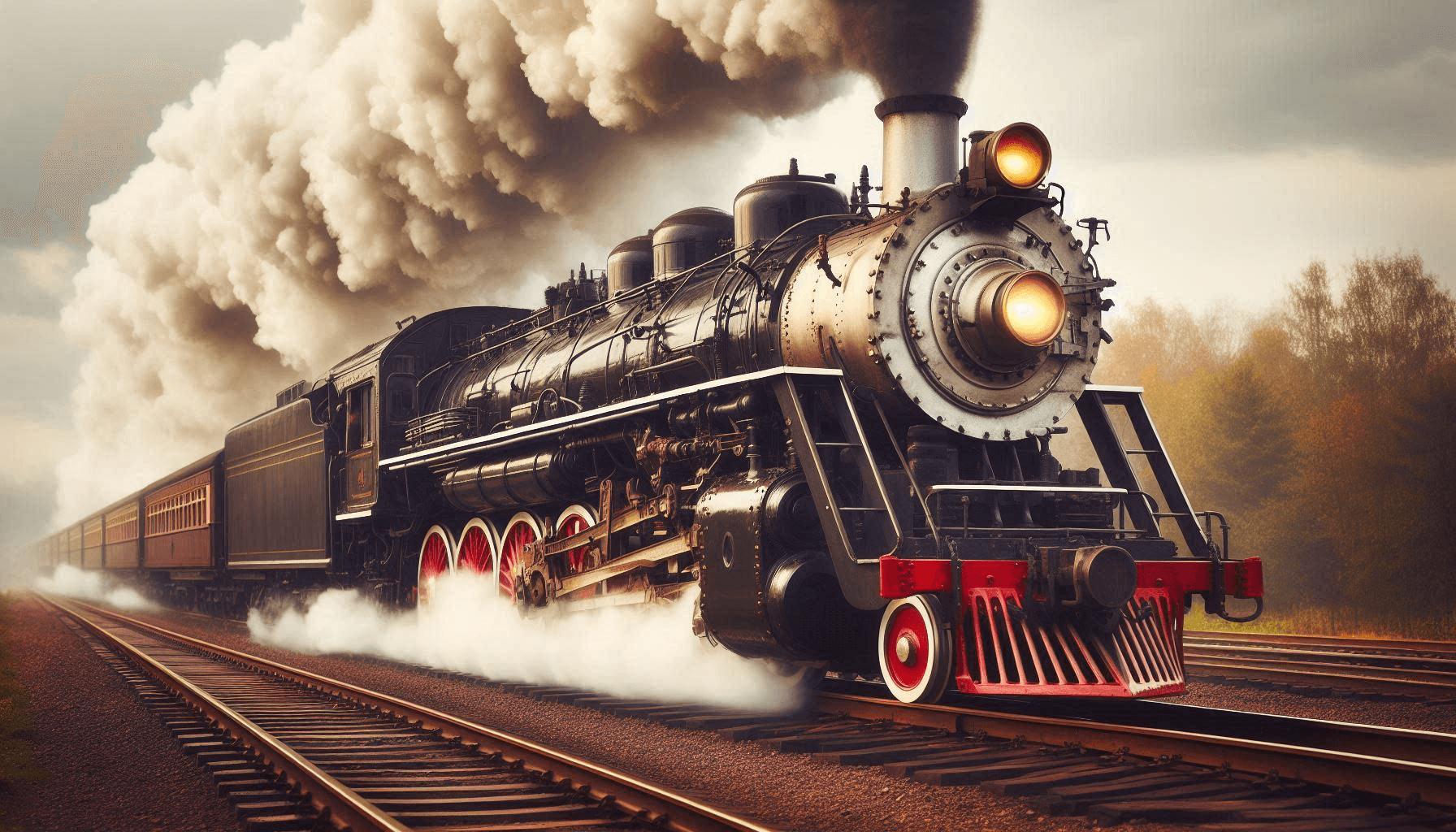
For the next 150 years, steam ran almost everything. Factories. Trains. Ships. Pumps. Saws. Looms. If something needed power and was bigger than a horse, it ran on steam.
→ The history of biomass and steam
The Core Trick
A steam engine has five parts that matter. Once you understand them, the whole thing makes sense.
Boiler: A sealed metal tank full of water. A fire burns underneath. The water heats up and turns into steam. Steam takes up about 1,700 times more space than water, so the pressure inside the boiler gets very high.
Cylinder: A round metal tube where the work happens. Steam from the boiler is forced into it.
Piston: A round metal plug that fits inside the cylinder like a sliding stopper. Steam shoves the piston down the cylinder.
Connecting rod and crankshaft: A bent piece of metal that turns the back-and-forth movement of the piston into round-and-round spinning. Same trick as a bike pedal turning a wheel.
Flywheel: A big heavy wheel attached to the crankshaft. Once it's spinning, its weight keeps it spinning, smoothing out the bumps between piston strokes.
The Sequence
Here's how it all flows together.
You light a fire under the boiler. The water boils. Steam builds up to high pressure.
A valve opens. Steam shoots into the cylinder. The pressure shoves the piston to the end of the cylinder. That's one push.
The valve flips. Steam now enters the other side of the cylinder, shoving the piston the other way. The first push of steam vents out as exhaust.
Push, push, push, push. The piston rockets back and forth, fast and hard.
The connecting rod and crankshaft turn each push into a quarter-turn of a wheel. After four pushes, the wheel has spun once.
That spinning wheel is the engine's output. Connect it to a saw, and the saw saws. Connect it to a train, and the train moves. Connect it to a generator, and out comes electricity.
What Made It Such A Big Deal
Before steam, the only ways to do heavy work were animals, wind, and water.
Animals get tired and need food, wind doesn't always blow, and water mills only work where there's a fast river.
Steam works wherever you can carry coal or wood. A train can chug across a desert. A ship can cross an ocean. A factory can sit in a city with no river anywhere nearby. Suddenly, you could put power exactly where you needed it.
That's why steam changed everything. Cities exploded. Countries got rich. Long-distance travel became normal.
Steam Today
Most modern steam engines aren't piston engines anymore. They're steam turbines, which are like windmills designed for steam instead of air.
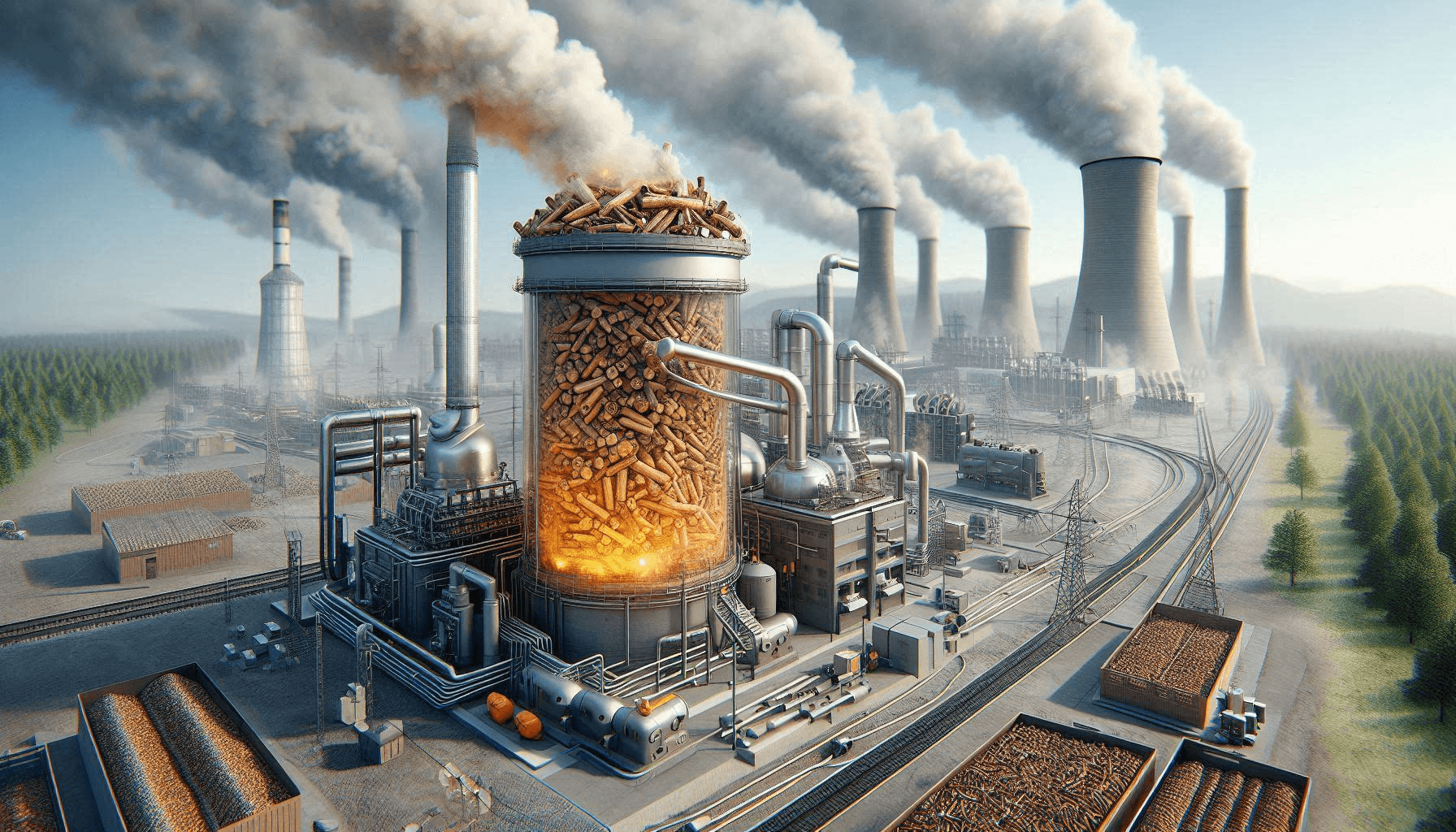
Power plants still use steam. Coal plants, nuclear plants, biomass plants, and even most gas plants all do the same thing: heat water, make steam, spin a turbine, make electricity.
In 2026, the steam turbine is still doing about 70% of the work of making the world's electricity. The fuel changes (coal, gas, uranium, wood chips, sunlight), but the steam stays.
→ How biomass plants use steam to make electricity
Why People Still Care
Steam is one of the safer, simpler ways to make a lot of power. Water is cheap, easy to find, and not dangerous. The only tricky part is keeping the boiler from blowing up under pressure (which is why modern boilers have lots of safety valves and pressure gauges).
You can build a small steam engine to learn how it works. You can build a big steam engine to power a town. Same idea, different scale.
The whole industrial age, every train and every factory and every electric light, all started with a young Scottish engineer named James Watt staring at a broken Newcomen engine and thinking: I can make this much better.
→ The detailed parts of a steam engine
→ How biomass plants make electricity using steam
→ The big picture of biomass energy
→ How modern wind turbines do a similar job
→ How hydro plants spin turbines with water instead