
What Even Is A Pellet?
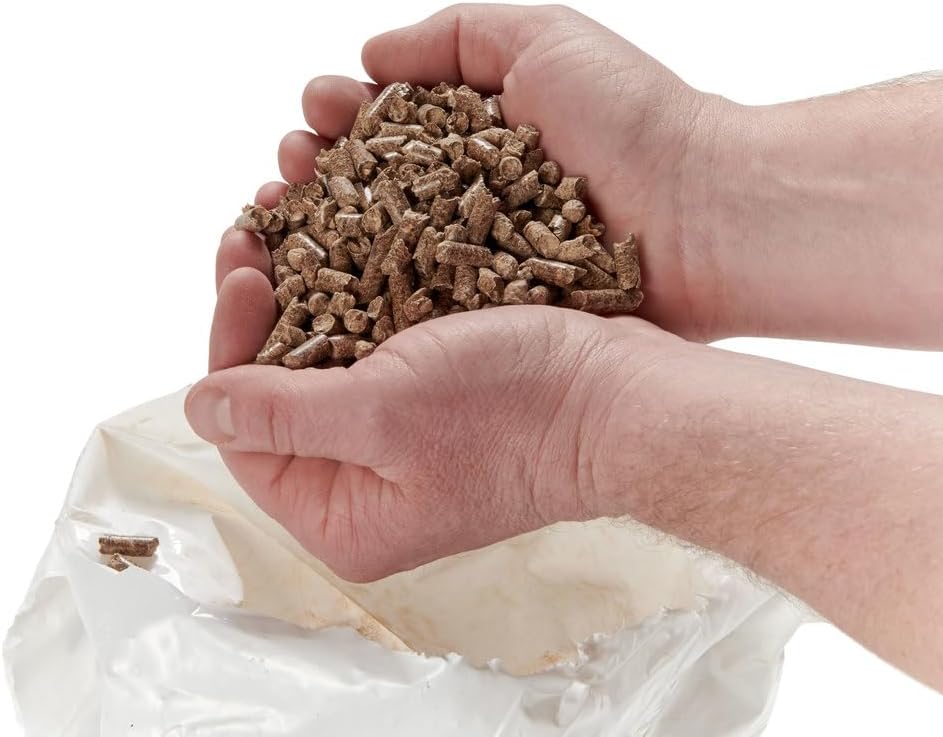
A pellet looks like a piece of dog food.
It's about the size of a vitamin. Hard. Brown. Pellets are made by taking sawdust (the leftover stuff from sawmills) and squeezing it under huge pressure. The squeeze locks the sawdust into a dense cylinder, no glue needed.
Each pellet packs a lot of energy into a small space. A bag of pellets the size of a backpack burns longer than a much bigger pile of regular firewood.
The Hopper Feeds The Fire By Itself
Here's the big difference from a wood stove.
A wood stove needs you. You load logs. You poke them around. You add more when they burn down. A pellet stove handles itself.
You pour pellets into a hopper, which is just a big bin on top of the stove. The hopper holds enough pellets for a whole day, sometimes longer.
A motor inside the stove turns a screw called an auger. The auger pulls pellets out of the hopper a few at a time and drops them into the burn pot, which is the metal cup where the actual fire happens.
So once you fill the hopper and push start, the stove takes care of the rest. Fill it in the morning, burn all day. Fill it before bed, burn through the night.
How It Lights Itself
There are no matches.
When you press the button, a small electric igniter inside the burn pot turns red-hot. It's like the element in a toaster. The first pellets land on it and catch fire from the heat.
A combustion fan pulls fresh air into the burn pot, feeding the flame. Same fan blows the exhaust out a small pipe in the back of the stove.
That's why a pellet stove doesn't need a tall chimney. Instead, it has a short vent pipe that goes straight through a wall. No giant brick chimney up the side of the house.
Why The Smoke Is Almost Invisible
A wood fire is messy. Logs are uneven. Some parts burn, some smolder, some just smoke. You get visible smoke pouring out the chimney.
A pellet stove burns way cleaner because everything about it is controlled. Pellets are all the same size and dryness, and the fire gets exactly the air it needs. The result is almost complete combustion.
Modern pellet stoves run up to about 85% efficient, higher than most home heating systems of any kind. Almost all the heat from the pellets ends up in your room, and the exhaust is so clean you can barely see it.
What's Going On Inside
The whole system has a few main parts:
The hopper (the storage bin) holds the pellets.
The auger (the motor-driven screw) feeds pellets into the burn pot.
The burn pot is where the pellets actually burn.
The igniter is the electric element that lights the pellets at startup.
The combustion fan pulls air in and blows exhaust out.
The heat exchanger is a set of metal walls that the hot exhaust passes through. The exhaust heats up the metal. The metal heats up the air in your room.
The convection blower is a separate fan that pushes warm air from the heat exchanger out into the room.
A small computer (the circuit board) runs the whole show. It tells the auger how fast to feed pellets based on the thermostat reading. Cold room: more pellets. Warm room: fewer pellets. The stove balances itself.
→ The exact parts inside a pellet stove
Two Main Types
A freestanding pellet stove sits on the floor like a regular stove. You can put it almost anywhere as long as the vent can reach an outside wall.
An insert pellet stove is built to slide into an existing fireplace. If you've got an old wood fireplace you never use, you can slot one of these in and use the old chimney.
What You Have To Watch For
Pellet stoves need electricity. The auger, the fans, the igniter, the computer (all run on power). If the grid goes down, your pellet stove stops too. People who want true off-grid heat usually pair it with batteries or pick a wood stove instead.
They need pellets, which you have to buy in bags or in bulk. The price changes year to year. Wood pellets cost more than chopping your own firewood, but less than gas heating in most areas.
They make a low background hum from the fans. It's quieter than a fridge, but it's not silent the way a wood stove is silent.
And they need cleaning. Ash builds up in the burn pot, the hopper needs vacuuming, and the heat exchanger needs brushing out. Once a week takes ten minutes.
→ How to install and maintain a pellet stove
Why People Pick Pellet Stoves
The big sell is convenience. Fill it once a day, press a button, walk away. You get steady, even heat with almost no work.
For people who like the idea of wood heat but don't want to chop logs and tend a fire, pellets are the answer. Same fuel source (trees), way less hassle.
→ How wood stoves work, by comparison
→ The big picture of biomass energy