
A solar panel on a sunny day can push way more power at a battery than the battery can handle. Bolt them straight together and you'll cook the battery in an afternoon.
So you put a charge controller between them.
The controller smooths things out. When too much power tries to rush in, it slows the flow. When the battery is nearly full, it eases off. When the battery is empty, it lets a steady stream through.
Two Kinds
PWM is the cheap and simple kind. It works by flicking the power on and off really fast. Fine for small systems, like a solar light or a tiny camping rig.
MPPT is the smarter kind. It actively changes the voltage from the panels to match what the battery wants right now. On a cloudy day, MPPT can squeeze 30% more energy out of the same panels than PWM. For a real home battery setup, MPPT is the answer.
Sizing It
The controller has to handle the current from your panels.
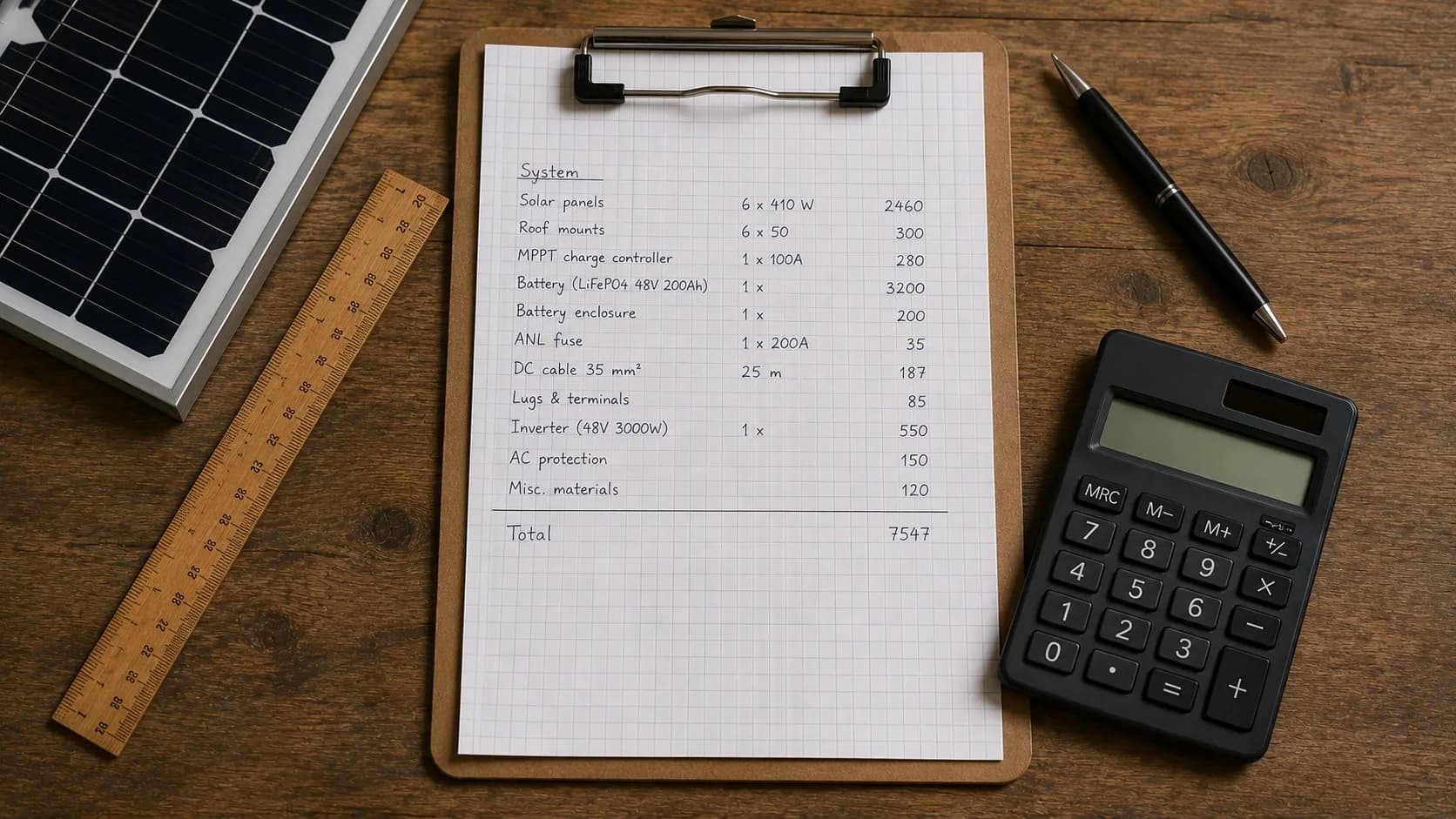
Take total solar wattage, divide by battery voltage, that's your amps.
500W of panels on a 12V battery: 500 ÷ 12 = about 42 amps. Buy a controller rated for 50A or more. Always leave headroom.
What It Protects Against
A good charge controller also stops other bad things from happening. It blocks the battery from feeding power back into the panels at night. It cuts out if there's a short circuit. It even compensates for temperature, since cold batteries need slightly different charging than warm ones.
A small, quiet box doing a lot of important work.
→ Read more about charge controllers