
A Battery Doesn't Actually Store Electricity
It stores chemistry.
Inside every battery are two pieces of metal sitting in a liquid or paste. When you hook up a wire between them, the chemistry reacts and pushes tiny particles (electrons) through the wire. That flow is electricity.
When the battery's "empty", the chemistry has finished reacting. When you charge it, you reverse the reaction and reset it. The chemistry is ready to go again.
That's the whole trick.
Lead-Acid: The Old Reliable
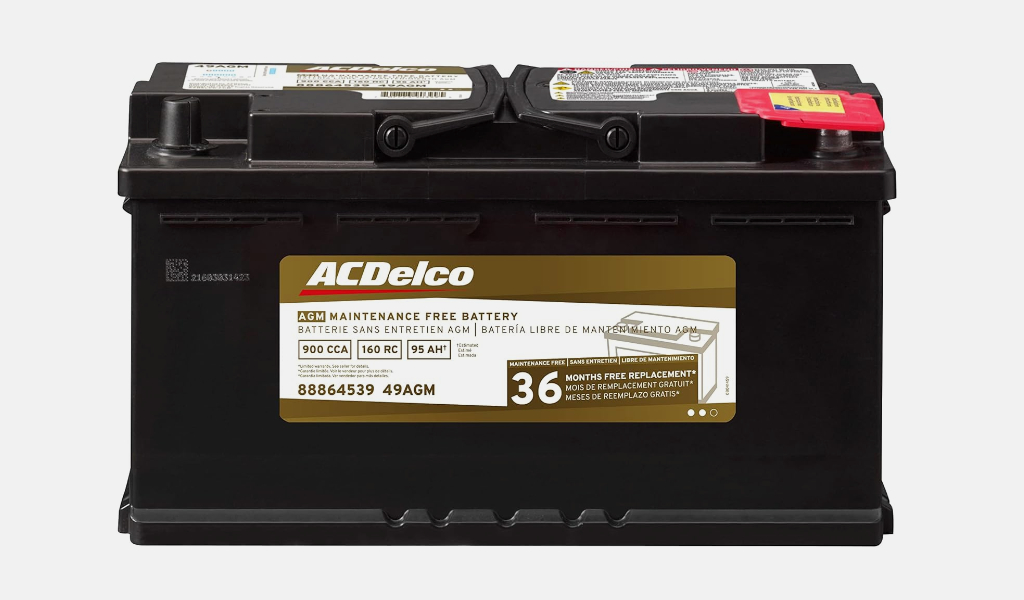
Lead-acid batteries have been around since 1859. The same basic idea still works today. The battery under your car's hood is almost certainly lead-acid.
A French scientist named Gaston Planté figured this one out. Two lead sheets, some acid, and a way to recharge it.
Good at: being cheap, being everywhere. You can buy a lead-acid battery in any auto parts shop on the planet.
Bad at: weight. A lead-acid battery big enough to power a house weighs as much as a few adults. And you can't drain them all the way down without wrecking them. You only really get to use about half of what's inside.
If you have space and a tight budget, lead-acid still works.
→ Read more about lead-acid batteries
Lithium-Ion: The Phone Battery, Scaled Up
Lithium-ion batteries are what's in your phone, your laptop, every electric car. They showed up in 1991 and slowly took over the world.
Way lighter than lead-acid. Holds more power per kilo. Lasts longer.
The downside: regular lithium-ion can catch fire if you mess it up. That's why your phone has all those temperature warnings.
Good at: power-to-weight, long life, no maintenance.
Bad at: cost upfront, and you have to treat them with respect.
→ Read more about lithium-ion batteries
LiFePO4: The Off-Grid Favorite
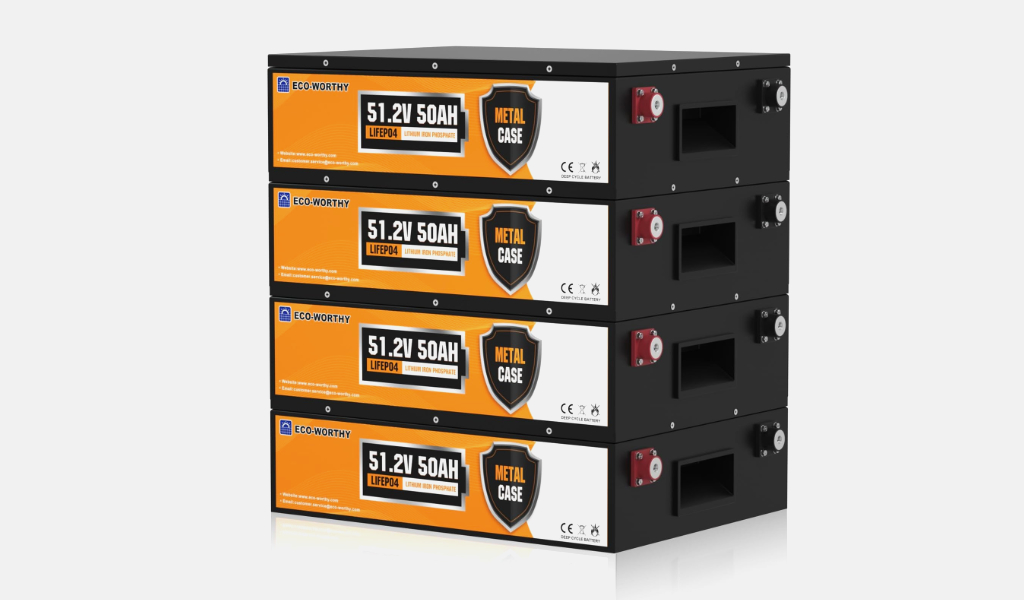
LiFePO4 (just say "lifepo-four") is a kind of lithium battery. Same basic chemistry, different ingredients.
The wild part: LiFePO4 can last 5000+ charge cycles. That's charging the battery every single day for 13+ years. Most other batteries give up long before that.
And they're extremely unlikely to catch fire the way regular lithium-ion can. Much safer. Which is why most off-grid home setups use LiFePO4 now.
The only catch is price. You pay more up front. But you charge them every day for over a decade, so most people come out way ahead.
If you're building an off-grid system today and the budget allows it, LiFePO4 is usually the answer.
Saltwater Batteries: The Mop-It-Up Option
Saltwater batteries are exactly what they sound like. Inside is salty water. That's it.
No fire risk. Nothing toxic. If one cracks open, you can clean it up with paper towels.
They don't hold as much power per kilo as lithium. But for a basement battery that just sits there for years, safe and recyclable, they're a quiet little hero.
→ Read more about saltwater batteries
Flow Batteries: The Big Tank Battery
Flow batteries are different from all the others. The chemistry isn't packed into a small box. It's stored in two big tanks of liquid, and pumped through a smaller box that does the reacting.
The cool thing: you can make a flow battery bigger just by adding bigger tanks. No re-engineering. They also last forever. Tens of thousands of cycles.
The catch: they're huge. Not really a home battery. You'll find them powering small towns or running giant solar farms.
Picking The Right One
The five questions to ask yourself:
How much power do I need each day? That decides battery size.
How much space do I have? Lead-acid is huge. Lithium fits anywhere.
What's my budget? Lead-acid is cheap now, expensive over years. Lithium is the other way around.
How long do I want it to last? LiFePO4 wins on lifespan.
How safe does it need to be? Saltwater cannot catch fire at all, and LiFePO4 is extremely unlikely to.
For most people building off-grid today, LiFePO4 is the default. Worth the extra cost up front.