

A Desert City Cooled By Towers
 Illustrative image
In the desert city of Yazd, in Iran, tall towers poke up above the rooftops. They're called windcatchers, and some of the oldest ones were built in the 14th century.
The tallest is about 33 metres high, about as tall as a ten-storey building. It catches the breeze up high and sends it down into the rooms below, with no electricity at all.
That's off-grid cooling in its oldest form. People in hot places figured out how to stay comfortable long before anyone plugged anything in. Good off-grid house design still starts there.
Now compare that with today. In 2018 there were about 1.6 billion air conditioners in the world, and the International Energy Agency expects 5.6 billion by 2050. Cooling already uses around 10% of all the electricity on Earth.
Off the grid, every watt of power comes from your own solar panels and batteries. So the smart move is to borrow the old tricks first and add machines last.
Where The Heat Sneaks In
 Illustrative image
Heat always moves from hot to cold, a bit like water running downhill. On a summer day, the outside is the top of the hill and your house is the bottom.
The sun is the biggest pusher. It shines through windows and bakes the roof, and that heat soaks down into the rooms.
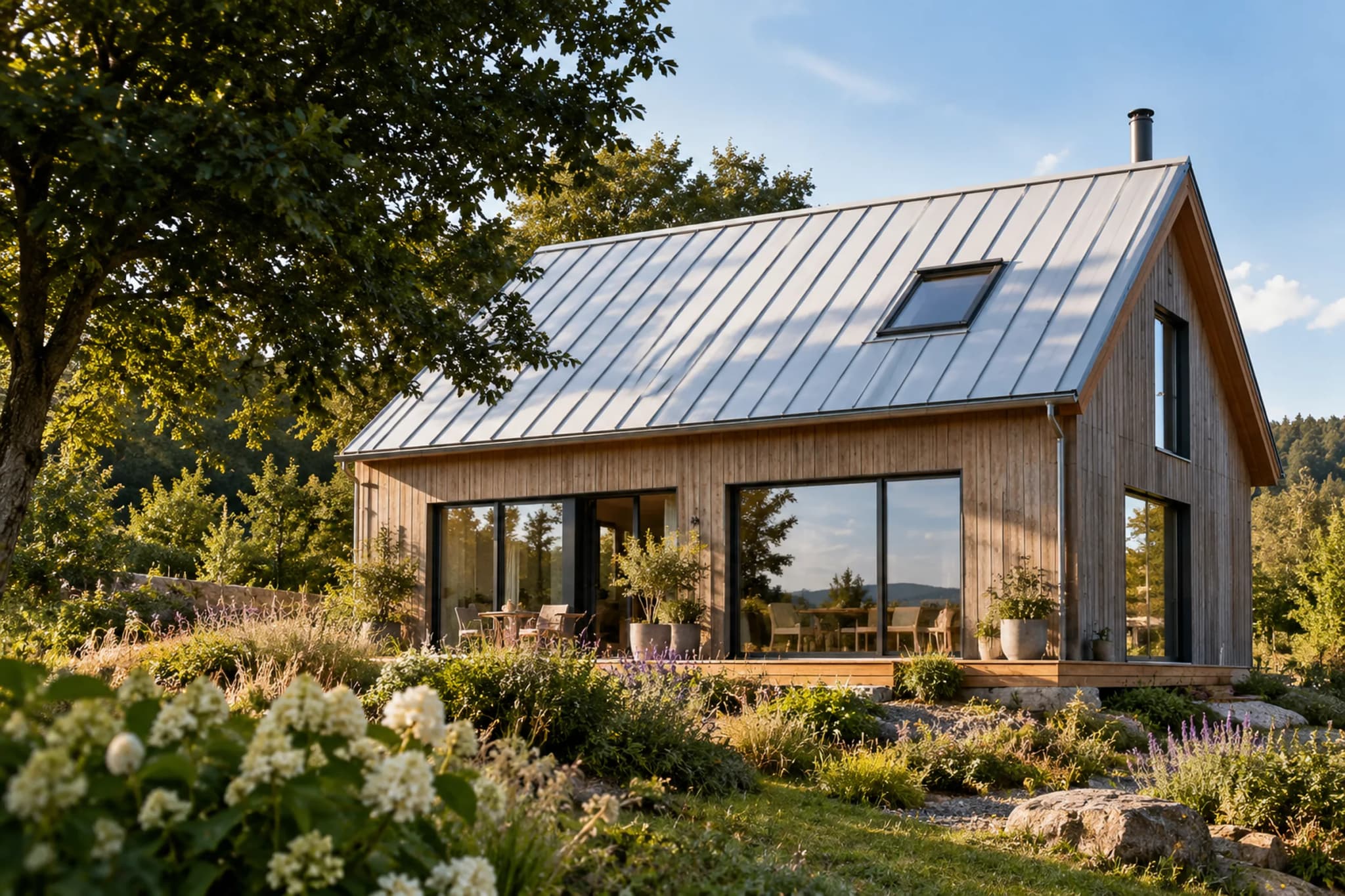
A dark roof in full sun can reach 65 °C (150 °F) or more, far too hot to touch. The US Department of Energy says a light "cool roof", painted or covered to bounce sunlight away, can stay more than 28 °C (50 °F) cooler.
Hot air also leaks in through gaps around doors and windows, which is why good insulation and sealed gaps help in summer too. Cooking, fridges and people add a bit of heat inside as well.
So the basics come down to three moves. Stop the heat getting in, push out the heat that does, and only then use power to cool what's left.
Shade Is The Cheapest Air Conditioner
 Illustrative image
The best place to stop sunlight is before it touches the glass. Once it gets through a window, it's already inside.
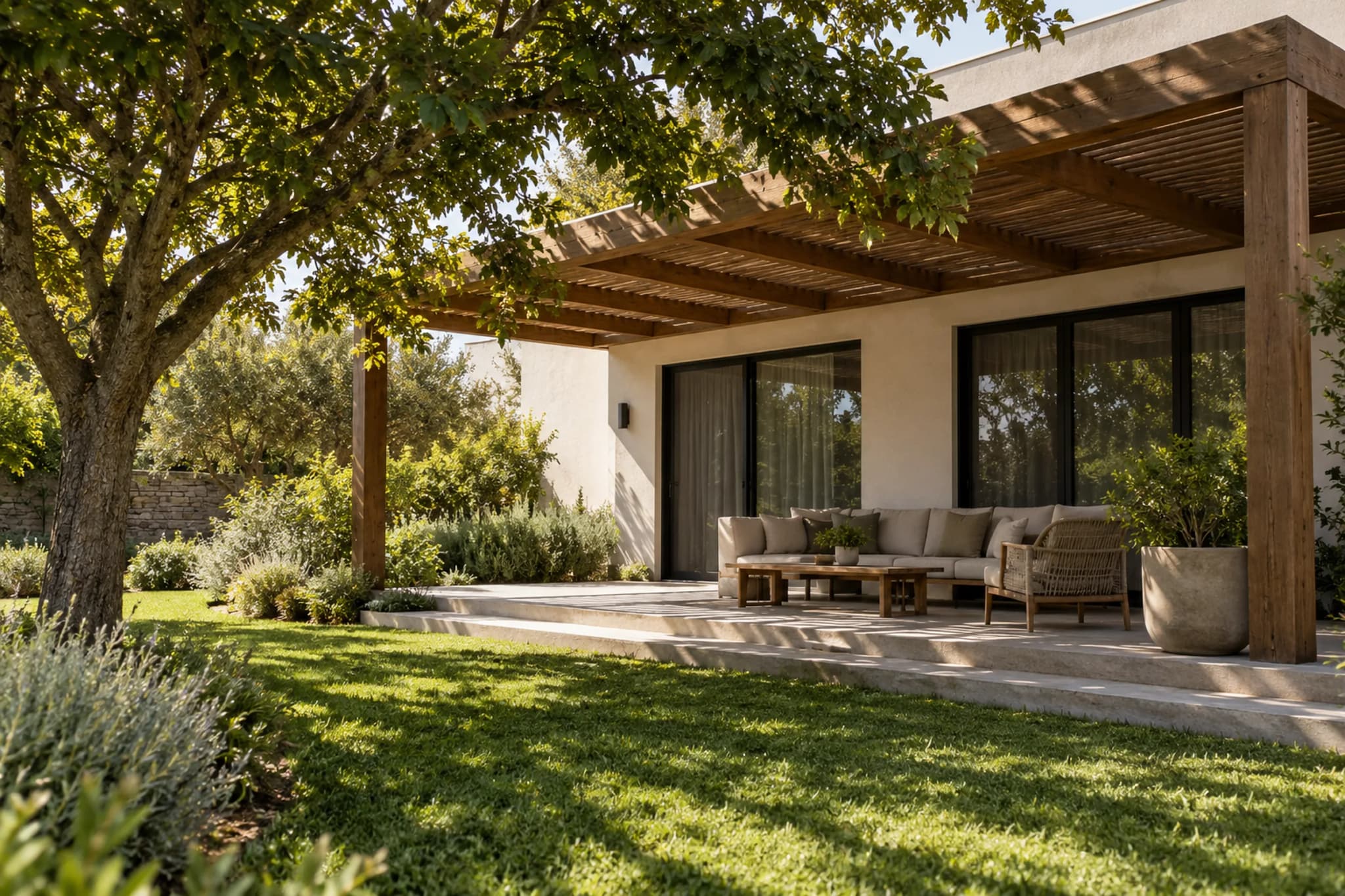
Awnings, outdoor shutters and wide roof overhangs act like a cap on a sunny day. They throw shade over the windows when the sun is high.
Trees work even better. The Department of Energy says a well-planned garden can reduce a home's air conditioning costs by 15 to 50%.
Trees that drop their leaves in winter are the clever choice. In summer they block 70 to 90% of the hot sun, and in winter the bare branches let the sunshine through to warm the house.
The air right under trees can be about 14 °C (25 °F) cooler than the air above a nearby car park.
Using Cool Night Air
 Illustrative image
In many hot places, the nights are much cooler than the days. That's free cooling, waiting outside.
The trick is called "night flushing". You open windows on opposite sides of the house at night, let the cool air rush through, and close everything up again in the morning before it heats up.
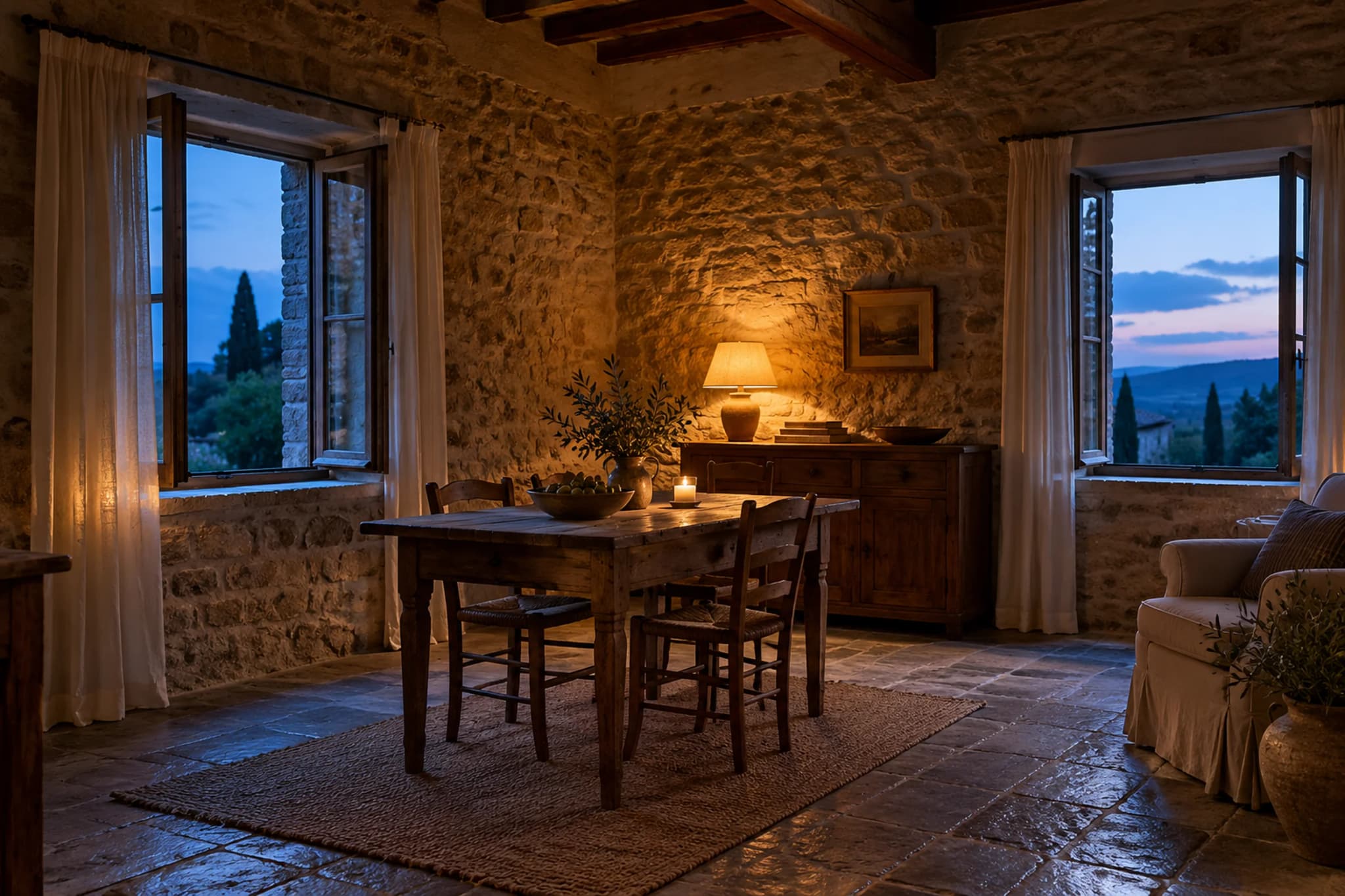
It works even better in a house with "thermal mass". That's just a fancy name for heavy stuff like stone, brick, concrete or earth walls that soak up heat slowly.
Think of those walls as a big cold-pack in a lunchbox. They chill down at night and keep the rooms cool through much of the next day.
It works best where nights are cool and breezes are regular, and a lot less where nights stay warm and sticky.
Earth Tubes Pull Cool Air From The Ground
 Illustrative image
Dig a deep hole on a hot day and the soil at the bottom feels cool. A couple of metres down, the ground stays close to the place's yearly average temperature, colder than the air in summer and warmer in winter.
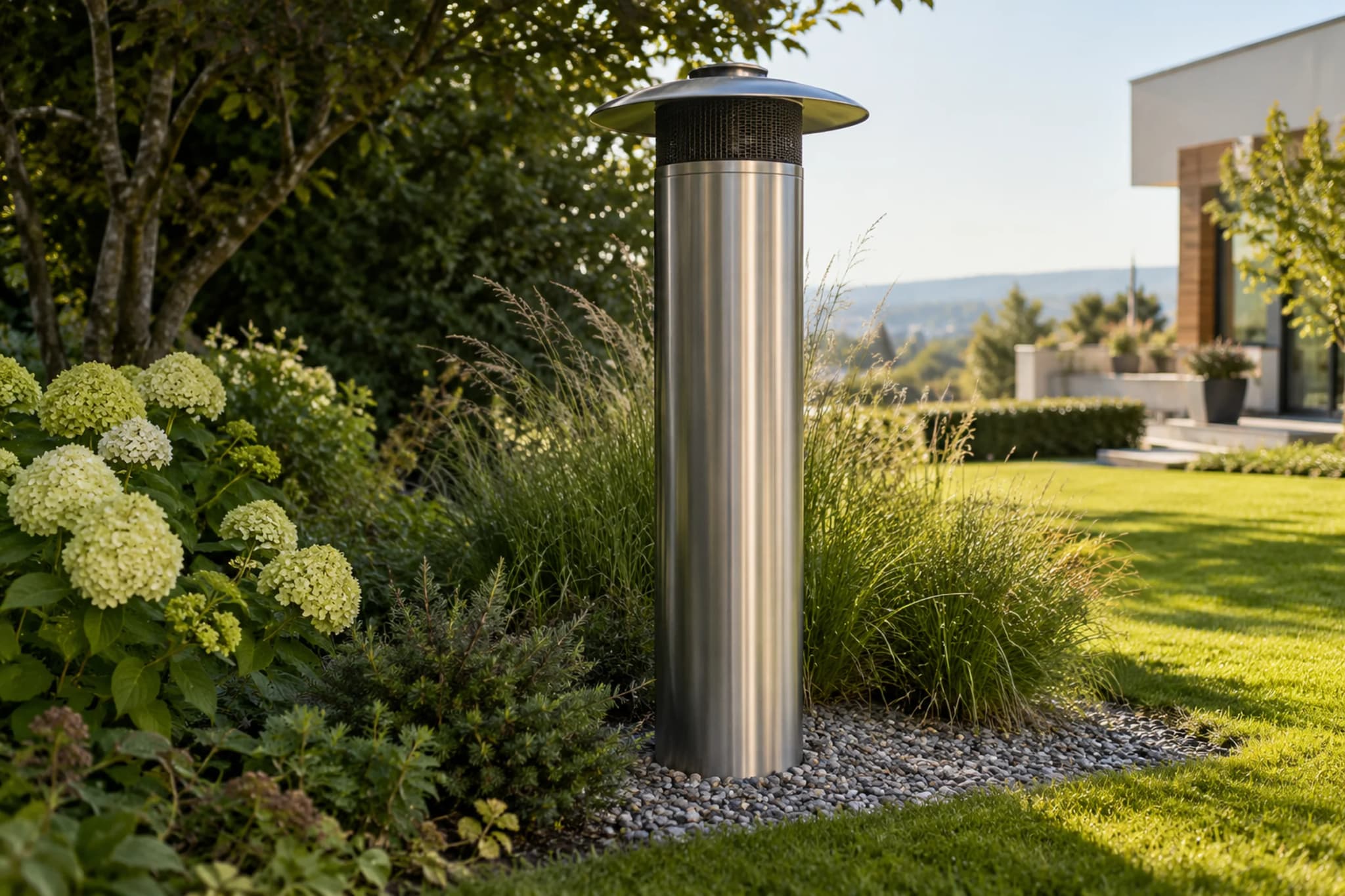
Earth tubes use that. They're long pipes buried in the ground, and a small fan pulls outside air through them before it enters the house. On the way, the air hands its heat to the cool soil, like a warm soda in a cooler full of ice.
A family home in Kelowna, Canada, has four pipes about 30 metres long, buried 1.8 metres deep. The air came out up to 8.2 °C cooler in summer and up to 13.2 °C warmer in winter. That was enough for the bedroom and living room, not the whole house.
It's pre-cooled fresh air, not an air conditioner, and in humid places the damp pipe can grow mould. A safe earth tube needs:
- A covered inlet above ground with a rain cap and an insect screen
- A pipe that slopes all the way to a drain or sump, so condensation water runs out
- A smooth inside, and a way in at each end to inspect and clean it
- An air filter before the air reaches the rooms
- Airtight joints, and a radon test of your soil first, because radon gas can seep into a leaky pipe
Skip it if your soil has a radon problem, groundwater sits high or summers are humid. Digging a 2 metre trench is a job for a pro, so earth tubes make most sense for new builds in dry, hot places.
Fans And Swamp Coolers
 Illustrative image
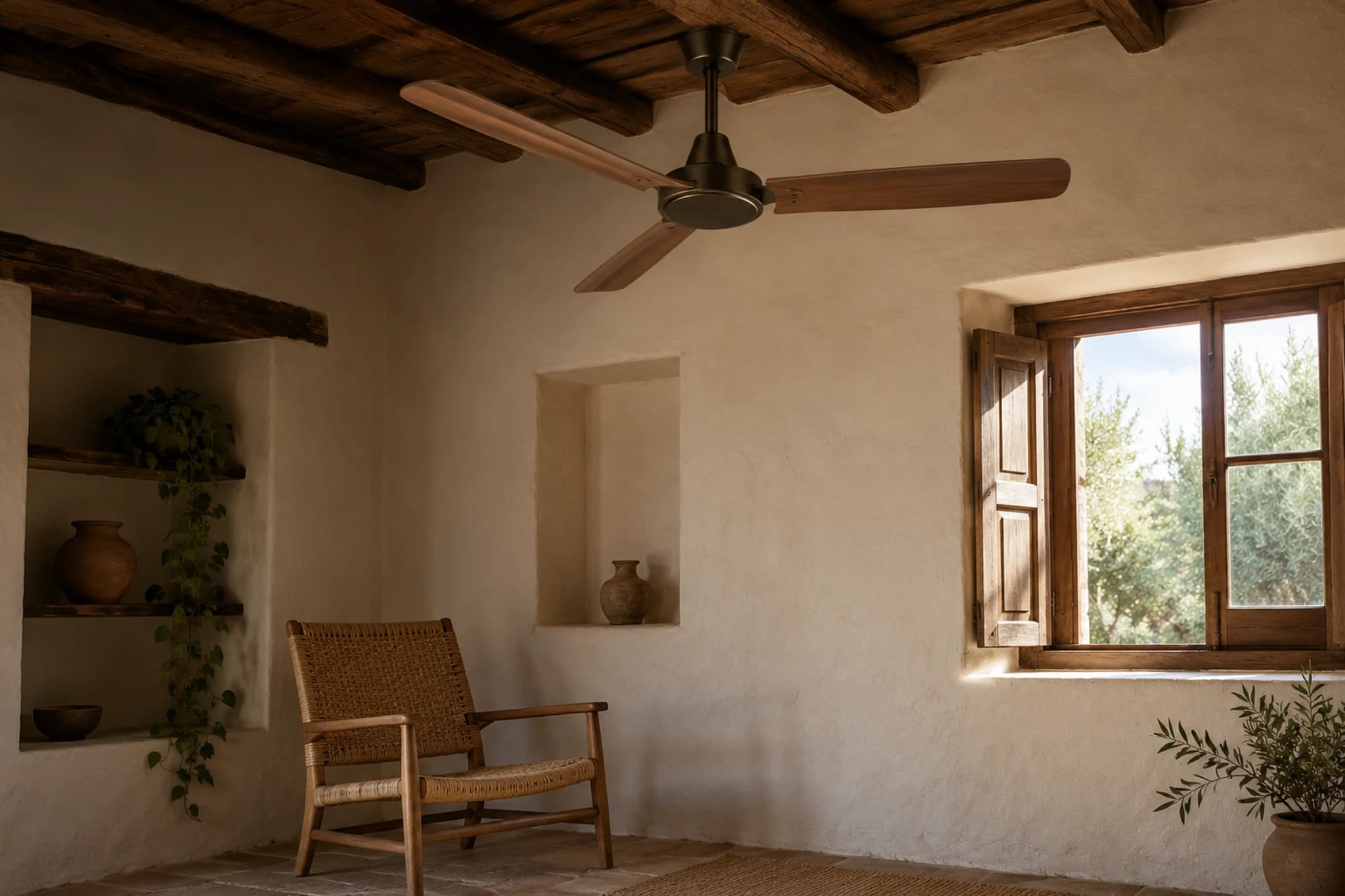
A fan doesn't make the air colder. It moves air across your skin, which helps your sweat dry, and that cools you down.
University of Florida experts say a ceiling fan lets you set the thermostat temperature up to about 2 °C (4 °F) higher and still feel just as comfy. A fan also uses only a small slice of the power an air conditioner needs.
There's a limit, though. The US health agency CDC warns against relying on fans once indoor air passes about 32 °C (90 °F), and other health agencies use somewhat higher cut-offs. A 2019 study found a fan still helps most healthy people in hot, humid air, but in very hot, dry air it can make things worse. Older people, babies and people who are ill get into trouble sooner, so in a heat wave follow your local health service's advice.
An evaporative cooler, often called a "swamp cooler", is a step up. It pulls outside air through wet pads, and as the water dries it soaks up heat, the same way you feel cold stepping out of a swimming pool.
The Department of Energy says these coolers use about a quarter of the energy of a normal air conditioner. They can cool the air by 8 to 22 °C (15 to 40 °F).
But they require a steady supply of water, and they only work well in dry climates. In humid places, the air is already too wet to take on more.
Can You Run Air Conditioning Off-Grid?
 Illustrative image
Yes, but it's one of the biggest power users an off-grid home can have. It's worth doing everything above first, so a smaller unit can do the job.
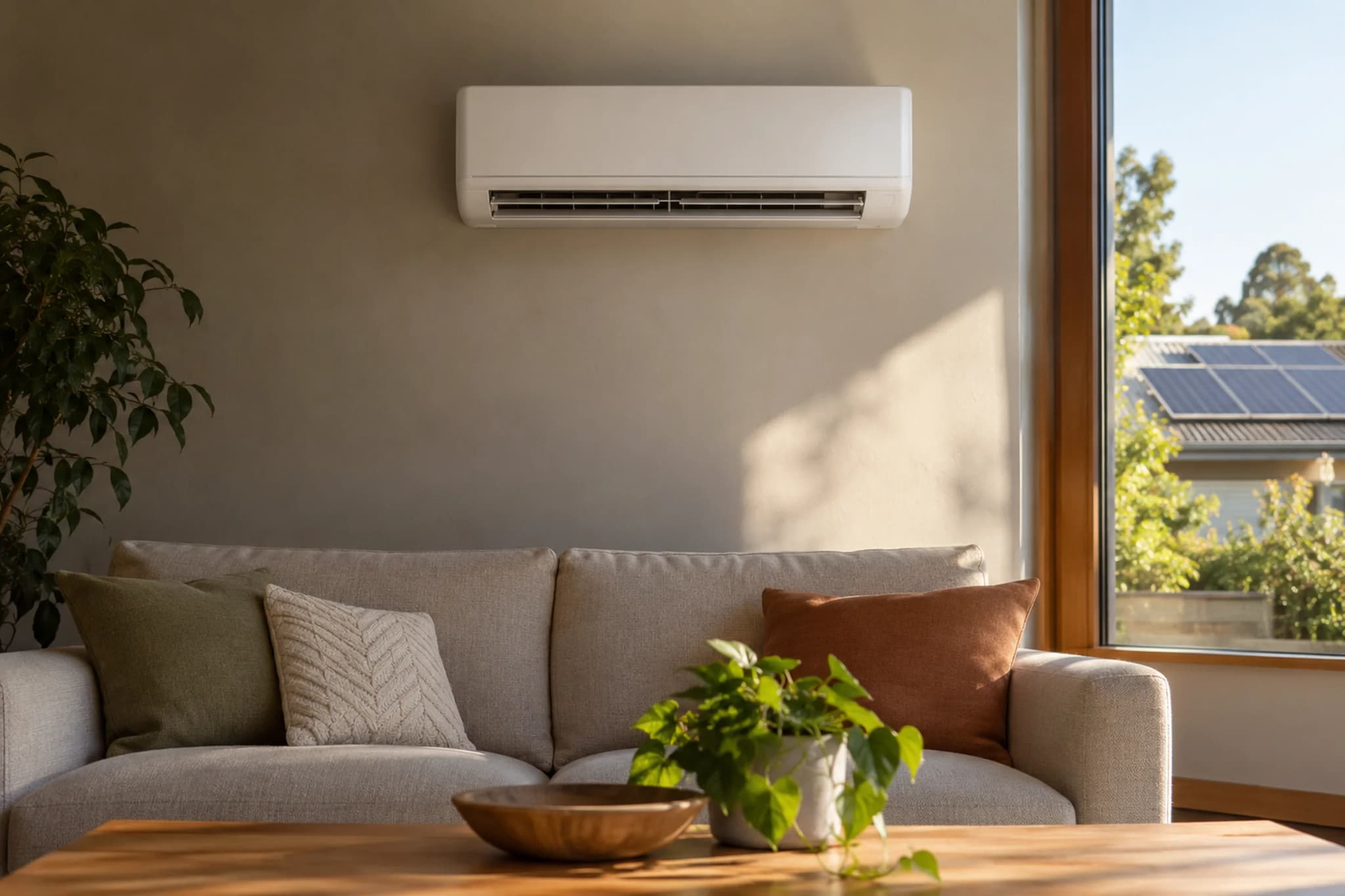
The usual option is a "mini-split". That's an air conditioner in two parts: a quiet box on the wall inside and a unit outside, linked by thin pipes. The outside unit holds the compressor, the pump that does the heavy work of carrying heat out of the house. One outside unit can serve a single room or multiple indoor boxes.
Most mini-splits are also heat pumps, so they can warm the house in winter too. Some even run straight from a 48-volt solar battery bank, without changing the power to household current first.
There's one handy match here. Hot afternoons are often sunny, so your solar panels tend to make the most power right when you want cooling most. The battery then has to carry the system through the warm evening, while the compressor keeps running.
A run of cloudy, sticky days is the hard part. Some owners keep a backup generator for that, others choose a bigger battery bank or simply cool one room instead of the whole house.
Before you buy, add up how much power the unit uses and for how many hours. The daily consumption calculator helps with that, and the guide to living off-grid in hot climates shows why heat also shortens battery life.
The wiring for a large air conditioner should be done by a licensed electrician, following local rules.
When Heat Becomes Dangerous
 Illustrative image
Heat isn't only about comfort. Heat stroke is an emergency, and the CDC says body temperature can climb to 41 °C (106 °F) or higher within 10 to 15 minutes.
Confusion, very hot skin and fainting are warning signs. Call your local emergency number straight away and get the person somewhere cool.
That's why a backup matters. Have one cool room you can rely on during a heat wave, and know where the nearest cooled public space is.
Is Off-Grid Cooling Right For Your Home?
 Illustrative image
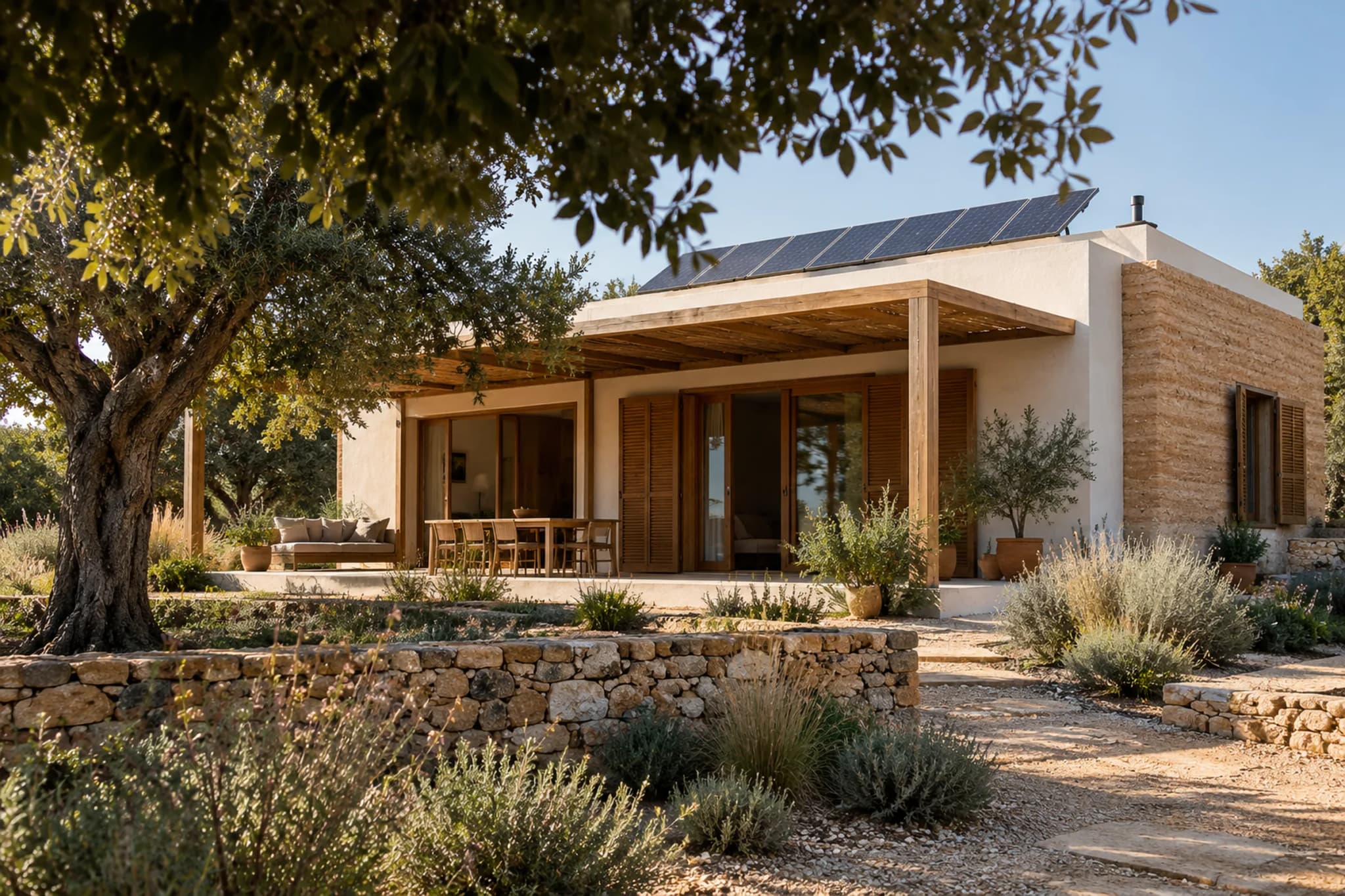
Where you live changes the answer. A dry desert with cool nights is perfect for shade, night air and a swamp cooler. A humid tropical place leans more on shade, fans and a small, efficient air conditioner.
The order stays the same everywhere. Block the sun, use the night, move the air, and only then switch on a machine.
Do that, and your solar system needs fewer panels and batteries for cooling. It's the same idea the builders of Yazd used centuries ago, with a few modern helpers added.
Sources
- International Energy Agency: Air conditioning use emerges as one of the key drivers of global electricity demand growth
- Arab News (AFP): Iran's windcatchers
- US Department of Energy: Cool roofs
- US Department of Energy: Landscaping 101
- US Department of Energy: Natural ventilation and cooling
- Natural Resources Canada: Earth tube case study 3, Kelowna home
- AIVC: Ground cooling, Ventilation Information Paper 11
- US EPA: Radon
- University of Florida IFAS: Ceiling fans
- CDC: About heat and your health
- Annals of Internal Medicine (2019): Electric fan use in heat waves
- US Department of Energy: Evaporative coolers
- ENERGY STAR: Ductless heating and cooling
- CDC NIOSH: Heat-related illnesses
Hard Words
| Term | What it means |
|---|---|
| Windcatcher | A tall roof tower that sends breezes down into the house. |
| Cool roof | A light or shiny roof that bounces sunlight away. |
| Night flushing | Opening the house at night to let cool air push out the day's heat. |
| Thermal mass | Heavy stone, brick, earth or concrete that soaks up heat slowly and lets it go slowly. |
| Evaporative cooler | A swamp cooler: it cools air by blowing it through wet pads. |
| Mini-split | An air conditioner in two parts, inside and outside, linked by thin pipes. |
| Heat pump | A machine that moves heat out of the house in summer and into it in winter. |
| Earth tube | A buried pipe that fresh air flows through, so it enters cooler in summer and warmer in winter. Also called an earth-air heat exchanger. |
| Radon | An invisible radioactive gas from some soils that can build up indoors. |
| Heat stroke | An emergency where the body gets dangerously hot and can't cool down. |
Common Questions
How can I cool my house without electricity?
Block the sun before it reaches the windows with awnings, shutters, overhangs or trees, and use a light-coloured roof. Open windows on opposite sides at night, then close up in the morning. Heavy walls of stone, brick or earth hold that night coolness through the day.
Can you run an air conditioner on off-grid solar?
Yes. An efficient mini-split is the usual choice, and some run directly from a 48-volt battery bank. It needs enough solar panels and battery capacity, so shade, insulation and night cooling come first to keep the unit small.
Do swamp coolers work in humid climates?
Not well. They cool air by evaporating water, and humid air is already too full of moisture to take much more. They work best in hot, dry places.
Does opening windows at night cool a house?
Yes, when nights are cooler than days. This is called night flushing. Close windows and shades in the morning to hold the coolness in.
Do ceiling fans actually cool a room?
No, they cool people, not the air. You can set a thermostat about 2 °C (4 °F) higher with a fan running, but in a real heat wave a fan is not enough on its own.
What is the most energy-efficient way to cool an off-grid home?
Stop heat before it gets in with shade, trees, a light roof and sealed gaps, then use cool night air where the climate allows. Add fans, a swamp cooler in dry areas, and only then a small air conditioner.
Do earth tubes really cool a house?
They cool the fresh air coming in, but they don't replace an air conditioner. They work best in dry climates and need a sloped pipe with a drain, cleaning access, a filter and airtight joints.
How did people cool houses before air conditioning?
They used shade, thick earth or stone walls, small windows, courtyards and clever airflow. In Yazd, Iran, tall windcatchers caught breezes and sent them down into homes.