

A Friend And An Enemy

If you live somewhere with a lot of sun, off-grid sounds like a dream. Free power, every day, all year. No dark December to plan around.
And it mostly is. But there's a twist that surprises a lot of people.
The same heat that gives you all that sunlight is also slowly cooking your gear.
Solar panels lose power when they get hot. Batteries wear out faster in heat. Electronics fail. Plastic cables crack. Even the seals on the panels themselves can dry out and let in dust or water.
A solar setup ages faster in the desert. Panels in Arizona typically lose about twice as much output per year as panels in mild Germany, so a 25-year design life can come out closer to 18 or 20. Same parts. Hotter ending.
The trick is knowing which parts get hurt by heat, and protecting them. Once you do that, hot-climate off-grid is the easiest mode there is.
Hot Panels Make Less Power
This is the one almost nobody knows about until they see it happen.
A solar panel has a rating, like "300 watts". That rating is measured in a lab at 25 degrees Celsius. A nice mild day.
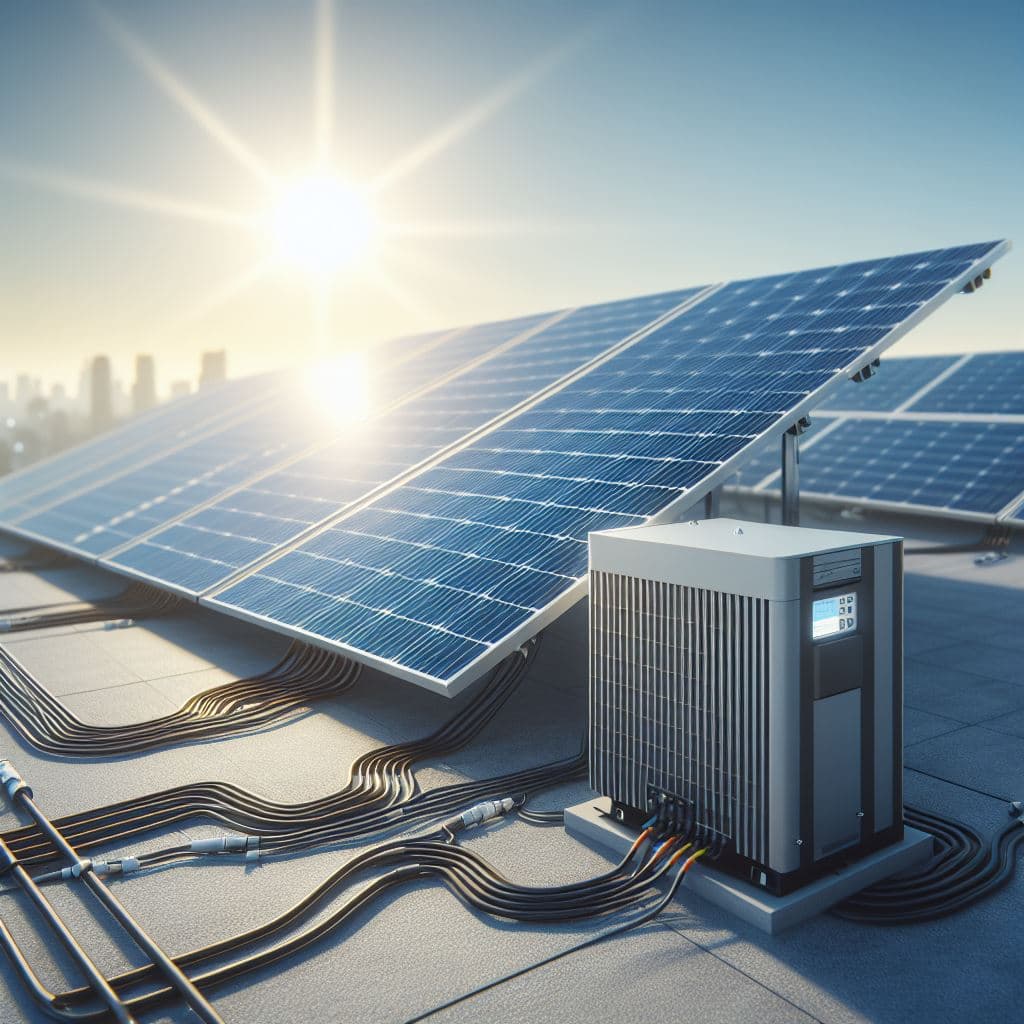
Now put that panel on a black roof in Texas in July. The panel itself can hit 65 degrees, or even 70. Hot enough to burn your hand.
At that temperature the same panel makes about 15% less power. So your 300-watt panel is suddenly a 255-watt panel. Right when the sun is at its peak.
Why does this happen?
Sunlight knocks electrons loose inside the panel. That's the whole game. But heat also knocks electrons loose, just randomly. When the panel is hot, the heat-loose electrons get in the way of the sunlight-loose ones. The flow becomes messy. Less clean power comes out.
So the panel that you thought was going to make 300 watts in the desert is actually making less than one rated 280 watts in cooler Spain.
What helps? Air. Mount the panel with a gap underneath, so air can flow and cool the back. A panel pressed flat against a roof gets way hotter than one floating an inch above. That single inch can give you back several percent of power.
→ How monocrystalline panels handle heat
Batteries Cook Faster In Heat
Heat is even harder on batteries than on panels.
A lithium battery (LiFePO4, the common off-grid kind) is happiest around 20 to 25 degrees Celsius. Above 45 degrees Celsius, it starts to wear out fast. The same battery that lasts 15 years in a cool basement might last 7 in a hot shed.
And in the desert, a metal shed sitting in full sun can hit 60 degrees inside. That's a battery killer.
So what do you do?
The first move is shade. Put the battery somewhere the sun never directly hits. Inside the house if you can. Under the floor. In a north-facing closet. Anywhere cool.
The second is ventilation. A battery in a sealed insulated box (great for cold climates) is a disaster in the desert. You want air moving past it, carrying heat away.
The third, in really hot climates, is active cooling. A small fan, or even a tiny air conditioner running off the system itself. Some serious desert setups have their batteries in an underground room that stays naturally cool, like a wine cellar.
The good news? If you get the temperature right, batteries in hot climates can actually outlast batteries in cold climates. The bad news is most people just stick the battery in the garage and wonder why it dies in five years.
→ Battery monitoring catches heat problems early
Cooling The House (Without Burning Through Your Power)
Here's where hot-climate off-grid gets clever.
Modern people see a hot house and reach for the air conditioner. An AC uses a huge amount of electricity. A whole-house AC can pull 3,000 watts continuously. That's enough to drain a normal off-grid system in a few hours.
But hot countries have been hot forever, and people lived there for thousands of years without any electricity. They had tricks.
Thick walls. A house with walls 40cm thick stays cool all day, because heat takes hours to soak through them. By the time the wall is warm, the sun is going down.
Light colors outside. A white house in the desert reflects most of the sun's heat. A dark house absorbs it.
Shade trees and big overhangs. Block the sun before it hits the wall.
Cross-ventilation. Windows on opposite walls let cool night air sweep through the house. Open them at night, close them at dawn. The walls and floor hold last night's coolness for most of the day.
Get this right and you barely need AC at all. Even in a really hot climate.
If you do need AC, look at DC mini-split units (12, 24, or 48 volts). They're designed for off-grid systems and use way less power than a regular AC. A small DC mini-split might pull 400 watts instead of 3,000. Big difference.
The Limit Most People Hit First
In a desert off-grid setup, the problem isn't power. There's plenty of sun. The problem is water.
A lot of hot dry places get less rain in a whole year than wet places get in a single month. Wells run shallow. Rainwater catchment fills up slowly. Hauling water in by truck is expensive.
So in desert off-grid, the design starts with water, not power. How much water do you have? How much can you collect or pump? Everything else (showers, laundry, garden, even how many people can live there) flows from that answer.
In the tropics it's the opposite. You usually have plenty of rain. The problem is humidity. Humid air rots wood, rusts metal, and shorts out electronics. Solar panels still work fine in tropical rain, but the wiring underneath them needs to be sealed against moisture.
Tropical off-gridders often have a small stream nearby. If the land has any slope at all, a tiny hydro setup can produce power around the clock, even through the rainy season when solar is at its worst.
A Real Hot-Climate Setup
Picture a small adobe house in the high desert of New Mexico, two adults living there.
The walls are 50cm thick, made of mud bricks. The roof is white-painted metal with big overhangs on all sides. There's a covered porch on the west side that shades the wall from afternoon sun.
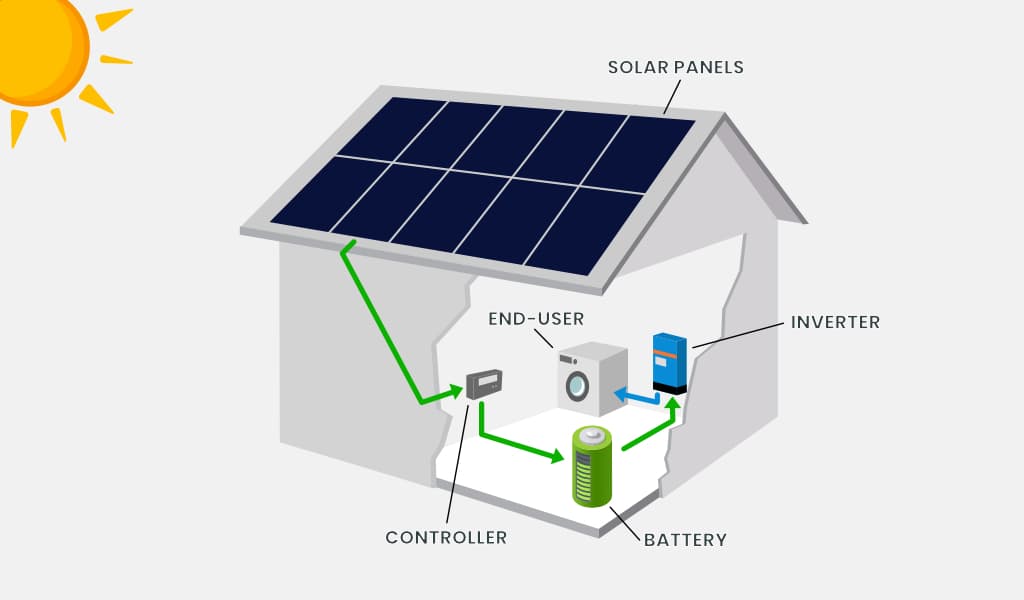
On the roof sit twelve solar panels, mounted on a tilted frame with five centimeters of air space underneath. Even on the hottest days the panels stay cooler than they would mounted flat.
The battery lives in a small underground room dug into the side of a hill. It stays around 18 degrees Celsius year-round, summer or winter. The owners haven't replaced it in 11 years.
A 5,000 liter rainwater tank captures every drop that hits the roof. A small DC pump pulls it into the house. They use about 60 liters per person per day, less than a third of what a normal US household uses.
There's no air conditioner. Two ceiling fans on the highest setting handle the hottest afternoons. By 9pm the desert air drops below 20 degrees, they open every window, and the thick walls drink in the cool night.
Total system cost about 22,000 dollars in 2018. They have full off-grid power, water, and a vegetable garden. No power bill, no water bill, and the house barely needs maintenance.
What Catches People Out
If you're planning hot-climate off-grid, three things tend to surprise people.
Plastic cracks. UV from the sun, plus heat, plus years, breaks down plastic. Cheap cable jackets, plastic clips, junction box seals. Spend extra on UV-rated parts, especially anything outdoors. Cheap stuff will need replacing in two or three years.
The afternoon hump. In hot climates, peak power usage is late afternoon, right when AC is working hardest. But solar peaks around noon and starts dropping after 2pm. Without enough battery to bridge that gap, you get hit hardest exactly when you have least power.
Dust on panels. Desert dust kills panel output. A panel that hasn't been cleaned in three months can lose 20% of its power. Plan a rinse with the hose every few weeks, or after a dust storm.
Why People Still Do It
Hot-climate off-grid is, frankly, the easiest version of off-grid living once you get the basics right.
The sun is generous. The days are long, even in winter. If you protect your batteries from the heat, oversize the cables a bit, and design the house to stay cool on its own, the whole system practically runs itself.
A family in the desert with the right setup will go years without thinking about power. Lights come on. Fridge stays cold. Phone charges. Garden gets watered.
The real off-grid pioneers in the American Southwest, in Australia, in Spain, in Morocco, have been doing this for decades. The technology has only gotten cheaper and better. If you're somewhere sunny, this is the easy mode of the off-grid world.