

Heat Is The Biggest Job In The House
 Illustrative image
Here's a number that surprises most people. In American homes, heating alone uses about 42% of all the energy the house consumes, more than lights, fridges, TVs and cooking.
Off the grid, nobody pipes that heat to you. Off-grid heating means you make every bit of warmth yourself, and the main options are wood, sunshine, gas you store, or off-grid power from your own panels. Wood, sun and compost are renewable heat sources, because trees grow back and the sun comes up again tomorrow.
The choice matters a lot, because heat is hungry. That's why off-grid house design keeps the heat in first and picks the heating system second.
A typical plug-in electric heater draws around 1,500 watts. That's about as much as fifteen old-style 100-watt light bulbs all switched on at once.
Run it for five hours on a winter evening and it eats 7.5 kWh. For many off-grid households, that's more than everything else in the house uses all day. And winter is exactly when the solar panels make the least power.
That's why most off-grid homes heat with fire, sun or a heat pump, and keep plain electric ones for tiny jobs.
The Cheapest Heat Is The Heat You Keep
 Illustrative image
Before picking a heat source, think of your house like a bucket with holes. Heat pours in, and it leaks out through the roof, walls, windows and gaps.
You can pour faster, or you can plug the holes. Plugging the holes with insulation is cheaper, and you only pay for it once. Every hole you plug will reduce the size of the system you need, and the fuel and panels that go with it.
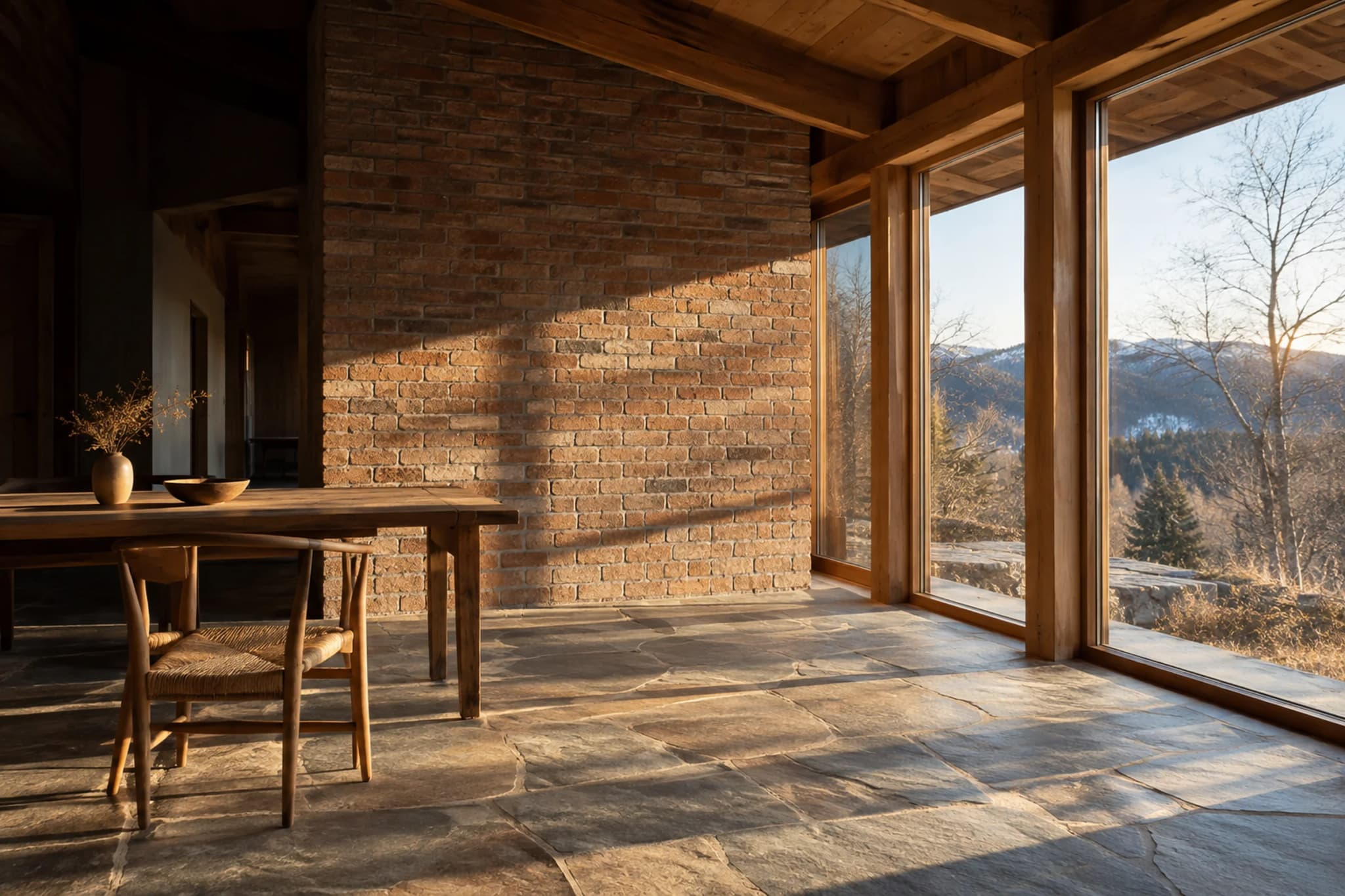
The sun can help too, if the house is built and placed with the sun in mind. In a "passive solar" house, big windows face the winter sun, south in the northern half of the world and north in the southern half. Sunlight pours in through the glass during the day.
Heavy floors and walls made of stone, brick, tile or concrete soak up that warmth like a sponge. Then they slowly let it back out in the evening.
Builders call this "thermal mass". That's just a fancy name for heavy stuff that stores heat.
It won't heat a house on its own in cold, cloudy weather. But every bit of sun the house catches is wood you don't have to chop.
Wood Stoves: The Classic Off-Grid Heat Source
 Illustrative image
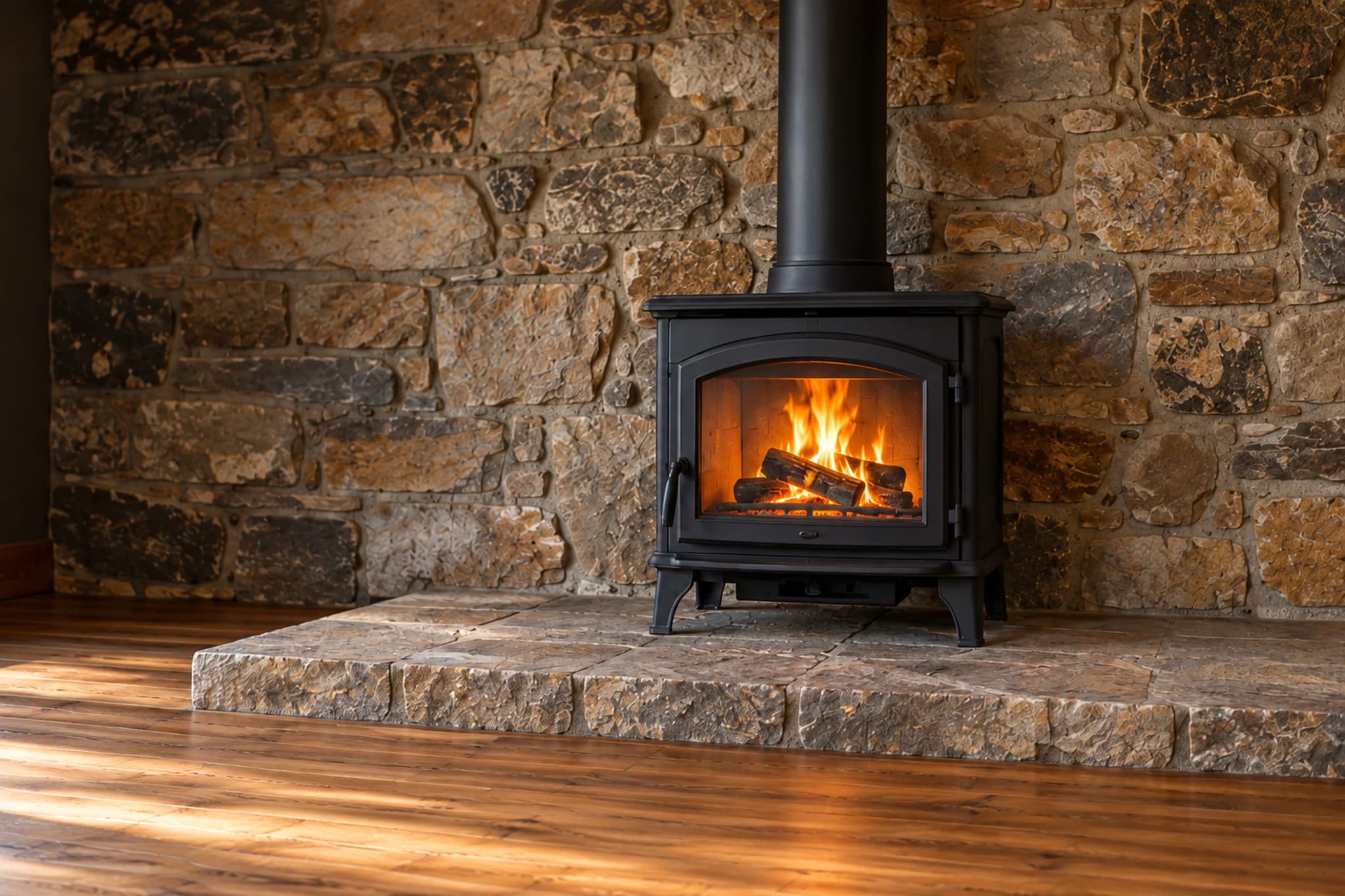
A wood stove is the off-grid heating method most people pick, and it's easy to see why. It needs no electricity and works right through a blizzard or a power cut.
Wood holds a surprising amount of energy. A full cord of oak, a stack about 1.2 metres high, 1.2 metres deep and 2.4 metres long, holds about 25 million BTU of heat. That's about 7,300 kWh, roughly what a plug-in heater would use running nonstop for over 200 days.
The catch is getting that heat into the room instead of up the chimney.
An open fireplace is a very poor heater. The US Environmental Protection Agency calls it "very inefficient" and says it makes 20 times more air pollution than a modern stove.
A modern, certified wood stove is a sealed box that controls the air feeding the fire. The EPA says certified stoves can be up to 50% more efficient than old ones, and use about a third less wood for the same heat.
Dry wood matters just as much. Wood burns best when less than 20% of its weight is water, and the EPA says to let it dry for at least six months, so you need dry storage for your firewood. Wet wood hisses, smokes and leaves sticky gunk in the chimney.
The daily maintenance is simple. The EPA says to remove the ashes regularly into a covered metal container and keep it outdoors on something that can't burn.
Pellet Stoves And Masonry Heaters
 Illustrative image
A pellet stove burns little wood pellets that look like rabbit food. A hopper holds the pellets, and a motor feeds them into the fire bit by bit, so it can run for hours without you.
Certified pellet stoves are usually 70 to 83% efficient, according to the EPA. The big catch off-grid is that most of them require electricity for the motor and fans, so they stop in a power cut unless you have batteries. A few gravity-fed models work without power.
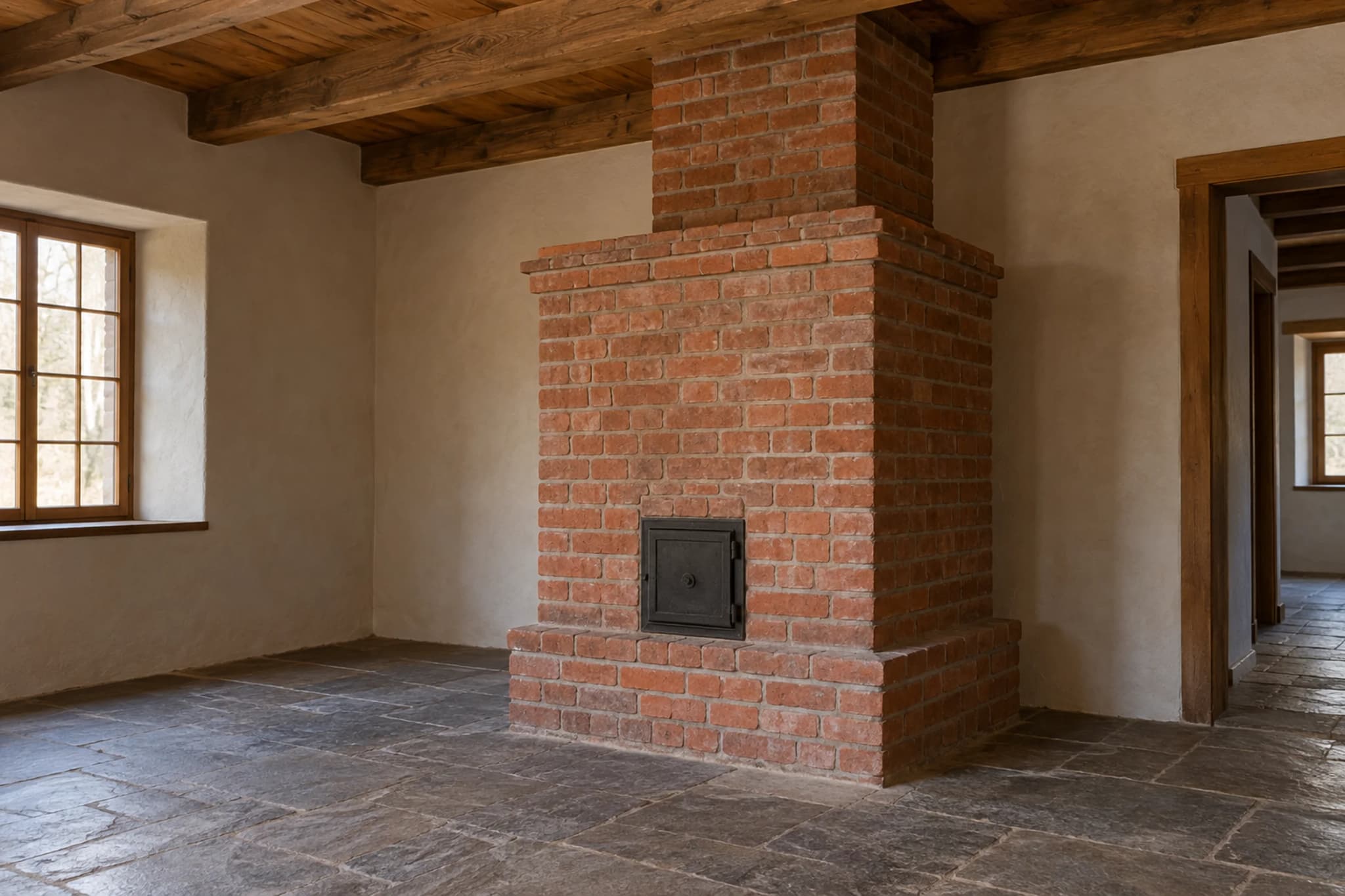
A masonry heater takes a different route. It's a huge block of brick or stone with a winding smoke path inside.
You burn a fast, very hot fire for a short time. The heavy stone soaks up the heat, and then gives it back slowly through the day. Think of it as a giant hot water bottle made of rock.
Rocket Stoves And Rocket Mass Heaters
 Illustrative image
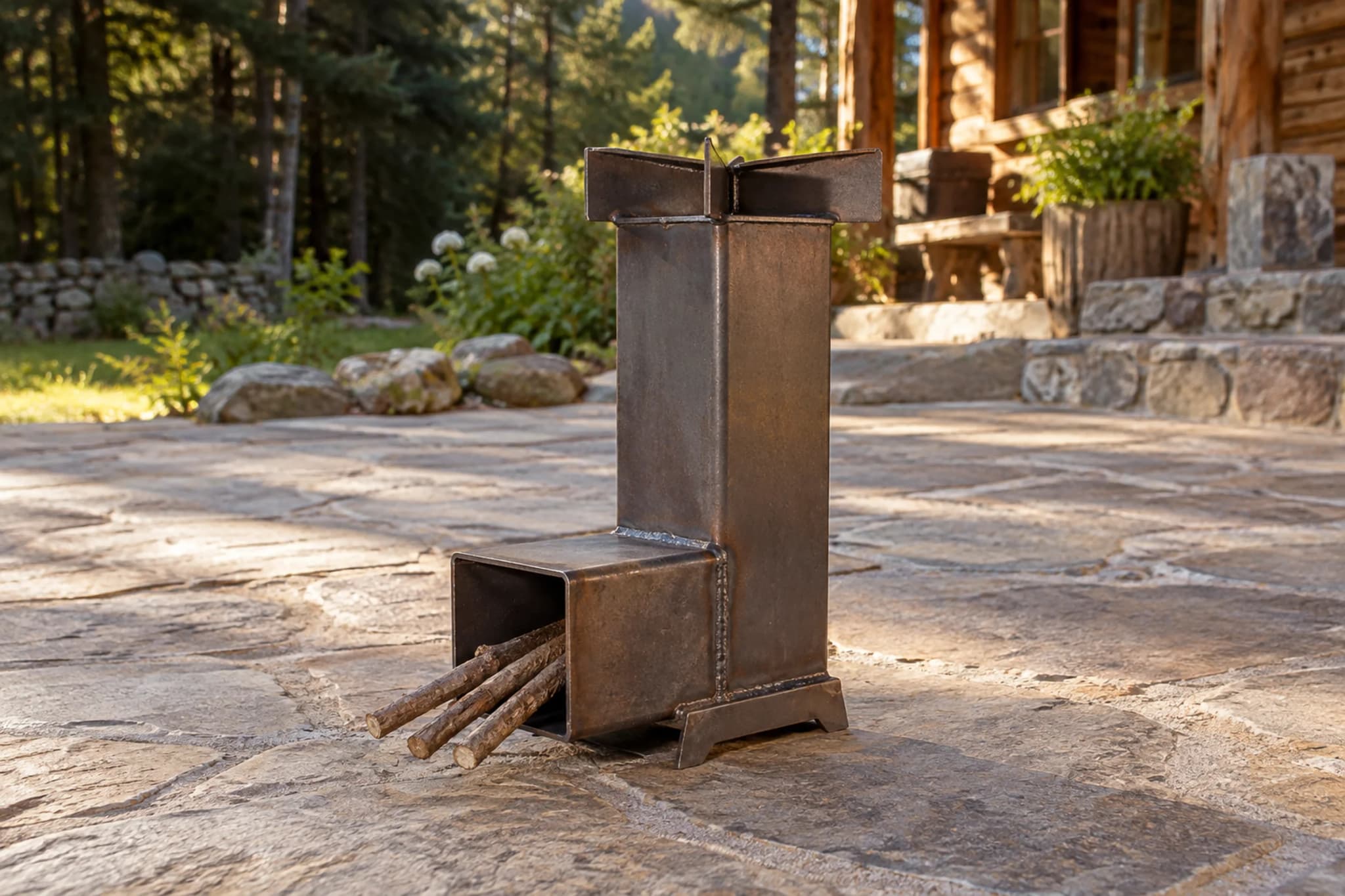
A rocket stove looks almost too simple to work. It's an L-shaped tube, and you push sticks into the short, low end while the fire roars up the tall end.
It was worked out in the early 1980s by engineer Larry Winiarski at the Aprovecho Research Center in Oregon. His big idea was insulation. The tunnel around the fire is wrapped in stuff that keeps heat in, like wood ash or pumice rock, so the fire stays above 650 °C.
That's hot enough to burn the wood almost completely. Smoke is really just fuel that didn't finish burning, so a hotter fire means less smoke. The tall insulated part works like a chimney inside the stove, sucking air through the fire like a fan.
A plain rocket stove is mostly a cooker, often used outdoors. To heat a room you need the next step up.
A rocket mass heater is a rocket stove with a giant heat battery attached. The hot gases leave the burn tunnel and warm a steel barrel that heats the room fast. Then they snake through a long pipe buried in a bench of clay, stone or brick.
The bench soaks up the heat and gives it back for hours, a bit like a heavy blanket that stays warm after you get up. It's the same trick as the masonry heater, just built by hand from cheap parts.
The design spread through a book by Ianto Evans and Leslie Jackson of the Cob Cottage Company. The authors of a later builder's guide say it uses 70 to 90% less fuel than a woodstove, and that a few hours of burning can give 20 or more hours of warmth.
Treat those numbers as a best case. They come from the builders themselves, and there are very few independent lab tests.
There's also a paperwork problem. In the US, a brick or stone heater normally has to follow a masonry heater standard or carry a safety lab's label. Most homemade rocket mass heaters have neither, so talk to your building department and your home insurer before you build, not after.
They're also big and heavy, so the floor has to carry the weight. And like any wood fire, they make carbon monoxide.
Compost Heaters: Hot Water From A Pile Of Wood Chips
 Illustrative image
This one sounds made up, but it's real. You can heat water with a pile of rotting wood chips, and no fire at all.
If you've ever pushed your hand into a compost heap, you know it's warm inside. Billions of tiny microbes are eating the chips, and all that eating makes heat, the way your body warms up when you run.
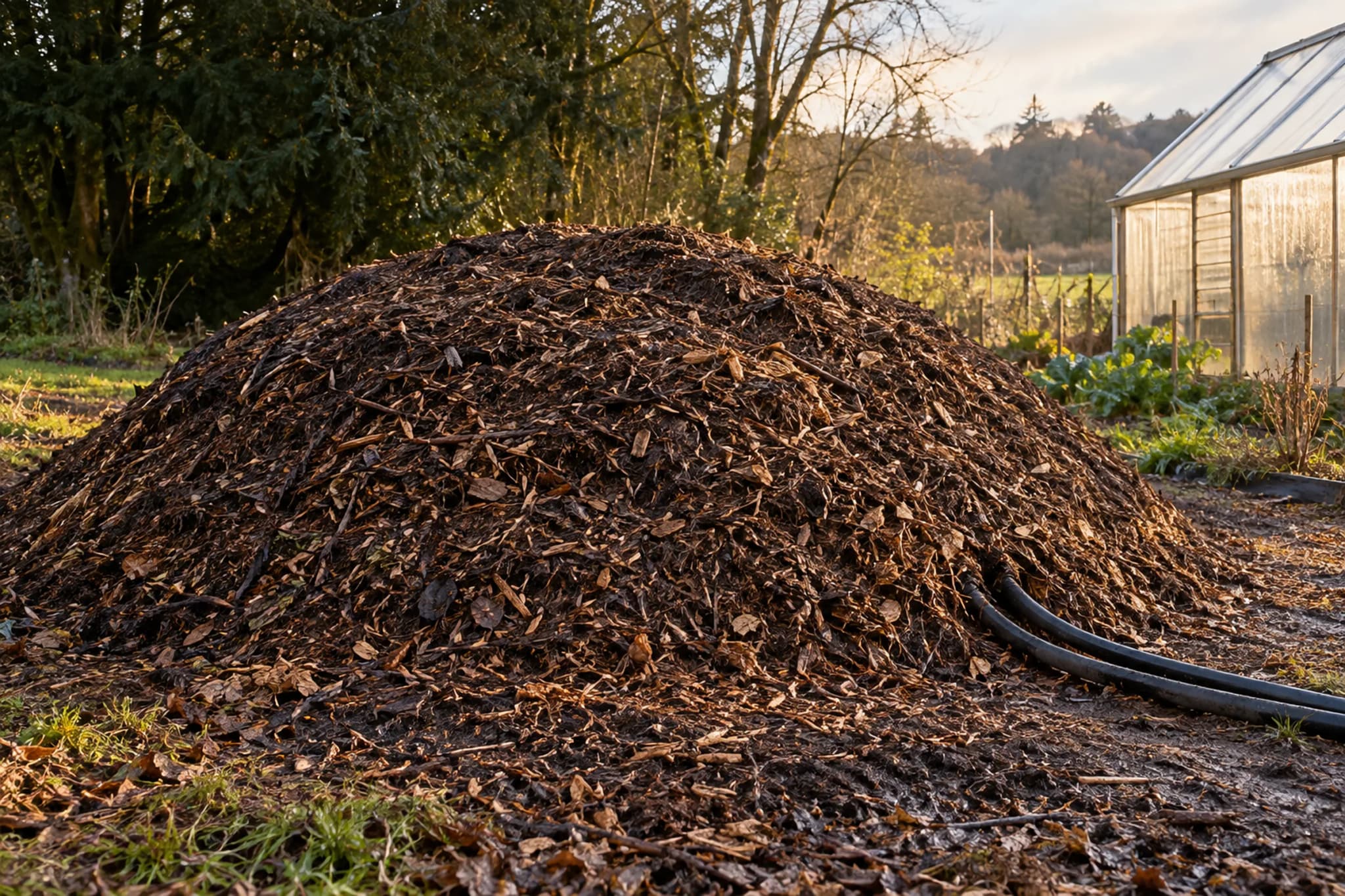
A compost heater, also called a biomeiler or a Jean Pain mound, catches that heat. You build a huge heap of shredded branches with a long coil of water pipe buried inside. Cold water goes in one end, picks up heat as it winds through the warm pile, and comes out hot enough to provide warm water and heat.
The name comes from Jean Pain, a Frenchman who did this on his land in the 1970s. A heap of about 50 tonnes of chipped brushwood warmed his well water from 10 °C to 60 °C, at about 4 litres a minute, for six months. That's a full bucket every two or three minutes, and it heated a 100 m² farmhouse.
Others tried it after him. In Germany, a heap of nearly 200 cubic metres kept water at 30 to 40 °C for nine months, while its middle stayed at 60 °C for 20 months.
A smaller modern design uses about 31 cubic metres of wood chips. It gives roughly 3 kW of heat for 12 to 18 months, about the same as two plug-in heaters running nonstop. When it's done, you're left with a big pile of finished compost for the garden.
It does have downsides. The pile slowly sinks as it rots, and that can crush the pipes. You also can't turn the pile once the pipes are in, and pulling water through too fast cools the microbes down so they slow their work.
Big, dry piles of woody stuff can even catch fire on their own. When a pile makes heat faster than it can lose it, the middle can creep up until it smoulders, so keep the heap damp and check its temperature. A heap of mostly wood chips rarely smells, but lots of fresh grass or manure can make it reek of ammonia, a sign of too much nitrogen.
It suits people with plenty of space, free wood chips available nearby, and a greenhouse or a small house to warm. It's more of a slow helper than a whole-house furnace, and you have to build a new pile every year or so.
Heat Pumps: The Most Efficient Option On Solar Power
 Illustrative image
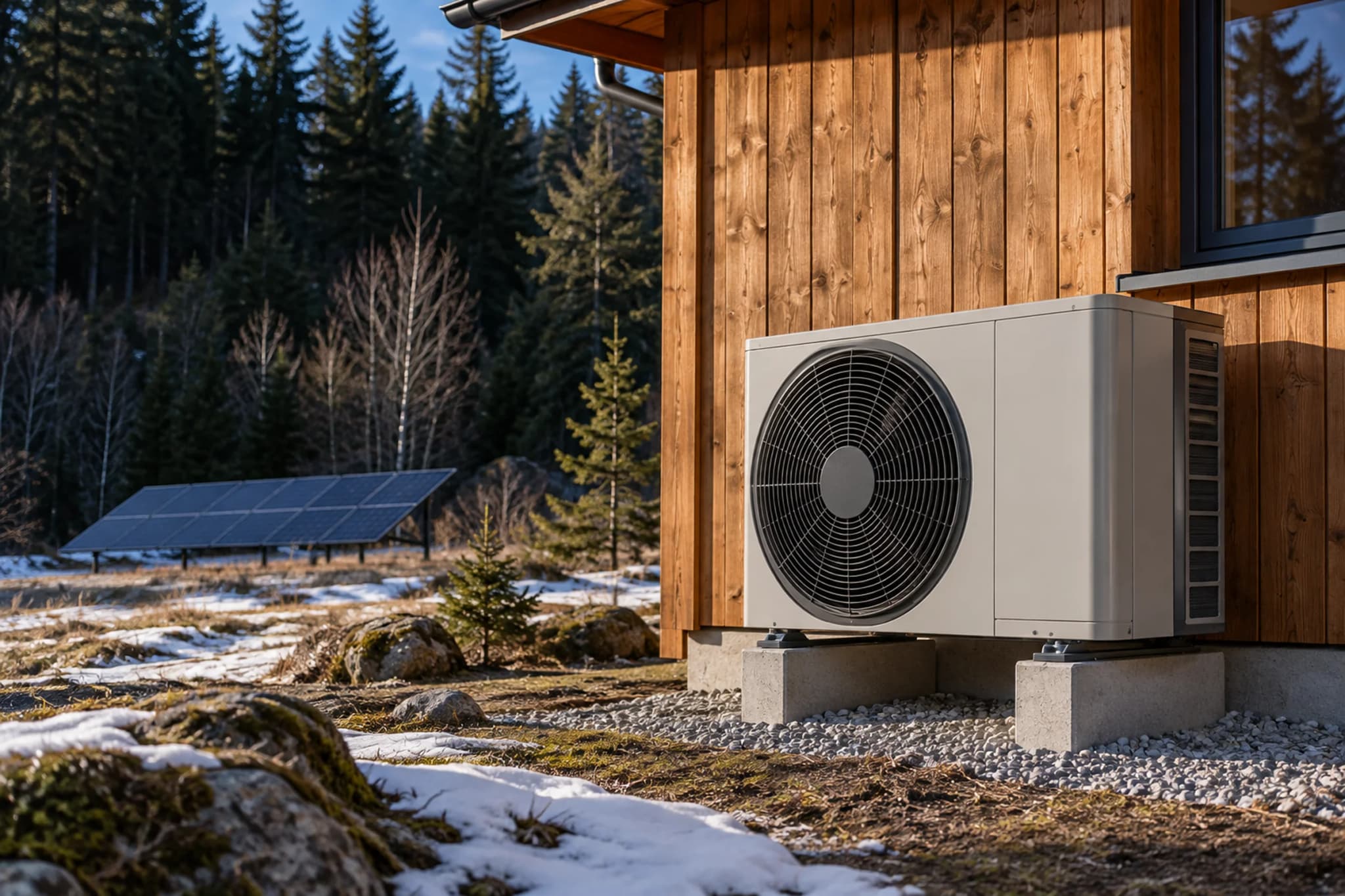
A heat pump works like a fridge running backwards. Instead of pulling heat out of a box, it pulls heat out of the outdoor air, even cold air, and pumps it inside.
That sounds like a magic trick, but it's real. ENERGY STAR says a heat pump can deliver up to three times more heat than the electricity it uses. A plain electric heater only ever gives you one unit of heat for each unit of power.
Cold-climate models are tested down to an outdoor temperature of about minus 15 °C (5 °F), and the advice is to have a backup heat source for colder days than that.
Off-grid, the hard part is energy. On the coldest, darkest weeks, the panels make the least and the heat pump needs the most, so you need a bigger solar system plus big battery storage or a generator to cover it. The guide to living off-grid in cold climates shows why many people pair a heat pump with a wood stove.
Propane, Fire And Carbon Monoxide
 Illustrative image
Some off-grid homes heat with propane or other bottled gas. It's simple and needs little or no electricity, but you have to keep buying fuel and hauling it in.
Every heater that burns something makes carbon monoxide, or CO. It's a gas you can't see or smell, and it can kill.
In the US, more than 400 people die each year from CO poisoning that isn't linked to fires, according to the CDC.
That is why a heater with a flue or chimney that takes the fumes outside is the safe choice for a home. Heaters with no chimney, called "unvented" or "ventless" heaters, let all their fumes stay in the room. Be very careful with them, especially in a small cabin, tiny house or van:
- Some places ban them in homes altogether, and many building codes forbid them in bedrooms and bathrooms or only allow small wall-mounted models there. In the US model gas code, for example, an unvented heater must have an oxygen-depletion shutoff and is barred from sleeping rooms except one small listed wall unit. Check your local rules before you buy.
- An oxygen sensor only shuts the heater off when oxygen runs low. It is not a CO alarm and does not make the room air safe to breathe.
- Never use a camping, patio or garage heater indoors. Use only one approved for indoor home use, installed as the manual says, with the fresh air supply it needs.
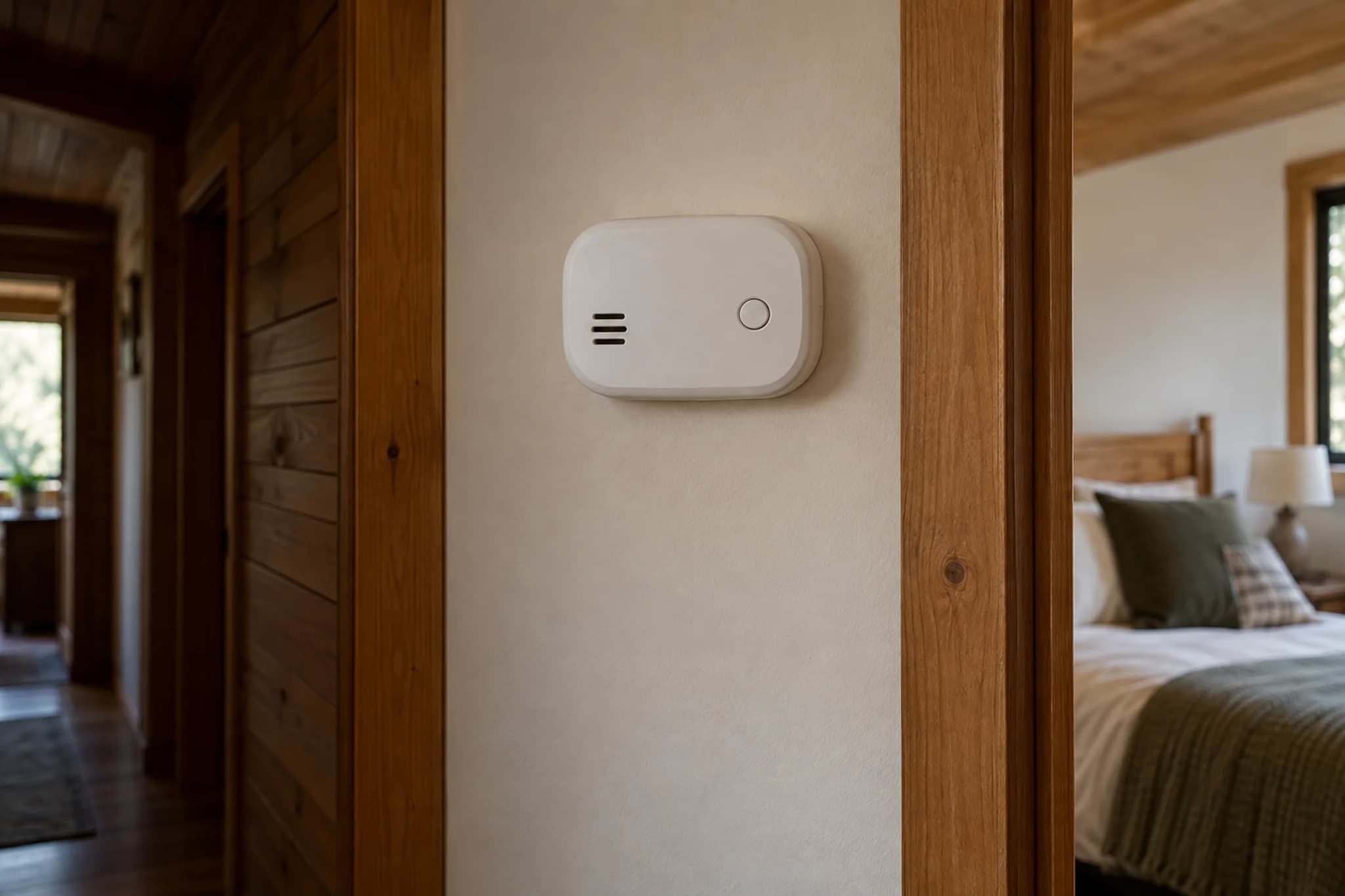
A CO alarm near every sleeping area is not optional, whatever heater you have. Test it every month with its test button, put it where the maker's manual says, and replace it at the date the maker gives. That date depends on the model: Kidde, for example, says its alarms last 7 to 10 years. Many alarms beep a special end-of-life signal when they are worn out, and then they no longer detect CO, so replace it right away.
Stoves and chimneys bring fire risk too. How far a stove sits from walls, what goes under it, and how the chimney runs all follow the stove's manual and your local building code, and those rules differ by country.
A certified installer or your local building department can check the installation, and the heating safety guide explains what to watch for.
Which Off-Grid Heating Option Fits You?
 Illustrative image
There's no single winner, because climates, fuel prices and rules differ around the world.
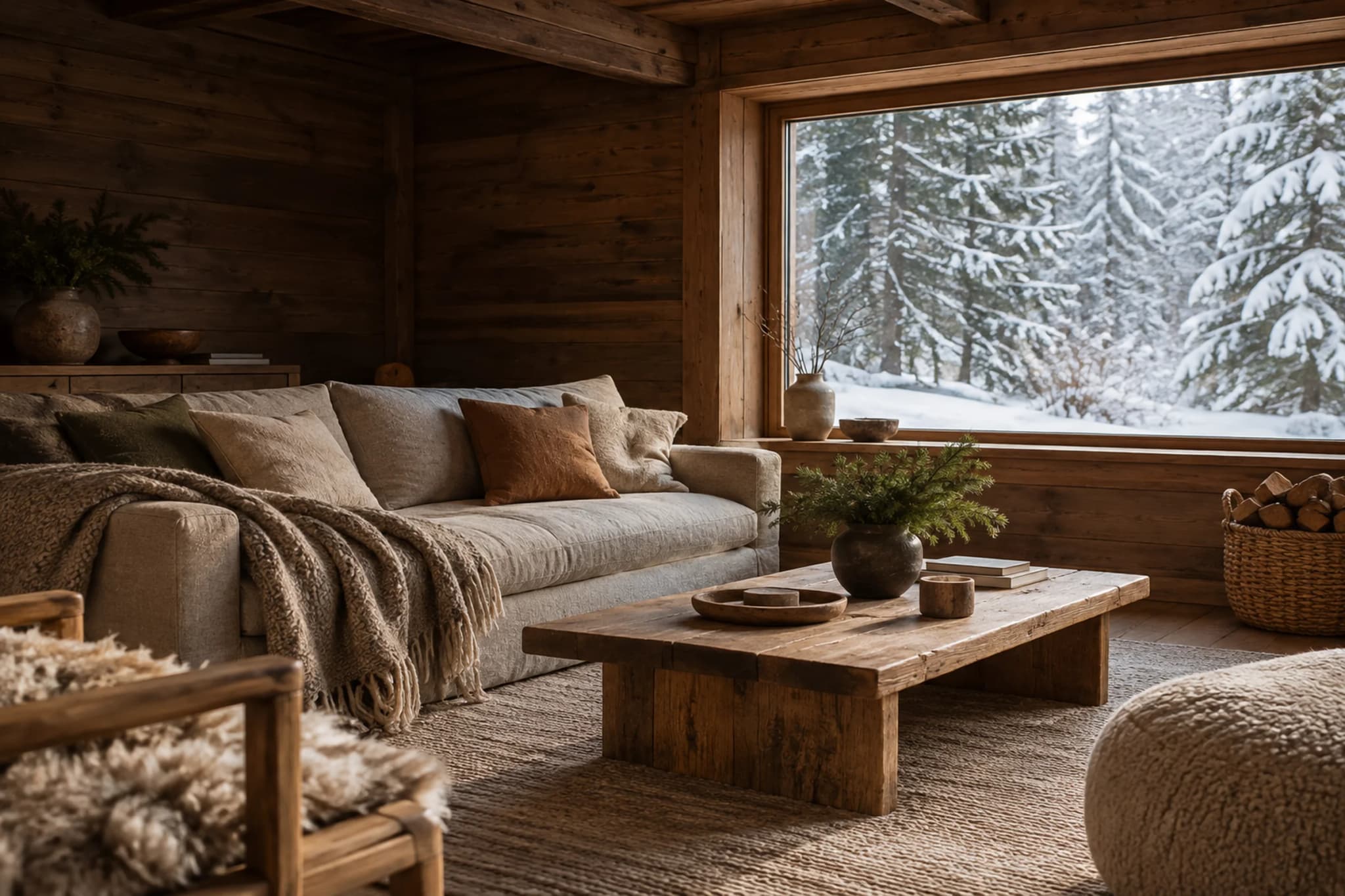
If you have trees nearby and don't mind the work, a wood stove is hard to beat. If you want heat without chopping, a heat pump paired with plenty of solar and a backup is the modern route. If you have room and free wood chips, a compost heater can warm a greenhouse or a small home for a year or more.
Many homes mix two methods: one main heat source and a backup for the worst weather. In milder places, good insulation, sunny windows and something small may be all you need.
How To Heat A House Without Power
A wood stove, a masonry heater, sunny windows and good insulation all keep working when the batteries are empty. Most pellet stoves and every heat pump don't, so if power cuts worry you, make sure at least one of your heat sources needs no electricity at all.
Whatever you pick, keep the heat in first, and treat fire and fumes with respect. Then a cold night outside becomes a cosy one inside.
Sources
- US Energy Information Administration, Heating accounts for 42% of home energy use
- Mississippi State University Extension, Heed safety precautions when using heaters
- SDSU Extension, Choosing firewood
- US EPA Burn Wise, Energy efficiency
- US EPA Burn Wise, Best wood-burning practices
- US EPA Burn Wise, Pellet stoves
- US EPA Burn Wise, Choosing appliances
- Still and Winiarski, Increasing fuel efficiency in traditional cooking stoves, Boiling Point 47 (2001)
- Wikipedia, Rocket mass heater
- New Society Publishers, The Rocket Mass Heater Builder's Guide
- Smith, Aber and Rynk, Heat recovery from composting: a comprehensive review (2017)
- BioCycle, Spontaneous combustion in composting: the causes
- ENERGY STAR, Air source heat pumps
- CDC, About carbon monoxide poisoning
- International Code Council, International Fuel Gas Code
- Kidde, Carbon monoxide alarm replacement
Hard Words
| Term | What it means |
|---|---|
| Passive solar | Designing a house so winter sunshine comes in through windows and warms it for free. |
| Thermal mass | Heavy materials like stone, brick or concrete that soak up heat and release it slowly. |
| Cord | A stack of firewood about 1.2 by 1.2 by 2.4 metres (4 by 4 by 8 feet). |
| BTU | British thermal unit, a small unit of heat. One BTU warms a pound of water by one degree Fahrenheit. |
| Pellet stove | A stove that burns small wood pellets fed in by a motor from a hopper. |
| Masonry heater | A big brick or stone heater that stores the heat of a short, hot fire and releases it slowly. |
| Rocket stove | An L-shaped stove with an insulated burn tunnel that makes a very hot, clean fire from small sticks. |
| Rocket mass heater | A rocket stove whose hot gases run through a heavy bench that stores the heat and releases it for hours. |
| Compost heater (biomeiler) | A big heap of wood chips with a water pipe inside. Microbes eating the chips heat the water. |
| Microbes | Living things too small to see, like bacteria, that break down plants and make heat as they eat. |
| Heat pump | A machine that moves heat from the outside air into the house, using electricity. |
| Carbon monoxide (CO) | A poisonous gas from burning fuel. You can't see or smell it, so you need an alarm. |
| Unvented heater | A fuel-burning heater with no chimney, so its fumes stay inside the room. |
Common Questions
What are the best off grid heating options?
A wood stove is the most common choice, because it needs no electricity. A heat pump on solar power is the most efficient electric option but needs a big battery or backup in winter. Passive solar design and good insulation cut how much heat you need from any of them.
What is the cheapest way to heat an off-grid home?
Often a wood stove burning wood you cut yourself, plus good insulation so less heat is needed. It depends on your climate and local fuel prices, so compare wood, pellets, propane and solar power where you live.
Can solar panels power a heat pump?
Yes, but it takes a large system. The coldest weeks are also the darkest, so most off-grid homes with heat pumps add a large battery, a generator, or a wood stove as backup.
Do pellet stoves work without electricity?
Most do not. They use a motor to feed pellets and fans to move air, so they stop in an outage unless you have batteries or a generator. A few gravity-fed models can heat without electricity.
Is propane heating safe indoors?
It can be, when a vented heater is installed and used as the maker says. Unvented heaters are banned in some homes and many bedrooms, and their oxygen sensor is not a CO alarm. Put a CO alarm near every sleeping area and follow local codes.
How dry should firewood be?
The EPA says wood burns best at a moisture content below 20%, and recommends seasoning it for at least six months. A cheap moisture meter tells you if a log is ready to burn.
What is a rocket mass heater?
A rocket stove whose hot exhaust runs through a long pipe inside a heavy bench of clay, stone or brick, which stores the heat for hours. Builders claim big wood savings, but independent tests are rare.
Can a compost pile heat a house?
It can help. Jean Pain heated a 100 m² farmhouse for six months with a 50 tonne heap of chipped brushwood. A smaller pile of about 31 cubic metres gives roughly 3 kW for 12 to 18 months, which suits greenhouses and small homes.