

Quieter Than Your Fridge (At The Right Distance)
People hear "wind turbine" and imagine a roaring machine. The reality is gentler.
A modern small home turbine, standing 30 meters away, sounds about as loud as a refrigerator humming in your kitchen. Roughly 50 decibels. That's quiet enough to have a normal conversation right next to it.
Closer than 30 meters, it gets louder. Stand right at the base of the tower and you'll hear a steady whoosh, around 60 decibels, like a soft shower running.
Farther away, it fades fast. At 60 meters, the turbine is whisper-quiet. At 100 meters, you might not hear it at all unless the wind is dead silent around you.
That's a long way from the screaming machine people picture.
What Actually Makes The Noise
Two things, mostly.
The first is the air itself moving past the blades. As each blade slices through the wind, it makes a soft whoosh. About once a second for a slow-spinning turbine, faster for a small home one. That sound is called aerodynamic noise, and it's the dominant sound on a healthy turbine.
The second is the generator and gearbox inside the nacelle (the box at the top of the tower). They hum the way any electric motor hums. On a well-built turbine, you barely hear it unless you're right at the base.
A turbine that suddenly starts making new noises (rattles, grinds, high-pitched whines) is telling you something. Probably worn bearings or a loose part.
→ Wind turbine maintenance basics
The Magic Of Distance
Here's a useful rule. Sound drops by 6 decibels every time you double the distance. So a turbine that's 50 decibels at 30 meters away will be 44 decibels at 60 meters, and 38 at 120 meters.
By the time you're 200 meters away, the turbine is quieter than a library.
This is why distance matters more than almost anything else. Pushing a turbine even 20 meters further from the house can be the difference between something you notice and something you don't.
Where To Put It
A few common sense rules go a long way.
Keep it away from bedrooms. Most noise complaints come down to one thing. Somebody put a turbine close to where they sleep, and now they hear it at three in the morning.
Put it on a tower. The higher up the turbine sits, the more wind it catches and the more the sound spreads out before reaching you. A turbine on a 20-meter tower is much less audible than the same turbine on a 5-meter pole.
Keep it away from reflective walls. A turbine 10 meters from the side of a barn will be louder than one in the open, because the barn wall throws the sound right back at you.
→ Factors for installing vertical-axis turbines
Old Turbines Vs New Ones
Some of the bad reputation comes from old designs.
In the 1980s, when wind turbines were new, blade shapes were rougher and gearboxes were noisier. Some of those turbines really did make an obnoxious mechanical whine you could hear from far off.
Modern turbines are different. The blade shapes have been studied in wind tunnels for decades. The trailing edges are now often serrated like an owl's feather, which is what makes owls fly silently. That trick alone cuts blade noise by a surprising amount.
If you've heard a noisy turbine somewhere and that's the picture in your head, know that today's models are a different machine.
Vertical Is Usually Quieter
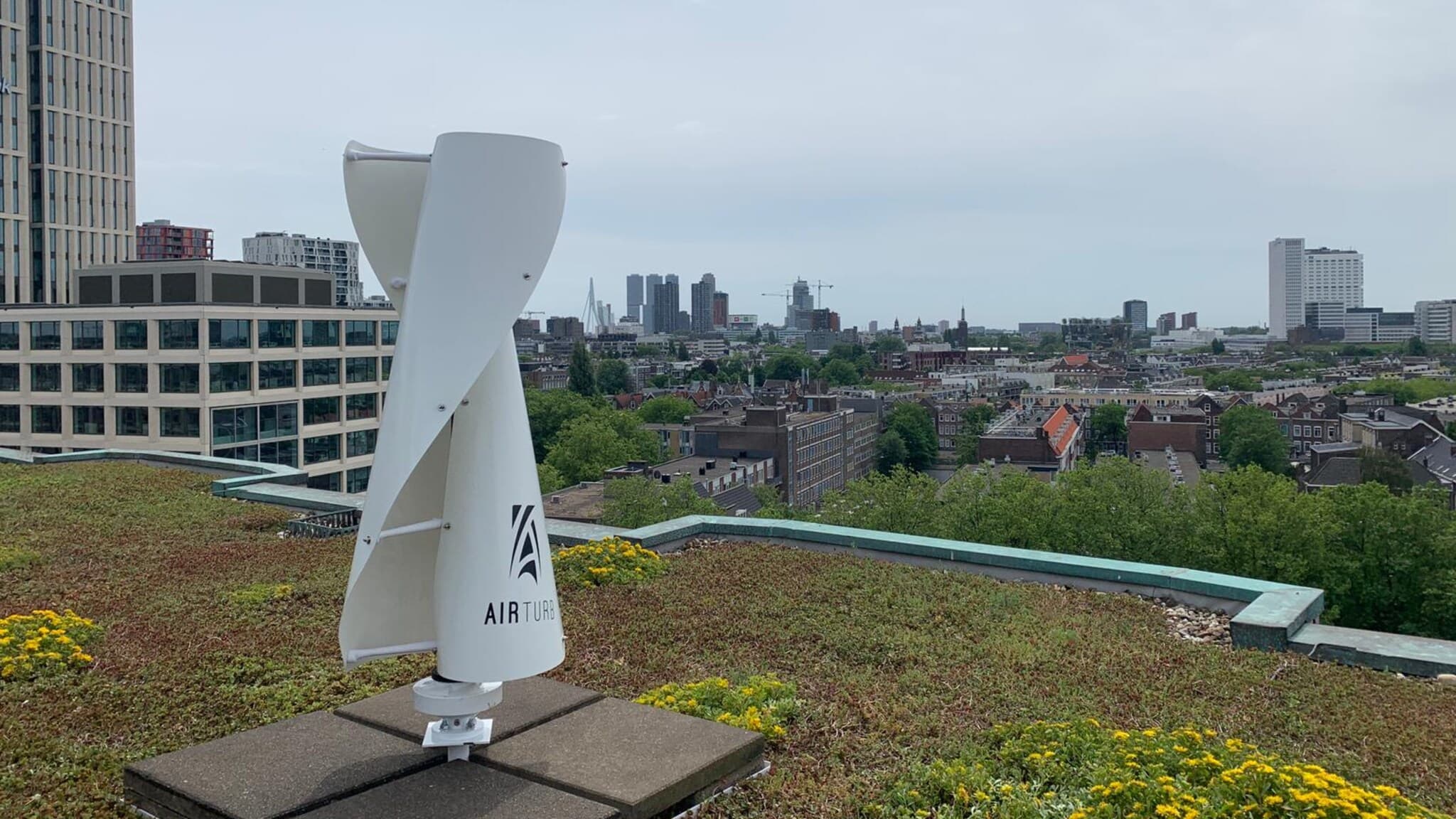
Vertical-axis turbines (the egg-beater-shaped ones that spin around a vertical pole) are usually quieter than the propeller-style horizontal ones. They run at lower tip speeds, which means less aerodynamic noise.
So if quiet matters a lot to you, a vertical-axis turbine is worth a serious look. The trade-off is usually a bit less power for the same wind.
→ What are vertical-axis wind turbines (VAWT)?
The Permit And Neighbor Side
In most countries, planning permits come with noise limits. Often something like "no more than 45 decibels at the property line" or "35 decibels at the nearest house at night."
Check your local rules BEFORE you buy a turbine. The wrong turbine in the wrong spot can be ordered to come down, and that's expensive.
And talk to your neighbors before the tower goes up. Show them the turbine. Explain how loud it'll be. Most of the time they're fine with it once they understand. The complaints come when somebody puts up a turbine without warning and a neighbor wakes up to a new strange sound nobody mentioned.
A bottle of wine and a conversation costs less than a lawsuit.
Pro Tip: Listen Before You Buy
The single best thing you can do is visit a working installation of the same model you're considering. Manufacturers will often point you to nearby customers who agreed to let people stop by. Stand at the property line. Listen for a few minutes. Walk around the tower.
A spec sheet says "45 decibels at 30 meters." Your ears will tell you whether that's a sound you can live with.