
Most wind turbines look like airplane propellers stuck on a pole. But there's a second family that looks completely different.
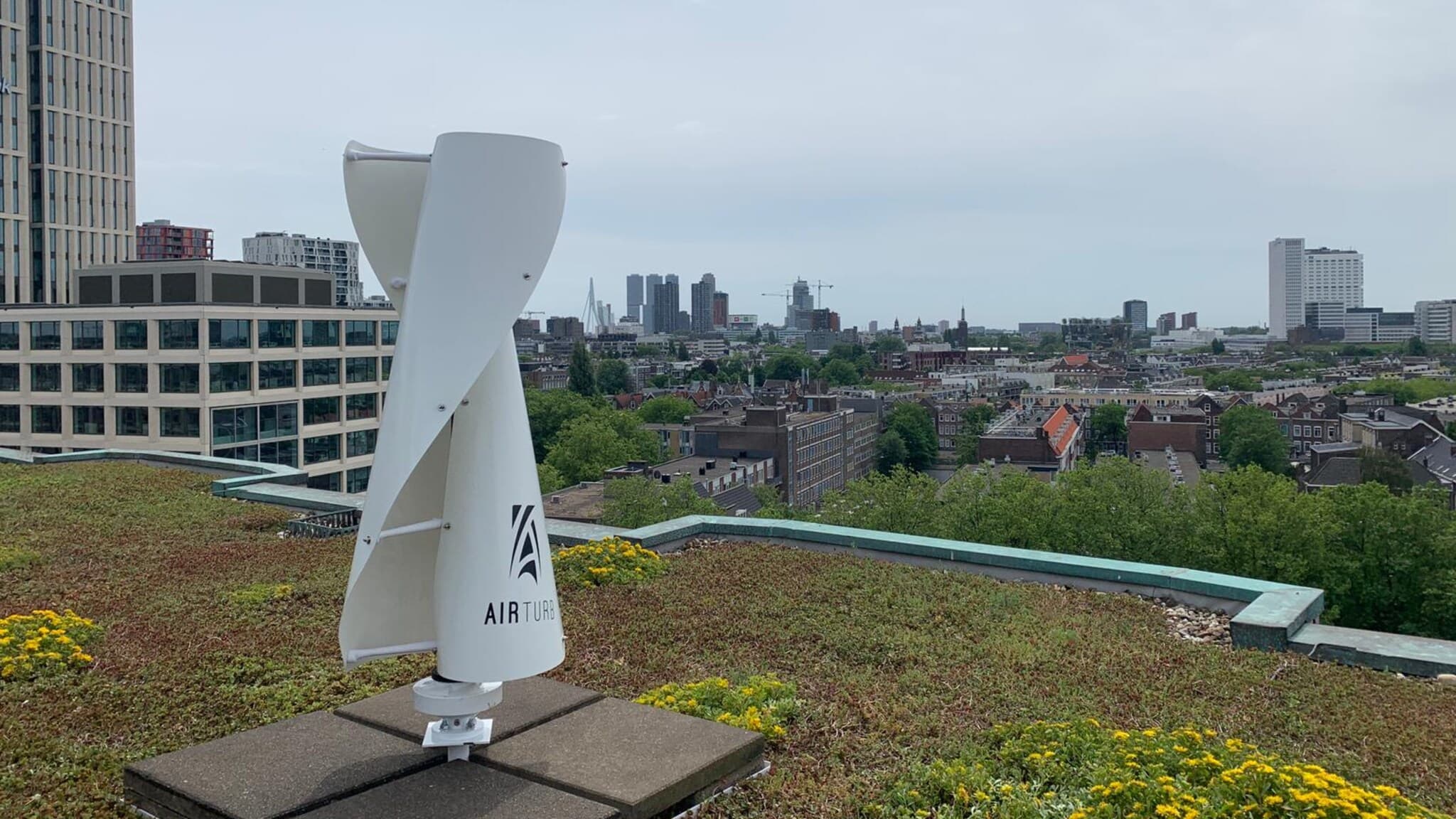
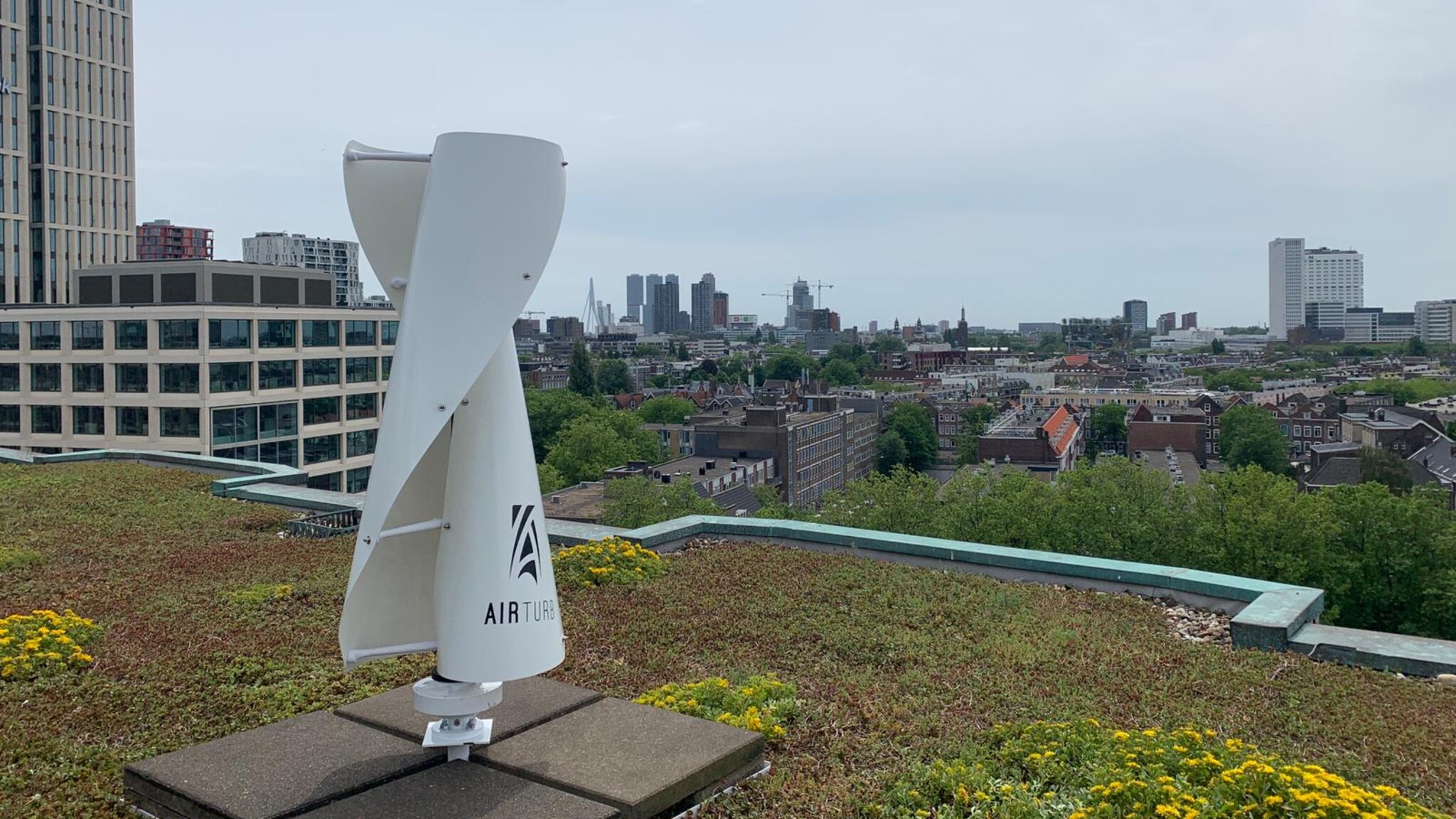
A vertical axis wind turbine, or VAWT, looks more like an egg beater or a giant whisk standing up. The blades wrap around a vertical pole and spin like a merry-go-round. The whole shape is built around an up-and-down axis instead of a sideways one.
VAWTs are the underdog of wind power. They're less common, less efficient, and a bit weird-looking. But in the right spot, they beat the propeller design.
How A VAWT Works
The blades catch the wind as they swing around. Half the rotor is always moving with the wind (getting pushed), and half is moving against it (pushing back through). The net result is a steady spin around the vertical pole.
That spin runs down the pole to a generator at the bottom. That's the design's first big advantage: the generator sits on the ground.
On a regular propeller turbine, the generator is in a box at the top of the tower, 30 metres up. To fix it, someone climbs up there with tools. On a VAWT, the generator is at your feet. Maintenance is just easier.
The Two Main Shapes
VAWTs come in two main flavors, and they work differently.
Darrieus turbines look like a giant whisk or eggbeater. The blades curve out from the top and bottom of the pole in two long arcs. Invented by a French engineer named Georges Darrieus in the 1920s. These can spin pretty fast and catch wind efficiently, but they're stubborn: they don't start spinning on their own. You usually need a small motor to kick them into motion.
Savonius turbines look like a barrel cut in half lengthwise, with the two halves offset. They catch wind by drag instead of lift. Invented by a Finnish engineer named Sigurd Savonius, also in the 1920s. Savonius turbines start spinning in very light wind, even a gentle breeze, but they're less efficient at high speeds.
A lot of real-world VAWTs combine both designs: a Savonius rotor in the middle to get things spinning, with Darrieus blades on the outside for power.
Where VAWTs Win
Three places a VAWT beats a propeller.
Cities and towns. Wind in a built-up area is a mess. It bounces off buildings, swirls around corners, changes direction every few seconds. A propeller turbine spends all its time swinging its yaw system to chase the wind. A VAWT doesn't care. Wind from any direction works the same way.
Low wind speeds. The Savonius shape starts spinning in winds as low as 2 metres per second. A typical propeller needs around 3 m/s to even begin. If you live somewhere with mostly gentle breezes, a VAWT generates power on more days of the year.
Quiet places. VAWTs spin slower than propellers. Slow blade tips make less noise. If your neighbours are 20 metres away, this matters.
Where They Fall Short
The honest truth: VAWTs are usually less efficient than HAWTs. Per square metre of "wind-catching area", a propeller pulls more energy out of the wind. That's why almost every commercial wind farm uses HAWTs.
The blade arrangement on a VAWT is also harder to maintain at scale. The vertical shaft has weird forces on it from blades pulling and pushing in opposite directions. The bearings wear out faster.
And big VAWTs are rare. The shape doesn't scale up as nicely. You won't see a 250-metre VAWT out at sea.
What's Inside
A VAWT has the same core parts as any wind turbine.
The rotor is the spinning bit: the curved or straight blades around the vertical pole.
The shaft is the pole the rotor spins around. It runs down to the generator at the base.
The generator is the magic box where spinning becomes electricity. Spin a magnet inside a coil of wire, and electricity flows out. Same trick we've been using since the 1830s.
The control system watches the wind speed and the turbine's spin. If a storm hits and the rotor speeds up dangerously, the controls slow it down or stop it entirely.
The support structure holds the whole thing steady. VAWTs put a lot of sideways force on their base, so the foundation has to be solid.
Where VAWTs Get Used
Rooftops in cities. Where messy wind and noise rules make propeller turbines impractical, a small VAWT can quietly turn breeze into power.
→ Read more about VAWT applications
Off-grid cabins. In a wooded valley where wind direction changes constantly, a VAWT keeps spinning while a propeller would be paralyzed.
Hybrid setups. Paired with solar panels and a battery bank. The VAWT catches breezes at night and on cloudy days when solar is asleep.
→ Read about the advantages of VAWTs
Before You Install One
A few things to think about first.
Wind resource. Even a VAWT needs some wind. Check what your site actually gets across a full year. → Is there enough wind on your site?
Site choice. Even in low wind, location matters. Get the turbine away from obstacles. Higher is better.
Local rules. Many cities have height limits, setback rules, and noise limits even for small turbines. Check before buying.
→ Read more about factors to consider when installing a VAWT
Where VAWTs Are Heading
Researchers are pushing the design forward in interesting directions.
Better airfoil shapes are pulling efficiency up closer to where propellers sit. New control systems adjust each blade's angle on the fly to grab more wind from each gust.
Floating VAWTs are being tested for offshore use. The low centre of gravity makes them surprisingly stable on water.
→ Read about current trends and future developments in VAWTs
→ Use the yearly kWh calculator
VAWTs aren't going to take over wind power. But for the right spot, especially anywhere wind is messy or noise matters, they're the better choice.