
What Solar Panel Mounting Has To Survive
A solar panel spends its whole life outside. Sun bakes it in summer, snow piles on it in winter, and wind tugs at it like a kite on a string.
Solar panel mounting is the frame and hardware that holds the panels in place through all of that. The US Department of Energy says the structure has to stay stable and handle wind, rain, hail and corrosion over decades. That's a long time to hang on.
The most common kind is rack mounting, where the panels sit on a frame of rails. The DOE describes it as sturdy and easy to install.
There are four big families: roof mounts, ground mounts, pole mounts and trackers. Each one fights the weather a little differently, but they share most of their parts, so those come first.
The Mounting System: What Holds A Solar Panel
Every mounting system for a solar panel is built from a few simple pieces. Rails are long metal bars that the panels sit across. Feet hold the rails to the roof or the frame, and clamps grab the edge of each panel.
Installers call the whole set "racking". That's just a word for the rack of rails and brackets under the panels.
Where a clamp grabs the panel matters more than you'd think. Panel makers mark clamping zones on the frame, and the best zone is usually around the mounting holes. A clamp outside the allowed zone lowers the load the panel is rated for, and in strong wind the panel can bend and its cells can crack.
Those load ratings come in two directions. One number says how hard the panel can be pulled up, which is the wind's job. The other says how hard it can be pushed down, which is the snow's job. The panel's manual lists them per clamping zone, so read it before you pick clamp spots.
When metals eat each other
Metals can wear each other out too. When two different metals touch and water gets between them, one of them slowly corrodes. Scientists call it galvanic corrosion, and the DOE says it gets worse the further apart the two metals sit on the "galvanic series", a ranking of metals.
The DOE warns about one pairing in particular: aluminum panel frames with stainless steel screws or bonding plates. Crevice corrosion can form there, weaken the joint and break the bonding. So the DOE's tips include avoiding mixed metals where you can and choosing parts made to resist rust, such as grade 316 stainless steel.
"Bonding" means joining metal parts with a solid electrical connection, so the frames and rails become part of the safety ground. Our page on grounding and surge protection explains what that connection is for.
The gap you can't see
There's one more part of the mount you can't see: the air gap behind the panel. In an NREL study, a panel lying flat on the roof ran much hotter than one on an open rack with free air behind it. A gap of about 10 centimeters (4 inches) ran nearly as cool as the open rack.
Most of the cooling comes in the first few centimeters. A bigger gap than that adds only a little.
Does the gap change the power? One small 2014 field study by Viridian, a maker of in-roof solar panels, reported by Solar Power Portal, found that free-standing panels with open air behind them made about 6% more energy than panels built into the roof. Panels mounted above a pitched roof made about 3% more than the built-in ones.
NREL also found that the weather where you live counts too. In a cold place, even a panel with no air behind it can stay cooler than a panel on an open rack in a hot place.
Mounting Solar Panel On Roof: Rails, Feet And Flashing
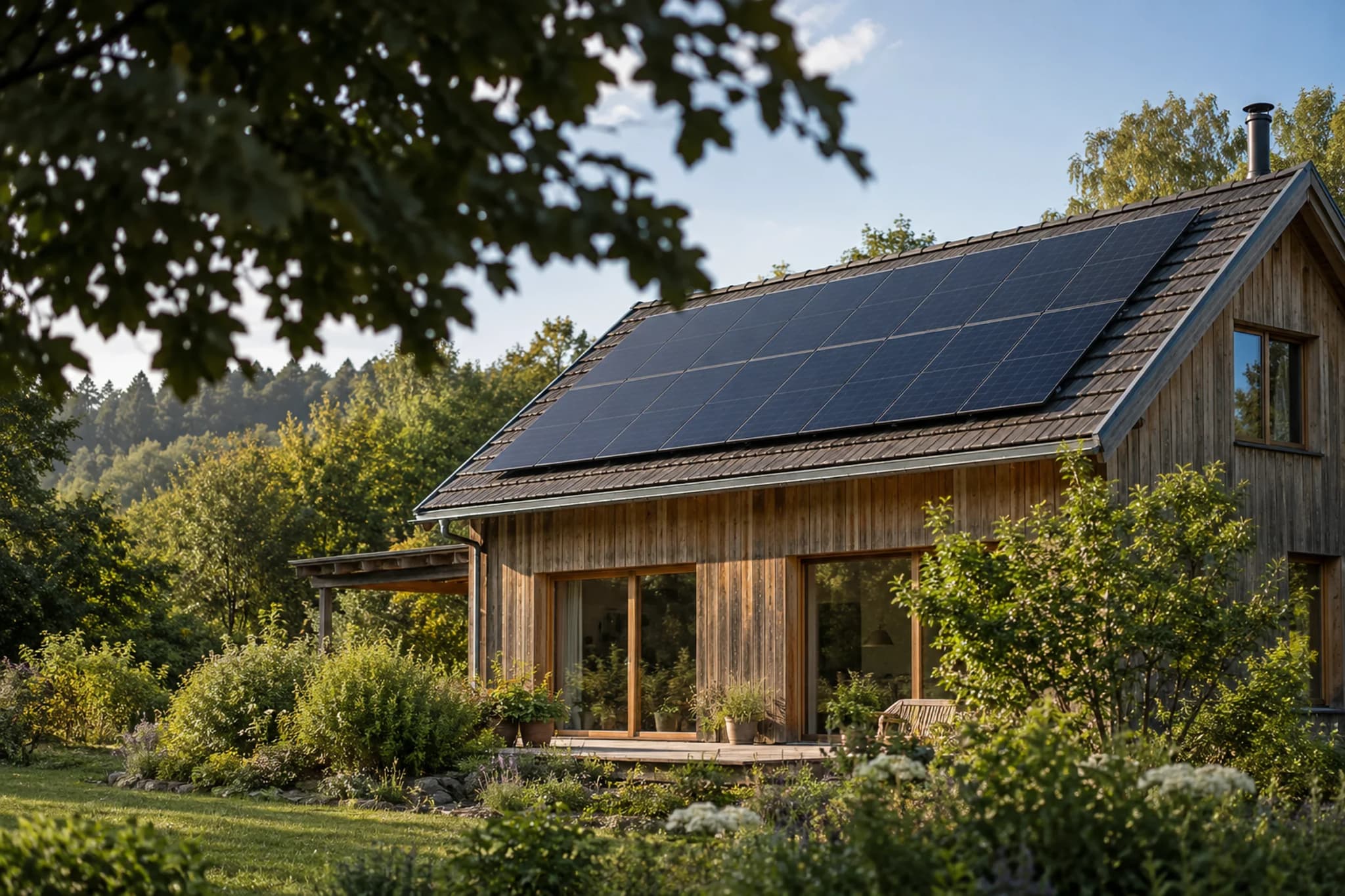
On a sloped roof with shingles, a common setup is rails on feet. Each foot is screwed into a rafter, one of the big wooden beams under the roof that carry its weight.
Every screw makes a hole in the roof, so each hole needs a raincoat. That raincoat is called flashing, a flat plate that sheds water past the hole the way roof shingles do.
Before any drilling, here is the first stop point. Whether your roof can carry the panels, and what wind and snow loads apply where you live, is a job for the racking maker's manual and an engineer or installer. Working on a roof is also work at height, so use proper fall protection or have a pro do it.
We use IronRidge manuals only as examples, not as a recommendation. In IronRidge's manual for its QM GF1 flashing, the pilot hole goes into the rafter and sealant goes over it. Then the flashing slides up under the next row of shingles, so its own hole lines up with the one in the roof.
Another IronRidge manual, for its ClickFit system, says the bonded EPDM washer has a visual indicator. The manual calls that indicator the most effective way to make sure the seal is watertight. EPDM is a rubbery material, a bit like a bike tire.
How far apart can the feet be? That depends on the product, the panel, the roof, and your wind and snow. Every racking system has its own span tables, and in places with heavy wind or snow the feet often have to sit closer together. So take the spacing from the manual and revision that match your own hardware, never from another product.
Flat roofs and ballast
A flat roof can work differently. One option is a ballasted frame, held down by weight like a beach umbrella in a heavy stand. The ballast has to be heavy enough that the wind can't lift the array.
The tricky part is that uplift is higher at the corners and edges, so that's where more ballast goes. That makes the load on those spots higher than the roof's average suggests.
Whether your roof can carry it is a question for a structural engineer. The ballast layout should come from the racking maker's own ballast schedule, not a general rule of thumb.
Which way to point the panels, and how steep, is the other half of a roof job. Our guide to roof orientation and tilt angle covers it, flat roofs included.
Solar Panel Ground Mounting: A Frame On Your Own Land
Solar panel ground mounting puts the racking on its own frame in a yard or a field. You're no longer stuck with the roof's direction or slope, and the panels sit where you can reach them.
That reach pays off when you clean them or brush off snow. Our solar panel cleaning guide shows the safe way to do it.
The hard part is under the ground. Each post sits on a footing, the buried base that anchors it, and in a cold place the ground plays a trick.
When wet soil freezes, it swells, a bit like water in an ice cube tray. That can push a post upward, and builders call it frost heave. The frost line is how deep the ground freezes in winter, and it changes a lot from place to place.
IronRidge's ground mount guide says to check the local frost line. For its ground screws, it adds that longer screws may be needed with high wind, heavy snow or freeze-thaw heave, and it tells you to ask a local engineer about the soil and the loads.
Some builds use ground screws or helical piers, giant screws twisted into the soil. A racking maker says they can avoid frost trouble if they go deeper than the frost line, and a soil engineer sets that depth.
So the size and depth of a footing come from the racking maker's guide or an engineer, never from a guess.
Spacing the rows
A bigger ground array has several rows, and the front row throws a shadow on the one behind it. A common check sizes the gap for noon on the shortest day of winter, when the midday sun is lowest. Even then, the rows shade each other a little in the early morning and late afternoon, and most designers accept that small loss so more panels fit.
Your racking maker or designer can work out the spacing for your place and tilt, and our page on solar panel shading shows why a shadow costs more than it looks.
Solar Panel Mounting Pole: A Few Panels Up High
A pole mount puts a small group of panels on top of one sturdy pipe. It keeps them off the ground, and the angle can be adjusted.
The catch is leverage. Hold a flag on a long stick in a strong wind and you feel it yank at your hands. A pole is that stick, with a big flat flag of panels on top, so the footing at the bottom takes a lot of force.
That's why a pole mount needs an engineered footing, taken from the kit maker's own documents.
Rules of thumb for pipe size and hole depth float around online, but nobody has checked them for your site. Go by the kit's own documents or an engineer.
Solar Trackers: Panels That Follow The Sun
A tracker is a mount that turns the panels to follow the sun, like a sunflower. A single-axis tracker swings them from east to west through the day, while a dual-axis tracker also tilts them so they aim at the sun all day.
How much does that help? The US Energy Information Administration (EIA) ran the numbers with NREL's PVWatts model for a 10 kW system in Los Angeles. Compared with panels fixed at a 20 degree tilt, a single-axis tracker made about 21% more energy a year and a dual-axis tracker about 31% more.
That's a sunny city, though. The EIA notes the gain depends on the kind of sunlight. Where more of the light is diffuse, scattered by clouds and haze, trackers gain less.
The EIA also says tracking needs more land and costs more, and the DOE adds that trackers need more maintenance. The DOE describes them for arrays mounted on the ground. Before you buy one for a small system, compare its price with adding enough fixed panels to make the same extra energy.
Which Solar Panel Mount Fits You?
This table is our own summary of the sources above. It's a starting point, not a rule.
| Mount | Good fit when | Watch out for |
|---|---|---|
| Pitched roof | The roof is sound and its sunny side has no shade | Every screw is a hole to seal; roof strength and age |
| Flat roof | You'd rather not drill, and an engineer says the roof can carry the weight | Ballast weight at corners and edges; an engineer checks the roof |
| Ground | You have land and want easy reach and your own tilt | Footings below the frost line; rows that shade each other |
| Pole | You have only a few panels | Wind leverage; an engineered footing |
| Tracker | You have land and want more energy from the same panels | More cost, land and upkeep; a smaller gain where light is diffuse |
Before you choose, know how many panels you're mounting. The solar panel calculator works that out from your daily use. Our off-grid solar system examples show complete systems from a van to a family home, mounts included.
Bring in an engineer or installer when:
- the roof is flat and needs ballast, or you don't know the state of the rafters or the roof's age
- your site gets strong wind or heavy snow
- a ground or pole footing goes into ground that freezes, or into poor soil
- the array is large
- any part of the job means working on a roof and you don't have fall protection gear and know how to use it
A mount is the least exciting part of a solar system, and the part that has to hold on the longest. Get it right once, and the panels can get on with their job for decades.
Sources
- U.S. Department of Energy, Solar Photovoltaic System Design Basics
- U.S. Energy Information Administration, Today in Energy: solar tracking
- U.S. Department of Energy FEMP, Managing and Mitigating Solar PV Corrosion
- U.S. Department of Energy, PV corrosion mitigation measures (spreadsheet)
- NREL, Close roof-mounted system temperature estimation (2024)
- Solar Power Portal, gap in performance between rooftop and integrated PV
- IronRidge, QM GF1 installation manual
- IronRidge, QuickMount ClickFit system installation manual
- IronRidge, QuickMount RockIt system installation manual
- IronRidge, ground mount installation guide
- SolarQuotes, solar panel clamping zones
- North American Clean Energy, structural effect of solar arrays on an existing structure
- Terrasmart, ground screws and frost
- Greentech Renewables, how to space a ground-mounted array
- SurgePV, inter-row spacing guide
Hard Words
| Term | What it means |
|---|---|
| Racking | The rails, feet and clamps that hold solar panels in place. |
| Rafter | One of the big sloping beams under a roof that carry its weight. Roof feet are screwed into them. |
| Flashing | A flat plate that slides under the shingles and keeps rain out of the hole a roof screw makes. |
| Clamping zone | The part of a panel's frame where its maker allows clamps. Clamping outside it lowers the panel's load rating. |
| Ballast | Weight that holds a frame down on a flat roof instead of screws. |
| Uplift | The wind (or frost) trying to pull a panel or post upward. |
| Frost line | How deep the ground freezes in winter. Footings go below it. |
| Frost heave | Freezing soil swelling and pushing posts upward. |
| Galvanic corrosion | Two different metals touching with water between them, so one slowly corrodes. |
| Single-axis and dual-axis tracker | Mounts that turn the panels after the sun: east to west, or east to west and up and down. |
Common Questions
What are the main types of solar panel mounting?
There are four: roof mounts, ground mounts, pole mounts and trackers. Roof mounts use rails on feet screwed into the rafters on a pitched roof, or ballast on a flat roof. Ground and pole mounts stand on their own footings. Trackers turn the panels after the sun. The US Department of Energy says rack mounting is the most common kind.
Can you mount solar panels directly to the roof?
On a pitched roof, a common way is rails on feet that are screwed into the rafters, with flashing under the shingles to keep each hole dry. Whether the roof can carry the load, and how far apart the feet may be, comes from the racking maker's manual and an engineer or installer. Roof work needs fall protection or a pro.
Can you put solar panels on a roof without drilling?
On a flat roof, yes: a ballasted frame is held down by weight instead of screws. The ballast has to be heavy enough that the wind can't lift the array, and more of it goes at the corners and edges, where uplift is higher. A structural engineer checks the roof, and the layout comes from the racking maker's ballast schedule.
How deep does a solar ground mount footing need to go?
Below your local frost line, so freezing soil can't push the posts up. How much deeper depends on the soil, the wind and the snow at your site. IronRidge's ground mount guide says longer ground screws may be needed with high wind, heavy snow or freeze-thaw heave. Take the exact depth from the racking maker's guide or an engineer.
How much more energy does a solar tracker make?
In an EIA example using NREL's PVWatts model, a 10 kW system in Los Angeles made about 21% more energy a year on a single-axis tracker and about 31% more on a dual-axis tracker, compared with panels fixed at a 20 degree tilt. Where more of the light is diffuse, the gain is smaller, and trackers need more land, money and maintenance.
What are the downsides of mounting solar panels on a roof?
Every roof screw makes a hole that has to be sealed with flashing. You're stuck with the roof's direction and slope, and the roof itself has to carry the load. The panels are also harder to reach for cleaning or clearing snow, and every visit is work at height that needs fall protection or a pro.
Does the air gap under solar panels matter?
Yes. In an NREL study, a panel lying flat on the roof ran much hotter than one on an open rack, and a gap of about 10 centimeters ran nearly as cool as the open rack. In one small field study reported by Solar Power Portal, free-standing panels made about 6% more energy than panels built into the roof, and panels above a pitched roof about 3% more.