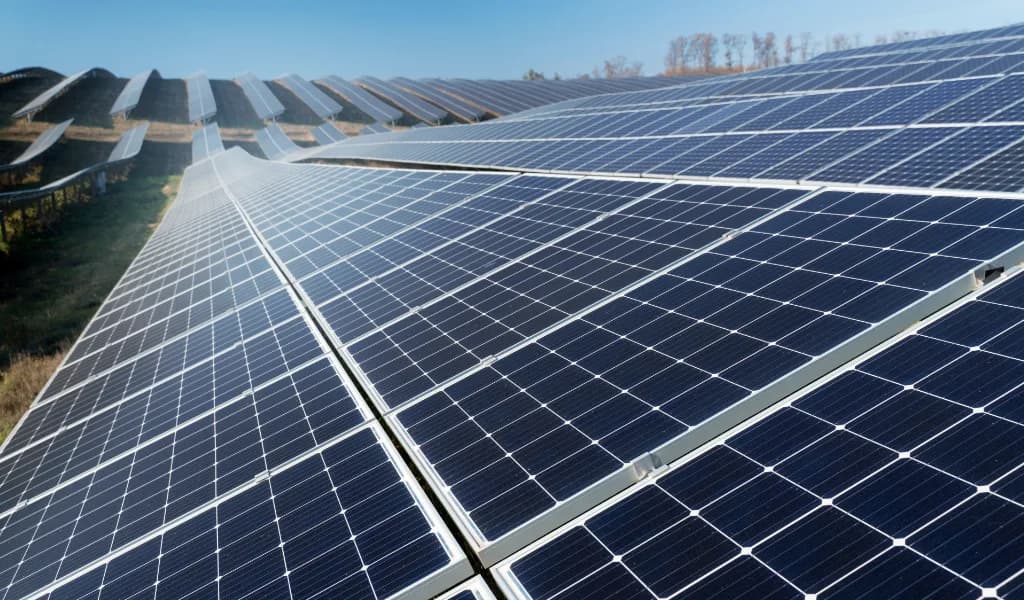

Here is something most people never think about. Two houses, same panels, same town. One makes 15% more power than the other. Same brand, same price.
The difference? The roof.
A panel that points the wrong way, or sits at the wrong angle, gives up a chunk of its power before it even starts. No fancy tech can fix that. So before you spend money on more panels, it's worth getting this part right.
The Two Things That Matter
A solar panel is basically a flat board catching light. Two things decide how much light hits it.
First is the tilt. That's how steep the panel sits, measured in degrees from flat ground. A panel lying flat is 0 degrees. A panel standing straight up is 90 degrees.
Second is the azimuth. Scientists call it that, but it really just means which direction the panel faces. North, south, east, or west.
Both of these need to match where you live and where the sun is. Get one wrong and the panel works less. Get both wrong and you might as well buy fewer panels.
The Tilt Rule Of Thumb
Here is a trick electricians use. Your best tilt is roughly equal to your latitude.
If you live at 45 degrees latitude (places like Lyon, Minneapolis, or northern Italy), tilt your panels around 45 degrees. If you live closer to the equator at 25 degrees latitude, tilt them closer to 25.
Why? Because that angle points the panel straight at the sun on an average day across the whole year. Light hits it head-on instead of glancing off.
You can also tweak it for the season. Tilt 15 degrees steeper than your latitude and you favor winter sun. Tilt 15 degrees flatter and you favor summer. Some people with adjustable mounts even change the tilt twice a year.
For most homes though, fixed-angle works fine. The yearly average is what matters.
→ How many sun hours does your area get?
Which Way Should They Face?
Now for the direction. The rule here is simple, but it depends on where on Earth you live.
If you live in the northern hemisphere (Europe, the US, Canada, most of Asia), the sun spends most of the day in the southern sky. So your panels should face south.
If you live in the southern hemisphere (Australia, South Africa, Argentina), the sun does the opposite. Your panels should face north.
A panel pointed dead at where the sun spends most of its time gets the most light. Simple as that.
But here is where it gets interesting.
What If Your Roof Is Not Perfect?
Most roofs are not aimed perfectly. Maybe your house faces east. Maybe the roof slopes the wrong way. Maybe a big tree blocks the south side.
The good news is, you do not need perfect.
A roof that faces east or west instead of south still works. You only lose about 10 to 20% compared to a perfect southern roof. That sounds like a lot, but it often just means buying one or two extra panels. Way cheaper than rebuilding your roof.
There is even a clever trick called east-west split. You put half the panels facing east and half facing west. The east ones catch morning sun, the west ones catch afternoon sun. You never get the big midday peak that south-facing panels do, but you spread your power evenly across the day. For people who use electricity in the morning and evening (and not when they are at work), that can actually be better.
→ How many solar panels do you actually need?
Flat Roofs Are Their Own Thing
If your roof is flat, you have a different problem. Flat panels lying on a flat roof catch a lot less light than tilted ones. They also collect dust, leaves, and puddles of water.
The fix is called a ballasted tilt frame. It's basically a metal frame that sits on the roof and props the panels up at the right angle. Heavy concrete blocks hold it down so wind does not toss it off. No holes drilled in your roof, which is a nice bonus.
These frames can hold the panels at any angle you want. Most people set them at the local latitude angle, the same rule as before.
A Real Example
Say you live at 45 degrees latitude. Your roof faces south and slopes at about 35 degrees. That is almost the sweet spot. Panels there will catch close to the maximum sunlight your area can give.
Now take the same house and same panels, but the roof faces east instead. You lose about 15% of your yearly power. That means a 4000-watt system makes the energy of a 3400-watt system.
To make up the gap, you would need to add one extra panel. Not a disaster, but worth knowing before you sign anything.
If the roof faced north (in the northern hemisphere), the loss would be much bigger. North-facing solar in the northern hemisphere is usually a no-go.
Why This Matters Before You Buy
Most solar quotes assume your roof is good. Nobody mentions the 15% you lose because your house was built to face the street, not the sun.
If you check the tilt and direction first, you can plan around it. The cheapest way to make more solar power is not buying more panels. It's pointing the ones you have in the right direction.