
The Sweet Spot
A normal house in Europe or North America uses about 25 kilowatt-hours of electricity per day.
A tiny house? About 4.
A small cabin? Sometimes less than 2.
This is the secret nobody mentions when people talk about off-grid living. It's not that off-grid power is somehow magical and free. It's that small homes use way less power. And small power needs are way easier to solve.
Most full-size houses can technically go off-grid, but you need a giant solar array, a wall of batteries, and a backup generator. The price tag is 50,000 dollars and up.
A tiny house can go fully off-grid for under 10,000 dollars. Sometimes way less. The system fits in a closet. And the power bill from day one is zero.
This is why the tiny house movement and the off-grid movement keep ending up in the same place. They fit each other perfectly.
A Typical Setup That Works
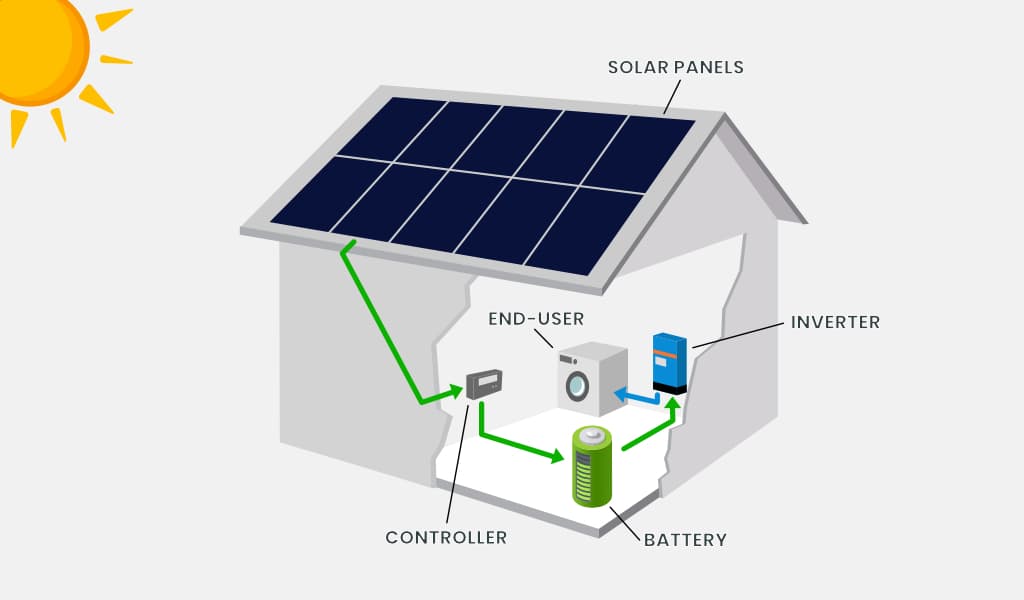
A complete off-grid system for a tiny house or small cabin usually looks like this.
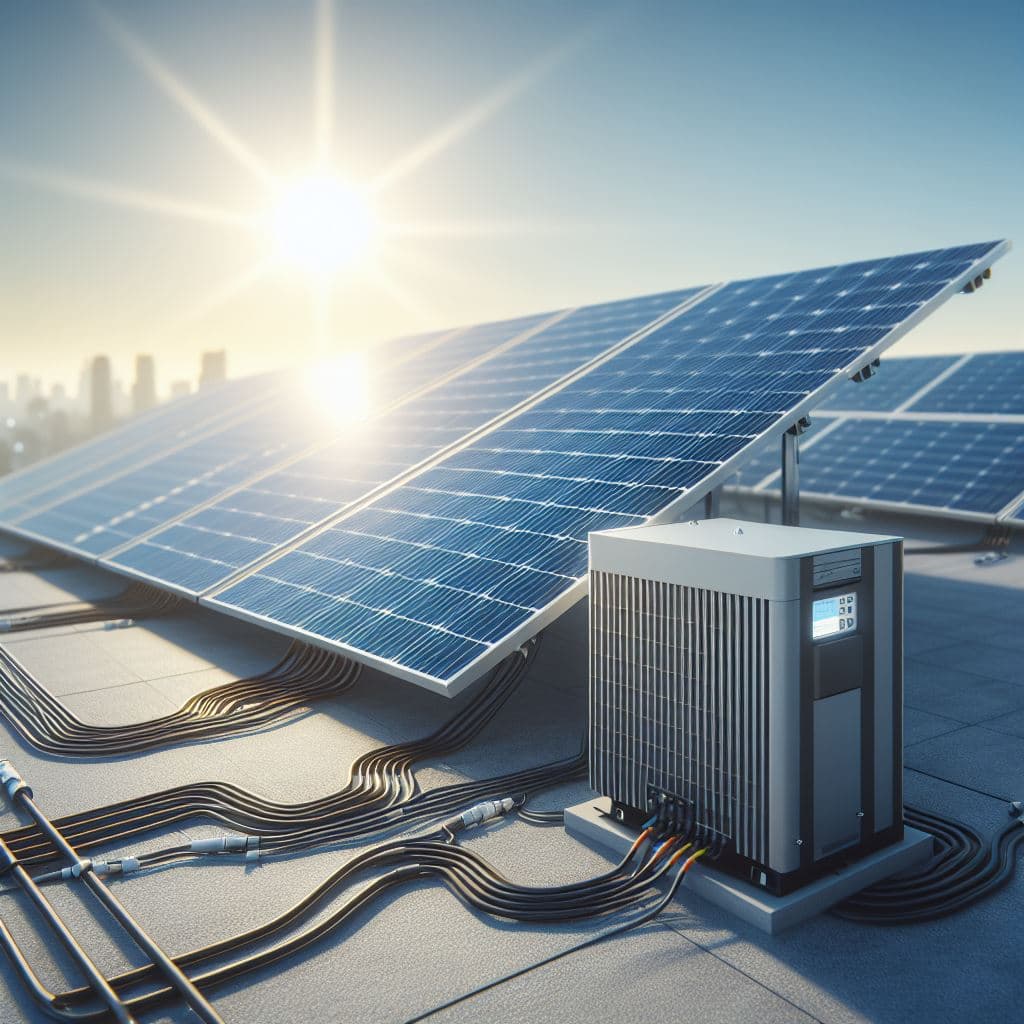
Solar panels: 2 to 4 kilowatts on the roof. That's maybe 8 to 12 panels of 250 to 400 watts each. Enough to keep up with normal daily use even on cloudy days.
Battery bank: 10 to 20 kilowatt-hours of lithium battery storage. That's enough to run the house for two or three days with no sun at all.
Inverter: 3,000 watts is the sweet spot. Big enough for everything except an electric oven or a clothes dryer. Both of which most tiny houses skip anyway.
A charge controller sized to the panels.
A safety switch and proper fuses.
That's the whole system. Five components. Total cost? About 6,000 to 10,000 dollars for the gear, plus your own time to install it. Some people install everything themselves. Some hire a professional. Either way, it ends up cheaper than a year of grid-tied utility bills in many places.
→ How many panels you actually need
The Tiny House Lifestyle
Going off-grid in a small home means making a few choices that bigger off-grid setups don't have to make.
Some big appliances just don't work. An electric oven pulls 3,000 to 5,000 watts. A clothes dryer pulls 5,000 watts for an hour. A dishwasher pulls 1,200 watts and runs for a whole cycle. A whole-house AC unit pulls 3,000 watts continuously.
Use any of these for an hour and you've burned through a whole day's worth of power.
So tiny house off-gridders usually pick simpler alternatives.
Cooking goes on a 2-burner induction cooktop, which only uses power while you're actively cooking. Or a propane stove that doesn't use electricity at all.
Laundry goes in a small portable washing machine, or to a laundromat once a week.
Dishes get washed by hand, which is honestly fine for a small house with two people.
Hot water comes from an on-demand propane heater. A small propane tank lasts months. No big electric water heater eating power all day.
For cooling, a single small DC mini-split or ceiling fans handle most of the work, helped by the fact that a small space cools fast.
This lifestyle shift catches some people off guard. But most tiny house dwellers settle into it fast. The constraint creates a kind of quiet. You're not running ten appliances at once. You're not paying for ten appliances at once. The whole house feels lighter.
The Water, Sewage, And Toilet Question
Power is the most visible off-grid challenge. But water and sewage are just as important, and tiny houses solve them with similar simplicity.
Water can come from a few sources. A well with a 12-volt pump. A rainwater catchment system that fills a tank from the roof. A large freshwater tank refilled by truck or hose every few weeks.
A well pumps maybe 200 watts while it's running, which is fine for a few minutes a few times a day.
Toilets are where tiny house off-grid gets interesting. Composting toilets have basically taken over. They don't use water at all. The waste goes into a sealed chamber underneath, mixed with a bit of sawdust or coconut fiber. After a few months it turns into harmless compost that you empty out. No septic tank, no plumbing, no smell if you do it right.
Greywater (the water from the sink and shower) goes into a simple drain field, or sometimes onto a garden. Soap residue is fine for plants in small amounts.
Skip the toilet flush and the septic tank, and your whole water system shrinks to a tenth of what a normal house uses.
Cabin-Specific Stuff
A weekend cabin is its own thing. If you only use it on weekends or in summer, the rules change.
Batteries sit half-charged for months when nobody's there. Lead-acid batteries sometimes don't survive this well. Lithium handles it better but still appreciates being topped up now and then. A small "maintenance" charger from the panels keeps the battery happy through long absences.
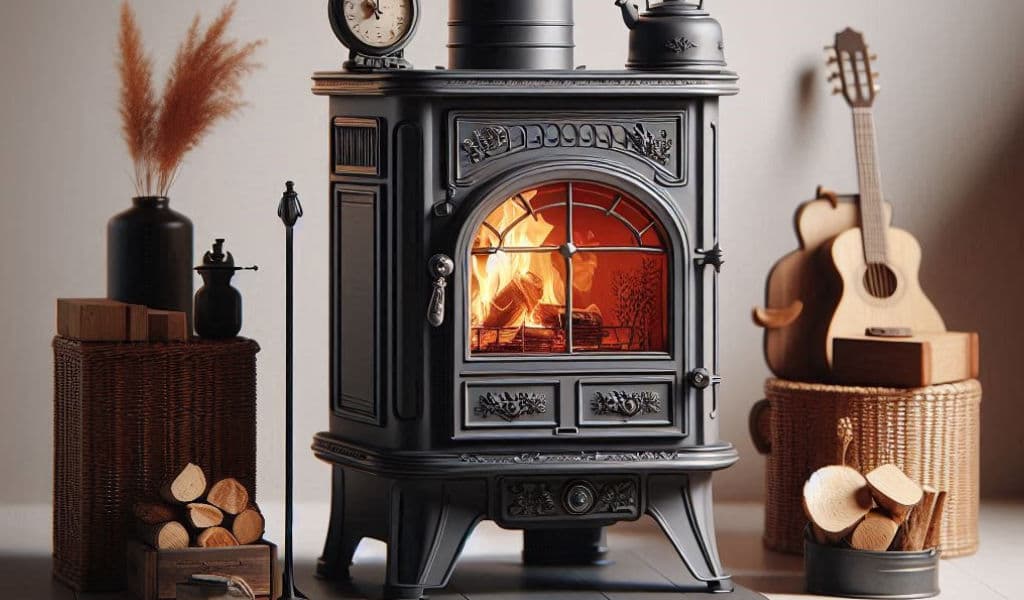
A small backup wood stove is often the heating choice for a seasonal cabin. It needs zero electricity. Works in any weather. Heats a small space fast. And there's something perfect about a wood fire crackling in a remote cabin on a cold evening.
If you don't visit for months, the panels keep making power for nothing. Some cabin owners run the surplus into a "dump load", which is just a water heater that heats the cabin's water tank using extra solar. Free hot water for when you do show up.
Tiny House On Wheels
A tiny house on a trailer adds one more constraint. Weight.
Every kilogram of battery, every solar panel, every fixture, has to ride on the trailer. The total has to stay under whatever the tow vehicle can handle. Usually under 4,500 kilograms.
So the system shrinks accordingly. Smaller battery (maybe 5 to 10 kilowatt-hours). Fewer panels (maybe 1,500 to 2,500 watts). A lighter inverter.
The roof real estate is also smaller. A 7-meter-long tiny house roof holds maybe 8 panels of 350 watts each, which is about 2,800 watts of solar. That's enough for a comfortable life, but not enough to run a heat pump in winter.
And the panels need to be mounted strongly. A tiny house can hit highway speeds, and 100 kilometer-an-hour wind across loose panels will tear them off.
For all the constraints, a tiny house on wheels is a working off-grid home that fits in a parking space and can move whenever you want. People have lived in them for 10+ years.
A Real Setup
Picture a 20 square meter tiny house, one person living there, parked in a forest in Oregon.
Solar: ten 300-watt panels on the roof, 3,000 watts total.
Battery: a 15 kilowatt-hour LiFePO4 setup, three batteries about the size of a small suitcase each.
Inverter: a 3,000 watt unit that handles everything except cooking, which runs on propane.
Heating: a tiny wood stove rated for 200 to 600 square feet. About a quarter-cord of wood per winter, easy to gather from fallen branches in the surrounding forest.
Water: a small rainwater catchment off the roof, into a 1,000 liter tank. Refilled by truck once or twice a year in dry summers.
Total daily power use: around 4 kilowatt-hours. The system handles it without ever needing a generator, even through Oregon's notoriously cloudy winters.
Total cost of the off-grid gear: about 9,000 dollars in 2022. Installed by the owner over a few weekends.
Annual cost to operate: maybe 200 dollars for propane and the occasional water truck. No power bill. No grid hookup fee. No mortgage on the house itself.
Why This Path Works So Well
A tiny house or small cabin combines two things that magnify each other.
A small power need (because the house is small and the lifestyle is simple).
A small system to meet that need (because power needs are small).
The result is an off-grid setup that costs less than most people's car, fits in a tool shed, and provides everything a person actually needs.
You don't have to be a survivalist. You don't have to give up modern life. You can have lights, hot water, a fridge, internet, a sound system, a computer for work, all running quietly on sunshine.
The tiny house movement has shown that millions of people are willing to trade square meters for freedom. And the off-grid systems that make those small homes self-sufficient have gotten dramatically cheaper in the last decade.
For the first time in history, you can buy a complete off-grid power system for less than the average yearly utility bill. And it'll keep running for 25 years.