

Why September Starts Underground
On 22 or 23 September, depending on where you live, comes the autumn equinox. Day and night are almost the same length again, and from here the nights win.
A solar panel in Amsterdam makes about 3.2 kilowatt-hours a day for every kilowatt of panels this month, down from 4.1 in July. In Ohio it's about 3.9 a day.
The garden is still busy, though, and some of the best food is hiding in the soil. So this September homestead checklist starts with food, then works through energy, the house, water and waste. Southern readers: your version of this month is March.
This month in three jobs: cure the potatoes, stack the wood, save the seeds.
Harvest The Garden
Step 1: Dig The Potatoes At The Right Time
Potatoes tell you when they're ready. The green tops turn yellow, flop over and die.
Nebraska Extension says to wait until the vines have been dead for about two weeks. Then rub a potato with your thumb.
If the skin stays put, it's ready to dig. If it peels off easily, give them a little longer.
Dig carefully with a fork, starting well away from the plant. Every stab wound is a door for rot.
So what to plant in September? An empty garden bed can still grow quick vegetables. The University of Maryland's calendar, built for a first frost in late October, sows spinach and bok choy in early September, radishes until mid-month and arugula all month.
A bed you won't need before spring can grow a green manure, a crop that feeds the soil instead of you. The RHS, Britain's big gardening charity, sows winter tares or grazing rye now. Their roots protect the soil from heavy rain, and in spring you dig them in as free organic matter.
Step 2: Cure The Potatoes Before Storing
Fresh-dug potatoes need a short rest before the cellar. Gardeners call it "curing". That's just a fancy word for letting the skin toughen and small cuts heal, like a scab forming.
Iowa State University says to cure them for about two weeks at 10 to 16 °C, somewhere dark and fairly damp. After that, store them cold, around 4 °C, still in the dark.
Step 3: Cure The Winter Squash Too
Harvest pumpkins and winter squash before cold autumn weather damages them. The University of Vermont says a ripe winter squash has a solid colour and skin your thumbnail can't dent. Cut them with a short piece of stem left on.
They cure the opposite way to potatoes: warm. The University of Vermont says to keep them at 27 to 29 °C for 5 to 10 days, though acorn squash should skip this step.
Then store them at 10 to 13 °C, cooler than a room but warmer than a cellar. Too cold, and they spoil.
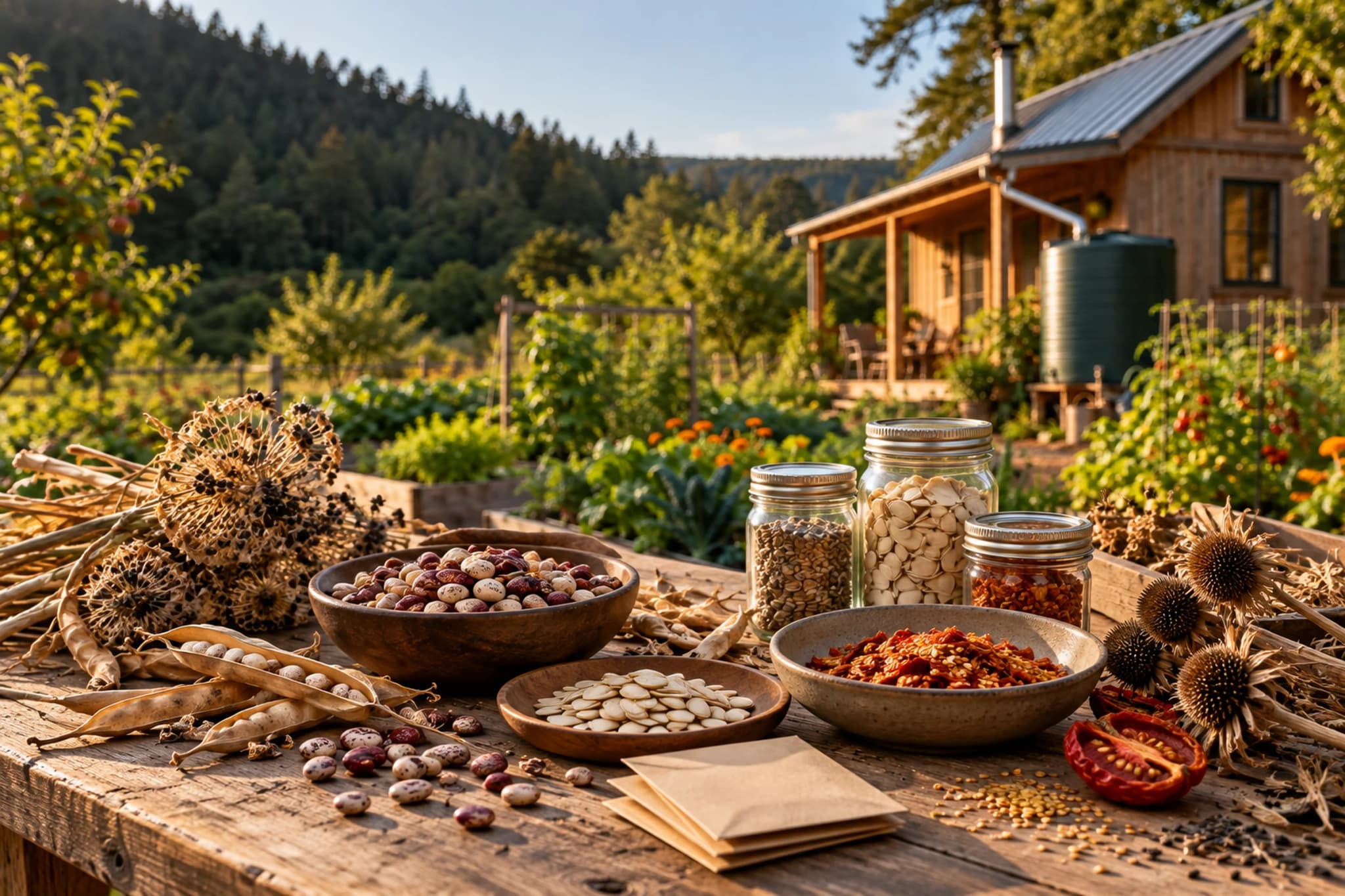
Step 4: Save Seeds From Your Best Tomatoes
Pick the tastiest fruit from the healthiest, strongest plant in the garden and save its seeds. Each seed sits in a slippery jelly that stops it sprouting.
So you let that jelly rot off. Scoop the seeds and juice into a jar with a little water and leave it for 2 to 3 days, stirring now and then. Then rinse the seeds, spread them on a plate and let them dry for one to three weeks.
One catch: seeds from F1 hybrid plants won't grow true. The University of Vermont says they don't produce plants like the parent, so save from open-pollinated kinds. Our guide to the off-grid garden explains the difference.
Still got green fruit when the nights turn cold? The RHS says to pick it and let it ripen somewhere warm and dark, or in a drawer with a banana.
Stack The Wood For Winter
Step 5: Stack The Firewood The Right Way
A woodpile isn't just storage. It's a drying machine powered by sun and wind.
The UK environment department says to stack logs off the ground, on wooden bearers, in a sunny, windy spot. Put a waterproof cover on top, but leave the sides open so the wind can blow through.
The EPA says to keep the pile away from buildings. Softwood needs at least 6 months to dry, and hardwood at least 12. So the wood you split in January has had the spring and summer, while anything you cut or buy now is mainly for next winter.
Stack both the same way. October's list checks this winter's wood with a moisture meter. Our guide to storing firewood shows the classic stack.
Step 6: Get The Power Ready For Darker Months
The drop from here is steep. In Amsterdam, that 3.2 a day falls to 2.1 in October and 1.3 in November.
Top lead-acid batteries up fully while the late summer sun can still do it, and check the battery connections. Next month the generator gets its first run of the season. Our guide to off-grid power shows how sun, wind and a generator share the work through winter.
Get The House Ready To Heat
Step 7: Test Every Alarm Before The Stove Is Lit
Before the first fire of autumn, test every smoke alarm and carbon monoxide alarm. Carbon monoxide is a gas you can't see or smell that comes from anything that burns.
The US Consumer Product Safety Commission says to test alarms every month. It also says to replace carbon monoxide alarms about every five years.
Some makers allow longer, so check the date on the back. Our guide to off-grid heating covers the rest of the fire safety basics.
Clean The Rain System Before The Autumn Leaves Fall
Step 8: Check The Screens And First Flush
Autumn leaves are about to fill the gutters. Texas water experts say to clean the roof, gutters and screens in spring and again in autumn, after the leaves drop.
For now, check the leaf screens and empty the first-flush diverter, the pipe that catches the dirtiest rain off the roof. The same experts say to check the first flush every month. Our guide to rainwater harvesting explains how it keeps the tank clean.
Keep Blighted Plants Out Of The Compost
Step 9: Bin The Blighted Plants
Late summer is blight season, especially after warm, wet weather. Blight is a disease that turns potato and tomato leaves brown and mushy and makes the fruit rot.
The RHS says not to put blighted plants on the compost heap. The spores, tiny seed-like specks that spread the disease, may survive a home heap. Bury them deep, take them to the council green waste or burn them.
Step 10: Compost The Healthy Leftovers
Everything else from the garden can go on the heap. Bean plants and pulled-up healthy vegetables are perfect compost.
Chop the big stalks small, so they rot faster, and mix soft green parts with dry, woody ones. Our guide to home composting shows how to balance greens and browns.
By October the potatoes are cured, the wood is stacked and the seed jars are labelled. The cellar is filling up, one cured potato at a time.
Sources
- US Naval Observatory, Earth's seasons 2026
- PVGIS, solar output for Amsterdam
- PVGIS, solar output for Ohio
- Nebraska Extension, Potatoes
- Iowa State University, Storing potatoes
- University of Maryland, Vegetable planting calendar
- RHS, Green manures
- University of Vermont, Pumpkin and squash storage
- University of Georgia, Seed saving basics
- University of Vermont, Saving seeds
- RHS, Growing tomatoes
- Defra, Seasoning wood
- US EPA, Dry wood card
- US CPSC, Age of alarms
- Texas Parks and Wildlife, Rainwater system maintenance
- RHS, Potato and tomato blight
Hard Words
| Term | What it means |
|---|---|
| Equinox | The two days a year when day and night are almost the same length, in March and September. |
| Kilowatt-hour | An amount of electricity: about what a small heater uses in one hour. |
| Curing | Resting harvested crops so their skin toughens and small cuts heal before storage. |
| F1 hybrid | Seeds from two different parent plants. Their own seeds won't grow true. |
| Open-pollinated | Seeds that grow into plants just like their parents, so you can save and resow them. |
| Bearers | Wooden beams or pallets that lift a woodpile off the damp ground. |
| Carbon monoxide | A gas from engines and fires that you can't see or smell. Breathing it can kill. |
| First-flush diverter | A pipe that catches the first dirty rain off a roof so it doesn't reach the tank. |
| Green manure | A crop you grow to protect and feed the soil, then dig in instead of eating. |
| Blight | A disease that rots potato and tomato plants. Its spores spread on the wind. |
Common Questions
What garden jobs are there in September?
Dig and cure potatoes, harvest and cure squash, save seeds and ripen the last green fruit indoors. Off-grid, stack firewood, top up the batteries, test the alarms and check gutter screens. Southern hemisphere homesteads do this list in March.
What should I plant in September?
Quick vegetables such as spinach, arugula, bok choy and radishes, where the first frost comes in late October. Beds left empty over winter can get a green manure such as winter tares or grazing rye.
When should I dig up potatoes?
About two weeks after the plants die back, once the skin no longer rubs off. Then cure them for two weeks somewhere dark at 10 to 16 °C.
How should firewood be stacked to dry?
Off the ground, in sun and wind, covered on top with the sides open. Softwood needs at least 6 months to dry and hardwood at least 12.
Can I compost tomato plants with blight?
No. The RHS says the spores may survive a home heap. Bury them deep, take them to council green waste or burn them.