

Why October Starts With The Sun
In June, a solar panel in Amsterdam makes about 4.2 kilowatt-hours a day for every kilowatt of panels. In October that same panel makes about 2.1 a day. By December it's down to 0.9, roughly a day of fridge use.
So October is the month your roof quietly loses half its power. Nothing is broken. The sun just sits lower and leaves earlier every day.
Farther south the drop is gentler. In Ohio, panels still make about three quarters of their June power in October, and close to half in December.
That's why this October homestead checklist starts with energy, then works through food, water, the house and the compost heap. Southern readers: your version of this month is April.
This month in three jobs: store the harvest, sweep the chimney, seal the gaps.
Keep The Power And The Fire Ready For Winter
Step 1: Get The Battery Ready For The Cold
Less sun means the battery works harder. And cold changes how batteries behave.
A lithium iron phosphate battery (people shorten it to LiFePO4) can run your house in freezing weather, but a standard one must never be charged below 0 °C.
Charging it colder than that makes a thin layer of metal grow inside the cells. Scientists call it "lithium plating". That's just a fancy name for damage that takes away some of the battery's storage for good.
Some batteries stop charging on their own below about 5 °C, and some have little heaters built in. Check the datasheet for your own battery and keep it somewhere that stays above freezing.
Old-style lead-acid batteries have a different weak spot: they can freeze.
A full one only freezes at about -69 °C, colder than almost anywhere people live. One that's down to 20% can freeze at about -7 °C, and a frozen battery is ruined.
So the rule for lead-acid in winter is simple: keep it full.
Step 2: Start The Generator Before You Need It
The generator is the backup for the grey weeks. Start it now, before you need it.
Old fuel causes trouble: Honda warns that petrol can quickly go stale and cause starting problems. Add a fuel stabilizer when you fill the can, but it can't fix fuel that has already gone stale.
One safety rule never bends. A generator makes carbon monoxide, a gas you can't see or smell that can kill.
The CDC says never run one indoors or in a garage, even with the doors and windows open, and keep it more than 6 metres (20 feet) from windows, doors and vents. That's about the length of a school bus.
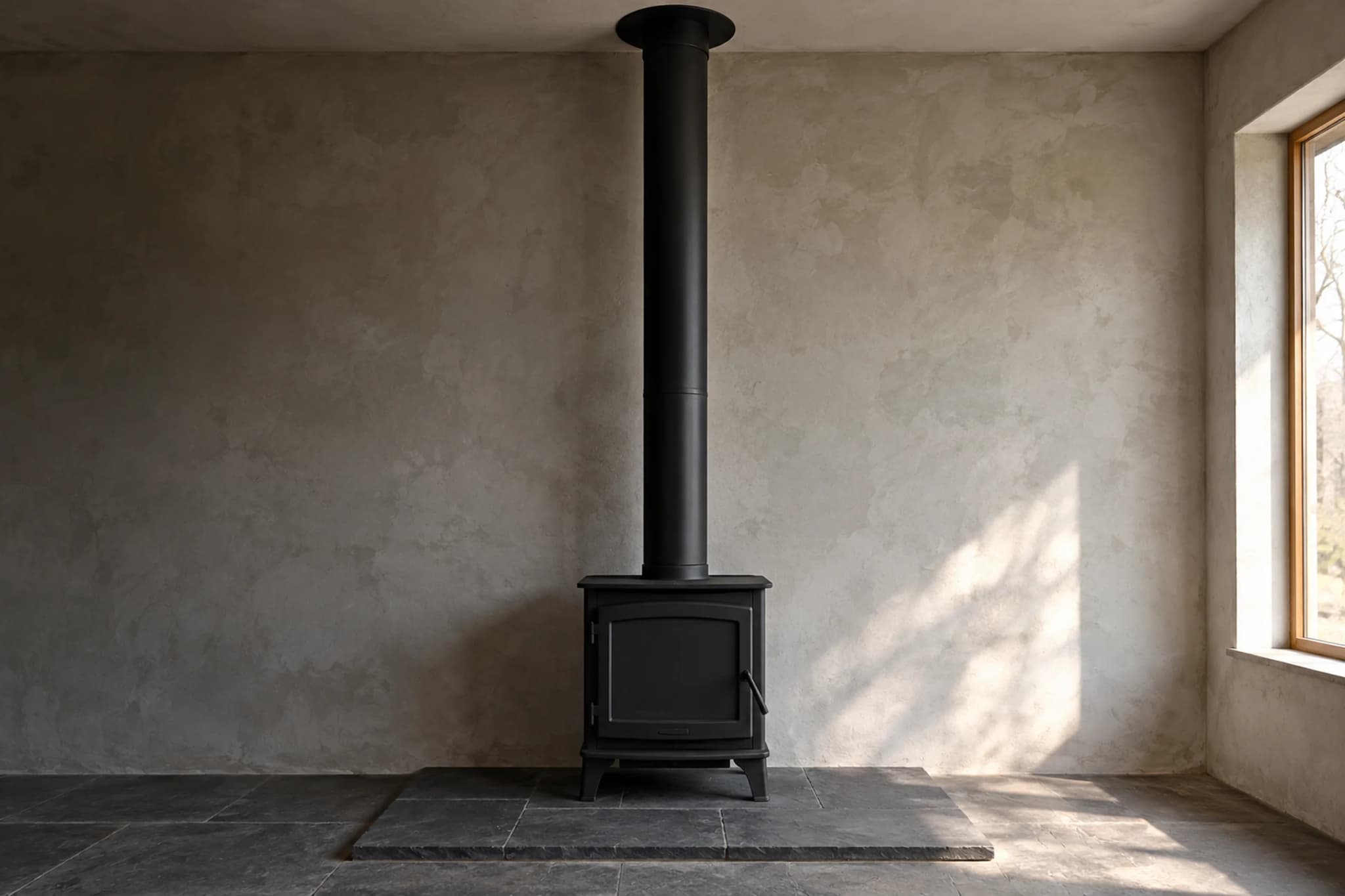
Step 3: Sweep The Chimney Before The First Big Fires
When wood burns, the smoke leaves a sticky black coating inside the chimney. It's called creosote, and it can catch fire.
A chimney fire burns inside the pipe, out of sight, and it can spread to the house. That's why chimney experts in the US follow one rule: inspect it at least once a year and clean it when it needs it.
In the UK, HETAS, the group that trains stove fitters, says to sweep at least twice a year if you burn wood. Smokeless fuel needs at least once a year.
October is the moment, before the cold weather sets in. The stove hasn't worked hard yet, and a sweep has more free time now than in December. Our guide to chimney requirements explains what a safe chimney needs.
Step 4: Check That The Firewood Is Dry
Dry firewood makes less creosote too. Wood burns best when less than 20% of it is water.
In England, firewood sold in amounts under 2 cubic metres must meet that line by law. A cheap moisture meter tells you in a second, like a thermometer for wood.
Garden Jobs: Store The Harvest And Plant For Next Year
Step 5: Store The Harvest
October is the last big harvest month in the garden, and keeping it all good is half the work.
A root cellar is a cool, damp room, often under the ground. It works like a big fridge that runs on the earth's own coolness.
Pick apples regularly as they ripen. They keep best just above freezing, at 0 to 4 °C, with damp air, and the RHS, Britain's big gardening charity, says to check stored fruit regularly and remove any that start to go bad. But keep them far from your potatoes. Apples give off a gas called ethylene, a natural ripening signal, and it makes potatoes sprout early.
Potatoes like it around 4 °C. Much colder turns them sweet, and warmer makes them sprout. The rest of the summer can go into jars, the freezer or the drying rack, and our guide to food preservation shows how.
Step 6: Store The Seeds You Saved
The seeds you saved in September need a home too. Keep them dark, cool and above all dry. Tomato seeds can last up to 4 years, and bean seeds up to 3.
Step 7: Plant The Garlic
Then plant something for next summer. So what to plant in October? Not much, but the few crops that go in now get a long head start.
Garlic is the classic. It goes in about three weeks before the ground freezes, so the cloves grow roots but no leaves yet. The University of Maryland's calendar, built for a first frost around late October, plants garlic cloves from mid-October to mid-November. Push each clove about 5 cm deep, pointy end up, and forget it until spring.
In milder places, broad beans can go in too. The RHS says October and November sowing works in mild areas or very sheltered gardens, and names 'Aquadulce Claudia' as a good bean for getting through winter. Sow the seeds 5 to 7.5 cm deep and 15 to 23 cm apart.
Overwintering onion sets, baby onions bred for the cold, can go in this autumn too, unless your soil is heavy and stays soggy in winter.
Thinking about fruit trees? The RHS says to plant them while they sleep, from autumn to spring, so October is the month to choose one and get the spot ready. Our guide to growing your own food off-grid helps you decide what's worth the space.
Step 8: Sow A Cover Crop On Empty Beds
Empty garden beds can get a cover crop, plants you grow only to protect the soil through the cold season. The RHS says grazing rye and winter field beans can both be sown until November. Rye's roots hold the soil like a net and catch nutrients for next year's plants before the autumn rain washes them away.
Keep The Water Safe From The First Frost
Water does something strange when it freezes. It gets bigger, by about 9%.
That doesn't sound like much. But ice trapped inside a pipe or a hose has nowhere to go, so it pushes until something splits.
Step 9: Drain The Hoses And Rain Barrels
Before the first hard frost, disconnect garden hoses, drain them and roll them up. Rain barrels come off the downpipe too: empty them and store them upside down.
Once most of the leaves are down, clean the gutters and leaf screens. That's the autumn half of the twice-a-year clean that March started and September planned.
Step 10: Make A Plan For The Big Tank
If you collect rainwater for the house, the big tank needs a winter plan. Buried tanks and tanks inside a warm space are safe, but a small tank in the open can crack on frosty nights.
Keep The Warmth Inside The House
Step 11: Seal The Gaps Before The Cold Gets In
A house loses heat through every crack, around doors, windows and pipes. You can feel it as a cold breeze on your ankles.
ENERGY STAR, a US government energy scheme, says sealing those gaps and adding insulation saves homes about 15% on heating and cooling. Off-grid, that's 15% less wood to split or battery to drain.
Start with the gaps that never move: a tube of sealant around window frames and where pipes go through walls costs little. Next month's list deals with the doors and windows that open. Our guide to insulation shows where the rest of the heat slips out.
Clear Fallen Leaves For Compost And Mulch
Step 12: Turn Fallen Leaves Into Compost
October drops a whole year of free soil food on your land. Leaves.
Clear the ones under apple and pear trees first. The RHS says getting rid of them, and of infected fruit, reduces scab, a fungus that spots leaves and fruit. Remove rotten fruit still hanging on the branches too, because the brown rot fungus spends the winter inside it and sends out fresh spores in spring.
In a compost heap, leaves are what gardeners call "browns". That's the dry, carbon-rich part that balances wet "greens" like grass and kitchen scraps.
A good heap has about two to three times as much brown as green, and leaves are perfect for it. Our guide to home composting shows how to build one.
Step 13: Pile The Rest Up For Leaf Mould
Or pile them up on their own and wait. Most leaves take about two years to turn into leaf mould. Even younger, half-rotted leaf mould makes a mulch to spread on the garden beds, and after two years it's fine enough to start seeds in.
Next month the hoses are drained, the cellar is full, and the stove is lit. November will be easy, because October did the work.
Sources
- PVGIS, solar output for Amsterdam
- PVGIS, solar output for Ohio
- REDARC, Charging lithium below 0 °C (archived)
- Trojan Battery, Storage guide
- Honda, Generator fuel
- CDC, Carbon monoxide
- CSIA, Preventing chimney fires
- HETAS, Chimney sweeping
- HETAS, Ready to Burn
- US EPA, Burn Wise
- Missouri Extension, Storing produce
- Iowa State Extension, Potatoes
- RHS, Apples: grow your own
- UC Master Gardeners, Seed saving (archived)
- UVM Extension, Saving seeds from vegetable crops
- Penn State Extension, Fall garlic
- University of Maryland, Planting calendar
- RHS, Broad beans: grow your own
- RHS, Onions: grow your own
- RHS, Green manures
- USGS, Water density (archived)
- West Virginia DEP, Rain barrels
- Texas Parks and Wildlife, Rainwater upkeep
- ENERGY STAR, Seal and insulate
- RHS, Apple and pear scab
- RHS, Brown rot
- US EPA, Composting at home
- RHS, Leaf mould
Hard Words
| Term | What it means |
|---|---|
| Kilowatt-hour | An amount of electricity: about what a small heater uses in one hour. |
| LiFePO4 | A kind of lithium battery, common in off-grid homes, that must not be charged below freezing. |
| Lithium plating | Damage inside a lithium battery from charging it too cold. It takes away storage for good. |
| Lead-acid battery | An older battery type with liquid inside. It can freeze when it's nearly empty. |
| Carbon monoxide | A gas from engines and fires that you can't see or smell. Breathing it can kill. |
| Creosote | The sticky black coating smoke leaves inside a chimney. It can catch fire. |
| Root cellar | A cool, damp room, often underground, for storing fruit and vegetables over winter. |
| Ethylene | A gas that ripening fruit gives off. It makes nearby vegetables age faster. |
| Cover crop | Plants grown to protect and feed the soil while a bed would otherwise be empty. |
| Onion set | A baby onion bulb, planted instead of seed for a head start. |
| Scab | A fungus that spots apple and pear leaves and fruit. |
| Leaf mould | Fallen leaves that have rotted for a year or two into a soft, crumbly mulch. |
Common Questions
What garden jobs are there in October?
Store the harvest and saved seeds, plant garlic, sow a cover crop and clear fallen leaves into compost or leaf mould. Around the homestead: batteries, generator, chimney sweep, hoses, rain barrels and gaps. Southern hemisphere homesteads do this list in April.
What should I plant in October?
Garlic first, about three weeks before the ground freezes. In mild or sheltered gardens, the RHS also sows broad beans in October and plants overwintering onion sets in autumn. Empty beds can take grazing rye or winter field beans until November.
How often should a chimney be swept?
At least once a year, says CSIA, the US chimney sweep institute. HETAS in the UK says twice a year if you burn wood.
How should I store potatoes and apples over winter?
Separately. Apples like 0 to 4 °C with damp air, around 80 to 90% humidity, while potatoes like it around 4 °C. Apples give off ethylene gas, which makes potatoes sprout early.