

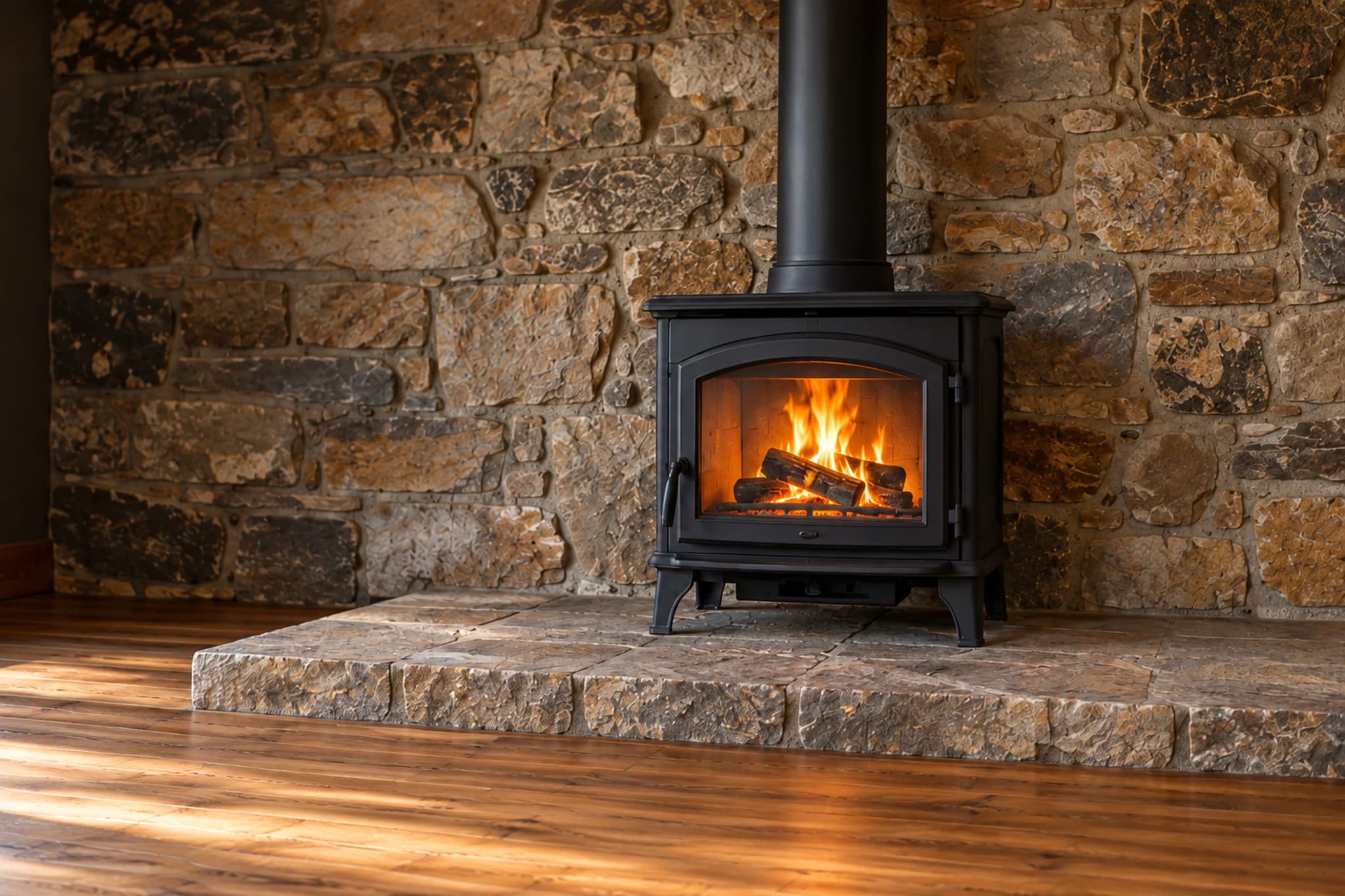
Why December Starts With The Stove
On 21 December comes the winter solstice, the shortest day of the year. In Amsterdam the sun is up for only about 7 hours and 41 minutes. In Columbus, Ohio, it's about 9 hours and 20 minutes.
A solar panel in Amsterdam makes about 0.9 kilowatt-hours a day for every kilowatt of panels this month, the lowest of the year and less than a quarter of June. That's roughly a day of fridge use. In Ohio it's about 1.9 a day.
So the stove does the heavy lifting now. That's why this December homestead checklist starts with energy, then works through food, the house, water and waste. Southern readers: your version of this month is June.
This month in three jobs: burn the stove hot, open old jars first, write down the year.
Keep The Fire Clean And The Battery Alive Through Winter
Step 1: Burn Hot, Not Slow
On a cold winter night, it's tempting to turn the stove right down, so a few logs smoulder until morning. That's the worst way to burn wood.
The EPA says to build hot fires, because a smouldering fire is neither safe nor efficient. HETAS, the UK group that trains stove fitters, warns that slumbering a stove overnight builds up creosote, the sticky black coating that can catch fire in a chimney. It can also let carbon monoxide into the room.
Dry wood is half the trick. Wood burns best when less than 20% of it is water. Our guide to how wood stoves work explains why a hot, bright fire burns cleaner.
Step 2: Light The Fire From The Top
Most people build a fire with paper at the bottom and big logs on top. HETAS suggests turning it upside down.
Lay two logs side by side, put a criss-cross layer of kindling on top, and tuck firelighters into the gaps. Light it from the top. The fire burns down slowly, like a candle, with less smoke while the stove warms up.
Step 3: Let The Generator Carry The Grey Weeks
At this time of year, some days the panels hardly charge the battery at all. Keep lead-acid batteries topped up with the generator instead of leaving them half full. A battery that sits low freezes more easily, and Trojan, a battery maker, says freezing usually ruins it for good.
Keep the generator outside, more than 6 metres from windows, doors and vents, every single time. Its exhaust is full of carbon monoxide. Our generator runtime calculator shows how long a tank of fuel will last.
Garden Jobs: Remove Rot From Stored Fruit And Vegetables
Step 4: Check The Stores Every Week
Somewhere in the cellar, one apple or potato is starting to rot. Left alone, it spoils the ones around it.
Wisconsin Extension puts it plainly: one bad apple will spoil the whole group. So sort through your stored fruit and vegetables every week and take out anything soft, mouldy or sprouting. Eat the slightly bruised ones first.
The garden is a winter store cupboard too. The RHS says parsnips are hardy enough to stay in the ground and be harvested as you need them, and a heavy frost makes them sweeter. Ground locked by frost is hard to dig, though, so it suggests a straw mulch over the row to protect the soil, or keeping a few lifted roots in the cellar.
Step 5: Open The Oldest Jars First
Home-canned food keeps best when it's eaten within about a year, so reach for the oldest jars on the shelf.
Before opening any jar, look at it. Don't open or taste a jar that leaks, bulges or spurts.
If the jar is still sealed, wear gloves, put it in a heavy plastic bag, close it and throw it out where children and animals can't reach it. A jar that leaks or is already open has to be boiled for 30 minutes before it goes in the bin, so follow the NCHFP steps for spoiled jars. Wipe any spill with a bleach solution and wash your hands.
Our guide to food preservation explains why.
Indoor Warmth, Safety And Rest
Step 6: Keep A CO Alarm Near The Stove
Carbon monoxide is a gas you can't see or smell, and every stove and lamp that burns fuel can make it. Stoves run longest now.
In England, building rules say any new or replacement wood stove must have a carbon monoxide alarm in the same room. The CDC adds one near every sleeping area.
Test them now, and check the date on the back. Our guide to off-grid heating covers the other fire safety basics.
Step 7: Rest, And Write Down The Year
The last of this month's three jobs is writing, and the rest that comes with it is a real job too. The garden is dormant until spring, the wood is stacked and the cellar is full.
Grab a notebook between Christmas and New Year and write down the year while you remember it. Which plants did well, what ran out, which week the battery struggled. In January, that notebook becomes next year's garden plan.
Keep The Water Flowing Through The Frost
Step 8: Keep The Pipes From Freezing
The outdoor taps were drained in November. Indoors, the first hard frosts call for January's routine early: on the coldest nights, let a little hot and cold water trickle and keep the house at 13 °C or warmer. Never thaw a frozen pipe with an open flame.
Step 9: Keep A Few Days Of Water Indoors
If the pump freezes in a winter storm or the power runs short, the taps go dry. Ready.gov says to keep at least about 4 litres per person per day, for several days.
A few full jugs in a cupboard are enough. Some off-grid homes also keep a hand pump on the well, which needs no power at all, and our guide to off-grid water pumps explains how they work.
Put Wood Ash To Work Around The Garden
Step 10: Store Ashes In A Metal Bucket
Ash from the stove can look cold and still hide glowing coals. Tipped into a plastic bin or a cardboard box, it can start a fire hours later.
The US Fire Administration says to put ashes in a metal container with a lid and keep it at least 3 metres from the house. That's about four big grown-up steps.
Step 11: Use A Little Ash In The Garden
Wood ash is a mild garden helper. Like garden lime, it makes acidic soil less sour, and it does it faster. It also brings potassium, a mineral plants feed on.
The University of New Hampshire suggests no more than about 1 kg per 10 square metres a year, because soil pushed too far the other way can damage plants. Spread it only where a soil test says the soil needs it, and keep it away from blueberries and hollies, which love sour soil.
A small scattering can go in the compost too, says Oregon State University. Our guide to home composting shows what else belongs in the heap.
The stove is lit, the pantry is full and the notebook is open. Now you finally get to enjoy the work of the whole year.
Sources
- USNO, Amsterdam daylight
- USNO, Columbus daylight
- PVGIS, Amsterdam solar
- PVGIS, Ohio solar
- EPA, Burn Wise
- HETAS, Overnight burning
- HETAS, Top-down fire
- Trojan, Battery storage
- CDC, Carbon monoxide
- Wisconsin Extension, Storing produce
- Missouri Extension, Storing produce
- RHS, Parsnips
- NCHFP, Spoiled canned food
- NCHFP, Storing home canned foods
- CDC, Home-canned foods
- Approved Document J
- Illinois Extension, Frozen pipes
- Ready.gov, Water
- USFA, Wood stove safety
- UNH Extension, Wood ashes
- UVM Extension, Wood ashes
- Oregon State, Ash in compost
- NC State Extension, Microgreens
Hard Words
| Term | What it means |
|---|---|
| Solstice | The shortest day of the year (in December) or the longest (in June). |
| Kilowatt-hour | An amount of electricity: about what a small heater uses in one hour. |
| Smouldering | Burning slowly with lots of smoke and little flame. |
| Creosote | The sticky black coating smoke leaves inside a chimney. It can catch fire. |
| Carbon monoxide | A gas from engines and fires that you can't see or smell. Breathing it can kill. |
| Kindling | Small, thin sticks that catch fire easily and light the bigger logs. |
| Lead-acid battery | An older battery type with liquid inside. It can freeze when it's nearly empty. |
| Home canning | Sealing food in jars and heating it so it keeps on the shelf. |
| Soil test | A lab check of soil that tells you how sour it is and what it needs. |
Common Questions
What garden jobs are there in December?
Mostly checking and protecting. Sort stored fruit and vegetables every week, harvest parsnips as you need them, cover the rows with straw mulch to protect them from hard frost, spread a little wood ash where a soil test says the soil is sour, and write down which plants did well this year.
What should I plant in December?
Outside in cold places, almost nothing. Indoors, try microgreens, tiny plants you eat as seedlings: NC State Extension says radish, broccoli, pea or sunflower seeds on a sunny windowsill are usually ready in 7 to 21 days, and grow lights help when daylight is short. It's a fresh harvest while you wait for spring.
What should be on a December homestead checklist?
Hot, clean fires, topped-up batteries, weekly checks of stored food, old jars before new ones, tested carbon monoxide alarms, warm pipes, jugs for a few dry days, ashes in a metal bucket and some rest. Southern hemisphere homesteads do this list in June.
Is it bad to keep a wood stove burning low overnight?
Yes, if it means letting it smoulder. That builds creosote in the chimney and can let carbon monoxide into the room, so burn dry wood in hotter, shorter fires instead.
How do I stop stored apples and potatoes from rotting?
Keep them cool, check them every week and remove anything soft straight away. Store apples away from potatoes, because apples give off a gas that makes potatoes sprout.
How should I dispose of wood stove ashes?
In a metal container with a tight lid, outside and at least 3 metres from the house. Never use a plastic bin, paper bag or cardboard box.
Can I put wood ash on my garden?
Yes, in small amounts and ideally after a soil test. It makes sour soil less sour, so keep it away from blueberries and other plants that like acid soil.