

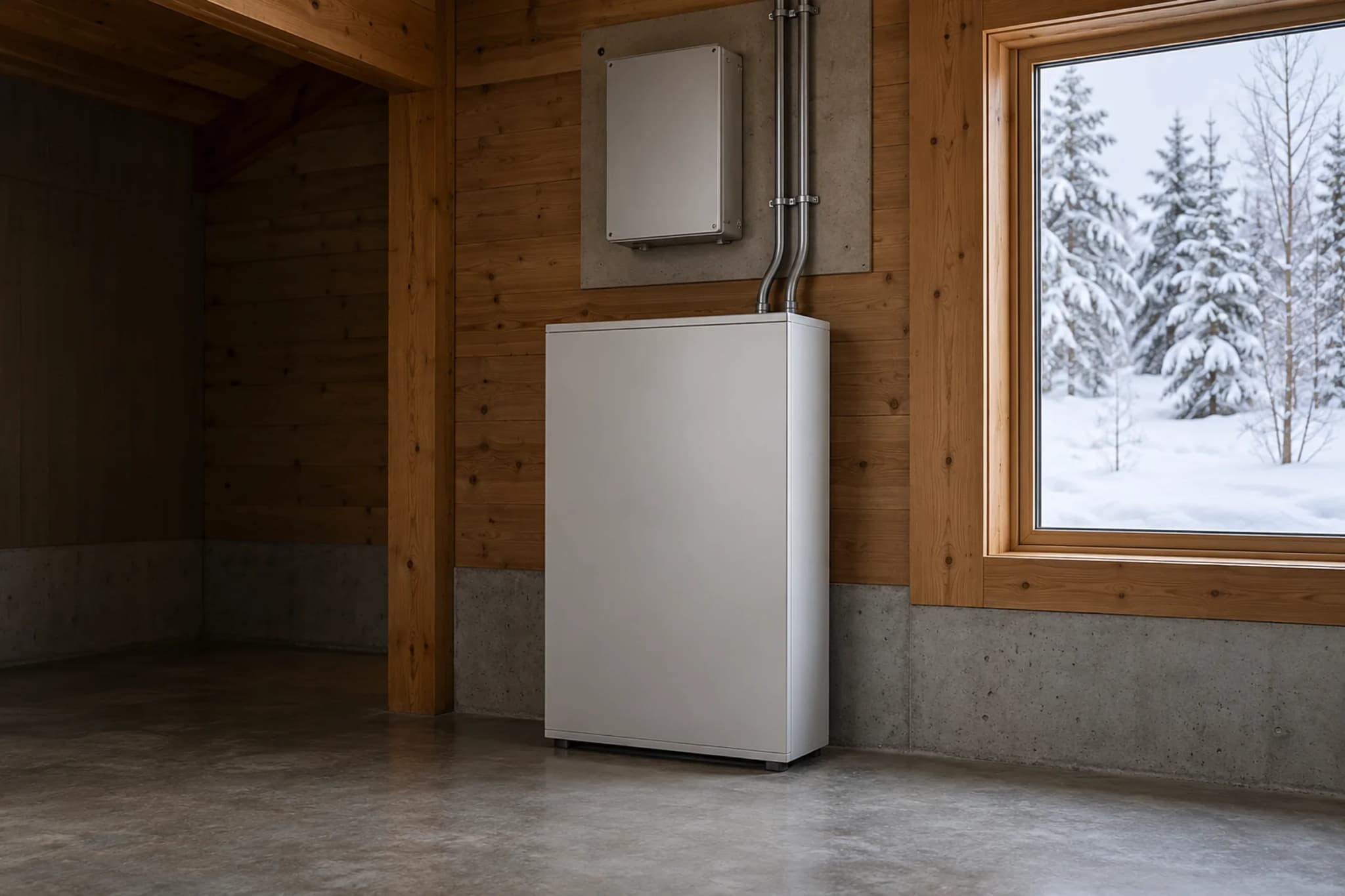
Why Deep Winter Starts With The Batteries
In January, a solar panel in Amsterdam makes about 1.1 kilowatt-hours a day for every kilowatt of panels. In June it makes about 4.2. That's about a quarter, roughly a day of fridge use.
December was even darker, at about 0.9 a day. So the worst is over, but only just. The days are getting longer by a few minutes at a time.
Farther south the dip is softer. In Ohio, a panel still makes about 2.3 kilowatt-hours a day in January, about half its June power.
That's why this January homestead checklist starts with energy and the batteries, then works through the house, water, food and the compost heap. Southern readers: your version of this month is July.
This month in three jobs: sketch the garden, split the wood, guard the pipes.
Keep The Power On Through The Darkest Weeks
Step 1: Watch The Batteries
A battery right now is like a piggy bank in a lean month. Less goes in, and the same amount goes out.
Old-style lead-acid batteries hate being left half full. Trojan, a big battery maker, warns against running them in a "partial state of charge" for long stretches.
When they sit like that, hard crystals slowly grow on the plates inside. Scientists call it "sulfation". That's just a fancy word for crust that steals some of the battery's storage.
An empty battery is also in danger from the cold. A lead-acid battery that's down to 20% can freeze at about -7 °C, while a full one only freezes at about -69 °C. So in grey weather, top it up with the generator instead of waiting for the sun.
Lithium batteries have their own rule. Many must not be charged below freezing, and some, like Victron's, only take a charge at 5 °C or warmer. Our guide to off-grid life in cold climates explains why batteries hate the cold.
Step 2: Let Snow Slide Off The Panels
Snow on a tilted panel usually slides off on its own, like a sledge on a hill. The steeper the panel, the faster it goes.
The US Department of Energy says clearing snow off panels is not recommended. If you really must, use a soft broom or brush. Shovels can damage the panels, and standing on one will damage it too.
Step 3: Split Next Winter's Wood
Wood that's just been cut is often half water. It needs to dry until less than 20% of it is moisture before it burns well.
That takes 6 to 12 months, and hardwoods like oak can need up to two years. So the wood you split today is for the next heating season, not this one.
Splitting helps a lot. More of the inside touches the air, so the damp escapes faster, like a wet towel dries faster spread out than rolled up.
Keep Damp And Mould Under Control
Step 4: Keep Damp Air In Check
A closed-up house in the cold months traps the steam from cooking, washing and breathing. Too much of it, and mould starts to grow.
The EPA says to keep indoor humidity below 60%, ideally between 30% and 50%. Humidity just means how much moisture is floating in the air. A cheap humidity meter tells you, and a fan or a window open for a few minutes helps.
Keep The Water Flowing In The Frost
Step 5: Keep The Pipes From Freezing
A frozen pipe can split, and you only find out when it thaws and starts spraying.
On the coldest nights, Illinois Extension says to let a little hot and cold trickle from the taps. Open the cupboard doors under sinks, so warm air reaches the pipes, and keep the house at 13 °C or warmer.
If a pipe does freeze, never thaw it with an open flame. That's how house fires start.
A well is built for the cold. A part called a pitless adapter lets the pipe leave the well deep underground, below the frost line, where the soil never freezes.
Garden Jobs: Crop Rotation, Seeds And Fruit Tree Pruning
Step 6: Plan The Garden On Paper
This is the quiet time in the garden, and the best one for thinking. Start with December's notebook: what grew well, what ran out and which plants got sick. Then grab paper and draw your beds.
Then rotate. That means growing each family of plants in a different bed every year. The RHS, Britain's big gardening charity, groups them into cabbage-family plants (gardeners call them "brassicas"), beans and peas, onions, potatoes and tomatoes, and roots.
Why move them around? The RHS says soil pests and diseases tend to attack the same plant family over and over. Clubroot in cabbages and white rot in onions are two common ones.
Move the family, and the bugs find an empty table. Another benefit: changing crops lowers the chance of the soil running short of one kind of food, and big-leaved crops like potatoes and squash shade out weeds for whatever comes next. Plants that stay put for years, like rhubarb and asparagus, sit outside the rotation.
Clemson University's garden experts say January is a great time for a soil test, so you can fix the soil before the growing season. It's simple: a lab looks at a little of your soil, and the results tell you what it's short of. Then you add only that, rather than guessing.
Now browse the seed catalogs with your plan in hand, including the vegetables and flowers you want for next summer's harvest. North Carolina State Extension's advice is to pick varieties with better insect and disease resistance. A resistant plant is like a kid who already had the chickenpox: the bug comes round, and nothing much happens.
Write your wish list now, and place the order in February, when you test last year's seeds first. Our guide to the off-grid garden helps you work out how much space you need.
Step 7: Prune The Apple And Pear Trees
Apple and pear trees are asleep now, with no leaves in the way. The RHS says to prune them between November and early March.
First, cut out any dead, diseased and damaged branches. If you see apple canker, a sunken, cracked wound on the bark, the RHS says to cut that growth out where you can.
Then thin the rest, but gently. Take out only about 10 to 20% of the canopy, the tree's crown of branches. Cut harder, and the tree answers with a mass of straight, leafy shoots called "watershoots" instead of fruit.
Keep the blades sharp and clean. The RHS warns that blunt tools leave tatty cuts and make the work harder, and Clemson adds that clean, sharp tools lower the risk of letting disease into the tree.
Want more trees in the orchard? Bare-root fruit trees, sold with no pot and no soil around the roots, are only on sale from late autumn to early spring while they sleep. The RHS says they're for planting straight away, in soil that drains well and doesn't stay soggy.
Feed The Compost And Protect The Beds
Step 8: Keep Feeding The Compost Heap
A compost heap slows right down in the cold, like a bear asleep in its den. Garden Organic, a UK charity for organic growing, says it doesn't stop for good, though.
Keep adding kitchen scraps and dry "browns" like leaves and cardboard. A thick layer of browns on top and a cover keep it warmer. Our guide to home composting shows how to get the mix right.
Step 9: Give The Christmas Tree A Second Life
If you had a Christmas tree, it still has one more job. Purdue University's garden experts say the thinner branches can be chopped into wood chips for flower, tree and shrub beds.
Bigger boughs make a blanket over newly planted perennials and small shrubs, and you lift them off in spring. Purdue adds that birds like an old tree as shelter, as long as you tie it down so the wind can't blow it away.
North Carolina State Extension calls this the ideal time to mulch beds anyway, so the tree is a free start.
By February the seed catalogs are marked up and the woodpile is growing. The whole year starts here, on paper and at the chopping block.
Sources
- PVGIS, EU Joint Research Centre, monthly solar output for Amsterdam
- Trojan Battery, frequently asked questions
- Trojan Battery, Deep Cycle Battery Storage Guide
- Rolls Battery, Battery sulfation
- Victron Energy, Lithium Battery Smart technical data
- US Department of Energy, Solar photovoltaic hardening for winter weather
- Penn State Extension, Heating with wood: an introduction
- University of Missouri Extension, Wood fuel for heating
- HETAS, How to season firewood
- EPA, A brief guide to mold, moisture and your home
- Illinois Extension, Frozen water pipes
- USGS, Groundwater wells
- RHS, Crop rotation
- RHS, Winter pruning apples and pears
- RHS, Growing apples
- Clemson Home and Garden Information Center, This month in your garden: January
- NC State Extension, January gardening tips
- Garden Organic, Winter composting tips
- Purdue University, Recycle your holiday greenery
Hard Words
| Term | What it means |
|---|---|
| Kilowatt-hour | An amount of electricity: about what a small heater uses in one hour. |
| Lead-acid battery | An older battery type with liquid inside. It can freeze when it's nearly empty. |
| Sulfation | Hard crystals that grow on the plates of a lead-acid battery left half charged. They steal storage. |
| LiFePO4 | A kind of lithium battery, common in off-grid homes, that must not be charged in the freezing cold. |
| Humidity | How much moisture is floating in the air as invisible vapour. |
| Pitless adapter | A fitting that lets the pipe leave a well underground, below the frost line. |
| Frost line | How deep the ground freezes in the cold months. Pipes below it stay safe. |
| Crop rotation | Growing each plant family in a different bed every year, so pests don't build up. |
| Brassicas | The cabbage family: cabbage, kale, broccoli, sprouts and their cousins. |
| Watershoots | Straight, leafy shoots a fruit tree throws up after it's pruned too hard. They rarely carry fruit. |
| Bare-root tree | A young tree sold while it sleeps, with no pot or soil around its roots. |
Common Questions
What garden jobs are there in January?
Plan the beds on paper with crop rotation, get a soil test, browse seed catalogs for disease-resistant varieties ready for the February order, prune apple and pear trees, plant bare-root fruit trees when the soil isn't soggy, keep feeding the compost and use the Christmas tree as mulch.
What should be on a January homestead checklist?
Energy, house, water, food and waste. Keep batteries charged, let snow slide off panels, split next winter's firewood, keep damp air in check, stop pipes from freezing, then do the garden jobs above. Southern hemisphere homesteads do the same list in July.
What should I plant in January?
In cold places, very little goes outside until the growing season starts. Bare-root fruit trees are the main thing, since they're only sold while dormant, from late autumn to early spring. In warm places like South Carolina, Clemson says cabbage, broccoli and cauliflower seeds can be started indoors in mid to late January.
How long does firewood need to dry before burning?
About 6 to 12 months after splitting, and up to two years for dense hardwoods like oak. It burns well only below 20% moisture. Stack it off the ground with the top covered and the sides open, and check it with a moisture meter.
Should I clear snow off my solar panels?
Usually not. The US Department of Energy does not recommend removing it. If you must, use a soft broom or brush, never a shovel, and never stand on the panels.
How do I stop pipes from freezing?
Keep the house at 13 °C or warmer, let hot and cold taps trickle on the coldest nights, and open cupboard doors under sinks. Wrap pipes in cold spaces. If a pipe freezes, never thaw it with an open flame.
Can you charge a lithium battery in the cold?
Yes, as long as the battery itself is warm enough. Many lithium (LiFePO4) batteries must not be charged below 0 °C, and some only accept a charge at 5 °C or above. Keep the battery in a warm spot or pick one with a built-in heater, and check its datasheet.
Can you compost in winter?
Yes. A compost heap slows down a lot in the cold, but you can keep adding kitchen scraps and dry browns. A thick layer of browns on top and a cover help keep it warm, and it speeds up again in spring.