

Why March Starts With The Sun Coming Back
In February, a solar panel in Amsterdam makes about 1.8 kilowatt-hours a day for every kilowatt of panels. In March that same panel makes about 2.9 a day. That's more than half as much again, in one month.
In Ohio it climbs from about 2.9 to 3.6 a day. And around 20 March comes the spring equinox, when day and night are almost exactly the same length. From here on, days win.
That's why this March homestead checklist starts with energy, then works through water, food, the house and the compost heap. Southern readers: your version of this month is September.
This month in three jobs: wash the panels, sow the peas, spread the compost.
Get The Solar Power Ready For Spring
Step 1: Clean The Panels After Winter
Winter leaves panels grubby. Dust, bird droppings and soon a yellow coat of pollen settle on the glass, like dirt on a window.
Researchers at NREL, the US national solar lab, measured what that costs. Pollen cut a panel's output by up to 15%. Panels that were never washed lost about 10% of their power over a year.
You might think rain does the job. It doesn't, at least not for pollen. In the same tests, panels brushed with a soft wet brush right after rain made 5 to 11% more power.
So pick a cool morning, use plain water and a soft brush, and stay safe on the ladder. Our guide to cleaning and maintaining solar panels shows what to use and what to avoid.
Step 2: Look Over The Whole System
While you're at the panels, take a slow look around from the ground. Winter storms shake things loose.
Look for cables that hang or rub, cracked glass and frames that have shifted. Inside, check that the battery area is dry and that nothing has chewed the wires.
Step 3: Put The Extra Sun To Work
March is the first month in a while when the battery fills up before lunch on a clear day. Once it's full, any extra sun is simply lost.
So move the hungry jobs into sunny afternoons. Run the washing machine, pump water up to the tank and charge tools while the panels are busy.
Get The Rainwater System Ready For The Garden
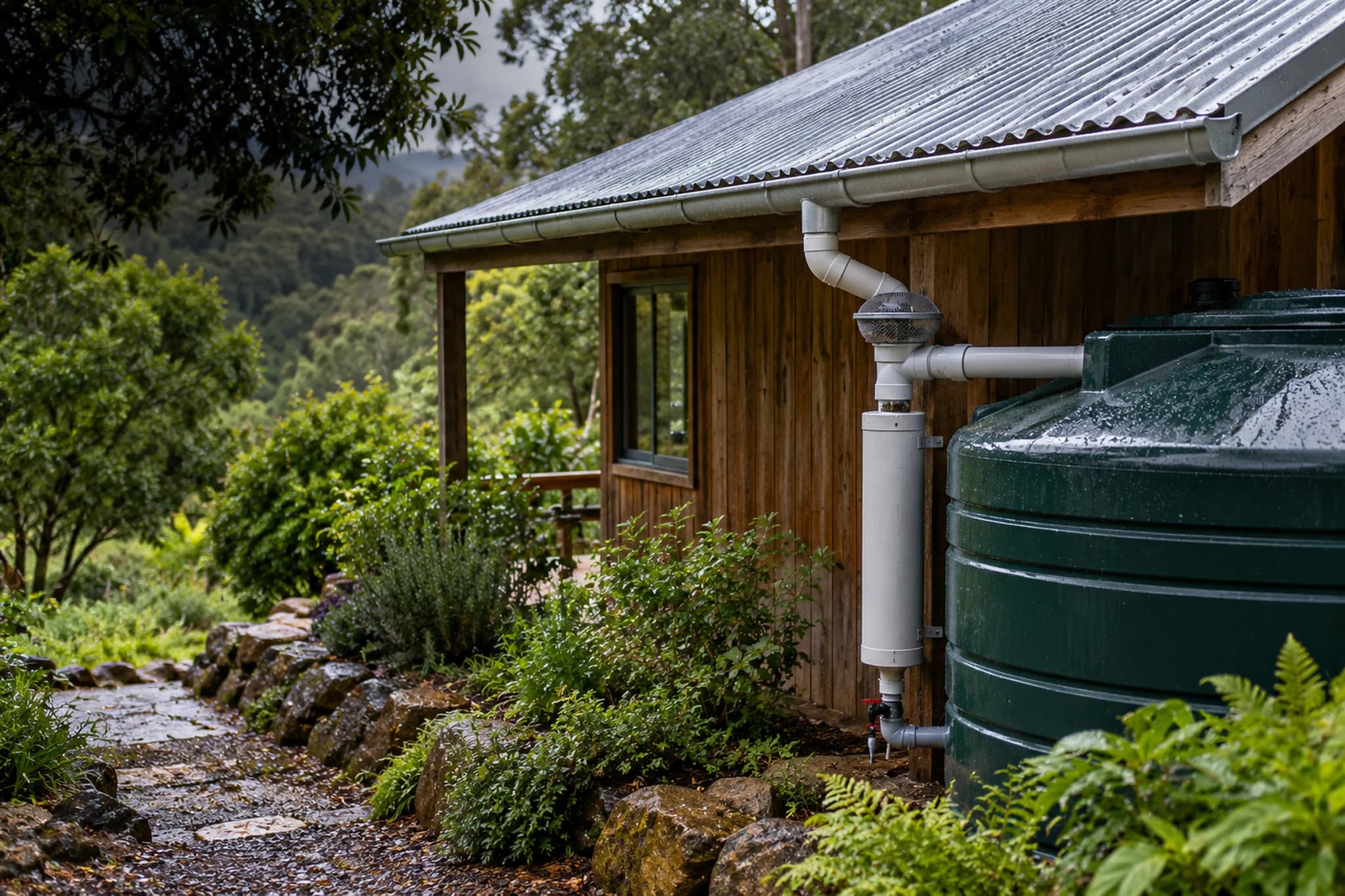
Step 4: Check The Gutters And Leaf Screens
If you collect rainwater, the gutters are the start of your water supply. Autumn leaves and winter storms leave them clogged.
Texas wildlife and water experts say to clean the roof, gutters and screens twice a year: in spring and again in autumn after the leaves drop. Check the leaf screens too. Their mesh holes are only about 6 mm wide, so they clog fast.
Step 5: Empty The First-Flush Diverter
The first rain off a roof is the dirtiest. It carries the dust, pollen and bird and rodent droppings that piled up since the last shower.
A first-flush diverter catches that dirty water and sends it away, so the cleaner rain after it goes into the tank. The Texas rainwater manual says to empty it after each rain, so it's ready for the next. Our guide to rainwater harvesting explains the whole system, roof to tap.
Garden Jobs: Plant The First Vegetables Outside
Step 6: Sow Peas Outside
So what do you plant in March? The tough, early crops of the season that don't mind cold feet.
Peas come first. They're one of the first seeds that can go directly into the garden. The University of Maryland says peas can be sown once the soil is at least about 4 °C, a little warmer than a fridge. A cheap soil thermometer, pushed in a few centimetres, tells you.
Then the potatoes you set out to sprout in February. The RHS, Britain's big gardening charity, says first early potatoes go in around late March, a bit later in colder places and earlier in milder ones.
Dig a trench about 15 cm deep, set them in with the sprouts facing up, and cover them over. Give each one about 30 cm of space, with rows about 60 cm apart.
The young shoots don't like frost. If cold weather is forecast for a night once they're up, the RHS says to cover them overnight with straw, a cloche or a bit of soil. Pulling soil up around the stems as they grow, called "earthing up", protects them from frost damage too.
Onion sets are the third early crop. These are baby onions that get a head start, and the RHS says they're usually planted in early to mid-spring, about 10 to 15 cm apart. Birds love to pull them up, so lay netting or fleece over the row until they've rooted in.
Step 7: Do The Squeeze Test Before You Dig
Before you prepare a garden bed, check the soil. Spring soil is often soaked. Digging it wet squashes out the air, and the soil dries into hard lumps like a mud pie in the sun.
Purdue University's garden experts use a simple test. Grab a handful and squeeze.
If it crumbles when you poke it, it's ready. If it stays a sticky, muddy ball, wait a few more days.
Step 8: Keep The Seedlings Going
The tomatoes and peppers sown indoors last month are growing fast now. Keep the light close above them and the soil damp, not soggy.
When the first "true leaves" show, the ones that look like the grown-up plant, it's time to move each seedling into its own bigger pot. The University of Maryland says to do it then, while they're still small and bounce back quickly.
Still more to start indoors? Maryland gives cabbage, broccoli and cauliflower 4 to 6 weeks before planting outside, and leafy greens just 2 to 4. If your last frost comes late, a March sowing of these is right on time. Getting them used to the outdoors is April's job.
Our guide to the off-grid garden covers what plants need to grow well.
Let Spring Into The House Safely
Step 9: Test The Alarms When The Clocks Change
In most of Europe and North America, the clocks jump forward in March. The CDC uses that day as a reminder: check the batteries in your carbon monoxide alarms.
It's an easy habit to pin to a date you won't forget. Do the smoke alarms at the same time.
Step 10: Let The Spring Sun Warm The House
The sun is still fairly low in March, so it shines deep into south-facing windows. That's free heat.
Open the curtains on sunny days and let it fall on stone, brick or tile floors. Those heavy materials soak up warmth during the day and give it back in the evening. Our guide to off-grid heating explains why the cheapest heat is the heat you keep.
Feed The Garden, Prune And Cut Back Perennials
Step 11: Spread The Finished Compost
Last year's compost heap is probably ready. The EPA says finished compost is dark, loose and crumbly, and smells like fresh soil.
If it smells like ammonia, the sharp smell of some cleaning sprays, or like rotten eggs, Oregon State University says it isn't done yet. Give it a few more weeks.
Oregon State also gives amounts. Spread 7.5 to 10 cm on a brand new bed and dig it in, and spread up to about 2.5 cm a year on established beds you already use. Our guide to home composting shows how to start the next batch.
Step 12: Start A Fresh Heap
Once the old heap is empty, start the next one for next season. Spring brings lots of "greens", like the first grass clippings and weeds without seeds.
Mix them with the dry "browns" you saved over winter, like leaves and shredded cardboard. The EPA counts plant stalks and twigs as browns too, and says to use about two to three times as much brown as green.
The garden hands you plenty of both this month. The RHS says most gardeners start cutting back last year's dead perennial stems and grasses from March. They were left standing all winter because they give wildlife food and shelter. Cut above the new growth at the base, never through it.
The stems can go on the heap, but not ripening seed heads, and the EPA says to keep diseased plants out.
Fruit trees are on the list too. The RHS says winter pruning of apple and pear trees runs from November to early March, so finish it at the start of the month. Remove the dead, diseased and damaged branches first.
While you're in the borders, summer-flowering perennials can be split. The RHS says to divide them in spring, from March to May, and every two to three years keeps the plants healthy.
Sources
- PVGIS, EU Joint Research Centre, monthly solar output for Amsterdam
- PVGIS, EU Joint Research Centre, monthly solar output for Ohio
- EarthSky, Are day and night equal at the March equinox?
- pv magazine USA, NREL study on soiling and cleaning solar panels
- Texas Parks and Wildlife, Passive rainwater harvesting system maintenance
- Texas Water Development Board, Rainwater Harvesting Manual
- University of Maryland Extension, Peas
- RHS, Potatoes: grow your own
- RHS, Onions: grow your own
- Purdue University, Resist the urge to work wet soil
- University of Maryland Extension, Starting seeds indoors
- CDC, About carbon monoxide poisoning
- US Department of Energy, Passive solar home design guide
- EPA, Composting at home
- Oregon State University Extension, How to use compost in gardens and landscapes
- RHS, Perennials: cutting back
- RHS, Apples and pears: winter pruning
- RHS, Perennials: dividing
By April the panels shine, the gutters run clear and the first peas are up. The homestead is awake again.
Hard Words
| Term | What it means |
|---|---|
| Kilowatt-hour | An amount of electricity: about what a small heater uses in one hour. |
| Equinox | The two days a year when day and night are almost the same length, in March and September. |
| NREL | The US National Renewable Energy Laboratory, a government lab that tests solar panels. |
| Pollen | Fine yellow dust that plants release in spring. It sticks to solar panels. |
| Leaf screen | A mesh cover on gutters or tank inlets that keeps leaves out of the water. |
| First-flush diverter | A pipe that catches the first dirty rain off a roof so it doesn't reach the tank. |
| Soil thermometer | A thermometer you push into the ground to check if it's warm enough to sow. |
| Thermal mass | Heavy materials like stone or brick that soak up heat and release it slowly. |
| Compost | Plant scraps that have rotted down into dark, crumbly soil food. |
Common Questions
What should I plant in March?
Hardy vegetables outside: peas once the soil is about 4 °C, first early potatoes around late March and onion sets in early to mid-spring. Indoors, cabbage, broccoli and cauliflower need 4 to 6 weeks before planting out, and leafy greens 2 to 4.
What garden jobs are there in March?
Sow and plant the early crops, do the squeeze test before you dig, pot on seedlings, spread finished compost, cut back dead perennial stems, finish pruning apple and pear trees and divide summer-flowering perennials.
What should be on a March homestead checklist?
The garden jobs, plus energy, water and the house. Clean pollen off the solar panels, clear gutters and leaf screens, empty the first-flush diverter and check carbon monoxide alarm batteries when the clocks change. Southern hemisphere homesteads do the same list in September.
Is it too late to prune apple trees in March?
Early March is the end of the window. The RHS gives November to early March for winter pruning of apples and pears, while the trees are bare. Start with dead, diseased and damaged branches.
How much power do dirty solar panels lose?
It depends on the dirt and the weather. In NREL tests, spring pollen cut output by up to 15%, and panels that were never washed lost about 10% over a year. Brushing panels with a soft wet brush after rain brought back 5 to 11% in the same tests.
Does rain clean solar panels?
Only partly. Rain rinses off loose dust, but in NREL tests it did not remove spring pollen, which sticks to the glass. A soft wet brush right after rain, when the dirt is softened, worked much better. Never use harsh tools or anything that scratches the glass.
How do I know if my soil is ready to dig in spring?
Use the squeeze test. Take a handful of soil and squeeze it into a ball, then poke it. If it crumbles apart, it's ready to dig. If it stays a sticky, muddy ball, wait a few days. Working wet soil squashes out the air and leaves hard lumps.
How do I know when compost is ready to use?
Finished compost is dark, loose and crumbly, smells like fresh soil, and you can no longer see the original scraps. An ammonia or rotten-egg smell means it needs more time.