

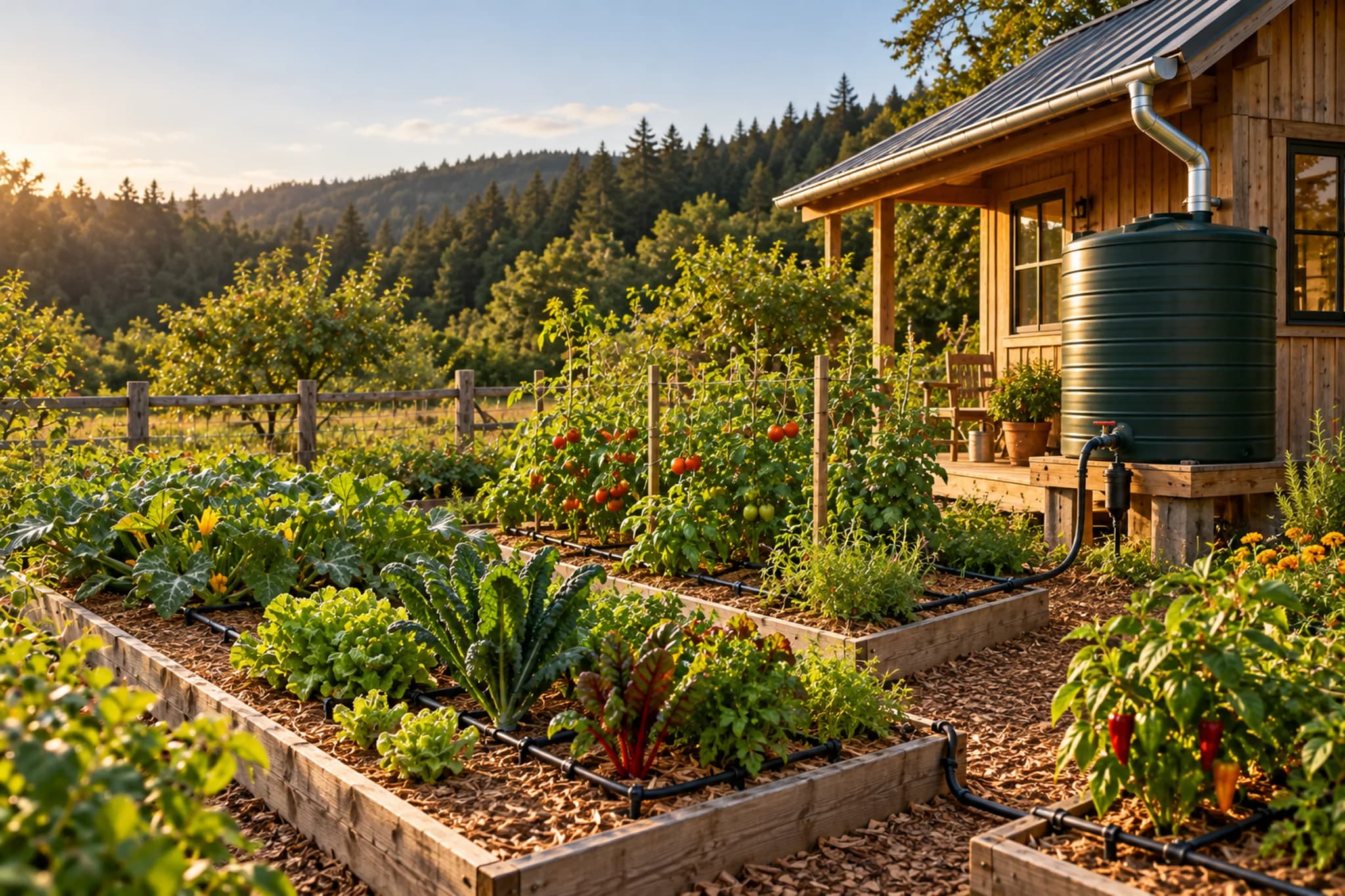
Why January Starts With A Clear Sky
In Bangkok, one kilowatt of solar panels makes about 4.4 kilowatt-hours a day in January. In July, the same panels make about 3.4.
That gap is the story of a whole tropical year, and it's why this January tropical homestead checklist starts with the sun. January sits deep in the dry season, when the sky stays clear for weeks and the roof works at full speed.
Across the northern tropics, from Central America and the Caribbean to West Africa, South India and Southeast Asia, the dry months run roughly from November to April. The rains return somewhere between May and October, and the exact timing changes from place to place.
South of the equator, in northern Australia, northern Brazil or Indonesia, the seasons run about six months later. Your version of this month is July.
This month in three jobs: bank the dry sun, water at dawn, cool with night air.
Bank The Dry-Season Sun And Keep Batteries Cool
Step 1: Bank The Dry-Season Sun
The daily numbers above come from PVGIS, a free solar tool from the European Commission's science service.
So use the extra power now. Run the water pump, the washing machine and the power tools in the middle of the day, when the panels make the most. Whatever the battery can't hold is simply lost.
Step 2: Keep The Batteries In The Shade
Heat is the battery's enemy. Many lithium iron phosphate batteries (LiFePO4) may only be charged up to about 45 °C, and some datasheets allow 55 °C. A battery box under a tin roof can get that hot.
Old-style lead-acid batteries hate heat too. A common rule from battery makers says their life is cut in half for every 8 to 10 °C above 25 °C.
To protect them, keep batteries in the shade with air moving around them, and check the datasheet for the safe temperatures of your own model. Our guide to lithium batteries explains what's inside them and why heat wears them out.
Make Every Litre Go Further In The Dry Months
Step 3: Water The Garden At Dawn
In the dry season every litre counts. On Guam, the university's farm advisers say irrigation is a must from January to April, because little rain falls and the wind dries the soil.
Water early in the morning, while the air is cool, so more water soaks in and less floats away as vapour. Late afternoon is worse: wet leaves at night can invite plant diseases.
Even better is drip irrigation: thin hoses with tiny holes that drip water right at the roots. The same Guam experts say a well-made drip system keeps more than 95% of the water in the root zone, where plants can use it. Shower and sink water from the greywater setup in November's list can go to the fruit trees.
Plant And Shade The Leafy Beds
Step 4: Shade The Beds From The Midday Sun
So what should you plant in a dry season garden? In many tropical climates this is the best vegetable month of the year: cooler nights, drier air and fewer leaf diseases, so plants thrive.
| Plants | Why now |
|---|---|
| Broccoli, cabbage, beetroot | A Darwin gardener told Gardening Australia these only grow in the cool dry season, which lasts about three months. |
| Lettuce, Asian greens, silverbeet | The same short window. Silverbeet only grows without turning bitter now. |
| Tomatoes, eggplant, peppers | The University of Guam says they do best in the dry season: fewer diseases, even watering, the most sun. |
Water young plants in well, because thirst is what kills them. December's list has more on dry-season tomatoes.
Then the shade question. Shade cloth is a loose woven net, a bit like a mesh football shirt, that blocks part of the light. The University of Delaware says cloth that blocks about 30% of the sun is the most common choice for vegetables.
In the cooler months you may not need it. In a University of Hawaii trial, lettuce grew heavier heads in full sun than under 30% shade in fall and spring, and shade helped only a little in summer. So if plants wilt at noon, shade that one bed first and compare growth with the rest. Our off-grid garden guide covers soil, water and how much space a family needs.
Keep The House Cool Without Burning Power
Step 5: Keep The Heat Off The Roof
A dark roof in full sun can reach 65 °C or more, hot enough to burn your hand. A light "cool roof" can stay more than 28 °C cooler, says the US Department of Energy.
That heat soaks down into the rooms below. Then fans or air conditioning have to fight it with battery power.
Step 6: Cool The Rooms With Night Air
Fans help, but only up to a point. The CDC, the US health agency, says to use a fan only while the room is below about 32 °C. Hotter than that, a fan can actually make your body warmer.
In places where dry-season nights cool down, open the windows after dark and close them in the morning to trap the cool air inside. Our guide to off-grid cooling has more tricks.
Keep The Compost Alive In The Dry Heat
Step 7: Keep The Compost Damp
A compost heap is a pile of food scraps and plant waste that tiny living things slowly turn into food for your plants. And those tiny workers need water to live.
A good heap feels like a wrung-out sponge: damp, but not dripping. If it gets too dry, the US Environmental Protection Agency says, the work inside slows down or stops.
So water the heap when you water the garden, and cover it with a layer of dry leaves or an old sack to slow the drying. A shady spot protects it too. Our guide to home composting shows how to build a heap that works.
January is the easy month. The sun is strong, the jobs are small, and the rains are still far away. Every full tank and full battery now makes April a little easier.
Sources
- European Commission JRC, PVGIS photovoltaic calculator
- Battery University, BU-806a: How Heat and Loading affect Battery Life
- Battery University, BU-410: Charging at High and Low Temperatures
- University of Guam Cooperative Extension, Eggplant, Pepper, and Tomato Production Guide for Guam
- Gardening Australia (ABC), Dry Season Vegies
- University of Delaware, Shadecloth for Hot Season Vegetable and Fruit Production
- University of Hawaii CTAHR, Chaya: A Productive Leafy Green for Hawai'i
- University of Hawaii CTAHR, Evaluation of Romaine Lettuce Varieties for Commercial Production in Hawai'i
- US Department of Energy, Guidelines for Selecting Cool Roofs
- CDC, About Heat and Your Health
- US EPA, Composting At Home
Hard Words
| Term | What it means |
|---|---|
| Kilowatt-hour | An amount of electricity: about what a small heater uses in one hour. |
| PVGIS | A free European Commission tool that estimates how much power solar panels make each month. |
| LiFePO4 | A kind of lithium battery, common in off-grid homes. Most may not be charged when too hot or too cold. |
| Lead-acid battery | An older battery type with liquid inside. Heat makes it wear out much faster. |
| Datasheet | The maker's page that lists what a product can and can't handle. |
| Drip irrigation | Thin hoses with tiny holes that drip water right at the roots of plants. |
| Greywater | Used water from showers, sinks and laundry, but not from toilets. |
| Shade cloth | A woven net stretched over plants that blocks part of the sunlight. |
| Cool roof | A light-coloured roof that reflects sunlight, so the house stays cooler. |
| Compost | Food scraps and plant waste that tiny living things have turned into crumbly soil food. |
Common Questions
What should I plant in January in the tropics?
Cool-season plants like broccoli, cabbage, beetroot, lettuce, Asian greens and silverbeet, plus tomatoes, eggplant and peppers, which grow best in the dry months. Water them at dawn, ideally with drip lines. South of the equator, the same planting fits July.
What tropical garden jobs are there in January?
Plant the cool-season beds, water at dawn, shade only the beds that wilt and keep the compost damp. Around the house, run big power jobs at midday, keep batteries shaded and cool the rooms with night air.
Do vegetables need shade cloth in the tropics?
Not always. In the cooler months a Hawaii trial grew heavier lettuce in full sun. Where beds wilt at noon, cloth that blocks about 30% of the sun is the usual choice.
What is the lowest-maintenance vegetable to grow in the tropics?
Chaya is a good bet. The University of Hawaii calls it a heat- and drought-tolerant shrub that needs little care and gives leafy greens all year. It grows from woody cuttings. Never eat it raw: boil or steam the leaves for at least 15 minutes and throw the water away.