

Why April Starts With The Roof
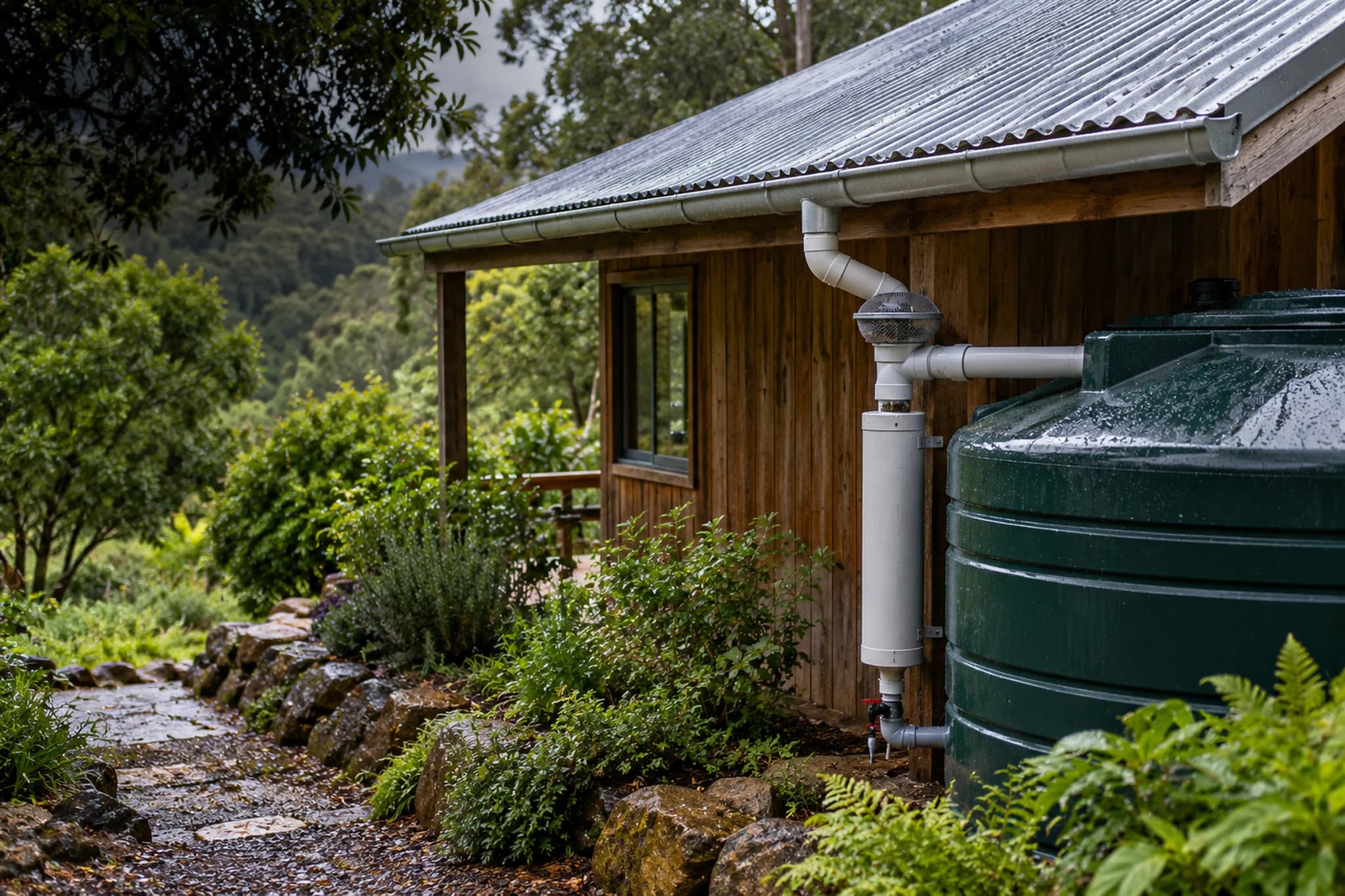
A roof does two jobs at once. It keeps the rain out of your house, and it catches the rain for your tank.
In April, both jobs are about to start again. In Thailand the hottest days come around mid-April, and the rainy season usually begins in mid-May. In Central America the rains also return in May, and in South India they usually reach the Kerala coast around 1 June.
So this April tropical homestead checklist is the last dry-season push: fix it, clear it and prepare it before the sky opens.
Exact dates differ from region to region and year to year. South of the equator, in places like northern Australia, northern Brazil or Indonesia, your version of this month is October.
This month in three jobs: fix the roof, clear the gutters, test the generator.
Fix The Roof Before The First Storm
Step 1: Fix The Roof
Walk around the house and look up. Loose or rusty sheets, missing screws, cracked tiles and gaps around pipes are where storms get in.
A roof leak in the rainy season isn't only a wet floor. Water soaks walls and ceilings, and the CDC, the US health agency, says wet things need to be dried within 24 to 48 hours to stop mould from growing.
Roof work at height is dangerous. If the job needs a ladder and a steep roof, a roofer with the right safety gear is the safer choice. Our guide to building an off-grid home covers what holds a house together.
Step 2: Get Ready For Storm Season Early
Storm seasons start soon. The Atlantic hurricane season, which hits the Caribbean and Central America, officially runs from 1 June to 30 November.
Around the Bay of Bengal, cyclones tend to come in two bursts: one just before the monsoon and one just after it. So April and May can already bring storms there.
Ready.gov, the US emergency agency's website, suggests clearing drains and gutters, bringing loose outdoor things inside and thinking about storm shutters. Doing that in a quiet week beats doing it with a storm on the radio.
Get Gutters And Tanks Ready For The Rain
Step 3: Clear The Gutters
Months of dry season fill gutters with leaves, dust and bird droppings. Clean them out now, so the first heavy rain flows to the tank instead of over the edge.
Step 4: Clean The First-Flush Diverter
The first rain that runs off a roof is the dirtiest. The CDC says it carries most of the dirt, germs and chemicals that sat on the roof.
A first-flush diverter is a pipe that fills up with that first dirty water and keeps it out of the tank. It's like pouring away the first cloudy splash from a hose before you drink.
How much to send away depends on the size of the roof, and experts don't agree on one exact amount. After a long dry season, more is better. Empty and rinse the diverter now so it's ready.
Step 5: Check The Tank Before It Fills
Look inside the tank with a torch. Old mud at the bottom, cracks and gaps in the lid all need fixing before it fills up.
A tank should be dark inside. Light lets green algae grow in the water, which is why Texas water experts recommend tanks that don't let light through.
Mosquitoes are the other worry. The CDC says to cover water tanks tightly, and to use wire mesh with holes smaller than a mosquito where there's no lid. Our rainwater harvesting guide explains roofs, tanks and safe drinking water.
Step 6: Know What Your Roof Is Made Of
Not every roof is good for drinking water. Texas water experts recommend a plain galvanized or painted metal roof and advise against asphalt shingles. The CDC adds that roofing can put chemicals such as lead, copper or asbestos into the water.
If your roof is one of those, use the water for the garden and get drinking water from somewhere else.
Prepare The Vegetable Garden For The Rains
Step 7: Prep The Beds
The rains will make everything in the garden grow fast, including weeds. So get the beds ready while the soil is easy to work.
Dig in compost, pull the last dry-season weeds and fix the edges of raised beds before heavy rain can wash them away. Tomatoes, peppers and eggplant like soil that is slightly sour to neutral, around pH 5.5 to 7, says the Guam guide, and a soil test tells you where yours stands.
And never plant into dust. The University of Guam's farm advisers say dry soil acts like a wick, sucking water out of young roots. Water the bed first, and plant in the calm late afternoon.
Step 8: Plan What Goes In First
Write down what you'll sow when the rains come, and check your seeds are dry. Next month is about timing: sowing too early can be a costly mistake.
So what can you plant in April in the tropics? Most garden calendars are written for cool climates, where spring means waiting for the last frost. A lowland tropical garden has no frost date. The date that matters is the first steady rain, and that depends on where you live.
So April is a month for small, clever planting. Start with seedling trays: little pots, like an egg box full of soil, where seeds sprout before they go into the garden. Sow tomatoes, eggplant and peppers in a shady spot near the house, where a watering can from the tank is enough.
The University of Guam recommends planting them out at 3 to 5 weeks old. Sow in the second half of April, and they're ready about when the rains settle in. Water the trays in the morning, so the leaves are dry by night, when damp leaves catch diseases more easily.
Mind the heat, though. The same Guam guide says tomato flowers can't make fruit when days go above 38 °C for 5 to 10 days before they open, and peppers set poor fruit above 32 °C.
Eggplant is tougher. In a tropical climate it's a short-lived perennial, living a few years instead of one season, and on Guam it can go in any time of year. The first fruits come about 60 to 65 days after planting out.
Some of the best tropical vegetables don't start from seed at all. ECHO, a group that helps farmers in the tropics, says sweet potatoes grow from cuttings that rest for 1 to 3 days before planting. They need steady water for the first few months and cope with drought after that, so the rains are a great time to plant them. The harvest comes after 2 to 9 months, depending on the variety.
Chaya, the leafy perennial from January's list, grows from woody cuttings too. The University of Hawaii says cuttings in pots usually root in two to four weeks in warm weather. Start some now and plant them out with the rains, and remember chaya must always be cooked.
Leave the cool crops for later. A Darwin gardener told Gardening Australia that broccoli, cabbage and beetroot "could never cope with the heat and humidity" outside the short cool season. Lettuce belongs in that cool window too.
The same gardener once planted cherry tomatoes, beans, cucumbers and Asian greens just before the wet season. Darwin then had its biggest wet season on record, more than 3 metres of rain, and none of them survived. So keep the April planting small, and ask your neighbours what they plant and when. Our off-grid garden guide covers soil, compost and how much space feeds a family.
Get The Generator And Wiring Storm-Ready
Step 9: Test The Generator Before The Storms
In the rainy season, the generator is the backup for long grey spells. Start it now, while you still have time to fix it.
Old fuel causes trouble fast. Honda says problems can start in less than 15 days if petrol wasn't fresh. A fuel stabilizer keeps fresh fuel good for up to a year, but it can't fix fuel that has already gone stale.
A generator makes carbon monoxide, a gas you can't see or smell that can kill. The CDC says never run one indoors or in a garage, even with the door open, and keep it more than 6 metres from windows and doors.
Step 10: Check The Wiring
Heat and dust are hard on cables and connections. Look for loose, melted or cracked wires around the battery and inverter, and fix them before damp weather arrives.
Make sure everyone in the house knows where the main safety switch is. Our guide to safety switches explains how they cut the power in a hurry.
Spread The Compost And Check The Septic Tank
Step 11: Spread The Finished Compost
Compost that is dark, crumbly and smells like a forest floor is ready. Dig it into the beds now, before rain can wash its goodness away.
A hot heap does extra work too. Cornell University's composting experts say temperatures of 55 °C and above destroy many germs that make people and plants sick.
Step 12: Have The Septic Tank Checked While The Ground Is Dry
A septic system is an underground tank plus a "drainfield", a patch of soil that slowly cleans the wastewater. It only works when that soil can soak up water.
The US Environmental Protection Agency says to have a system inspected at least every 3 years, and most tanks need pumping every 3 to 5 years. If yours is due, do it now. Florida's extension service warns that pumping a tank in soaked ground can make it pop up out of the soil. Our guide to septic systems and composting toilets explains how the system works.
April is the busiest dry-season month. Every gutter you clear and every screw you tighten now saves you a wet, muddy job in June.
Sources
- Thai Meteorological Department, Climate of Thailand (archived)
- CDC, Dry Off Wet Items After a Storm
- NOAA National Hurricane Center, Tropical Cyclone Climatology
- NOAA Hurricane Research Division, When is hurricane season? (archived FAQ)
- Ready.gov, Hurricanes
- CDC, Collecting Rainwater and Your Health
- CDC, Mosquito Control at Home
- World Health Organization, Dengue and severe dengue
- Texas Water Development Board, Texas Manual on Rainwater Harvesting
- University of Guam Cooperative Extension, Eggplant, Pepper, and Tomato Production Guide for Guam
- ECHO, Perennial Vegetables (Beth Doerr)
- University of Hawaii CTAHR, Chaya: A Productive Leafy Green for Hawai'i
- Gardening Australia (ABC), Dry Season Vegies
- Honda, Avoiding Fuel-Related Problems (EU generators)
- Honda, BF40D owner's manual, fuel storage (ManualsLib)
- CDC, About Carbon Monoxide Poisoning
- Cornell Waste Management Institute, Compost Microorganisms
- US EPA, How to Care for Your Septic System
- University of Florida IFAS, Flooding and Septic Systems
Hard Words
| Term | What it means |
|---|---|
| First-flush diverter | A pipe that catches the first dirty water off a roof and keeps it out of the tank. |
| Algae | Tiny green plants that grow in water when light gets in. |
| Monsoon | A seasonal wind change that brings months of heavy rain to places like India and Southeast Asia. |
| Cyclone | A huge spinning storm. Called a hurricane in the Atlantic and a typhoon in the western Pacific. |
| Soil pH | A number that says how sour or chalky soil is. Tomatoes, peppers and eggplant like about 5.5 to 7. |
| Seedling tray | A tray of small pots where seeds sprout before they are planted in the garden. |
| Perennial | A plant that lives for more than one or two years. |
| Cutting | A piece of stem cut from a plant that grows roots and becomes a new plant. |
| Fuel stabilizer | A liquid you add to fresh petrol so it stays usable for longer. |
| Carbon monoxide | A gas from engines and fires that you can't see or smell. Breathing it can kill. |
| Septic system | An underground tank and a patch of soil that clean toilet and house wastewater. |
| Drainfield | The patch of soil where a septic tank's water soaks away and gets cleaned. |
Common Questions
What should be on an April tropical homestead checklist?
Fix the roof, clear gutters, clean the diverter and tank, cover tanks against mosquitoes, prepare the beds, start seedlings, service the generator, check the wiring, spread compost and have the septic tank checked while the ground is dry. South of the equator, the same list fits October.
What should I plant in April in the tropics?
Plant small while it's hot and dry. Start tomato, eggplant and pepper seedlings in trays, ready to plant out at 3 to 5 weeks old when the rains settle, and root sweet potato and chaya cuttings. Leave broccoli, cabbage and lettuce for the cool dry season. South of the equator, this fits October.
What is the easiest tropical vegetable to grow?
Sweet potatoes are hard to beat. ECHO calls them easy to grow and fairly free of pests and diseases, and they grow from cuttings instead of seed. Give them steady water for the first few months; after that they cope with drought.
What is a first-flush diverter?
A pipe that catches the first rain off a roof and keeps it out of the tank. That first water carries most of the dust, droppings and germs, the CDC says.
When does the rainy season start in the tropics?
It differs by region. In Thailand the rainy season usually begins in mid-May. In Central America the rains return in May. In India the monsoon usually reaches Kerala around 1 June. South of the equator, the rains come about six months later.
How do you keep mosquitoes out of a rainwater tank?
Cover it tightly, the CDC says, and use wire mesh with holes smaller than a mosquito where there's no lid. The World Health Organization also advises cleaning water containers weekly.
Why should a rainwater tank be dark inside?
Light lets algae grow in stored water, so rainwater experts recommend tanks that don't let light through, with tight lids and fine mesh over every opening.
Should you pump a septic tank before the rainy season?
If it's due, yes. Florida's extension service warns that pumping a tank in waterlogged ground can make it float up out of the soil, so dry ground is safer.