

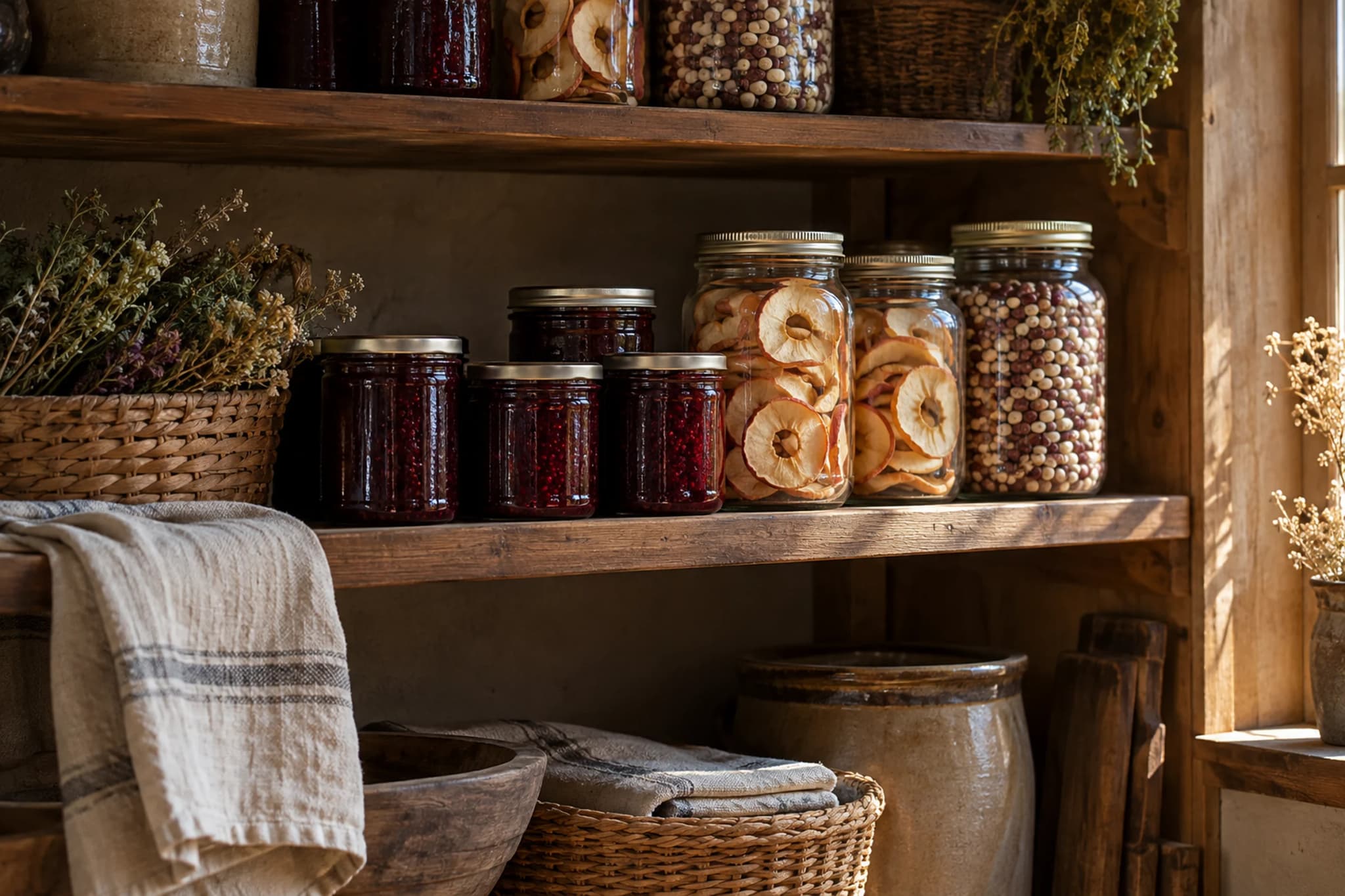
Why November Starts In The Store Room
On 30 November the Atlantic hurricane season officially ends. Across the northern tropics, the dry season is settling in, and the sun is coming back.
In Accra, Ghana, November is the best solar month of the year. PVGIS, a free solar tool from the European Commission, shows one kilowatt of panels making about 5.1 kilowatt-hours a day there.
But the harvest is in, and stored food has months of heat and hungry insects ahead. So this November tropical homestead checklist starts in the store room, then moves to the panels, the water and the house.
Timing differs by region: some coasts stay rainy for weeks longer. South of the equator, in places like northern Australia, northern Brazil or Indonesia, your version of this month is May.
This month in three jobs: seal the grain, rinse the panels, keep the rats out.
Store The Harvest Where Bugs And Mould Can't Reach It
Step 1: Seal The Grain In Airtight Bags
Weevils and other small beetles eat stored grain from the inside. Researchers at Purdue University in the US found a cheap way to stop them without any poison.
Their PICS bag is a woven sack with two layers of thick plastic inside, tied shut so no air gets in. Insects inside keep breathing, use up the oxygen and die.
The bags were first made for cowpeas, a kind of bean, and have since been tested on maize, sorghum, rice, peanuts and beans.
Step 2: Dry It Before You Seal It
An airtight bag isn't a drying machine. Whatever water goes in stays in.
In a trial on farms in Kenya, maize kept in airtight bags for 35 weeks stayed free of aflatoxin build-up when the grain was drier than 14%. Aflatoxins are mould poisons the World Health Organization links to liver cancer. So finish drying first, then seal.
Step 3: Keep The Rats Out
Plastic bags don't stop rats and mice. Store bags off the floor, in a room or bin rodents can't chew into, and check them often.
Our guide to off-grid food preservation explains drying, storage and other ways to keep food without a fridge.
Wash Off The Dust And Bank The Bright-Season Sun
Step 4: Rinse The Dust Off The Panels
The Harmattan, a dusty wind from the Sahara, starts blowing over West Africa around November and keeps going until about March.
In a study in northern Ghana, a test panel lost almost 29% of its power to settled dust between November and February. PVGIS only counts a small, general allowance for dirt, so a panel under Harmattan dust makes less than the tool says.
Clean from the ground with plain water and a soft brush on a long pole, early on a cool morning. Our guide to cleaning solar panels explains what to use and what to avoid.
Step 5: Bank The Sun
A kilowatt-hour is an amount of electricity, about what a small heater uses in one hour. From now on, most tropical homes have more of them than the wet season gave.
Use the surplus for jobs you put off in the wet season: grinding, sawing, pumping water up to a high tank or running a solar dryer fan. Our guide to off-grid power shows how the panels, battery and inverter fit together.
Start The Dry Season With A Water Plan
Step 6: Work Out How Long Your Water Must Last
The tanks are as full as they'll get until May. Count the months ahead and the people in the house, then do the sum.
A 5,000-litre tank gives four people about 25 days at 50 litres each a day, or about 62 days at the bare minimum of 20 litres each, the figure from a report for the World Health Organization. Most homes use more than the minimum, so plan honestly, and redo the sum in February.
Step 7: Give Used Water A Second Job
Shower, bathroom sink and laundry water can water fruit trees in the dry months. Scientists call it greywater, which just means used water that didn't come from a toilet.
Our guide to greywater systems explains how to reuse it safely.
Dry Out The House After The Wet Season
Step 8: Air Out And Clean Up The Mould
Open every window and cupboard on dry, breezy days. Wash or throw out anything that grew mould during the rains.
The tiny spores of mould can irritate your lungs, so clean it up the safe way from September's list: an N95 mask, gloves and goggles, water and detergent, and never bleach mixed with ammonia or other cleaners.
Step 9: Get Ready For The Heat
The dry season brings heat as well as sun. Fix shade cloth, check fans and keep the battery corner shaded with air moving through it.
Our guide to off-grid cooling explains how to keep a house cool without burning battery power.
Wake The Compost Up And Plant The Dry-Season Garden
Step 10: Water The Compost Again
A compost heap that was soggy all through the rains will soon dry out. Keep it damp, like a wrung-out sponge, and keep kitchen scraps covered with 10 to 20 cm of dry leaves.
That compost has a job waiting, because the garden is about to get busy.
So what should you plant in November in the tropics? Garden calendars from cooler places spend November protecting tender plants from frost and getting ready for winter, as our temperate November list shows. In the northern tropics, the rains are ending and the sun is coming back, so it's planting time instead. Every place keeps its own rain calendar, though, and the growers around you know yours best.
One good guide comes from the University of Guam, an island in the western Pacific north of the equator. From October to March, every crop on its table of common garden vegetables is in its planting window. November sits right in the middle, early in the dry season, so it's a perfect time to plant a little of everything:
| Vegetable | When Guam plants it | Days until the first harvest | How long you keep picking |
|---|---|---|---|
| Leafy greens | Year round | 30 to 50 | One harvest |
| Green onions | Year round | 30 to 50 | One harvest |
| Okra | Year round | 60 to 70 | 8 weeks |
| Long eggplant | Year round | 55 to 65 | 12 weeks |
| Hot peppers | Year round | 50 to 60 | 12 weeks |
| Bitter melon | Year round | 60 to 80 | 8 weeks |
| Sweet potatoes | Year round | 3 to 4 months | One harvest |
| Red taro | Year round | 6 to 10 months | One harvest |
| Cucumbers | September to April | 35 to 45 | 3 weeks |
| Yardlong beans | September to April | 55 to 60 | 4 weeks |
| Sweet corn | September to April | 60 to 70 | 2 weeks |
| Chinese cabbage | October to April | 45 to 60 | 2 weeks |
| Watermelon | October to March | 60 to 70 | 2 weeks |
| Cherry tomatoes | October to May | 60 to 70 | 5 weeks |
Cherry tomatoes, Chinese cabbage and watermelon joined the list in October, and the year-round crops continue as before. A watermelon sown in early November is ready around mid-January. Tomatoes need stakes, a trellis or a cage to keep them off the ground, and beans and cucumbers need a trellis, a frame of sticks and string they can climb. December's list explains why the dry season suits them.
What about lettuce and other cool-weather greens? Pick the seed with care. Many seeds sold in Guam don't suit the hot, humid climate, the university warns, so buy varieties made for the tropics.
Give the garden the sunniest space you have, because most vegetables need at least 6 to 8 hours of full sun a day. Big seeds like corn, beans and cucumbers can go straight into the soil. Eggplant and peppers do much better raised in small pots and planted out once the seedlings are big enough, with four or five true leaves. Plant them in the late afternoon or on a cloudy day, so the midday sun doesn't stress them.
Now the dry season makes every drop count. Before planting, the Guam guide says to cover the soil with mulch, like dry leaves or dried grass clippings. Mulch saves water, keeps weeds down, helps roots grow and keeps the soil cooler, so mulched beds need less from the tank. Lay it 5 to 8 cm thick, and keep it 5 to 8 cm away from the stems.
Give each drink slowly and deeply, at the soil and not the leaves, so the roots grow deeper. In a raised bed or a pot, push a finger about 5 cm into the soil first, and if it's still moist, wait. Pots dry out fast, especially in sunny, windy weather, and a big plant in a pot may need a drink once or twice a day, so count the garden in Step 6's sum.
Our off-grid vegetable garden guide has more on soil and beds.
November is the month to lock in the harvest and turn your face to the sun. Seal the store, rinse the roof, and the dry season can begin.
Sources
- NOAA National Hurricane Center, Tropical Cyclone Climatology
- PVGIS (European Commission JRC), monthly solar output for Accra, 1 kWp
- IFT Food Technology, Sealing the harvest: PICS bags preserve crops worldwide
- PICS Global, The origins of PICS: from Purdue to the world
- Ng'ang'a et al., Effect of triple-layer hermetic bagging on mould infection and aflatoxin contamination of maize in Kenya (icipe)
- FAO AGRIS, maize moisture at harvest in Ghana
- World Health Organization, Mycotoxins fact sheet
- PVGIS user manual (European Commission JRC), system loss
- KNUST, The effect of settling harmattan dust on photovoltaic modules in Walewale, Northern Ghana
- EGU25, Cleaning practices for solar panels
- Howard and Bartram for WHO, Domestic water quantity, cited in PMC review
- EPA, Mold cleanup in your home
- EPA, A brief guide to mold, moisture and your home
- University of Guam Cooperative Extension, Starting a vegetable garden in Guam
Hard Words
| Term | What it means |
|---|---|
| Weevil | A small beetle that lays eggs in stored grain. Its young eat the grain from inside. |
| PICS bag | An airtight grain bag from Purdue University: a woven sack with two plastic liners. |
| Aflatoxins | Poisons made by some moulds on grain and nuts in warm, damp conditions. |
| Harmattan | A dry, dusty wind that blows from the Sahara over West Africa, roughly from November to March. |
| Kilowatt-hour | An amount of electricity: about what a small heater uses in one hour. |
| PVGIS | A free online tool from the European Commission that estimates how much power solar panels make in each month. |
| Mulch | Dry plant material, like leaves or grass clippings, spread on the soil to keep water in and weeds out. |
| True leaves | The real leaves a seedling grows after its first two tiny seed leaves. |
| Greywater | Used water from showers, sinks and laundry, but not from toilets. |
Common Questions
What should I plant in November in the tropics?
North of the equator, the dry season is starting and nearly everything can go in. The University of Guam plants cherry tomatoes, Chinese cabbage, watermelon, yardlong beans, sweet corn and cucumbers now, next to year-round greens, green onions, eggplant, hot peppers, okra, bitter melon and sweet potatoes. South of the equator, follow the May list.
What vegetables do well in full hot sun?
Warm-season crops like cucumbers, eggplant and yardlong beans grow well in Guam's tropical climate, says the University of Guam. Give them full sun and mulch to keep their roots cool.
What are the tropical garden jobs in November?
Plant the dry-season garden, mulch it and give it slow, deep drinks. Around the homestead: dry the grain and seal it in airtight bags, keep rats out of the store, rinse dusty panels, use the solar surplus, work out how long the water must last, reuse greywater, air out the house and keep the compost damp.
Can you grow lettuce and other winter vegetables in the tropics?
Some of them. Peas and brussels sprouts don't produce a crop on Guam, but lettuce, broccoli and kale grow quite well there if you plant the right variety, says the University of Guam.
How do hermetic grain bags kill insects?
They're airtight, so insects sealed inside use up the oxygen and die, with no poison needed. The bags don't stop rats or mice, so store them off the floor.
How dry should grain be before sealing it in an airtight bag?
Below about 14% moisture. In a Kenya trial, maize in airtight bags stayed free of aflatoxin build-up when it was drier than that.
An airtight bag keeps any water that goes in. Grain straight from the field is often much wetter, around 17 to 19% in a Ghana study, so give it a few more sunny days.
When does the Harmattan blow?
From roughly November to March, over West Africa. Its Sahara dust settles on solar panels, so rinse them more often until the rains return.