

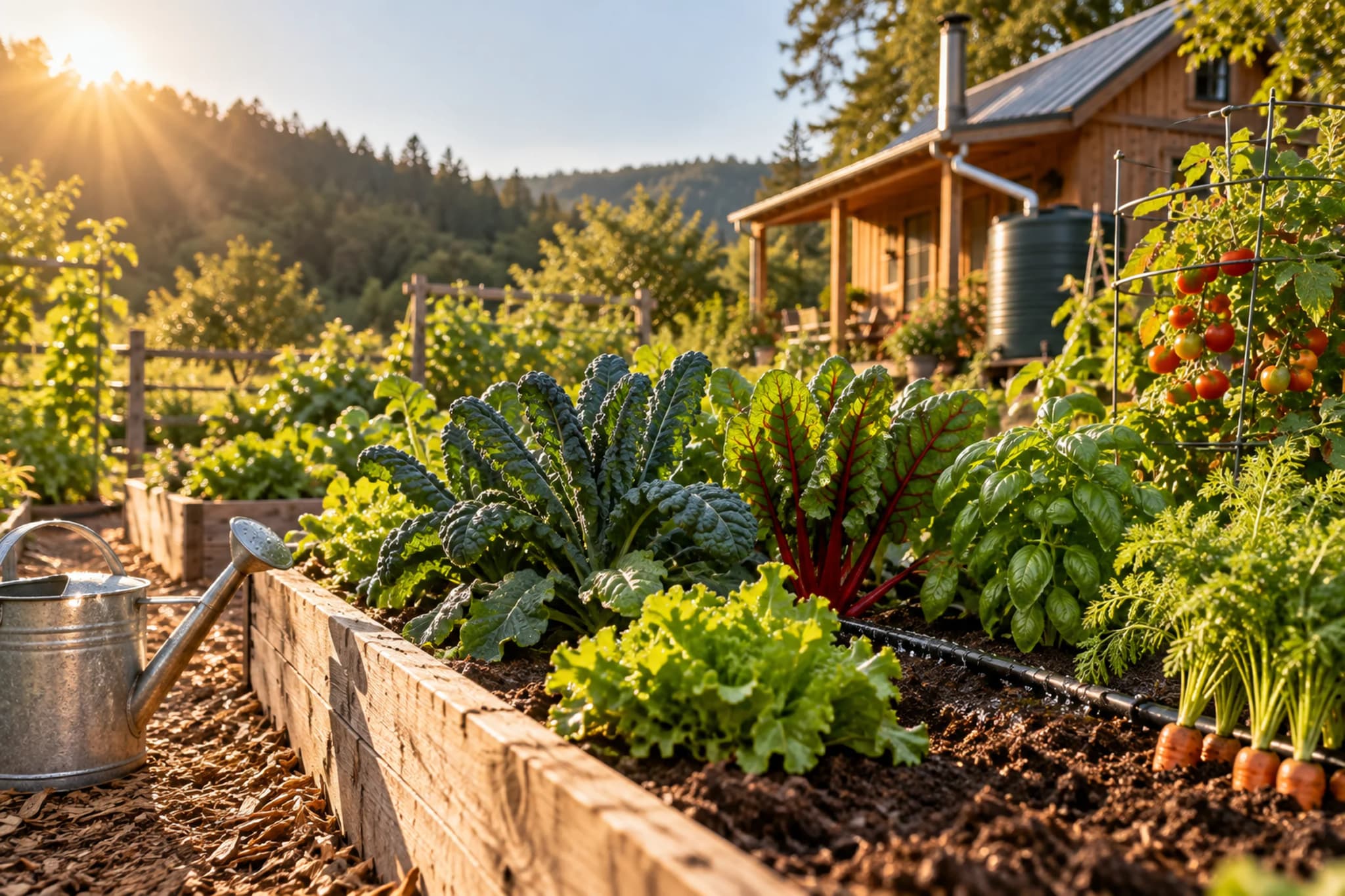
Why July Starts In The Garden
This July tropical homestead checklist starts with something odd. In the middle of the rainy season in Mexico, Central America and the Caribbean, the sky often takes a break. For a few weeks in July and August, the rain eases off.
People there call it the canícula or the veranillo, the "little summer". Scientists call it the mid-summer drought. A 2022 study found its timing may be shifting, so it doesn't arrive on the same dates every year.
On the West African coast around Accra, the sky also brightens: PVGIS solar figures show more power in July and August than in June.
Elsewhere in the northern tropics, July is simply wet. Either way, the garden is growing like crazy, and so are the weeds.
South of the equator, in places like northern Australia, northern Brazil or Indonesia, your version of this month is January.
This month in three jobs: pull the weeds, fix the drips, trim the shade.
Weed The Garden, Plant The Gaps And Dry The Surplus
Step 1: Weed The Beds While It Matters Most
Weeds steal water, food and light from your crops. They also give bugs a place to hide: the University of Guam's garden guide says weeds harbor pests and compete with your plants for sunlight and nutrients.
But not every week of weeding counts the same. Farm scientists call it the critical weed-free period: the window when weeds hurt a crop most, and for many crops it's the first few weeks after planting.
In trials in Puerto Rico, tomatoes needed weed-free beds for the first 36 days after planting out in one year, and 48 days the next. The weed the researchers expected to cost growers most was pigweed, a wild amaranth.
So weed young beds first, and don't lose sleep over a few weeds under big, healthy plants.
Every bed you clear is a gap, and bare soil doesn't stay bare for long in the rains. So what should you plant in July in the tropics? It depends on where you live, because every tropical place keeps its own rain calendar. Your local weather service and the farmers around you know yours best.
One good guide comes from the University of Guam, on an island in the western Pacific north of the equator. Its table of common vegetables for home gardens lists these plants for any month of the year, July included:
| Vegetable | Days until the first harvest | How long you keep picking |
|---|---|---|
| Leafy greens | 30 to 50 | One harvest |
| Green onions | 30 to 50 | One harvest |
| Long eggplant | 55 to 65 | About 12 weeks |
| Hot peppers | 50 to 60 | About 12 weeks |
| Okra | 60 to 70 | About 8 weeks |
| Bitter melon | 60 to 80 | About 8 weeks |
| Sweet potatoes | 3 to 4 months | One harvest |
| Red taro | 6 to 10 months | One harvest |
Leafy greens are the sprinters: a bed you weed today can be a salad in about six weeks. Eggplant and peppers are the long-distance runners, and they produce fruit for about three months once they start.
Keep June's succession planting going too: a small batch of greens every two weeks means the harvest never stops at once.
Cherry tomatoes are missing from that list. Guam plants them from October to May, which fits the rest of this calendar: tomatoes are mainly a dry-season crop.
Choose seed varieties made for hot, wet weather. The university warns that many seeds sold on Guam don't suit its hot, humid climate, and it names disease-resistant varieties as one of the first ways to keep plants healthy. Its crop charts list the varieties that do well there, and a good local nursery can often tell you the same for your area.
Big seeds like beans, corn and radishes can go directly into the soil, but eggplant and peppers do much better started in small containers, like the seedling trays from April, and planted out when they're big enough. Plant them out in the late afternoon or on a cloudy day, the university says, so they don't get the full midday heat on their first day. Give each plant some space, too: air moving between plants means less disease.
And keep a new row of sweet potatoes going now and then, the way May's list started. Our off-grid vegetable garden guide has more on soil and beds.
Step 2: Smother Weeds With Mulch
Pulling weeds by hand is slow. A thick blanket of mulch between the rows blocks the light weeds need to sprout.
The same mulch that saved water in February keeps weeds down now, and it slows the soil drying out in a sunny spell, say garden experts at the University of California. They and the University of Guam both suggest a layer about 5 to 8 cm thick, and Guam adds that mulch saves water and keeps the soil cooler. Leave a small gap around each stem, so the mulch doesn't sit against it.
That matters in a mid-season dry spell, when sunny weather dries the top of a bed fast. The dry spell is no small problem: in 2023, the GEOGLAM Crop Monitor reported that the peak of the July heat, the canícula, caused big losses in El Salvador's first maize and bean harvest of the season. Before you reach for the watering can, push a finger about 5 centimetres into the soil. If it feels moist, don't water yet.
When you do water, water the soil, not the leaves. The Guam guide says wet leaves help plant diseases start and spread, and mulch stops rain and watering from splashing dirt up onto the leaves.
Step 3: Dry What You Can
Food goes bad because tiny living things grow on it, and they need water to live. Drying takes the water away, so they can't.
That's why a sunny break in the rains is a gift. Spread fruit slices on racks in the sun with a cloth over them against flies, but hang herbs in bundles in a shaded, airy spot. Sun drying only works on hot days with dry air, so in muggy weeks use a solar dryer and bring everything in before the evening damp.
In wet regions, a solar dryer helps: a box with a clear lid that traps the sun's heat like a car parked in the sun. Our guide to off-grid food preservation explains drying, fermenting and canning.
Keep The Tanks Clean And The Taps Tight
Step 4: Check The Tanks
Every week, walk around the water system.
Is the lid tight? Is the mesh over the overflow still whole? Is anything growing or wriggling in the water?
Keep May's weekly mosquito habit going too: anything wriggling means a gap in the lid or the mesh.
Our rainwater harvesting guide explains how to keep stored water safe.
Step 5: Fix The Drips
Small leaks add up. The US Environmental Protection Agency says a tap dripping once a second wastes more than 3,000 gallons a year. That's over 11,000 litres, a whole small tank.
In July the tank may be full, but every litre saved now is a litre still there in March.
Keep Shade Off The Panels In The Darkest Month
Step 6: Trim What Grows Over The Panels
Rain makes trees, vines and grass shoot up, and some of them will reach the panels.
Shade is worse than it looks. The cells in a panel are wired in a chain, like old Christmas lights. Penn State's solar course works it out for a typical panel: one shaded cell can cost it about 30% of its power, close to a third.
So cut back branches and vines that throw shade at midday. Our guide to shading and solar panels explains why one small shadow costs so much.
Step 7: Expect The Lowest Power Of The Year
For many tropical homes, July is the darkest month. PVGIS, a free solar tool from the European Commission, shows one kilowatt of panels making about 3.4 kilowatt-hours a day in Bangkok, 3.3 in Chennai and 3.1 in Manila. In Manila that's about a third less than in April, its sunniest month.
A kilowatt-hour is about what a small heater uses in one hour. Use sunny breaks for heavy jobs and go easy on the battery at night.
Dry Out The House Between Showers
Step 8: Air Out The House On Dry Days
Weeks of rain fill a house with damp air. Clothes smell musty, shoes grow a white fuzz, and mould starts on walls.
When the sun comes out, open everything. Let the breeze blow through, hang bedding and clothes outside, and dry out cupboards. Our guide to off-grid cooling explains how air moves through a house.
Step 9: Check The Roof After Big Storms
Heavy July storms find every weak spot. After each one, look for wet patches on ceilings and walls, the way you did after May's first storms, and dry them within the same two days.
Compost The Weeds Without Their Seeds
Step 10: Keep Seedy Weeds Out Of A Cool Heap
Pulled weeds are good compost food, as long as they haven't set seed yet. Weeds that have flowered and made seeds can come back to haunt your beds.
A hot heap helps. Cornell University's composting experts say temperatures of 55 °C and above destroy many germs that make plants and people sick, and the heat also helps kill weed seeds. A cool, small heap won't get that hot, so keep seedy weeds out of it.
The same goes for sick plants. The University of Guam says to clear diseased leaves, fallen fruit and old plant bits off the beds, so pests and diseases don't spread. Put them in a hot heap, never a cool one.
Our guide to home composting explains how to build a heap that heats up.
July is the month of hands in the soil. Pull the weeds early, dry what the sun allows, and keep checking the water.
Sources
- Maurer et al. 2022, The Mesoamerican mid-summer drought (Hydrology and Earth System Sciences)
- GEOGLAM Crop Monitor, Central America and Haiti special report (November 2023)
- University of Guam Cooperative Extension, Starting a vegetable garden in Guam
- Liu et al., Weed competition in transplanted tomatoes (Caribbean Food Crops Society)
- UC Master Gardeners, Saving water in the vegetable garden
- National Center for Home Food Preservation, Sun drying
- NC State Extension, Harvesting and preserving herbs for the home gardener
- US EPA WaterSense, Fix a leak
- Penn State, AE 868: Wiring within a PV module and the shading effect
- PVGIS (European Commission JRC), monthly solar output for Bangkok, 1 kWp
- PVGIS (European Commission JRC), monthly solar output for Chennai, 1 kWp
- PVGIS (European Commission JRC), monthly solar output for Manila, 1 kWp
- PVGIS (European Commission JRC), monthly solar output for Accra, 1 kWp
- Cornell University, Compost microorganisms
- Cornell University, Compost physics
Hard Words
| Term | What it means |
|---|---|
| Canícula | The short dry spell in the middle of the rainy season in Mexico, Central America and the Caribbean. |
| Mid-summer drought | The scientists' name for that dry spell. |
| Primera and postrera | The first and second growing seasons in Central America: maize and beans sown from April, then a second bean crop from September. |
| Critical weed-free period | The weeks when weeds hurt a crop most, so weeding then matters most. |
| Pigweed | A wild amaranth; in the Puerto Rico tomato trials, the weed expected to cost growers most. |
| Solar dryer | A box with a clear lid that uses the sun's heat to dry food. |
| Overflow | The pipe that lets extra water out of a full tank. |
| Bypass diode | A tiny one-way gate inside a solar panel that lets power skip around shaded cells. |
| Kilowatt-hour | An amount of electricity: about what a small heater uses in one hour. |
| PVGIS | A free online tool from the European Commission that estimates how much power solar panels make in each month. |
| Hot compost | A compost heap that gets hot inside, 55 °C or more, which kills many germs and weed seeds. |
Common Questions
What should I plant in July in the tropics?
North of the equator, July is mid-way through the rains. The University of Guam lists leafy greens, green onions, long eggplant, hot peppers, okra, bitter melon, sweet potatoes and taro for any month, July included. Leave tomatoes for the dry season. South of the equator, follow the January list.
What should be on a July tropical homestead checklist?
The tropical garden jobs in July: weed young beds in their critical early weeks, replant the gaps, mulch, and dry herbs and fruit on sunny days. Around the house, check tanks and overflow mesh every week, fix dripping taps, trim plants that shade the panels, go easy on the battery, air out the house on dry days, and compost weeds before they set seed.
What second crop can I plant after the mid-summer dry spell?
In Central America, farmers sow maize and beans from April and harvest by September, then plant a second bean crop, the postrera, from September and harvest it by January, says the GEOGLAM Crop Monitor. The July canícula can cut that first harvest, so the second crop matters.
What is the canícula or mid-summer drought?
A dry spell of a few weeks in the middle of the rainy season, usually in July and August, across Mexico, Central America and the Caribbean. It's also called the veranillo. A 2022 study found its timing may be shifting, so farmers can't count on the same dates every year.
When is weeding most important?
During the critical weed-free period, usually the first weeks after planting. In trials in Puerto Rico, tomatoes needed weed-free beds for the first 36 days after planting out in one year and 48 days the next. Weeds also shelter pests, says the University of Guam.
How much water does a dripping tap waste?
The US Environmental Protection Agency says a tap dripping once a second wastes more than 3,000 gallons a year, which is over 11,000 litres. Off the grid, that's water you caught and stored yourself, so fixing drips is one of the cheapest water savings there is.
How much does shade reduce solar panel output?
More than the shaded area suggests. Cells are wired in a chain, so Penn State's solar course estimates that one shaded cell can cost a typical panel about 30% of its power. Trim branches and vines before they reach the panels.