

Why May Smells Of Rain
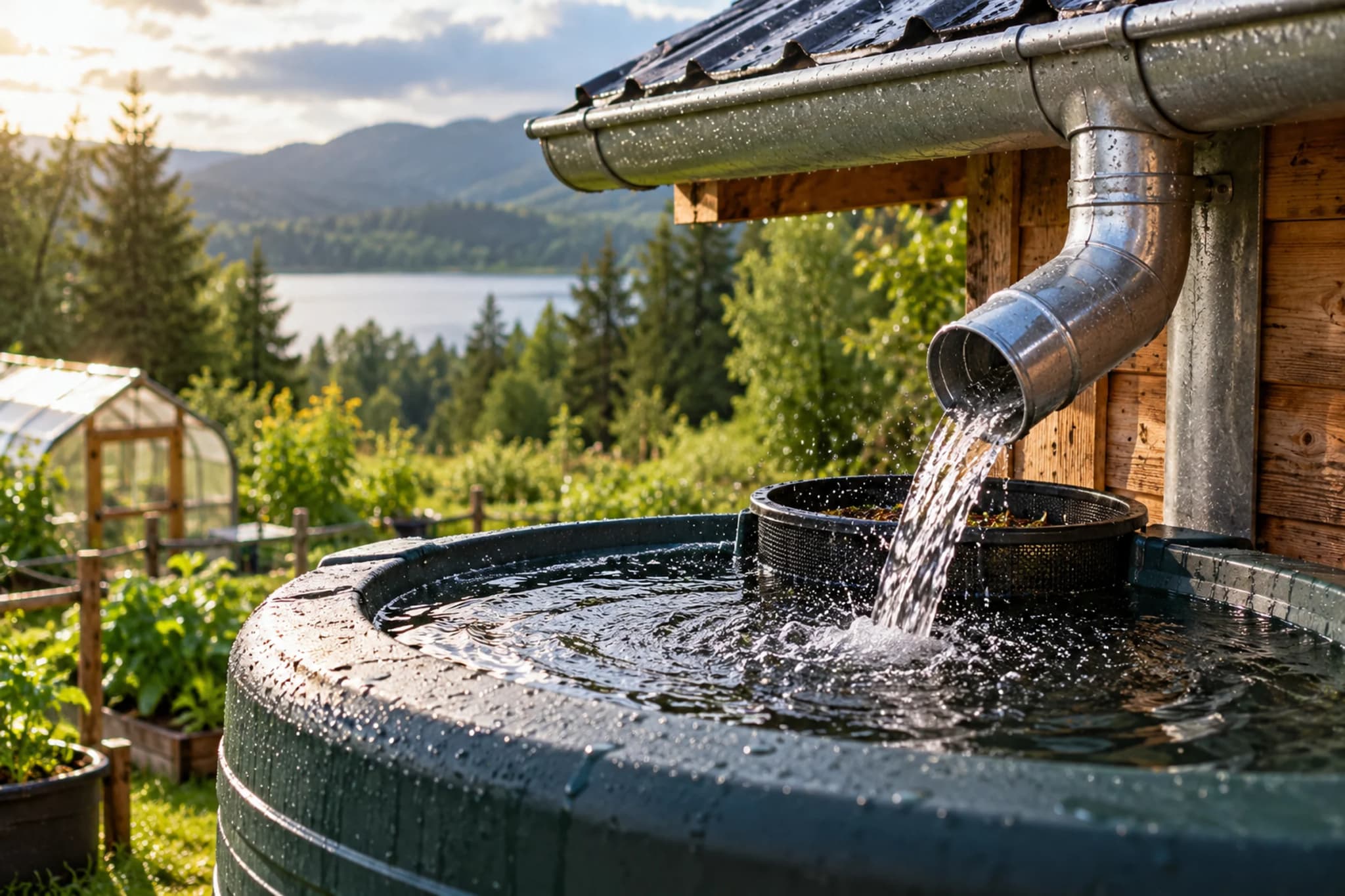
After months of dust, the first big storm feels like a party. The air smells different, and the tank finally fills. Scientists even have a name for that smell of rain on dry ground: petrichor, named by two Australian researchers in 1964.
Thailand's rainy season usually opens in mid-May, and the Philippines usually follows in late May or early June. In Central America the rains also return in May, and India's monsoon reaches Kerala around 1 June.
So this May tropical homestead checklist is all about water: catch it, store it, keep it clean, and use it to start the garden.
The start of the rains moves around from year to year and region to region. South of the equator, in places like northern Australia, northern Brazil or Indonesia, your version of this month is November.
This month in three jobs: catch the rain, skip the first flush, sow when it's real.
Get Every Drop Of The First Rains Into The Tank
Step 1: Catch The Rain
One millimetre of rain falling on one square metre of roof gives you 1 litre of water.
So a 100 square metre roof in a 20 mm storm catches 2,000 litres, about ten bathtubs. Not all of it reaches the tank, because some splashes off or goes to the first flush. Texas rainwater experts say installers count on 75 to 90% of it.
That means one good tropical storm can put roughly 1,500 litres in your tank. After months of dust, that's a lot of drinking, washing and watering.
Step 2: Skip The First Flush
The first rain after the dry spell washes all that dust and droppings off the roof. The CDC, the US health agency, says that first water carries most of the dirt and germs.
Make sure your first-flush diverter is empty and working, so that dirty water goes to the ground instead of into the tank.
Step 3: Fill The Tanks And Check The Overflow
Once a tank is full, extra water has to go somewhere. Make sure the overflow pipe runs well away from the house's walls and foundations.
Cover every opening, including the overflow, with fine mesh. Otherwise it becomes a front door for mosquitoes, frogs and rats. Our rainwater harvesting guide explains tanks, overflows and safe drinking water.
Step 4: Treat The New Drinking Water
Fresh rain can stir up the mud at the bottom of a tank. Until you know the water is clean, treat what you drink.
Boil it the way February's list explains, and filter cloudy water or let it settle first.
Step 5: Stop Mosquitoes Breeding
Mosquitoes are the dark side of the rains. The kind that spreads dengue fever lays eggs just above the waterline in buckets, tyres and pots.
Here's the sneaky part. The CDC says those eggs can survive drying out for up to 8 months, then hatch as soon as rain covers them. From egg to flying mosquito takes only 7 to 10 days.
So the CDC's advice is a weekly habit: once a week, empty and scrub, turn over, cover or throw out anything that holds water. That includes plant pots, seed trays and garden containers. The World Health Organization says about half the world's people now live where dengue can spread.
What To Plant When The Rains Settle In
Step 6: Sow When The Rain Is Real
It's tempting to sow the day after the first storm. But the first rains can be a "false start": a few showers, then a dry spell of a week or more.
Seeds that sprout and then dry out are lost. Researchers at Delft University of Technology studied this in West Africa. Sowing straight after the first rains raised the risk of water stress, because the soil hadn't stored enough moisture yet.
So wait until the rains have settled in and the soil is moist deep down, not just on top. Local farmers and your weather service know the usual pattern where you live, because every tropical climate keeps its own calendar.
Then it's time to plant. So what should you plant in May in the tropics? Not the same vegetables as the dry months. Once the rains are established, the garden wants plants that thrive in warm, wet weather:
| Plants | Why they suit the rains |
|---|---|
| Corn | Darwin gardener Leonie Norrington, on Gardening Australia, plants a corn variety bred for the wet. It goes at the back of the garden, where plants stay about three months before harvest. |
| Snake beans | She says they "do fantastically during the wet". Beanfly attacks young plants, so keep them covered until they're big enough to fend for themselves. |
| Cowpeas and pigeon peas | The bean seeds February's list kept ready for the rains. ECHO, a group that helps small farmers in the tropics, says both fix nitrogen and cope with dry spells, which helps if the rain stalls. |
| Sweet potatoes | Norrington plants a new row every two or three weeks, so there's always a row to dig throughout the year. |
| Cassava | A root crop that takes a long while to mature, so it also goes at the back, out of the way. |
| Ceylon spinach | An edible green that loves the wet. A little trellis keeps the leaves out of the mud. |
"Fix nitrogen" sounds like something a mechanic does. It just means these plants pull plant food out of the air and leave some in the soil for the next crop.
Before you sow, prepare the garden beds so they drain. Norrington builds raised beds from whatever she has: old tin, wood, blocks, even old carpet. Then direct sow the big seeds like corn and beans straight into the bed, where they grow quickly in the warm, wet soil.
Tomatoes are the odd one out. The University of the West Indies notes that heavy rain damages their flowers, and Gardening Australia calls the Darwin wet too hot and humid for them. If you want tomato fruit, save that job for the dry season.
Step 7: Cover Bare Soil
Heavy tropical rain hits bare soil like a drum, washing the best topsoil away. Keep beds covered with mulch, or with plants, so the rain soaks in instead of running off.
Gardening Australia suggests coarse mulch like hay or leaves, which softens the hit of big raindrops. Charles Darwin University's gardening expert Scott McDonald adds a catch: mulch breaks down quicker in the wet, so top it up regularly.
Rain also washes plant food away fast. That's why Gardening Australia suggests applying a bit of fertiliser to tropical greens every week or so while the rains last. Our off-grid garden guide covers soil, compost and watering.
Keep The Rain On The Outside Of The House
Step 8: Watch For Leaks After The First Storms
The first heavy rain is the real test of your roof. Look at ceilings, walls and window frames for wet patches the morning after.
Act fast when you find one. The CDC says wet things should be dried or removed within 24 to 48 hours to stop mould from growing.
Step 9: Keep Water Away From The Walls
Rain that pools against a house soaks into walls and floors. Clear the drains and ditches around the house, and make sure gutters and downpipes lead water away.
Our guide to building an off-grid home explains why a house starts with a dry, well-drained spot.
Plan For Cloudier Solar Days
Step 10: Expect Less Sun, Not No Sun
Clouds cut solar power, but they don't stop it. In Bangkok, PVGIS figures show one kilowatt of panels making about 3.9 kilowatt-hours a day in May, against about 4.7 in March.
A kilowatt-hour is an amount of electricity, about what a small heater uses in one hour. So May still gives you roughly four fifths of March's power.
The real test comes later, in the cloudiest weeks. Our guide to how many solar panels you need shows how to size a system for the darkest month, not the brightest.
Keep The Compost Heap From Drowning
Step 11: Cover The Heap In Heavy Rain
A compost heap needs to be damp, like a wrung-out sponge, but not soaked.
When the rain soaks a heap, water fills the gaps where air should be. Without air, the heap starts to smell like rotten eggs, and the rain also washes nutrients out of the bottom.
So cover the heap with a lid, a tarp or a thick layer of dry leaves during heavy rain. Our guide to home composting explains how to rescue a soggy heap.
May is the month the house drinks again. Catch every drop you can, and don't let the mosquitoes catch you.
Sources
- Bureau of Meteorology (Australia), Climate data FAQ
- Texas Water Development Board, The Texas Manual on Rainwater Harvesting
- CDC, Collecting Rainwater and Your Health
- CDC, Life Cycle of Aedes Mosquitoes
- CDC, Mosquito Control at Home
- World Health Organization, Dengue and severe dengue
- PAGASA, Onset of the rainy season
- Agoungbome, ten Veldhuis and van de Giesen (TU Delft), Optimal sowing windows under rainfall variability in rainfed agriculture in West Africa (Agronomy, 2023)
- Gardening Australia (ABC), Top-End Vegie Garden
- Gardening Australia (ABC), Tropical Greens
- Gardening Australia (ABC), Wet Season Tasks
- Charles Darwin University, Expert offers advice for gardeners this wet season
- ECHO, Perennial Vegetables
- University of the West Indies, UWISpace thesis on wet-season tomatoes
- CDC, Dry Off Wet Items After a Storm
- European Commission JRC, PVGIS photovoltaic calculator
Hard Words
| Term | What it means |
|---|---|
| Millimetre of rain | How deep the rain would stand on flat ground if none soaked away. 1 mm on 1 square metre is 1 litre. |
| First flush | The first, dirtiest rain off a roof, which is best kept out of the tank. |
| Overflow | The pipe that lets extra water out of a full tank. |
| Dengue fever | An illness spread by mosquitoes in warm countries. It causes high fever and pain. |
| False start | Early rain that stops again for a while, so seeds sown too soon dry out. |
| Fix nitrogen | What beans and peas do when they take plant food from the air and leave some in the soil. |
| Beanfly | A tiny fly whose young tunnel into bean seedlings in warm, wet weather. |
| Raised bed | A garden bed built up above the ground, so rainwater drains away from the roots. |
| Monsoon | A seasonal wind change that brings months of heavy rain to places like India and Southeast Asia. |
| Kilowatt-hour | An amount of electricity: about what a small heater uses in one hour. |
| PVGIS | A free online tool from the European Commission that estimates how much power solar panels make in each month. |
Common Questions
What should I plant in May in the tropics?
Wait until the rains are established, then sow vegetables that like it warm and wet: corn, snake beans, cowpeas, pigeon peas, sweet potato cuttings, cassava and Ceylon spinach. Tomatoes do better in the dry months. South of the equator, the same planting fits November.
What tropical garden jobs are there in May?
Sow when the rain is real, build or clear raised beds so they drain, cover bare soil with mulch and top it up, feed leafy crops a little and often, and empty anything that holds water once a week so mosquitoes can't breed.
When should you plant at the start of the rainy season?
When the rains have settled in and the soil is moist deep down. The first showers can be a false start followed by a dry spell. Research in West Africa found that sowing straight after the first rains raises the risk of crops running short of water.
Can you grow tomatoes in the rainy season?
It's hard. Heavy rain damages the flowers, and Gardening Australia calls the Darwin wet too hot and humid for them. Grow tomatoes in the dry season instead.
Do solar panels work in the rainy season?
Yes, just less. PVGIS figures for Bangkok show about 3.4 kWh a day per kilowatt of panels in July, the cloudiest month, against about 4.7 in March. Size the system and battery for that dark stretch.