
This is the step where everything finally talks to each other.
The order of the connections matters. Solar panels feed the charge controller. The charge controller feeds the battery. The battery feeds the inverter. The inverter feeds your house.
Each box only knows how to do one job. Skip a box or wire one wrong, things break or catch fire.
The Wiring, In Order
Solar panels. Panels can be linked in two ways. In series (one after the other) bumps up the voltage. In parallel (side by side) bumps up the current. Most off-grid systems do a mix to land at a useful voltage. The wires from your panels then run to the charge controller.
Charge controller. Connect the panel wires to the input side. Connect the battery wires to the output side. The controller takes care of giving the battery the right amount of power.
Battery. If you have more than one battery, you connect them into a "bank". Same rules as panels. Series for more voltage, parallel for more capacity, or a mix. The charge controller wires go to the bank.
Inverter. The wires from the battery bank go to the inverter's input. The inverter's output goes to your regular electrical panel (or straight to AC appliances).
That's the chain. Sun makes power, goes to controller, into battery, out through inverter, into your house.
DC Stuff Can Run Straight Off The Battery
Some things in an off-grid setup don't need to go through the inverter at all. LED strip lights, 12V water pumps, USB chargers. They run on DC, same as the battery.
You can wire these directly to the battery bank with their own fuse. Skips the inverter (which loses a small amount of energy every time it converts).
The Safety Bits
Every wire run gets a fuse near the battery side. Cheap protection that stops fires.
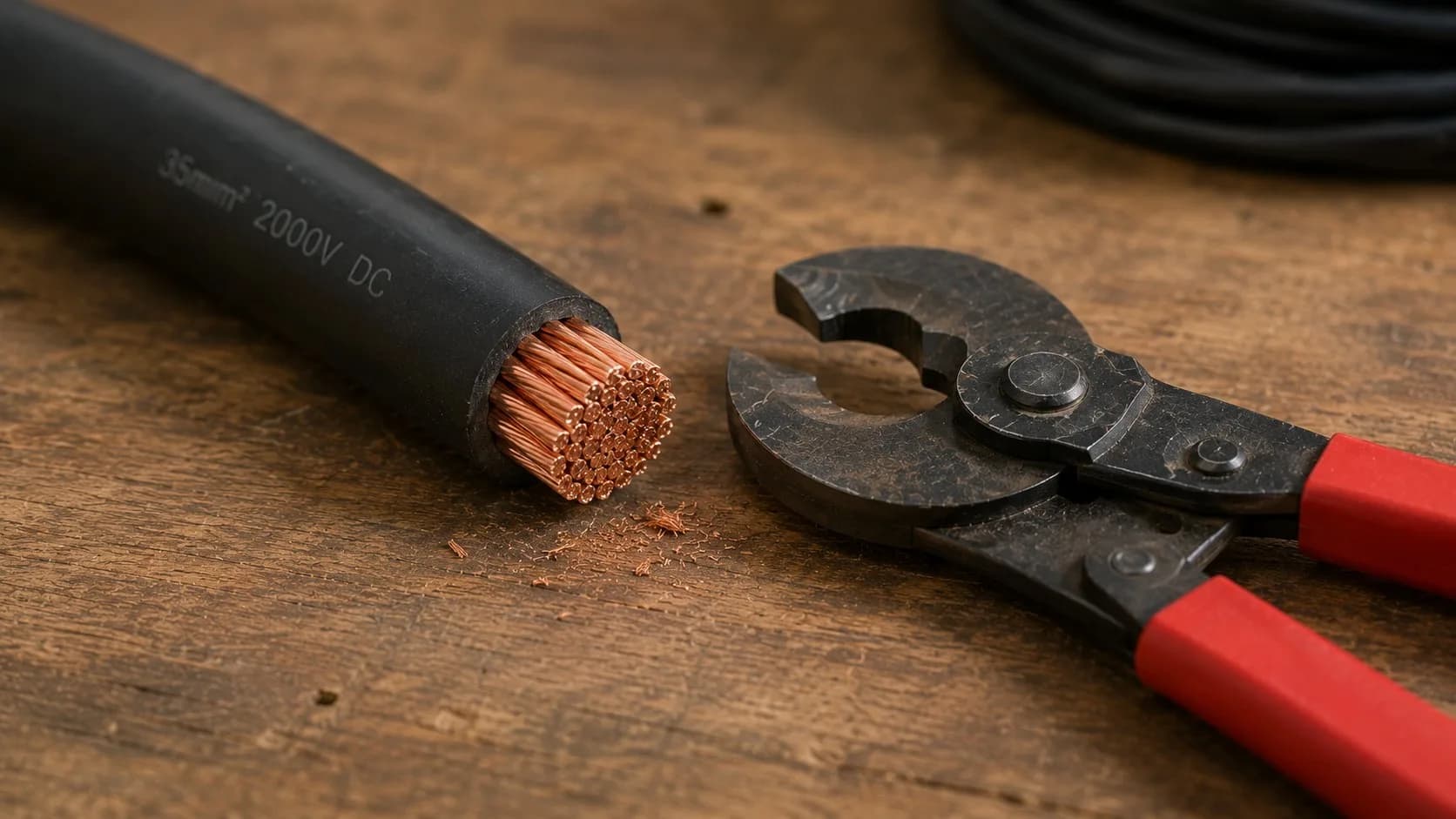
Use the right cable thickness. Thin cable can't carry much current. Force too much through it and it gets hot, the plastic melts, and you've got a problem. The cable calculator tells you what to use.
Every connection should be tight. Loose connections heat up, and heat melts things.
Wrap everything in proper insulation. Label every cable so you (or someone else) can figure out what does what in two years.
Monitoring
If you're adding a monitor, the shunt goes on the battery's minus wire. Every electron in or out passes through it, so the monitor knows exactly what's going on.
A Last Note
Wiring up an off-grid system isn't rocket science. But it isn't bunny ears either. If you've never done mains-level wiring, get someone who has to look over your work before you turn anything on.
The energy in a home-sized battery is enough to weld metal. Worth doing this part right.