
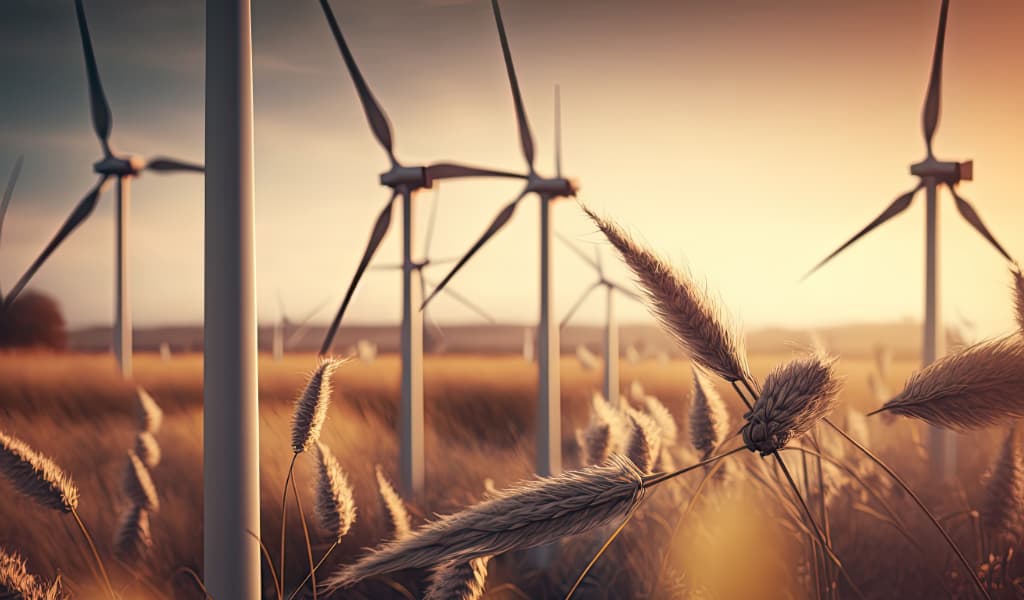
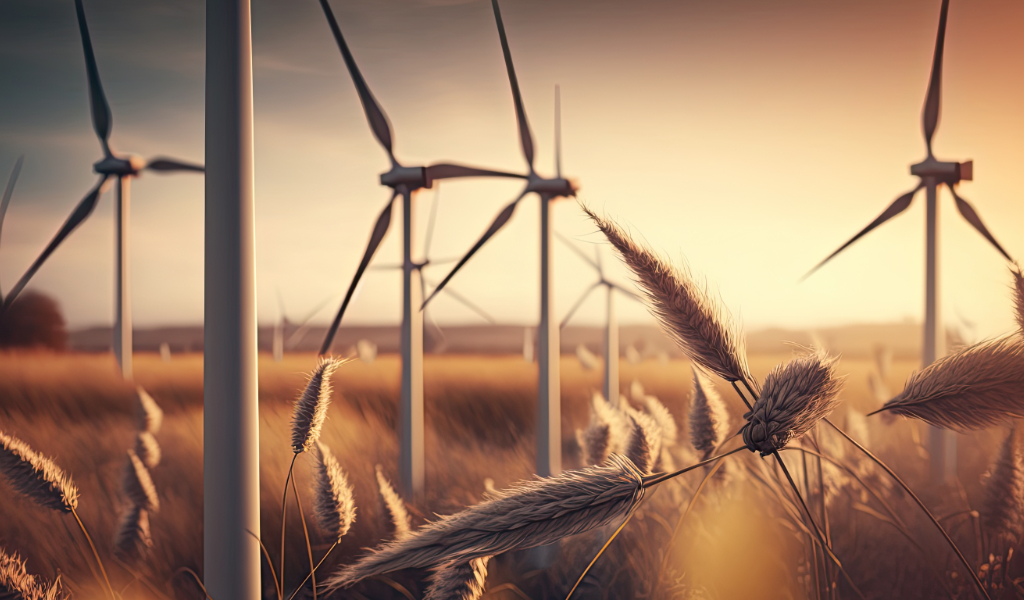
When you picture a wind turbine, you're probably picturing a HAWT. The white propeller shape on a tall pole. Two or three slim blades, spinning slowly against the sky.
HAWT stands for horizontal axis wind turbine. The "horizontal axis" bit just means the shaft the blades spin around runs sideways, like an airplane propeller. Scientists called it that to tell it apart from the egg-beater shape, which has a vertical axis.
This is the kind that almost every commercial wind farm uses. It dominates the industry. And it's earned that spot.
How It Works
The blades are shaped like an airplane wing. When wind flows over them, it creates a pull that yanks them around in a circle, the same way air over a plane's wing creates lift.
The spinning blades turn a shaft. The shaft runs into a box at the top of the tower called the nacelle. Inside the nacelle is a generator that turns spinning into electricity.
One thing about HAWTs: the blades have to face the wind to work properly. So the whole top of the turbine swivels on a kind of giant lazy susan called a yaw system. It listens for the wind direction and rotates the top to point the blades the right way.
It sounds complicated. It is. But the result is the most efficient wind-catcher ever built.
Why HAWTs Won
Three reasons HAWTs took over the wind industry.
They catch more wind for their size. A well-designed HAWT can turn around 40-50% of the wind hitting it into electricity. That's close to the absolute physical limit (called the Betz limit, around 59%). No other shape comes close.
They scale up beautifully. A bigger HAWT just means longer blades. Modern offshore turbines have blades longer than a soccer field. One blade. That much wind-catcher gives you serious power: a single big offshore turbine can run thousands of homes.
They've been improved for over 100 years. With that much engineering history, the wrinkles are mostly worked out. Spare parts are everywhere. Repair crews know what they're doing.
The Parts Of A HAWT
The blades you see are just the most visible part. Inside the nacelle, a whole system of parts works together.
→ Read more about the components of a HAWT
Types Of HAWT
Not all horizontal turbines work the same way.
Upwind turbines have the blades on the windward side of the tower. The wind hits the blades first, then flows around the tower. This is the most common setup, because the tower doesn't get in the way of the air flowing into the blades.
Downwind turbines put the blades behind the tower. The wind hits the tower first, then the blades. This sounds backwards, but it means the turbine doesn't need a yaw system. The blades naturally swing to point away from the wind, like a flag. They're simpler, but the tower creates messy air that hits the blades, so they're a bit less efficient.
Fixed-speed turbines spin at the same rate no matter how hard the wind blows. Cheaper, simpler, but they miss out on energy when the wind gets stronger.
Variable-speed turbines speed up in strong wind and slow down in weak wind. They grab more energy out of every gust. Almost all modern turbines work this way.
Where HAWTs Fall Short
HAWTs aren't perfect.
They have to face the wind. If the wind changes direction often (like in a city or a forested valley), the yaw system is constantly swinging the top around. Each swing wastes a few seconds of generation. In choppy wind, this adds up.
They make noise. The blade tips travel fast, and fast air over a sharp edge creates a whooshing sound. Modern designs are quieter, but you'll still hear them.
They can kill birds. A bird flying into a spinning blade has a bad day. Newer turbines have radar systems and even paint patterns that help birds see them, but it's still a real problem, especially near migration routes.
The bigger they get, the harder they are to install. A 100-metre blade is hard to truck down a normal road. Offshore installations need specialized ships. The whole supply chain gets exotic at large sizes.
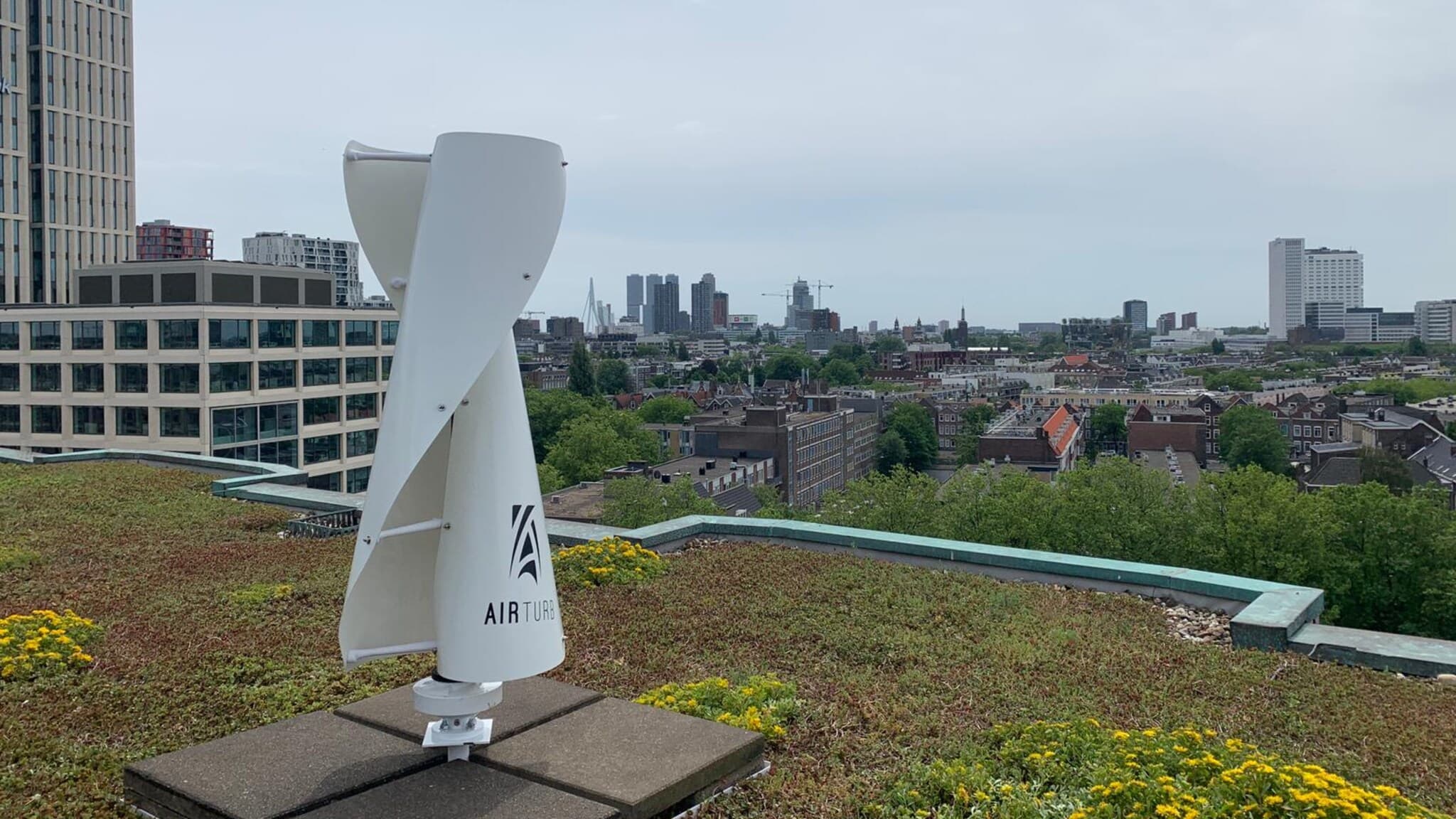
For a home setup, where wind is more turbulent and you can't put up a 100-metre tower anyway, the trade-offs change. Sometimes a vertical axis design actually beats a HAWT for the conditions you have.
Where HAWTs Get Used
Onshore wind farms. The rows of turbines you see on hills, on plains, along coasts. The bread and butter of wind power.
Offshore wind farms. Out at sea, where wind blows harder and more steadily. The biggest turbines on Earth live here. A single offshore turbine can hit 15 megawatts. That's enough for around 20,000 homes.
Home and farm setups. Smaller HAWTs on a tower in the yard. Good for properties with steady wind from a known direction.
Hybrid systems. A HAWT paired with solar panels and a battery bank. The wind covers the cloudy days and nights, solar handles the calm days.
Where HAWTs Are Heading
The blades keep getting longer. The newest offshore designs have rotors over 250 metres across. That's longer than two soccer fields end to end.
Floating turbines are a new trick. Instead of anchoring to the seabed, they sit on a platform that floats and is tied down with cables. That opens up deep-water sites where the seabed is too far down to plant a tower.
Materials keep getting lighter. Carbon fibre blades weigh less than the old fibreglass ones, which means a bigger turbine with the same tower.
→ What size turbine do you need?
→ Use the yearly kWh calculator
For most large-scale wind power, HAWTs are the answer. For your own roof or yard, the answer depends on your site.