

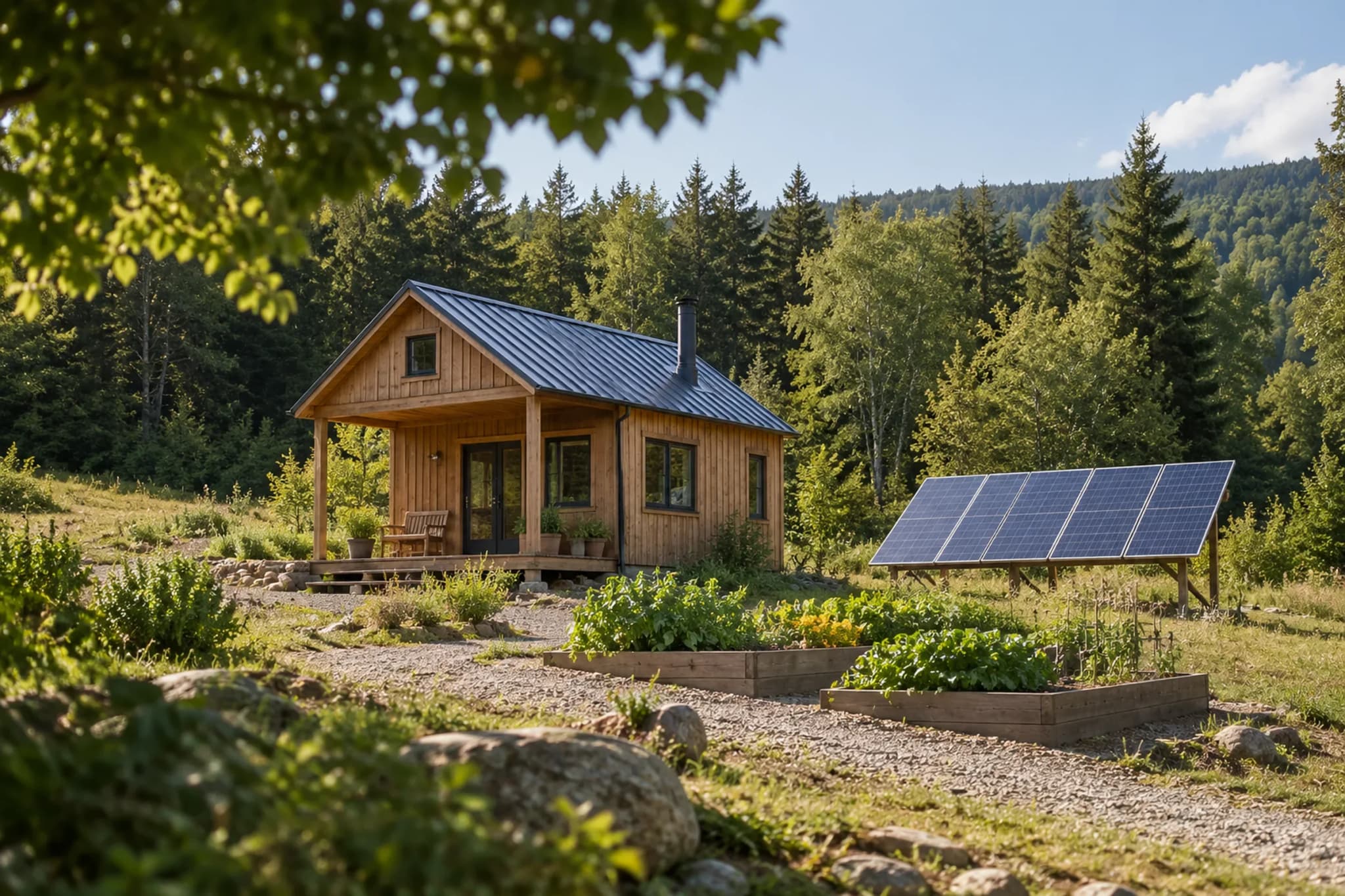
Why May Beats June For Solar Power
This May homestead checklist starts with a surprise. You'd guess June is the best month for solar power, but in Amsterdam it isn't.
A panel there makes about 4.3 kilowatt-hours a day for every kilowatt of panels in May, and about 4.2 in June. In Ohio, May gives about 4.4 a day, right up with the best summer months. That's enough to run a fridge for about four days.
Part of the reason is heat. Solar panels work a little worse when they get hot, like a runner on a scorching day.
Most panels lose a little output for every degree of heat. So a panel baking on a summer afternoon makes noticeably less. Cool, bright May days suit them perfectly.
That's why the list starts with energy, then works through food, water, the house and waste. Southern readers: your version of this month is November.
This month in three jobs: charge the battery, fill the tanks, plant the beds.
Fill The Battery To The Top
Step 1: Charge The Battery All The Way
After a winter of grey days, a battery deserves a really full charge. Late spring finally has the sun for it, day after day.
For lithium batteries that's simple: let them fill and let their own electronics handle the rest. Old-style flooded lead-acid batteries may need one extra step.
Step 2: Equalize Flooded Lead-Acid Batteries (Only If Needed)
A lead-acid battery is made of cells, little boxes linked together like train carriages. Over time some carriages end up a bit fuller than others.
Equalizing is a careful, extra-strong charge that evens them out again. Trojan, a big battery maker, says to do it only when a hydrometer shows the cells need it. A hydrometer is a small tool, a bit like a turkey baster with a float inside, that measures how strong the liquid in each cell is.
Equalizing makes the battery bubble and give off hydrogen, an explosive gas, so air the room well, keep flames away and wear eye protection.
Two rules matter. It's only for flooded batteries, the kind with caps you open to add water. Trojan says never to equalize sealed AGM or gel batteries, and any other battery type should follow its own manual.
Our guide to lead-acid batteries explains the different kinds and how to keep one healthy.
Garden Jobs: Plant Out Tomatoes, Vegetables And Containers
Step 3: Plant The Beds When The Soil Is Warm
So what do you plant in May? This is the big planting month, when the vegetable garden finally fills up. But warm-weather crops care more about soil temperature than the date.
Oregon State University gives the minimums for seeds to sprout. Beans and squash want soil of about 16 °C. Sweet corn can start at about 10 °C.
Plant them colder, and few or none of the seeds sprout. A soil thermometer pushed in a few centimetres settles the question.
Then come the tender seedlings you started indoors in early spring. Tomatoes and peppers can't take any frost, so they go outside only once the last frost has passed, after the hardening off you began in April. If your last frost comes late, watch the weather forecast until it has passed.
Tomatoes need a little help once they're in. The tall "cordon" varieties grow up a single stem, and the RHS, Britain's big gardening charity, says they need supports, usually a tall sturdy cane. They don't wrap around it by themselves, so tie the stem to the cane as it grows.
Small side shoots pop out where the leaves meet the main stem. The RHS says to remove them, by pinching them out or snapping them off, so all the growth goes up the one stem.
No garden bed? Tomatoes grow fine in containers too: the RHS gives one plant per 30 to 45 cm pot, or two per grow bag, in full sun.
The flowers go outside now too. The RHS says summer hanging baskets can be planted from late April, but the tender summer bedding plants in them need protection from frost until late May or early June. Without a greenhouse, plant them once the frost risk has passed.
Baskets dry out fast, so the RHS says to check them daily once the hot weather comes. Remove the dead blooms often too. That encourages the plant to keep making fresh flowers, and the colour lasts a longer season.
Strawberries begin to fruit as well. The RHS says to tuck straw or mats under the plants as the fruits form, to keep the berries off damp soil. Net them before they ripen, or the birds harvest them first.
Step 4: Sow A Little, Often
Lettuce and radishes all sown on one day are all ready on one day too. Then the garden gives you far more than you can eat, followed by nothing.
The fix is called succession sowing. NC State University suggests sowing radishes every two weeks, a short row at a time, so there's always some coming. Our guide to the off-grid garden helps you plan how much space each crop needs.
Fill Up The Water Supply
Step 5: Fill The Tanks Before Summer
May often still brings rain. Summer often doesn't.
So top up all the tanks and barrels now. Well water follows the seasons too: Penn State says groundwater usually sinks to its lowest point in late September or October.
A full tank going into summer is like a full water bottle at the start of a long hike. You'll be glad of it in August, when the garden is thirsty.
Shade The House Before The Heat
Step 6: Shade The Sunny Windows
The house is easier to keep cool if the heat never gets in, so plan it before the first hot week.
The US Department of Energy suggests awnings on south- and west-facing windows. For trees, it suggests tall leafy ones on the south side and lower ones on the west, where the evening sun comes in low and sideways.
A shade tree planted in April does the same job in later summers, and leafy trees drop their leaves in autumn, so the winter sun still gets through. Our guide to off-grid cooling explains why shade beats almost any machine.
Look After The Septic And The Lawn Clippings
Step 7: Check When The Septic Was Last Looked At
A septic tank works quietly underground, so it's easy to forget. That's exactly how it fails.
The EPA says to have it inspected at least once in three years, or yearly if it has pumps or other moving parts. Most tanks need pumping every three to five years.
Saving water helps it too. The EPA says one leaky or running toilet can send as much as 750 litres a day into the system. Our guide to septic systems explains how it all works.
Step 8: Use The Grass Clippings
The lawn grows fast in May, and the clippings are free plant food. University of Missouri Extension says leaving them on the lawn is highly recommended, and it doesn't cause a build-up of dead grass.
If you'd rather compost them, add thin layers of no more than 5 to 7.5 cm at a time. A thick, wet pile of clippings turns into a slimy, smelly mat, so mix them with dry browns like leaves. Our guide to home composting shows how to balance the heap.
Or don't mow a corner of it at all. Plantlife, a British wildflower charity, runs a campaign called No Mow May that asks people to stop mowing their lawn, or even just a small part of it, from May onwards.
Daisies, dandelions and clover get a chance to flower, and Plantlife says even the tiniest wild patch can provide food for bees and butterflies, the same pollinators your squash and strawberries need.
By June the beds are planted, the tanks are full and the battery is topped up. Summer can come now. The house is stocked up for it.
Sources
- PVGIS, EU Joint Research Centre, monthly solar output for Amsterdam
- PVGIS, EU Joint Research Centre, monthly solar output for Ohio
- EnergySage, How hot do solar panels get?
- Trojan Battery, User's Guide
- Trojan Battery, Flooded battery quick start guide
- Oregon State University Extension, Soil temperature conditions for vegetable seed germination
- RHS, Tomatoes: grow your own
- RHS, Hanging baskets
- RHS, Strawberries: grow your own
- NC State Extension, Succession planting in the vegetable garden
- Penn State Extension, Managing your well during drought
- US Department of Energy, Landscaping for energy-efficient homes
- US Department of Energy, Energy Saver guide
- EPA, How to care for your septic system
- University of Missouri Extension, Grass clippings (G6959)
- University of Missouri Extension, Making and using compost (G6956)
- Plantlife, No Mow May
Hard Words
| Term | What it means |
|---|---|
| Kilowatt-hour | An amount of electricity: about what a small heater uses in one hour. |
| Equalizing | A careful, extra-strong charge that evens out the cells of a flooded lead-acid battery. |
| Hydrometer | A small tool that measures how strong the liquid in each battery cell is. |
| AGM and gel | Sealed lead-acid batteries that never need water. They must not be equalized. |
| Succession sowing | Sowing a short row at a time, a week or two apart, so a crop keeps coming. |
| Cordon tomato | A tall tomato grown up one stem, tied to a cane. |
| Side shoot | A small extra stem that grows where a leaf meets the main stem. |
| Summer bedding | Tender flowering annuals set out for one summer, often in pots and baskets. |
| Awning | A small roof over a window that shades it from high summer sun. |
| Septic tank | An underground tank where a home's wastewater settles before it soaks into the soil. |
Common Questions
What should I plant in May?
Most May gardening is planting. Sow beans, squash and sweet corn outside once the soil is warm enough, and plant out tender tomatoes and peppers once the last frost has passed.
What garden jobs are there in May?
Plant out and stake tomatoes, plant up hanging baskets after the frost, put straw under strawberries and net them, sow little and often, and leave clippings on the lawn or a patch unmown for pollinators.
When can I put hanging baskets outside?
Once the risk of frost has passed, usually late May or early June, says the RHS. In a frost-free greenhouse they can be planted from late April.
What should be on a May homestead checklist?
The garden jobs, plus a full battery charge, full water tanks, shade on sunny windows and a check on when the septic tank was last inspected. Southern hemisphere homesteads do the same list in November.
How often should a septic tank be pumped?
Usually every three to five years, says the EPA. How often depends on tank size and how many people use it, so ask your inspector.