

Why August Starts With Too Many Courgettes
In August, a solar panel in Ohio has its best month of the year, about 4.4 kilowatt-hours a day for every kilowatt of panels. In Amsterdam it's already sliding, down to about 3.7 a day from 4.1 in July.
The garden doesn't care about any of that. It's handing you more beans, tomatoes and courgettes than you can eat.
So this August homestead checklist starts with food, then works through energy, water, the house and waste. Southern readers: your version of this month is February.
This month in three jobs: bottle the surplus, dry the herbs, clear the brush.
Harvest The Garden And Put The Crop Away Safely
Step 1: Pick Courgettes While They're Small
Turn your back on a courgette plant for three days, and you'll find one the size of a baseball bat. Smaller ones are firmer and tastier. Big ones are watery and full of seeds.
Iowa State University says to pick courgettes, also called zucchini, when they're about 15 to 20 cm long. That's roughly the length of a pencil. Check the plants every day or two.
So what to plant in August? Every garden bed that empties can grow one more crop before winter. The University of Maryland's calendar, built for a first frost around late October, sows spinach, leaf lettuce, arugula, radishes and turnips outdoors now, and plants out cabbage seedlings. Dates shift a week or two with where you live.
The fruit plants want care too. The RHS, Britain's big gardening charity, says late summer is ideal for rooting strawberry runners: pin each baby plant into a pot of moist compost beside its parent, and cut it free once it roots. When summer strawberries finish, remove the old leaves about 10 cm above the crown, so fresh ones grow.
Apples trained flat against a wall or wire get their summer pruning in mid to late August, once the bottom third of the new shoots is woody. The RHS says to cut new side shoots longer than 20 cm back to three leaves. That keeps growth in check, lets light reach the fruit and sets up next year's crop. Our guide to the off-grid garden covers how much to grow.
Step 2: Bottle The Surplus The Safe Way
Canning means sealing food in jars and heating it, so germs can't spoil it. Summer food can then sit on a shelf until winter. But it has one hidden danger.
Some soil germs make spores, tiny tough seeds that live through boiling. In a sealed jar of low-acid food, the botulism germ can wake up and make a poison you can't see, smell or taste.
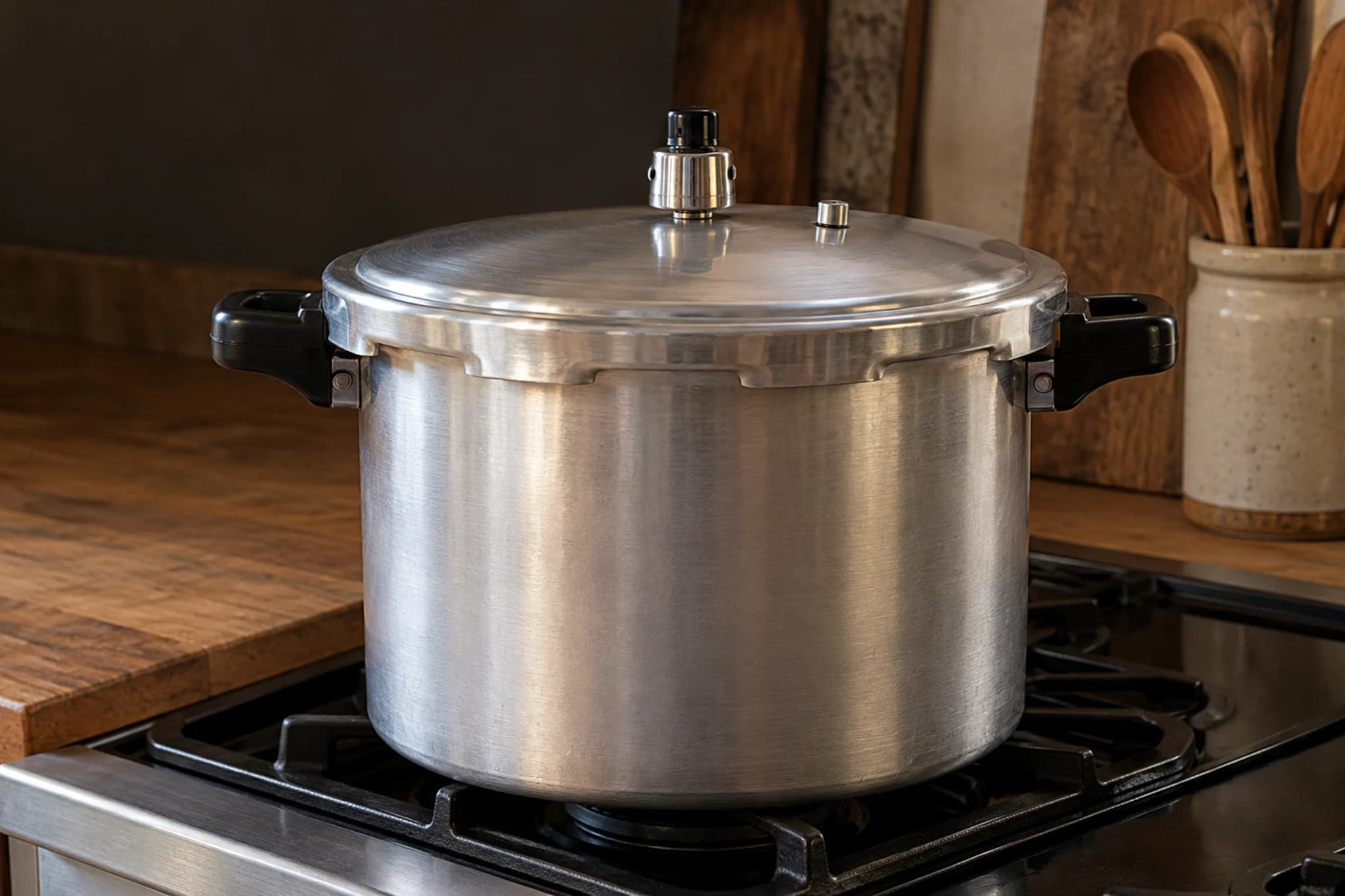
So there are two ways to can, and the food decides which one. Acidic foods like most fruit, jam and pickles can go in a boiling water bath. Vegetables, meat and other low-acid foods must go in a pressure canner, which reaches 116 to 121 °C.
The USDA says pressure canning is the only recommended method for vegetables and meat. Always follow a tested recipe, like the ones in the free USDA Complete Guide to Home Canning.
If you live above about 300 metres, add time to water-bath recipes and pressure to pressure-canner recipes, exactly as the tested recipe says.
Step 3: Add Acid To Tomatoes
Tomatoes sit right on the border between acidic and not. So they need a helper however you can them, in a boiling water bath or even a pressure canner: 2 tablespoons of bottled lemon juice or 1/2 teaspoon of citric acid per quart jar (just under a litre), half that per pint.
Bottled juice is used because its strength is always the same. Our guide to food preservation explains why the acid matters so much.
Step 4: Dry The Herbs
Herbs are easy to dry with no power at all. NC State University says to cut them in the early morning, once the dew has dried, and before they flower.
Tie them in small bundles and hang them upside down somewhere warm, dry and airy, out of direct sun. They're ready when the leaves are brittle and crumble easily. Store them in airtight jars somewhere cool and dark.
Let The Sun Do The Drying
Step 5: Dry Fruit With Sun Or Solar Power
You can dry fruit in the sun itself, but only in the right weather. The US National Center for Home Food Preservation says sun drying needs temperatures of at least 29 °C and air that's not too damp. It's for fruit only, never vegetables or meat.
An electric food dryer is more reliable. It runs at about 60 °C for hours, so on an off-grid system, run it on sunny mornings when the panels can carry it. Our guide to working out your power needs helps you see what a new machine adds.
Step 6: Look Ahead To The Short Days
The power drops quickly from here. In Amsterdam, panels make about 3.2 kilowatt-hours a day per kilowatt in September and only 2.1 in October.
So use August to get ready. Book the chimney sweep before the autumn rush, so October's sweep has a date. The generator can rest until October.
Stretch The Water Through Late Summer
Step 7: Go Easy On The Well
Underground water rises and falls with the seasons, like a slow tide. Penn State says groundwater usually reaches its lowest point in late September or October, after a summer of plants drinking and little rain soaking in.
So late summer is when a shallow well can run short. Give the garden a drink at the roots, keep June's mulch topped up to hold the moisture in, fix dripping taps and save the big jobs for after a good rain. Our guide to off-grid wells explains what makes a well run dry.
Clear Burnable Plants Away From The House
Step 8: Clear The Brush Around The House
In dry places, late summer is fire season. Flying sparks, called embers, can travel far ahead of a wildfire and land right next to a house.
The NFPA, the US fire protection group, calls the first 1.5 metres around a house the "immediate zone". It says that strip should be non-combustible, which means nothing in it can burn. To protect the house, remove bark chips, firewood and dry leaves from that strip. Think gravel, stone and bare soil instead.
Further out, up to about 9 metres, keep plants trimmed and spaced apart. When you plan a new home, where it sits on the land matters as much as its walls, and our guide to building an off-grid home starts there.
Reuse The Jars, Compost The Peels
Step 9: Reuse Jars, Not Lids
Canning is great for cutting waste. The US National Center for Home Food Preservation says glass canning jars can be reused many times, and so can the metal bands that screw on.
The flat lids are different. They seal only once, so each jar needs a new lid every time. Our guide to off-grid recycling shows why reusing comes before recycling.
Step 10: Cover The Peels And Cores
Canning day leaves a mountain of peels, cores and tomato skins. Treat them like July's fruit scraps: bury them under 10 to 20 cm of browns, so flies and animals don't find them.
By September the shelves are lined with jars, the herbs hang drying and the yard is clear. Summer is in the jars now, ready to be winter food.
Sources
- PVGIS, EU Joint Research Centre, monthly solar output for Amsterdam
- PVGIS, EU Joint Research Centre, monthly solar output for Ohio
- Iowa State University Extension, When should I harvest my summer squash?
- University of Maryland Extension, Vegetable planting calendar
- RHS, Strawberries: grow your own
- RHS, Apples and pears: summer pruning
- National Center for Home Food Preservation, Ensuring safe canned foods
- USDA Complete Guide to Home Canning, Principles of home canning
- Ohio State University Extension, Home canning and botulism
- National Center for Home Food Preservation, Since you can't have too many tomatoes
- National Center for Home Food Preservation, Selecting the correct processing time
- NC State Extension, Harvesting and preserving herbs for the home gardener
- National Center for Home Food Preservation, Sun drying
- National Center for Home Food Preservation, Food dehydrators
- Penn State Extension, Managing your well during drought
- NFPA, Preparing homes for wildfire
- National Center for Home Food Preservation, Recommended jars and lids
- US EPA, Composting at home
Hard Words
| Term | What it means |
|---|---|
| Kilowatt-hour | An amount of electricity: about what a small heater uses in one hour. |
| Canning | Sealing food in jars and heating it so germs can't spoil it. |
| Botulism | A rare, very dangerous poisoning from a germ that can grow in badly canned low-acid food. |
| Spore | A tiny, tough seed-like form some germs make. It survives boiling water. |
| Pressure canner | A heavy pot with a locked lid that heats jars above boiling, to 116 °C or more. |
| Water bath canning | Boiling sealed jars in a big pot of water. Safe only for acidic foods. |
| Groundwater | Water stored underground in soil and rock, which wells pump up. |
| Embers | Small burning bits that fly ahead of a fire and can start new ones. |
| Non-combustible | Something that can't burn, like stone, gravel or metal. |
Common Questions
What garden jobs are there in August?
Pick courgettes small, sow autumn greens, can the surplus with tested recipes, dry herbs and fruit, root strawberry runners and summer prune trained apples. Beyond the garden, go easy on the well, clear burnable things near the house and cover kitchen scraps. Southern hemisphere homesteads do the same list in February.
What should I plant in August?
Quick autumn crops. The University of Maryland's calendar sows spinach, leaf lettuce, arugula, radishes and turnips outdoors in August and plants out cabbage seedlings. Where the first frost comes earlier, sow sooner and pick the fastest crops.
Do I need to add lemon juice when canning tomatoes?
Yes, however you can them. Use bottled lemon juice or citric acid in the amounts above, and follow a tested recipe exactly.