

Why July Starts With A Bowl Of Berries
In July, a solar panel in Amsterdam makes about 4.1 kilowatt-hours a day for every kilowatt of panels. In Ohio it's about 4.4. Power is not the problem this month.
Heat is. And water. And a garden that suddenly gives more food than one family can eat in a week.
So this July homestead checklist starts with food, then works through water, energy, the house and waste. Southern readers: your version of this month is January.
This month in three jobs: pick at dawn, shade the battery, open up at night.
Harvest The Garden And Keep The Berries Fresh
Step 1: Pick In The Cool Of The Morning
Berries picked at noon are warm, soft and start to spoil fast. Iowa State University says to pick in the early morning, before the heat builds up in the fruit, and get them cold straight away.
Don't wash them until you're about to eat them. Water on the skin makes them go mushy and mouldy sooner.
Even chilled, fresh garden berries don't last long. Raspberries keep only a few days in the fridge, and strawberries not much longer. So check the canes regularly and pick little and often.
When a row of summer raspberries has finished, it's pruning time. The RHS, Britain's big gardening charity, says to do it straight after harvesting: cut every old, woody cane that carried berries right down to the ground. Then keep the six to eight strongest new green canes per plant, tie them to the wires about 10 cm apart and remove the rest, so all the growth goes into them. Those green canes are next summer's crop.
Strawberry plants get a haircut too. Once cropping is over, the RHS cuts the old leaves off about 10 cm above the crown, the knobbly middle of the plant, so fresh healthy leaves can grow.
So what to plant in July? A finished row is an empty bed, and an empty bed can still grow food before winter. The University of Maryland's calendar, built for a last frost around mid-April, sows beets, carrots, kale, turnips and fall lettuce in July, and plants out cabbage and cauliflower for an autumn harvest. The RHS sows spring cabbage in July too: it sits through winter and is ready from mid-spring.
Our off-grid garden guide covers how much to grow.
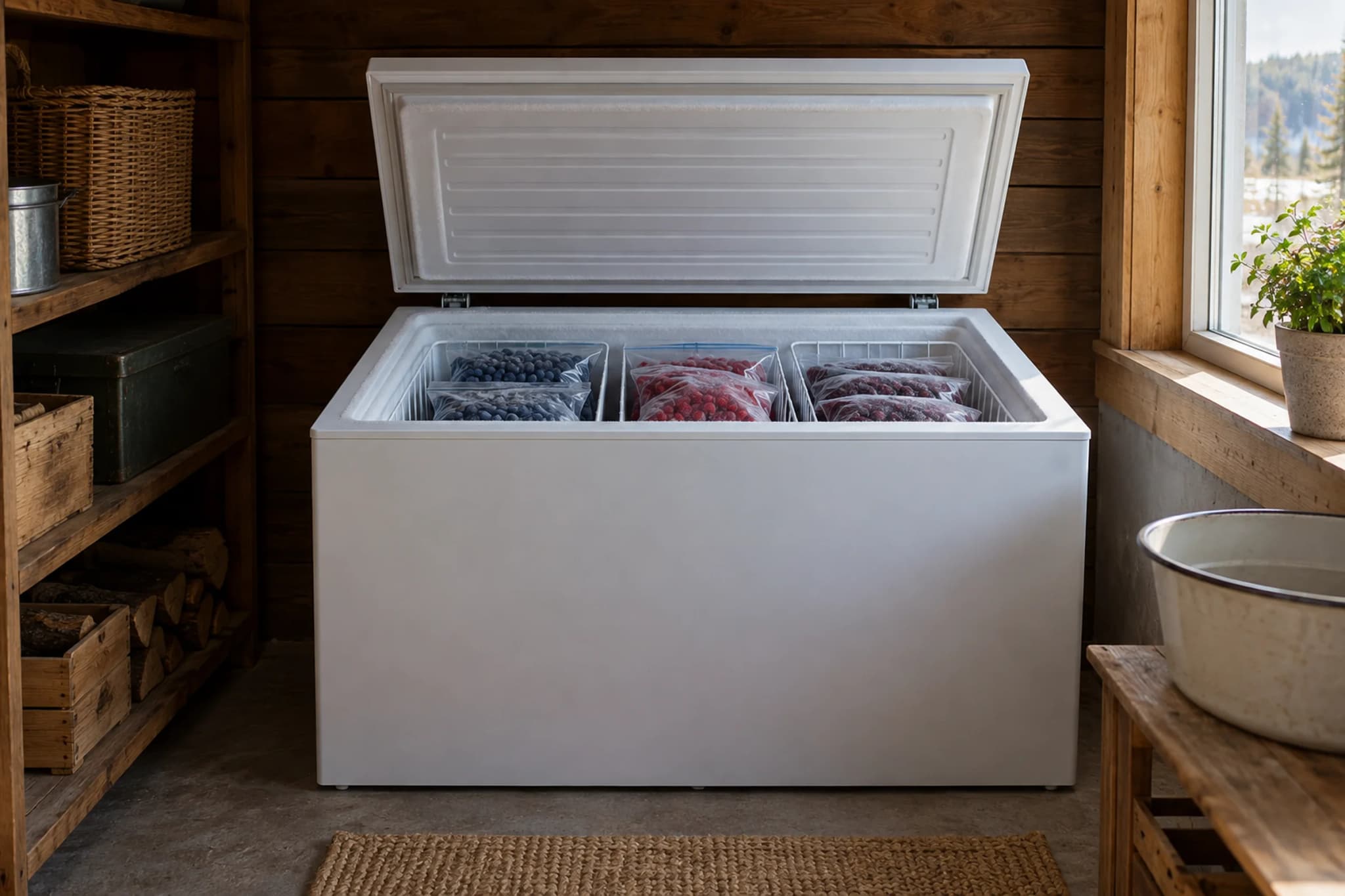
Step 2: Freeze The Rest On A Tray
Got more than you can eat? Freeze them, but avoid one big bag. They'd freeze into one solid purple brick.
The US National Center for Home Food Preservation says to spread the fruit in a single layer on a tray and freeze it. Once the berries are hard, pack them into bags or boxes. Now you can pour out a handful at a time, like frozen peas.
At -18 °C, frozen fruit keeps its best taste for about 8 to 12 months. A freezer runs all year, though, so on an off-grid system it's one of the hungriest machines in the house. Our guide to food preservation covers drying, jam and other ways that need no power once they're done.
Make Every Litre Count In The Dry Summer Weeks
Step 3: Give Shower Water A Second Job
The water from your shower, bathroom sink and washing machine is called greywater. It's a little soapy, but it doesn't have to go straight down the drain.
Oregon's environment department allows it on many garden plants, with clear limits. Keep it off root vegetables like carrots, and off any part of a plant you eat. Fruit trees and bushes around the garden are the usual target.
Use it the same day. Oregon says not to store greywater longer than 24 hours, so germs and bad smells don't build up.
Let it soak out under at least 5 cm of mulch or soil. Our guide to greywater systems explains the simple setups and the rules where you live.
Step 4: Keep The Rain Barrels Dark And Screened
A rain barrel standing in full sun can turn green inside. That's algae, tiny plants that love warm water and light.
Keep the lids on and April's fine mesh over every opening, so mosquitoes can't breed in there either, and empty a barrel you aren't using at least once a week.
That barrel water has a big job now: the tomatoes. The RHS says to water them regularly so the soil stays evenly moist. Wet one day and bone dry the next can make the tomatoes split, or give them blossom end rot, so check the soil moisture with a finger before you water. Plants in containers dry out fast and may need a drink every day in hot weather.
Once the first fruits start to swell, the RHS feeds container plants every 10 to 14 days with a high-potassium liquid fertiliser. Tie the stems to their support as they grow, because tomatoes don't climb a cane by themselves.
Keep The Battery Cool
Step 5: Keep The Battery Out Of The Heat
Batteries hate cold, but they hate heat too, in a quieter way. Heat speeds up the chemistry inside, and that wears them out.
Trojan, a big battery maker, says that for every 10 °C warmer, the reactions inside a lead-acid battery run twice as fast. So a month at 35 °C ages a battery as much as two months at 25 °C.
Lithium batteries have limits too: Victron rates its lithium batteries for use up to 50 °C.
Keep the battery in a shaded, airy spot, never in a hot shed under a metal roof. Our guide to off-grid life in hot climates explains why batteries cook faster in the heat.
Keep The House And Yourself Cool
Step 6: Close Up By Day, Open Up At Night
The US Department of Energy has a simple routine for hot weather. Open the windows at night while you sleep. In the morning, shut the windows and blinds to trap the cool air inside.
It works best when nights are clearly cooler than days. Our guide to off-grid cooling shows more ways to keep heat out without an air conditioner.
Step 7: Work In The Cool Hours
July chores can be hard work in the heat. The CDC says to plan outdoor jobs for the coolest parts of the day, take breaks in the shade and drink often.
For moderate work outside, the US workplace safety institute NIOSH says to drink about a cup of water, 240 millilitres, every 15 to 20 minutes.
Heat stroke is an emergency. The CDC warns that body temperature can climb to 41 °C or more within 10 to 15 minutes. If someone gets confused or faints in the heat, call for help straight away.
Keep The Compost Covered
Step 8: Bury The Fruit Scraps
Summer brings piles of peels, cores and squashed berries. Left on top of the compost heap, they're a free buffet for flies and animals.
The EPA says to cover fresh food scraps with 10 to 20 cm of browns, like dry leaves, straw or shredded cardboard. The browns hide the smell and keep the heap balanced. And keep the heap as damp as June's wrung-out sponge, because the July sun dries it fast. Our guide to home composting shows how to fix a heap that's too wet or too dry.
By August the freezer is filling up, the barrels are clear and the battery is cool in the shade. Nothing spoiled in the heat, not the berries, not the water and not the battery.
Sources
- PVGIS, EU Joint Research Centre, monthly solar output for Amsterdam
- PVGIS, EU Joint Research Centre, monthly solar output for Ohio
- Iowa State University Extension, Harvesting and storing small fruit
- University of Illinois Extension, Small fruits: handling and care
- RHS, Raspberries: grow your own
- RHS, Strawberries: grow your own
- RHS, Tomatoes: grow your own
- RHS, Cabbages: grow your own
- University of Maryland Extension, Vegetable planting calendar
- National Center for Home Food Preservation, Dry or tray packing for fruits
- National Center for Home Food Preservation, How long can I store frozen foods?
- Oregon DEQ, Graywater guide for homeowners
- University of Wisconsin Extension, Rain barrels
- Trojan Battery, TE35 data sheet
- Victron Energy, Lithium Battery Smart: operation
- US Department of Energy, Summer energy saving tips (archived)
- CDC, About heat and your health
- CDC NIOSH, Heat stress recommendations
- CDC NIOSH, Heat-related illnesses
- US EPA, Composting at home
Hard Words
| Term | What it means |
|---|---|
| Kilowatt-hour | An amount of electricity: about what a small heater uses in one hour. |
| Tray freezing | Freezing fruit spread out on a tray first, so the pieces don't stick together in the bag. |
| Greywater | Used water from showers, sinks and washing machines. Not toilet water. |
| Algae | Tiny green plants that grow in warm, still water when light gets in. |
| Lead-acid battery | An older battery type with liquid inside. Heat makes it age faster. |
| NIOSH | The US government institute that studies safety and health at work. |
| Heat stroke | A dangerous overheating of the body. It's a medical emergency. |
| Browns | Dry, carbon-rich compost materials like leaves, straw and cardboard. |
| Blossom end rot | A dark, sunken patch on the bottom of a tomato, linked to uneven watering. |
| Crown | The short, thick middle of a strawberry plant, where the leaves and roots start. |
Common Questions
What garden jobs are there in July?
Pick berries in the cool morning and freeze the extras on a tray. Prune summer raspberries after harvesting, cut back old strawberry leaves and water tomatoes regularly. Sow the gaps for autumn and winter.
Off-grid, reuse greywater on fruit trees, keep rain barrels covered, shade the battery and bury scraps in the compost. Southern hemisphere homesteads do this list in January.
What should I plant in July?
Fill the beds left by finished crops. With a last frost around mid-April, the University of Maryland calendar sows beets, carrots, kale, turnips and fall lettuce in July and plants out cabbage and cauliflower. The RHS sows spring cabbage in July to stand through winter.
When do you prune summer raspberries?
Straight after the harvest, the RHS says. Cut the old canes that carried berries down to the ground, then keep six to eight strong new green canes per plant and tie them in.
How often should I water tomatoes in July?
Regularly, so the soil stays evenly moist. The RHS says uneven watering can split the fruit or cause blossom end rot. In hot weather, plants in containers may need water every day.
Can I use greywater on my vegetable garden?
Sometimes, with limits. Oregon, for example, allows it on food plants except root vegetables and crops where the part you eat touches the water. Use it within 24 hours, under mulch or soil.
Does heat damage solar batteries?
Yes, it shortens their life. Trojan says a month at 35 °C ages a lead-acid battery like two months at 25 °C. Keep batteries in a shaded, airy place.
How much water should I drink when working in the heat?
For moderate outdoor work, NIOSH advises about a cup (240 ml) every 15 to 20 minutes. Rest in the shade and do the hardest jobs in the coolest hours.