

Why April Starts In The Garden
In April, a solar panel in Amsterdam already makes about 4.1 kilowatt-hours a day for every kilowatt of panels. June only manages about 4.2. That's a summer-sized day of power, while there's still frost on some mornings.
In Ohio, April gives about 4.2 a day, close to the long days ahead.
So the power problem is solved for now. This April homestead checklist starts in the garden, then works through water, waste, energy and the house. Southern readers: your version of this month is October.
This month in three jobs: plant after frost, catch the rain, check the well.
Move The Vegetable Garden Outdoors
Step 1: Harden Off The Seedlings
The tomatoes and peppers on your windowsill have lived a soft life. No wind, no strong sun, no cold nights. Put them straight outside and they can wilt or burn.
So you toughen them up slowly. Gardeners call it "hardening off". That's just a fancy way of saying you get the plants used to the outdoors bit by bit, like easing into a cold swimming pool.
South Dakota State University says to take 7 to 14 days. Start with 3 to 4 hours outside in a sheltered spot and add a little more each day. Keep them in if the day's high stays below about 7 °C.
Don't forget the flowers. SDSU gives full-sun annuals the same slow start, a little more sunlight each day.
Step 2: Plant Out After The Last Frost
Every area has an average last frost date. But here's the catch: "average" means there's still about a 50% chance of a frost after it.
Illinois Extension says tomatoes, beans and summer squash can go out from around that average date. February's sowing count planned on a week or two after it, which is the safer bet for tomatoes. Peppers and winter squash like it warmer, so wait about two more weeks.
Tomatoes really get going once nights stay above about 10 °C. If a cold night is forecast after planting out, throw an old sheet or a garden fleece over them.
So what can you plant in April without waiting? The tough crops. Illinois Extension calls onions and peas "hardy" and plants them four to six weeks before the average frost-free date. Carrots, lettuce and beets are "half hardy", and they can be sown from late March to early May.
The University of Maryland's planting calendar is built for a last frost around mid-April. It puts carrots, spinach, lettuce and radishes straight into the garden this month, and the broccoli, cauliflower and onion plants started indoors go out now too.
Short on space? Lettuce grows happily in a container by the back door. Our guide to the off-grid garden shows how row covers and cold frames add warm weeks to the season.
Catch The Spring Rain And Keep It Clean
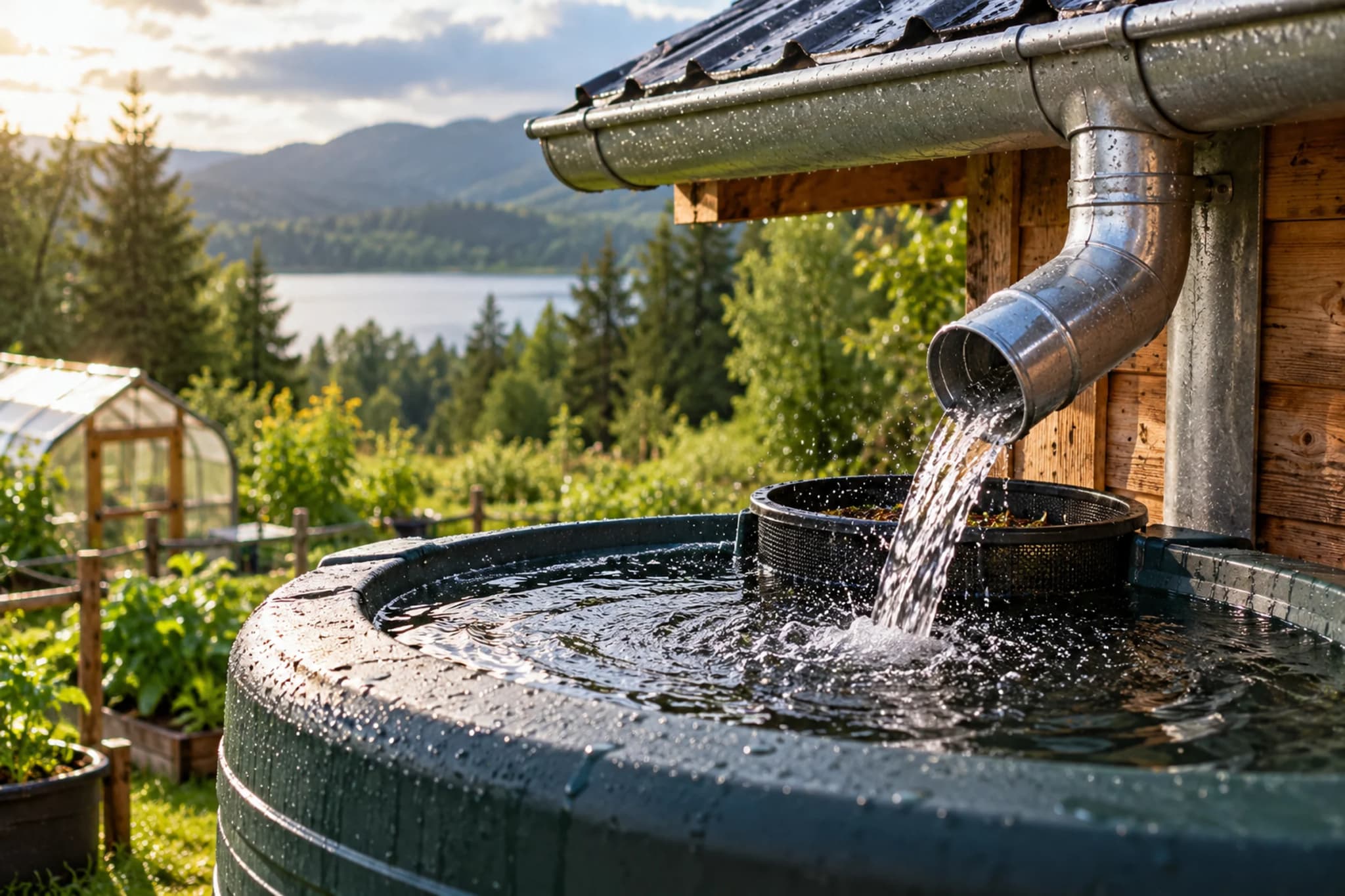
Step 3: Catch The Spring Rain
Here's a handy rule. One millimetre of rain falling on one square metre of roof gives one litre.
So a 100 m² roof in a 10 mm shower collects about 1,000 litres. That's five big 200-litre rain barrels from one rainy afternoon.
You won't catch all of it. The Texas rainwater manual says systems usually collect 75 to 90%, because some splashes out, some evaporates and some goes down the first flush. Reconnect the barrels you drained in autumn, and our guide to rainwater harvesting shows how to size a tank.
Step 4: Keep Mosquitoes Out Of The Water
Warm weather wakes up the mosquitoes, and still water is their nursery. The CDC says a mosquito can go from egg to flying adult in about 7 to 10 days.
So once a week, empty anything that holds rain, like buckets, saucers and old tyres. Barrels and tanks should be closed, with fine mesh over every opening.
Step 5: Give The Well Its Yearly Check
The CDC says to check your well at least every spring, to make sure nothing mechanical has gone wrong. Have the water tested at the same time.
The CDC says to test private well water at least once a year for four things. Coliform bacteria show whether germs from soil or waste are getting in. Nitrates often come from fertilizer or septic systems. Dissolved solids tell you how much stuff is dissolved in the water, and pH tells you how acidic it is. Your local health department or a certified lab can do it.
If your area flooded, be extra careful.
After a flood, the EPA warns that wells older than 10 years or shallower than about 15 metres are likely to be contaminated. Don't switch on a pump that has been under water. Don't drink from it until the well has been disinfected and a lab test comes back clean.
Wake Up The Compost And Spare The Septic
Step 6: Turn The Compost
As the weather warms, the tiny creatures in your compost heap get busy again. They need air to work.
Cornell University says a heap works best between about 32 and 60 °C. A compost thermometer, a long metal spike you push into the middle, tells you where it is.
Turn the heap when it climbs above 60 °C or drops below 32 °C. Turning means forking the outside into the middle and fluffing it up, like stirring a pot so it cooks evenly. Above about 71 °C the heap gets so hot it kills its own helpers.
If it's too dry, add a splash from the barrel, and if it smells, add browns and turn it. Our guide to home composting has more fixes.
Step 7: Stay Off The Septic Field
Spring ground is soft and wet. If you have a septic system, the drain field, where the cleaned water soaks into the soil, is easy to damage now.
The EPA says never to park or drive on it. Heavy wheels squash the soil, and then the water can't soak away.
If the field is soaked after heavy rain, go easy on showers and laundry for a while.
Use The Spring Power Surplus
Step 8: Let The Charge Controller Do Its Job
On a sunny April day, a battery can be full by lunchtime. Then the charge controller, the box between the panels and the battery, turns the flow down so the battery doesn't get overcharged.
That's good for the battery, but it means free power goes unused. So keep March's habit of running the hungry jobs in the sunny hours. Our guide to charge controllers shows what the box does, and our off-grid power guide shows where it sits in the whole system.
Step 9: Park The Generator Properly
The generator might sit until autumn now. Fuel that sits goes stale. Honda's storage guide uses petrol with fuel stabilizer for storage of up to a year, and says to drain the carburetor if the generator runs less than once a month.
Follow your manual for long storage. It saves a frustrating pull on the starter cord in October.
Plant Shade And Protect The Fruit Trees
Step 10: Plant A Shade Tree For Summer
April is planting season, and a tree is the slowest, cheapest air conditioner there is.
The US Department of Energy says leafy trees can block 70 to 90% of hot summer sun. In winter they drop their leaves and let the sun back in. A well-planned garden can cut the cooling bill of an unshaded home by 15 to 50%.
Plant them on the sunny sides of the house, where afternoon heat hits hardest. Our guide to off-grid cooling explains why shade beats almost everything else.
Then tuck the new tree in with mulch, a blanket of wood chips or bark. UNH Extension says to spread it 5 to 10 cm thick, out to the edge of the branches, with none touching the trunk. Piled up against the bark like a little volcano, it stays wet and invites rot.
The fruit trees you already have need a different kind of care now, because their blossom is their soft spot. Illinois Extension says a frost of about -1 °C during or after blooming can kill some or all of the flowers, and with them the fruit. Apricots and sweet cherries are the most at risk, apples the least.
So on a frosty night, the RHS says to throw fleece over small fruit trees and take it off again in the morning.
By May the seedlings are outside, the barrels are filling and the compost is steaming. Everything that lived on a windowsill now lives outside.
Sources
- PVGIS, EU Joint Research Centre, monthly solar output for Amsterdam
- PVGIS, EU Joint Research Centre, monthly solar output for Ohio
- South Dakota State University Extension, Harden your transplants prior to planting your garden
- NC State Extension, Interpreting freeze/frost probabilities
- Illinois Extension, Patience is critical for many garden vegetables
- Illinois Extension, The time is right to plant cool season vegetables
- University of Maryland Extension, When to plant vegetables
- University of Maryland Extension, Lettuce
- UC Master Gardeners of Contra Costa, Seven tips for success when planting
- Texas Water Development Board, Rainwater Harvesting Manual
- CDC, Mosquito life cycle (Culex)
- CDC, Preventing mosquito bites
- CDC, Mosquito control at home
- CDC, Guidelines for testing well water
- EPA, What to do with your private well after a flood
- Cornell University, Compost temperature fact sheet
- EPA, Composting at home
- EPA, How to care for your septic system
- EPA, Septic systems: what to do after a flood
- Honda, Generator fuel recommendations
- US Department of Energy, Landscaping 101
- UNH Extension, Volcanoes kill trees!
- Illinois Extension, Fruit trees: management
- RHS, Fruit: protecting from frost
Hard Words
| Term | What it means |
|---|---|
| Kilowatt-hour | An amount of electricity: about what a small heater uses in one hour. |
| Hardening off | Getting indoor seedlings used to sun, wind and cold slowly before planting them out. |
| Last frost date | The average date of the last spring frost. There's still a 50% chance of frost after it. |
| Hardy crop | A vegetable, like peas or onions, that can take a light frost and goes in early. |
| Garden fleece | A thin white cloth laid over plants to keep frost off them. |
| First flush | The first, dirtiest rain off a roof, which is sent away before it reaches the tank. |
| Compost thermometer | A long metal thermometer you push into a compost heap to check how hot it is. |
| Coliform bacteria | Germs that show whether dirty water from soil or waste is getting into a well. |
| Nitrate | A chemical, often from fertilizer or septic systems, that can get into well water. |
| Drain field | The area of soil where water from a septic tank soaks away and gets cleaned. |
| Charge controller | The box between solar panels and a battery that stops the battery being overcharged. |
| Fuel stabilizer | A liquid you add to petrol so it stays fresh longer while it sits. |
| Mulch | A layer of wood chips, bark or straw spread on the soil to keep it moist and weeds down. |
Common Questions
What are the main April garden jobs?
Harden off seedlings, plant out tender crops after the last frost, sow hardy vegetables, reconnect rain barrels, empty standing water each week, check the well, turn the compost, keep off the septic field and plant a shade tree. Southern hemisphere homesteads do this list in October.
What should I plant in April?
Sow carrots, spinach, lettuce, beets and radishes straight into the garden, and set out broccoli, cauliflower and onion plants raised indoors. Tomatoes, beans and summer squash wait for the average last frost, and peppers about two weeks longer.
When can I plant tomatoes outside?
Around your average last frost date, safer a week or two after, once nights stay above about 10 °C. Harden them off for 7 to 14 days first, and keep a fleece ready.
How do I protect fruit blossom on a cold night?
Cover small trees with fleece on frosty nights and uncover them in the day. A frost of about -1 °C during or after bloom can kill the flowers. Apricots and sweet cherries are most at risk, apples least.
How often should I turn my compost?
Go by temperature, not the calendar. Turn the heap when a compost thermometer reads above 60 °C or below 32 °C.
How often should I test my well water?
At least once a year, for coliform bacteria, nitrates, dissolved solids and pH, and again after a flood, repairs or a change in taste, smell or colour.