

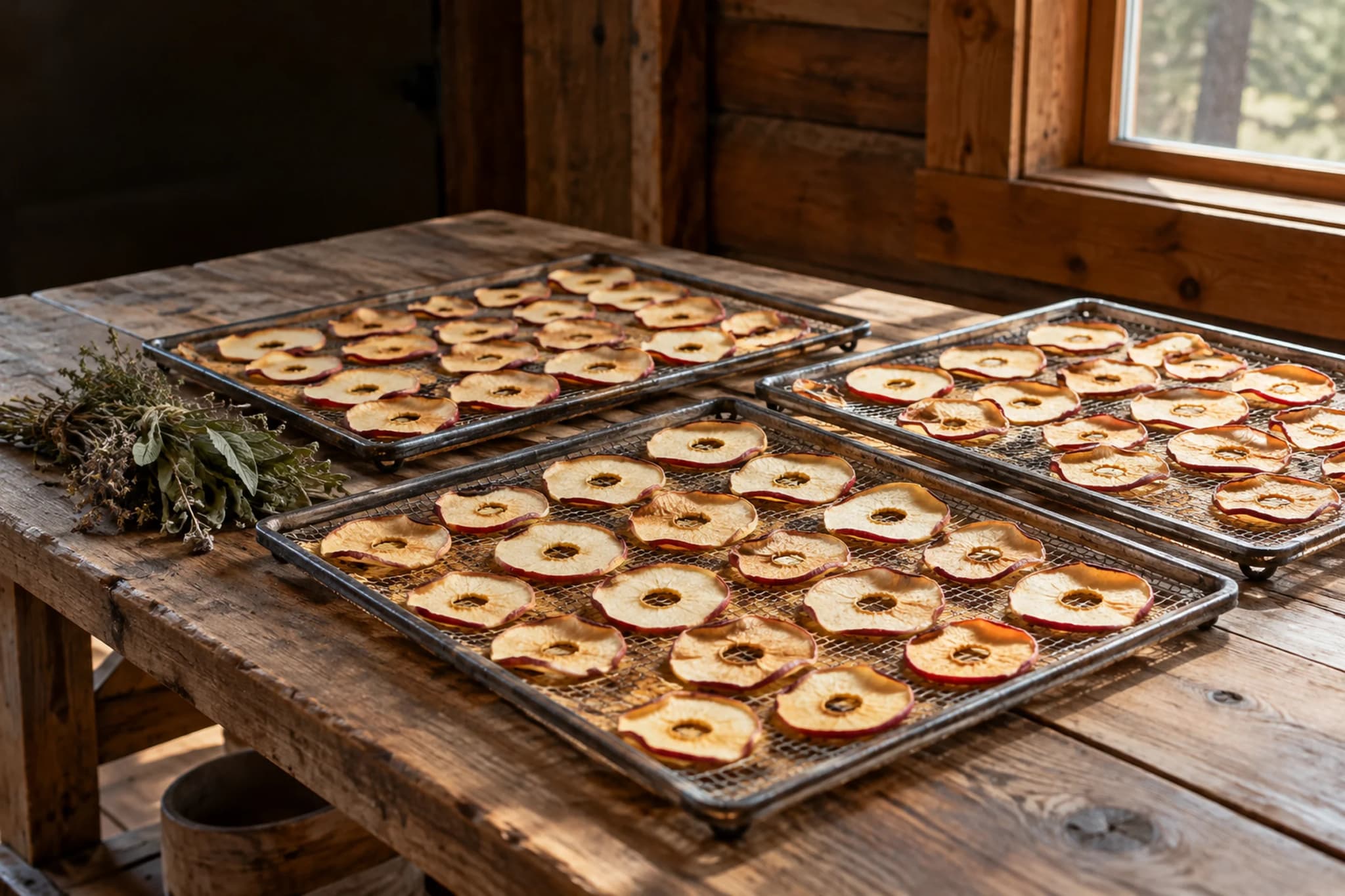
Why October Starts With A Full Field
Months of rain and sun have done their work, and the fields are full. October is harvest time for many tropical homes.
It's also when the rains start to pack up. India's monsoon usually leaves the whole country by about 15 October, and the rains in upper Thailand usually end around mid-October.
Not everywhere follows that plan, though. On the east coast of southern Thailand, heavy rain can last until January. So this October tropical homestead checklist is about bringing in the crop, drying it well and filling the tanks one last time.
Tamil Nadu and coastal Andhra Pradesh are the other big exception: they get their main rains from the northeast monsoon, from about the third week of October. South of the equator, in places like northern Australia, northern Brazil or Indonesia, your version of this month is April.
This month in three jobs: dry the grain, fill the tanks, mend the damage.
Bring In The Harvest, Dry It And Plant The Next Crop
Step 1: Harvest Gently
Pick maize, beans and rice on dry days when you can, and handle them gently. The World Health Organization says damaged grain is easier for moulds to invade.
Keep bruised, cracked or insect-eaten grain apart and use it up first, and only the clean, whole grain goes into storage.
Step 2: Dry The Grain Before You Store It
Fresh grain is still wet inside. In a study in Ghana, maize in the field was about 17 to 19% water, and drying brought it down to about 12 to 14%.
That matters, because moulds need damp to grow. Researchers say maize stored in the tropics should be dried until only about 13 to 14% of its weight is water, to keep harmful moulds away.
Spread the grain thin on tarps or racks in the sun, turn it often and cover it when rain threatens.
Step 3: Watch Out For Mould Poisons
Some moulds make poisons called aflatoxins. The World Health Organization says large doses can cause acute poisoning, and there's evidence they can cause liver cancer.
You can't cook them away. So throw out grain and nuts that look mouldy, discoloured or shrivelled. Our guide to off-grid food preservation explains drying and storage without a fridge.
Step 4: Save Seed From The Best Plants
Before everything goes to the kitchen, set aside seed from your strongest, healthiest rainy-season plants, like beans. Dry it well, then keep it dark, cool and dry until the rains come back, the same way as February's tomato seeds. Next year's garden starts in this jar.
Then fill the empty beds. So what should you plant in October in the tropics? Garden calendars written for a cool climate count the months from winter to summer, but a tropical garden runs on the rain calendar, and every place keeps its own. The growers around you know yours best.
One good guide comes from the University of Guam, on an island in the western Pacific north of the equator. On its planting table of common vegetables, October opens three new windows: cherry tomatoes from October to May, Chinese cabbage from October to April and watermelon from October to March.
Chinese cabbage is ready to pick 45 to 60 days after planting, and cherry tomatoes and watermelon after 60 to 70 days. Tomatoes need stakes, a trellis or a cage to keep the fruit off the ground, the guide says.
Yardlong beans, sweet corn and cucumbers from September's list can still go in until April. The year-round crops keep growing too: leafy greens, green onions, long eggplant, hot peppers, okra, bitter melon, sweet potatoes and taro. A sweet potato takes 3 to 4 months, so one planted now is ready early next year.
Try not to put the same vegetables back in the same bed year after year. The university says to rotate between plant families, like the tomato family, the bean family and the melon family. It's one of the ways the guide lists to keep pests and plant diseases down.
Many seeds sold in shops aren't made for the heat. Lettuce, broccoli and kale can grow well on Guam if you pick a heat-tolerant variety, one made for a hot and humid climate. Our off-grid vegetable garden guide covers soil, watering and space.
Fill Every Tank Before The Rains Stop
Step 5: Fill The Tanks One Last Time
The last storms of the season are the last free water for months. Make sure every drop off the roof goes into a tank, not onto the ground. Next month's list does the sum of how long it must last. Our rainwater harvesting guide shows how to size storage month by month.
Step 6: Add Storage If The Tank Overflowed All Season
If your tank spilled over after every storm, that was rain you could have kept. A second tank now means more to drink and cook with in March, when you'll want it most.
Step 7: Scrub Out The Mosquito Eggs
When the rains end, mosquitoes don't just disappear. Their eggs stay stuck to the inside of buckets, pots and tyres.
The CDC, the US health agency, says those eggs can survive drying out for up to 8 months, then hatch when the next rain covers them. So scrub out containers you won't use, turn them over or throw them away. Just emptying them isn't enough.
Get The Battery And Panels Ready For The Bright Months
Step 8: Give The Battery A Health Check
The cloudy season is hard on batteries, especially old-style lead-acid ones that sat half empty for weeks. Give them a full charge on the first sunny days.
Flooded lead-acid batteries, the kind with caps on top, also need their water checked. Our guide to lead-acid batteries explains the three simple rules that keep one healthy.
Step 9: Get Ready For The Sun To Come Back
Solar power climbs again from here. PVGIS is a free solar tool from the European Commission. For Bangkok it shows one kilowatt of panels making about 3.7 kilowatt-hours a day in October, 4.1 in November and 4.4 in January.
A kilowatt-hour is about what a small heater uses in one hour. That growing surplus is the energy side of the dry season.
Stay Ready For The Late-Season Storms
Step 10: Don't Put The Storm Kit Away Yet
The Atlantic hurricane season runs until 30 November. India has two cyclone seasons, says its weather department: one before the monsoon and one from October to December, just after it.
Keep the shutters, torches and stored water from June and August ready until the season is over.
Step 11: Mend The Wet-Season Damage
Walk around the house. Look for rusty roof screws, cracked plaster, rotten window frames and damp corners.
Fix small things now, while they're still small, and before the next rains find them again. Our guide to building an off-grid home explains what keeps a house standing.
Clear Crop Leftovers Before Pests And Disease Spread
Step 12: Compost The Stalks And Husks
After harvest, the fields are full of maize stalks, bean plants and husks. That's not rubbish. It's compost food.
Dry, woody leftovers are what gardeners call "browns". The US Environmental Protection Agency says a heap works best with two to three times as much brown as green, the wet stuff like kitchen scraps.
Chop stalks into short pieces so they rot faster, and bury kitchen scraps under 10 to 20 cm of them. Our guide to home composting explains how to build a heap.
Leave out plants that were sick or crawling with pests, though. The EPA puts diseased and pest-infested plants on its list of things not to compost, and the Guam guide says to clear away diseased leaves, fallen fruit and plant debris so pests can't spread.
October is the month when the work of the rainy season turns into food on the shelf. Dry it well, fill the tanks, and the dry season can come.
Sources
- The Tribune (India), Southwest monsoon withdraws from entire country: IMD
- Thai Meteorological Department, The climate of Thailand (archived)
- India Meteorological Department, press release of 15 October 2026
- World Health Organization, Mycotoxins fact sheet
- Journal of Stored Products Research, Moisture content, insect pests and mycotoxin levels of maize in the Middle Belt of Ghana (FAO AGRIS)
- Journal of Stored Products Research, Maize quality in markets in four West African countries (Purdue PICS)
- University of Guam Cooperative Extension, Starting a vegetable garden in Guam
- CDC, Life Cycle of Aedes Mosquitoes
- PVGIS (European Commission JRC), monthly solar output for Bangkok, 1 kWp
- NOAA National Hurricane Center, Tropical Cyclone Climatology
- The Assam Tribune, India has 2 cyclone seasons unlike most coastal countries: IMD
- US EPA, Composting At Home
Hard Words
| Term | What it means |
|---|---|
| Monsoon | A seasonal wind change that brings months of heavy rain to places like India and Southeast Asia. |
| Moisture content | How much of the grain's weight is water, given as a percentage. |
| Mould | A fungus that grows on damp food and surfaces. Some kinds make poisons. |
| Aflatoxins | Poisons made by some moulds on grain and nuts in warm, damp conditions. |
| Crop rotation | Growing a different plant family in a bed each time, so pests and diseases don't settle in. |
| Flooded lead-acid battery | An older battery type with liquid inside and caps on top, which needs topping up with distilled water. |
| Kilowatt-hour | An amount of electricity: about what a small heater uses in one hour. |
| PVGIS | A free online tool from the European Commission that estimates how much power solar panels make in each month. |
| Cyclone | A huge spinning storm. Called a hurricane in the Atlantic and a typhoon in the western Pacific. |
| Browns | Dry compost material like stalks, husks, leaves and cardboard. |
Common Questions
What should I plant in October in the tropics?
North of the equator, the University of Guam lists cherry tomatoes, Chinese cabbage and watermelon from October, plus yardlong beans, sweet corn and cucumbers, which started in September. Greens, okra, eggplant, peppers and sweet potatoes grow year round. South of the equator, follow the April list.
What vegetables can you plant in September and October?
On Guam, yardlong beans, sweet corn and cucumbers can go in from September to April, and cherry tomatoes and Chinese cabbage join them in October. Pick varieties made for a hot, humid climate.
What are the tropical garden jobs in October?
Harvest gently, dry the grain, throw out mouldy grain, save seed, plant the next crop and compost the healthy leftovers. Around the home: fill the tanks, scrub out mosquito eggs, charge the batteries, keep the storm kit ready until late November and fix wet-season damage.
How dry does maize need to be for storage?
About 13 to 14% water by weight, say researchers who study maize storage in the tropics. Drier grain resists the moulds that make aflatoxins.
What are aflatoxins?
Poisons made by some moulds on maize, groundnuts and other grains and nuts in warm, damp conditions. The World Health Organization links them to liver cancer. Cooking doesn't remove them, so throw out mouldy grain.
When does the monsoon end?
It depends on where you live. India's southwest monsoon usually leaves the whole country by about 15 October, and rain in upper Thailand usually ends around mid-October.
But Tamil Nadu and coastal Andhra Pradesh get rain from the northeast monsoon from mid or late October, and the east coast of southern Thailand can stay rainy until January. Your local weather service has the dates.
Why scrub containers at the end of the rainy season?
Because mosquito eggs stick to the inside walls and can survive drying out for up to 8 months, the CDC says. When the next rains fill the container, they hatch.