

SALT WATER ON YOUR BATTERY
The Strange Battery That Won't Catch Fire
Here's a battery you can attack with a hammer and a bucket of water, and the worst thing that happens is it stops working.
No fire. No explosion. No toxic smoke.
That's the saltwater battery. It hasn't taken over yet (the biggest maker, Aquion Energy, went bankrupt in 2017 and the category is still niche), but a few makers are keeping the idea alive, and once you see how it works, you'll see why.
The Big Idea
Inside every battery there's something called an electrolyte. It's the liquid (or paste) that carries the charge between the two metal plates inside.
In a lithium battery, that electrolyte is flammable. That's why lithium batteries can catch fire when they're damaged or overcharged.
In a saltwater battery, the electrolyte is just salt water. The same stuff in the ocean. You can't set salt water on fire. So you can't set this battery on fire.
That's the whole pitch.
How It Actually Works
A saltwater battery has the same basic parts as any other battery. Two metal pieces, called electrodes, sitting in liquid.
One electrode is usually zinc or manganese. The other is also a cheap, common metal. Nothing rare. Nothing toxic.
When the battery charges, electrons get pushed from one metal to the other through the salt water. When it discharges, they flow back, and that flow is electricity.
No fancy chemistry. No rare-earth metals dug out of a mine. Just metal, salt, and water.
Why It's Heavy
Here's the catch. A saltwater battery can hold maybe a third of the energy of a same-size lithium battery.
So if you want to store a lot of power, you need a lot of saltwater battery. They're big. They're heavy. You're not putting one in a phone or a laptop.
But for a stationary battery in a basement or a shed? Where size and weight don't matter? It's a real option.
What They're Good For
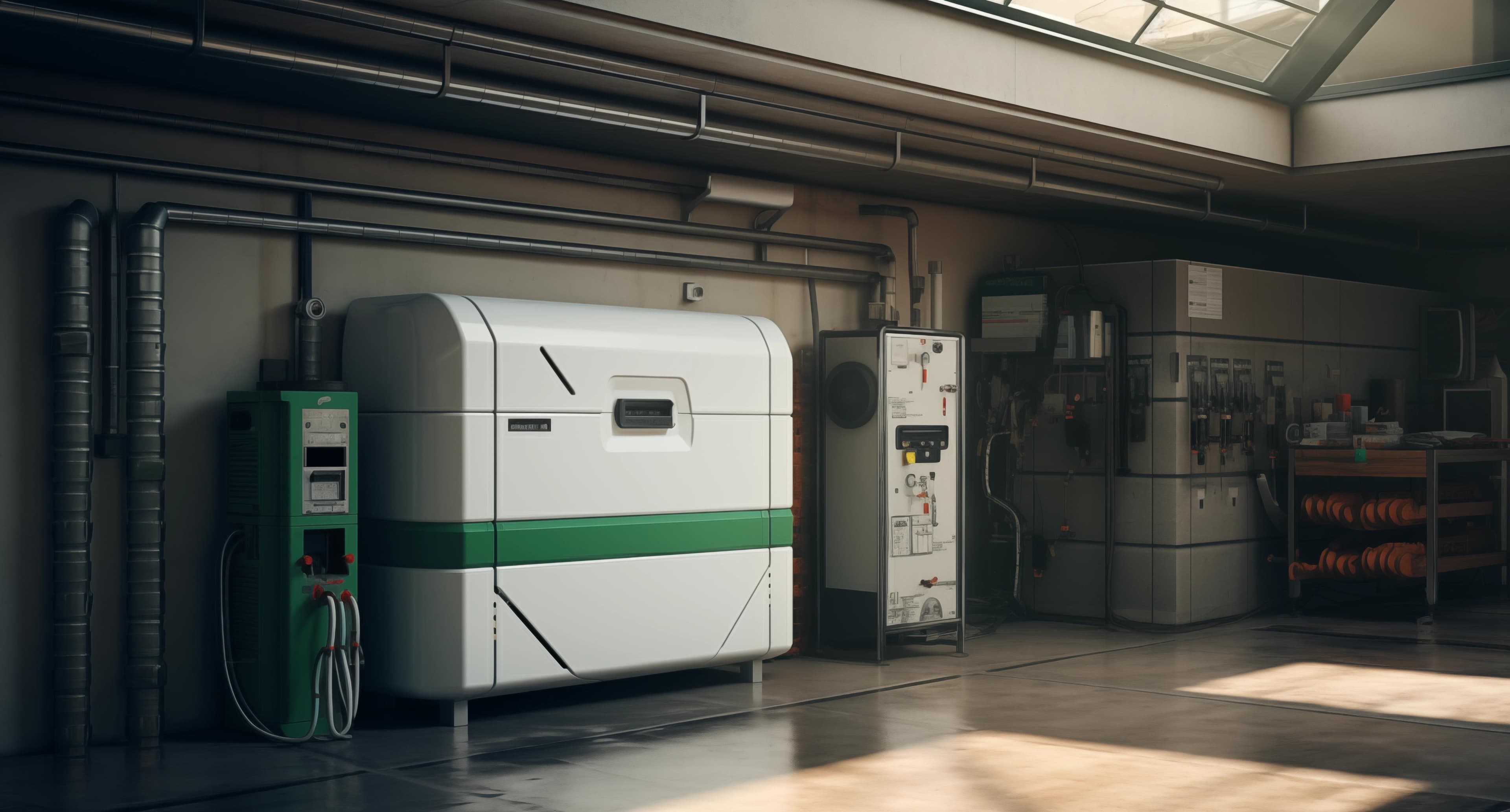
The sweet spot is home solar storage. You've got a battery sitting next to your house, charging from the panels during the day, running your lights at night.
You don't care if it weighs 200 pounds. You're not carrying it anywhere.
What you care about is:
- It won't burn your house down
- It works in any weather
- It lasts a long time (often 10+ years)
- It doesn't have toxic guts to dispose of
Saltwater batteries hit all four.
→ How off-grid energy storage works
Why You Don't See Them Everywhere
Two reasons.
One: they're new. Lithium has been around for decades and is made by the millions every year, so it's cheap. Saltwater is younger and made in smaller numbers, so it's more expensive per kWh.
Two: they're big. For a phone, a laptop, or an electric car, lithium wins because it crams a lot of power into a small space. Saltwater can't do that. So most consumer products will stay on lithium.
But for stationary storage, the safety story is hard to beat.
The Bigger Picture
Battery fires are a real thing. Lithium-ion fires can burn for hours, are hard to put out with water (the water reacts with the lithium), and put out toxic smoke.
A saltwater battery just... can't do that. The chemistry won't allow it.
For a homeowner, that peace of mind matters. Especially when the battery is sitting next to the house, full of charge, for the next ten years.
Where It's Going
Researchers are working on cramming more energy into saltwater batteries. The newer designs are getting closer to lithium on energy density. They're not there yet. But the gap is closing.
The category is still niche today (Aquion Energy, the biggest commercial player, filed for bankruptcy in 2017), and a handful of smaller makers like BlueSky Energy are keeping it going while sodium-ion newcomers chase the same safety story.
→ How lithium-ion batteries work
→ Lead-acid batteries: the original