
Two Problems At Once
In a Finnish village in January, the sun comes up around 10am and goes back down at 3pm. That's five hours of weak winter light. Outside it's minus 20 degrees Celsius.
Now imagine you live there off-grid. You need two things at the same time, and winter is making both of them hard.
You need to heat the house. A lot.
And you need electricity, but solar panels are getting almost no sun.
Most people who try off-grid living in warm places never have to think about this. They have power all year and they barely use heat. In cold climates, winter is the boss. Every choice you make has to survive it.
The good news? People have been doing this for decades in Canada, Finland, Sweden, Alaska, and the mountains. The trick is knowing what breaks in the cold, and what does not.
Why Batteries Hate The Cold
Here's something that catches a lot of new off-gridders off guard.
Lithium batteries (the kind most people use today, called LiFePO4) flat-out refuse to charge below 0 degrees Celsius. Not "they charge slowly". They stop.
Push power into a frozen lithium battery and you damage it permanently. So every modern lithium battery has a brain inside (called a BMS, or battery management system) that just blocks charging until the battery warms up. Sounds smart. Until you realize your panels are making power on a sunny winter day and your battery is refusing every watt of it.
So what do you do?
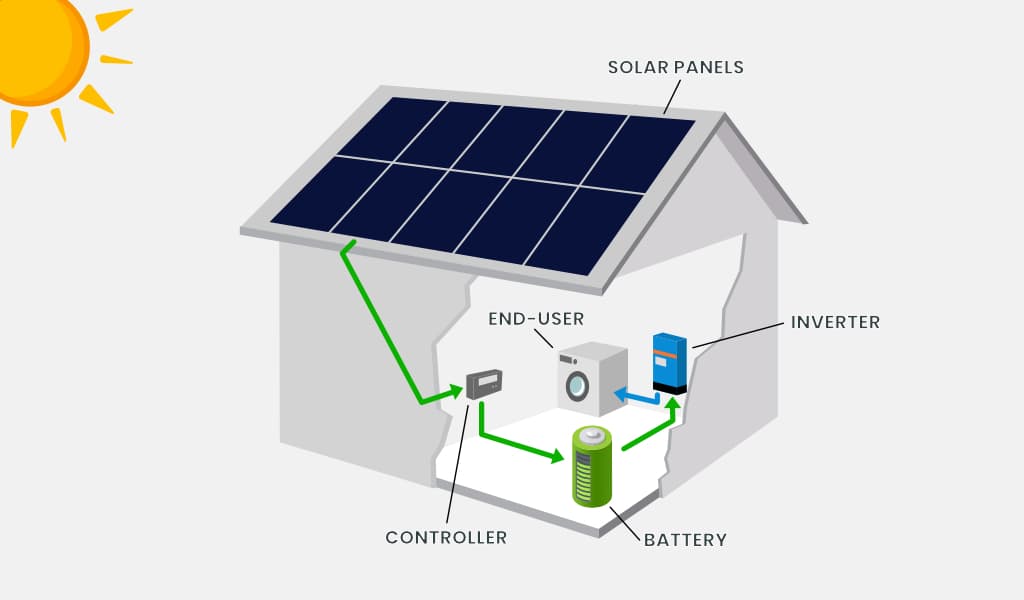
You insulate the battery. A wooden box stuffed with foam, or a small dedicated shed, keeps the battery a lot warmer than the outdoor air. Batteries also make a tiny bit of heat themselves when they work, and that heat builds up inside an insulated box.
For really cold places, you add a small heating pad under the battery. The pad uses very little power (often less than 30 watts) and keeps the battery just above freezing. Many off-grid setups in Finland and Canada run this way all winter.
Older lead-acid batteries handle the cold a bit better than lithium, but they hold less energy and wear out faster. Most cold-climate off-gridders today still pick lithium and just protect it.
Solar In Winter (The Bad News, And The Good)
Winter solar is brutal at first glance.
In summer in Helsinki you get about 16 hours of daylight. In December? Six hours. And the sun stays low in the sky, which means less power per hour too. A panel that makes 300 watts at noon in July might only make 80 watts at noon in December.
Snow is the other problem. A panel covered in snow makes zero power. None. And if your panel is flat on the roof, snow can sit there for weeks.
So how do people make solar work in real winter?
Three tricks.
First, tilt the panels steeper. A near-vertical tilt (around 60 to 75 degrees in northern Europe) does two things at once. It catches the low winter sun head-on, and snow slides right off.
Second, oversize the system. A normal solar system might be 30% bigger than the bare-minimum calculation. A cold-climate system often runs 50 to 70% bigger. The summer extra is wasted, but the winter is the part you actually need to survive.
Third, add a backup source. Many cold-climate off-gridders pair solar with a small wind turbine or a generator. Wind often blows hardest in winter, exactly when solar is weakest. They cover each other.
→ How many sun hours does your area actually get?
Heating Choices That Survive Winter
Heating is where cold-climate off-grid gets serious. A house that's not heated for a few days in real winter freezes pipes, cracks tile, and becomes unlivable.
The three common options each have their own personality.
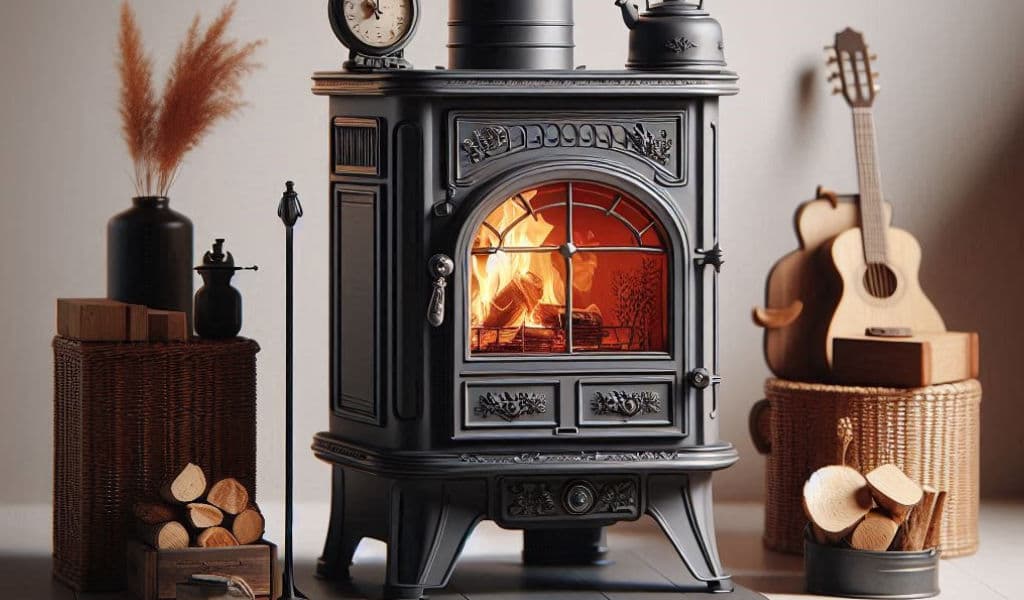
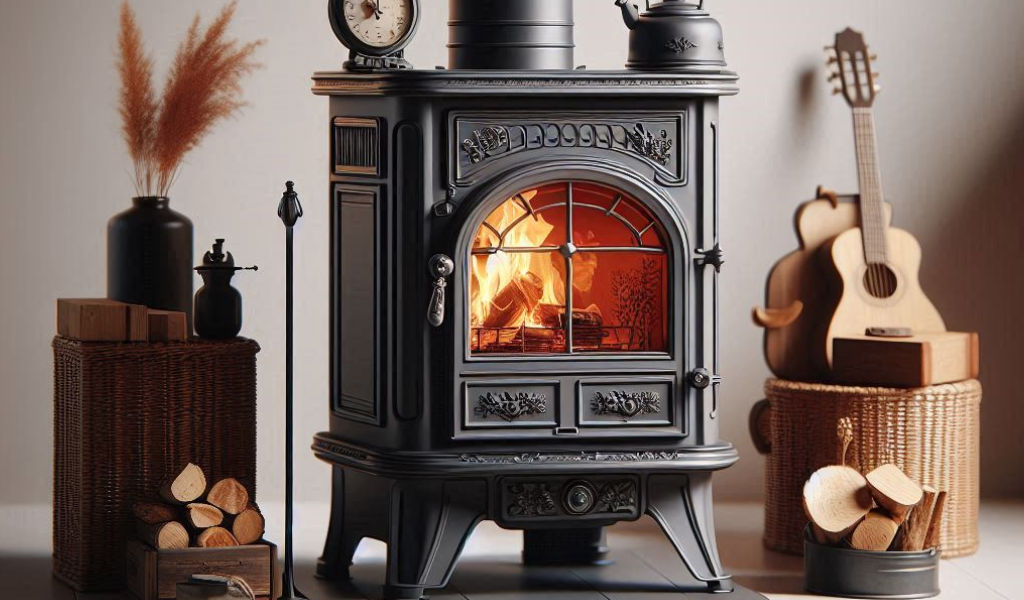
A wood stove is the classic. Cheap to buy. Almost no electricity needed (some don't even need a fan). Burns local wood you can cut yourself. Works through a power outage, a blizzard, anything. The downside is that you have to feed it. Real wood-heated homes use a few cords of wood per winter, which is a lot of chopping, stacking, and hauling. Some people love this. Some people quit after one winter.
A pellet stove burns small wood pellets, automatically. A hopper drips pellets into a small fire, a fan blows the heat out, and the whole thing runs on a thermostat. Way less work than wood. Cleaner. But it needs electricity to run the fan and the auger, and pellets come in bags you have to buy.
A heat pump is the most efficient option on paper. It moves heat from outside air (yes, even cold outside air) into the house. For every 1 watt of electricity you give it, you get 2 to 4 watts of heat. But the catch is huge. A heat pump that warms a whole house in winter draws thousands of watts continuously. That's brutal on an off-grid power system. Most cold-climate off-grid homes pair a heat pump with one of the other two, or skip it entirely.
The Boring Answer That Actually Wins
Here's the thing nobody puts on their off-grid wishlist, but every cold-climate veteran swears by it.
Insulation.
A really well-insulated house in northern Canada can stay above freezing for two days with no heat at all, just from body heat and a few light bulbs. A poorly insulated house? Two hours.
Thick walls. Triple-pane windows. A sealed roof. A vapor barrier. None of it looks impressive. But it's the difference between a house that needs constant heating and one that holds warmth like a thermos.
So the order of attack for cold-climate off-grid is usually: insulate first, then pick your heat source, then size your power system.
People who skip the insulation step and dump money into bigger solar arrays usually regret it within one winter.
A Real Cold-Climate Setup
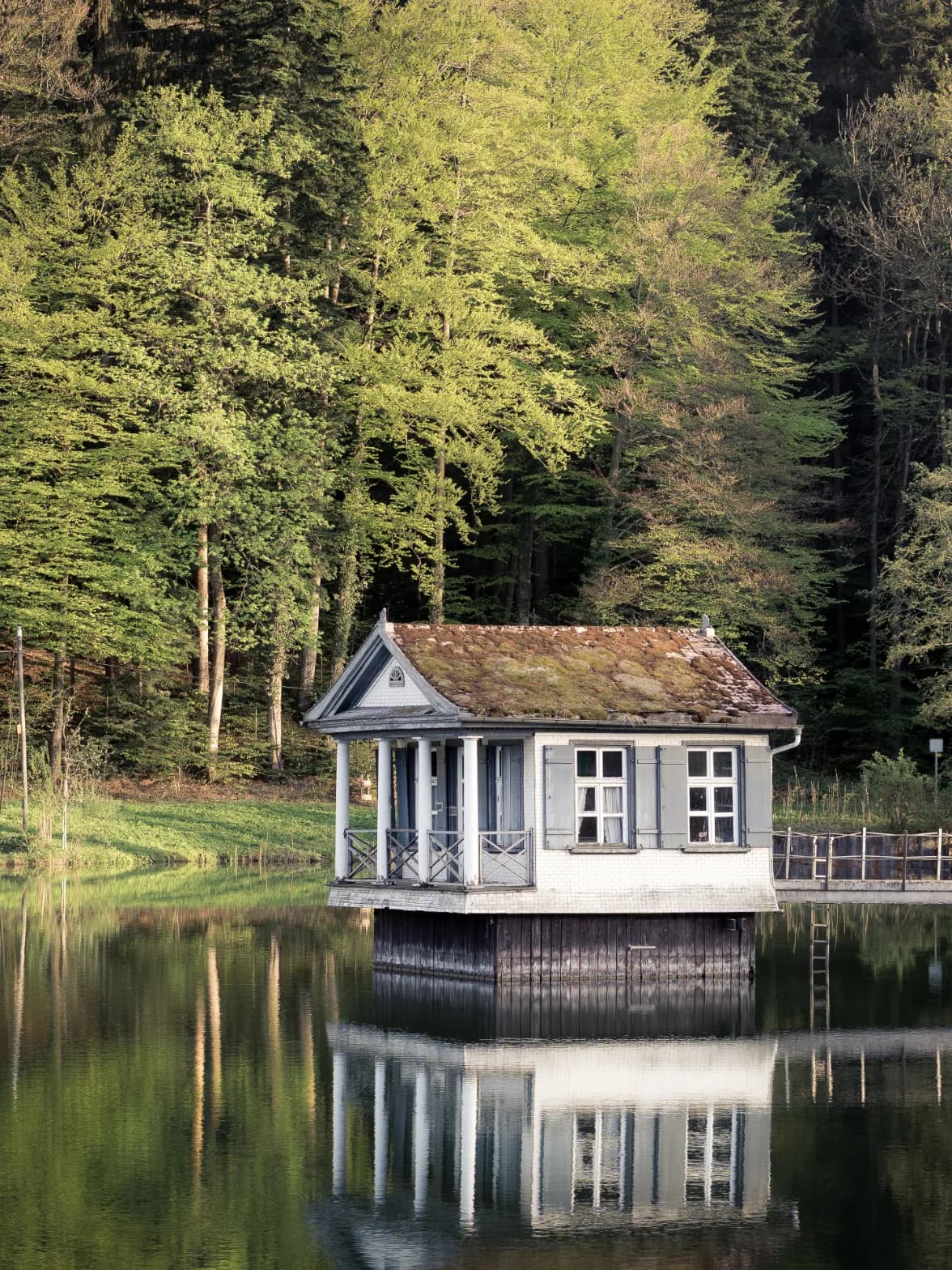
Picture a small cabin in northern Sweden, 100 square meters, two people living there year-round.
The walls are 40cm thick. Triple-pane windows. A vapor barrier behind the wood interior.
The roof has 50cm of insulation.
On the south wall (not the roof) sit eight solar panels tilted at 70 degrees. Snow slides off. The low winter sun hits them almost straight on.
The battery sits in an insulated cupboard in the entryway. A small 25-watt heating pad keeps it just above freezing on the coldest nights.
A wood stove in the main room does all the heating. About four cords of birch a year, cut from their own land in summer.
A tiny diesel generator sits in the shed. It runs maybe 50 hours a year, on the darkest stretches in December when even the wind is calm.
Total electric use? About 5 kilowatt-hours a day. Less than a quarter of what a normal grid-connected European home uses. They have lights, a fridge, a laptop, music, and a heat-pump water heater. Nothing fancy. Everything that matters.
The whole system cost roughly 18,000 euros to build. They've been living there since 2014. It just works.
What Catches People Out
If you're planning cold-climate off-grid, three things tend to surprise people.
Battery cycling drops in the cold. A battery that gives you 10 years in a warm garage might give you 6 in a freezing shed. Heating the battery costs power, but it saves the battery.
Snow load is real. A flat solar array in heavy snow country can collect a meter of snow in one storm. The weight alone can damage the panels or the mounting frame. Plan for that.
Generators fail in the cold. Diesel turns into jelly below about minus 15 Celsius. Gasoline generators need winter-rated oil. If your backup plan is "I'll just run the generator", make sure it actually starts at the temperatures you'll see.
Why People Still Do It
Cold-climate off-grid is more work than warm-climate off-grid. There's no way around that. Winter just demands more.
But there's something about a small cabin in the snow, lit by panels you bolted on yourself, warmed by wood you cut from your own land, with no power bill and no grid to fail in a storm. People who do it tend to stay.
The grid in much of the rural north is also unreliable. Storms knock it out for days at a time. An off-grid cabin during that storm? The lights stay on.
If you're thinking about it, the path is straightforward. Insulate the house properly. Pick a heat source you can actually feed all winter. Size your power system for December, not July. Protect your battery from the cold.
Then enjoy a quiet winter night with the stove crackling and your own panels keeping the lights on.