
You flip a switch. A light comes on. Most people never think about where the power came from. A wire in the wall. A wire under the street. A wire to a power plant a hundred miles away.
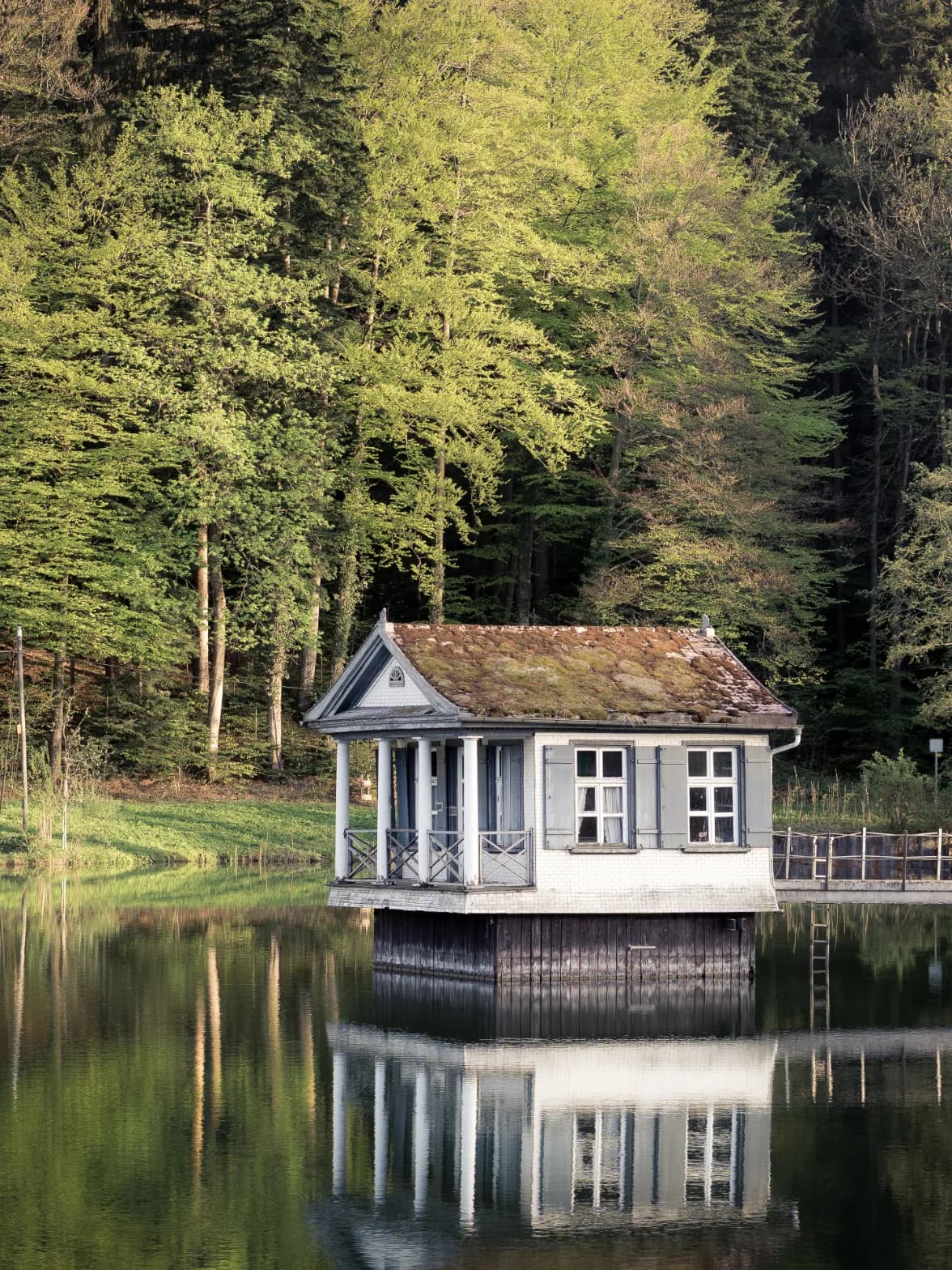
Off-grid homes skip all of that. They make their own power, right on the property. Estimates vary, but hundreds of thousands of US households live off-grid today.
Most setups mix two or three sources, because the sun goes down and the wind doesn't always blow. Here's the menu.
Solar
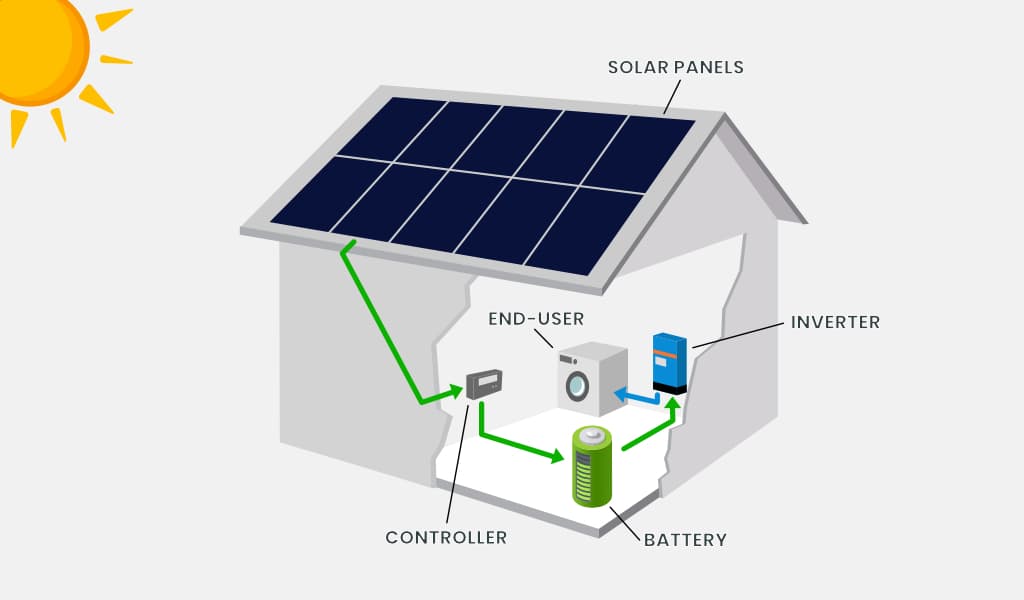
The most popular by far. Panels catch sunlight and turn it into electricity. Quiet, no moving parts, lasts 25 to 30 years.
→ How sunlight becomes electricity
Wind
A spinning blade on a tall pole. Good when you've got open land and steady wind, and it works at night, which is solar's weak spot. Not every site has enough wind to make it worth the cost.
→ Is there enough wind at your site?
Hydro
A small water turbine in a stream. If you have running water, this can be the cheapest power per watt. It runs day and night, summer and winter, but the catch is you need flowing water.
Biomass
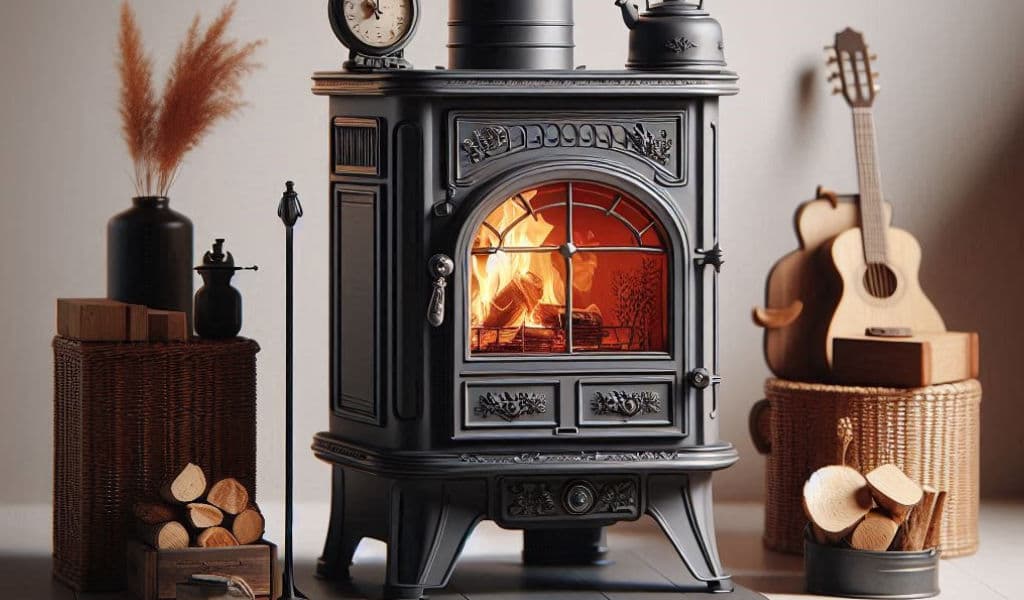
Wood or pellets you burn for heat. Not the same as electricity, but if you're heating your home with a pellet stove, that's a huge chunk of your energy bill handled.
Generator
A diesel or propane engine you start when nothing else is working. Not your main source. Your safety net.
Storing It
Whatever source you pick, you need a place to put the electricity for when the sun isn't out. That's batteries.
→ How off-grid energy storage works
Figuring Out What You Need
Two numbers matter before you buy anything. How much power your house uses per day. And how much sun, wind, or water your site can deliver.