

You've decided to put solar on your roof. Now you pick between two setups that look similar from the outside but work very differently inside.
Off-grid: no wires to the utility. Full independence. You make it, you store it, you use it.
Grid-tied: panels on the roof, but the wire to the power company stays. The grid is your backup. You sell extra power back, buy it back when needed.
Both are valid. They suit different lives.
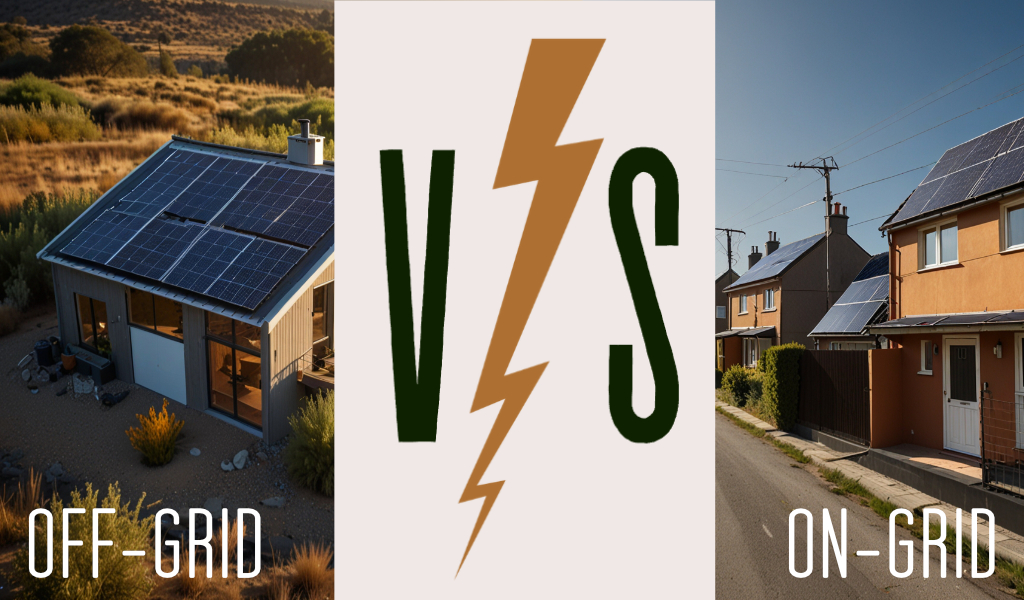
Off-Grid Solar
You cut the cord. Your house gets all its power from your own panels and batteries.
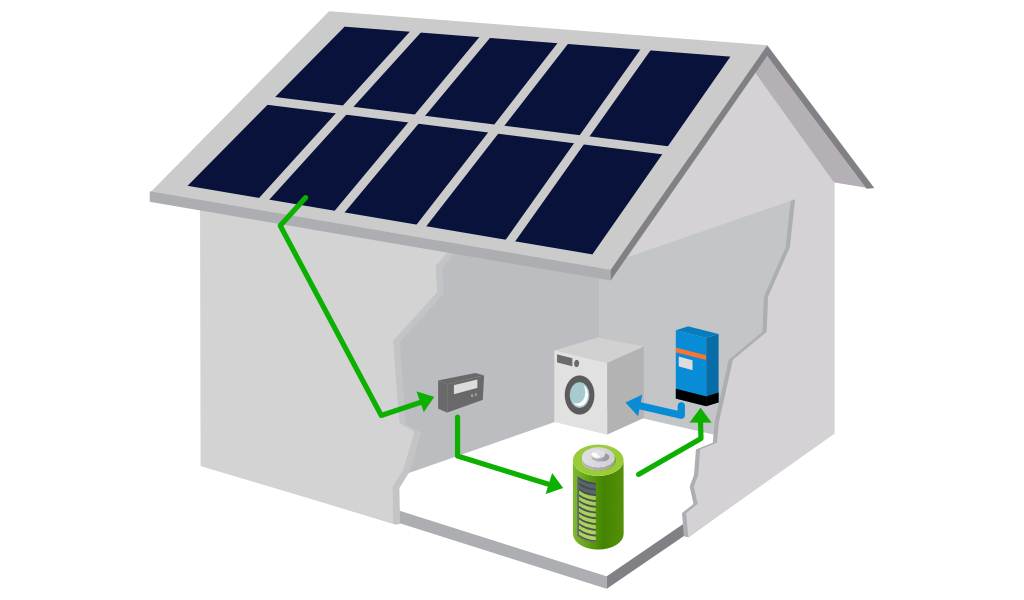
What's In The Box
- Solar panels
- Charge controller
- Battery bank (the big one)
- Battery management system
- Inverter
- Safety switch
- Backup generator (most people have one)
Good
- Total independence. No utility bill.
- Works where the grid doesn't reach.
- Power outages don't affect you.
- Long-term: usually cheaper than 25 years of utility bills.
Hard
- Expensive up front. Often $20,000 to $40,000.
- You manage everything yourself.
- Battery replacement every 5 to 15 years.
- You need to size it right.
On-Grid (Grid-Tied) Solar
You stay connected to the power company. Your panels feed the house first. Extra goes to the grid for credit. When your panels aren't enough, the grid fills in.
What's In The Box
- Solar panels
- Inverter
- Grid connection
- Net meter
No batteries needed (unless you want backup power during outages).
Good
- Way cheaper up front. No battery bank.
- Net metering can credit you for extra power.
- You never run out. The grid is your infinite backup.
- Less maintenance.
- Often pays back in 6 to 10 years.
Hard
- When the grid goes down, so does your power. Most grid-tied systems shut off during outages for safety.
- You're still tied to the utility's rates and rules.
- Net metering varies by state and can change.
How To Choose
Off-Grid If:
- You live somewhere remote where running grid power costs $10k+
- You really want full independence
- You're in a place with unreliable grid power
- You're building from scratch
Grid-Tied If:
- You're in town with normal grid access
- You want solar to save money, not to disconnect
- Your state has good net metering
- You don't want to think about batteries
Or A Hybrid
A growing number of homes do both. Grid-tied for daily savings. Plus a small battery for blackouts. Even one or two batteries can keep the fridge and lights going during an outage.
This is becoming the most popular setup in places where storms knock out power often.
Cost Reality Check
A typical 6 kW grid-tied system: roughly $12,000 to $18,000 before incentives.
The same 6 kW off-grid (with batteries for one to two days): roughly $25,000 to $40,000.
The batteries are the difference.
→ What does going off-grid actually cost?
The Honest Answer
For most people in the US with a normal house and a normal electricity bill, grid-tied makes more financial sense.
Off-grid wins when the grid isn't there, the grid is unreliable, or independence matters more than dollar-for-dollar payback.